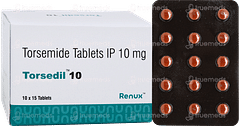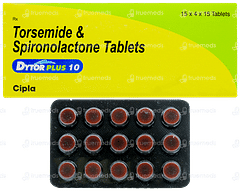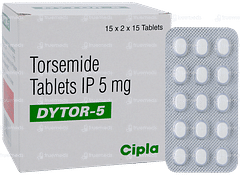
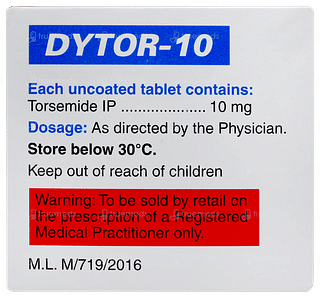
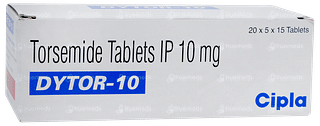
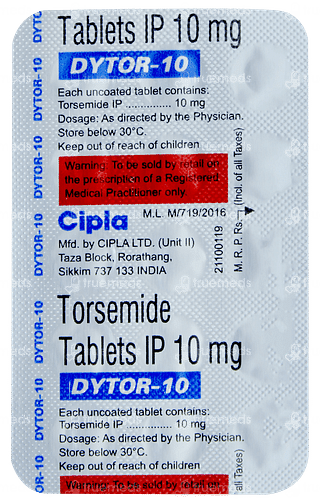
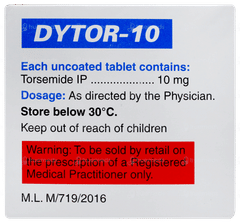
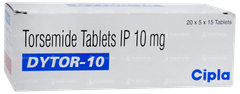
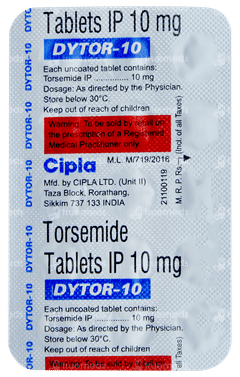

 Composition
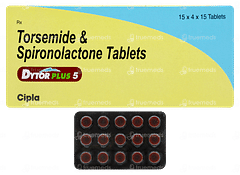
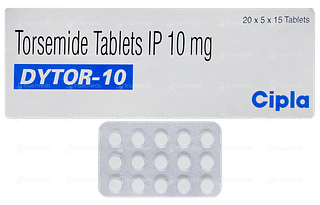
Dytor-10 Tablet is used to manage high blood pressure and fluid retention (oedema) associated with heart, kidney or liver disorders. It reduces swelling and helps lower blood pressure.
It contains torsemide, a diuretic (water tablet). It works by helping the kidneys remove excess water and salt from the body in the urine.
Take it exactly as prescribed, ideally at the same time each day. Avoid taking it late in the evening to prevent frequent urination at night.
Tell your doctor about any kidney or liver problems before starting. Report severe dizziness, muscle cramps or signs of dehydration, as this medicine can affect fluid and salt balance.