

- Medicines
- Personal Care
- Skin Cream
- Sunscreen
- Face Wash
- Skin and Body Soap
- Acne Care
- Body Lotions
- Moisturising Lotion
- Moisturising Cream
- Mosquito Repellent
- Moisturising Gel
- Body Wash
- Hair Oils
- Hair Shampoo
- Hair Conditioners
- Hair Supplements
- Hair Colour
- Hair Serum
- Hair Mask
- Hair Solutions
- Baby Diapers and Wipes
- Baby Lotion and Moisturising Cream
- Baby Bath Essentials
- Baby Skin Care
- Baby and Infant Food
- Baby Healthcare
- Women Multivitamins
- Ovulation Test Kit and Women Intimate Care
- Sanitary Pads
- Nutritional Drinks
- Condoms
- Lubricants
- Massage Gels
- Personal Body Massagers
- Men Performance Booster
- Sexual Health Supplements
- Massage Oils
- Ayurveda
- Tooth Paste
- Mouth Ulcer Gel
- Mouthwash
- Toothache and Gum Pain
- Tooth Brush
- Gargle Solution
- Orthopaedic Supports
- Adult Diapers
- Footwear
- Mobility and Support Accessories
- Urinary Support and Care
- Health Conditions
- Bone and Joint Care
- Digestive Care
- Eye Care
- Pain Relief
- Smoking Cessation
- Liver Care
- Stomach Care
- Cold and Cough
- Heart Care
- Kidney Care
- Piles, Fissures & Fistula
- Respiratory Care
- Mental Wellness
- Derma Care
- Pre and Probiotics
- Acidity
- Gas
- Constipation
- Loose Motion/Diarrhoea
- Digestive Fibres
- Digestive Enzymes
- Eye Lubricant Drops
- Lens Solution
- Safety Eye Wear
- Eye Cream
- Eye Vitamins and Supplements
- Eye Drops
- Eye Ointment and Gel
- Nicotine Patch
- Nicotine Gum
- Nicotine Lozenges
- Cough Syrups
- Chest Rubs and Balms
- Nasal Spray
- Lozenges
- Inhalant Capsules
- Cold and Cough Tablets
- Vitamins & Supplements
- Diabetes Care
- Healthcare Devices
- Homeopathic Medicine
- Health Guide
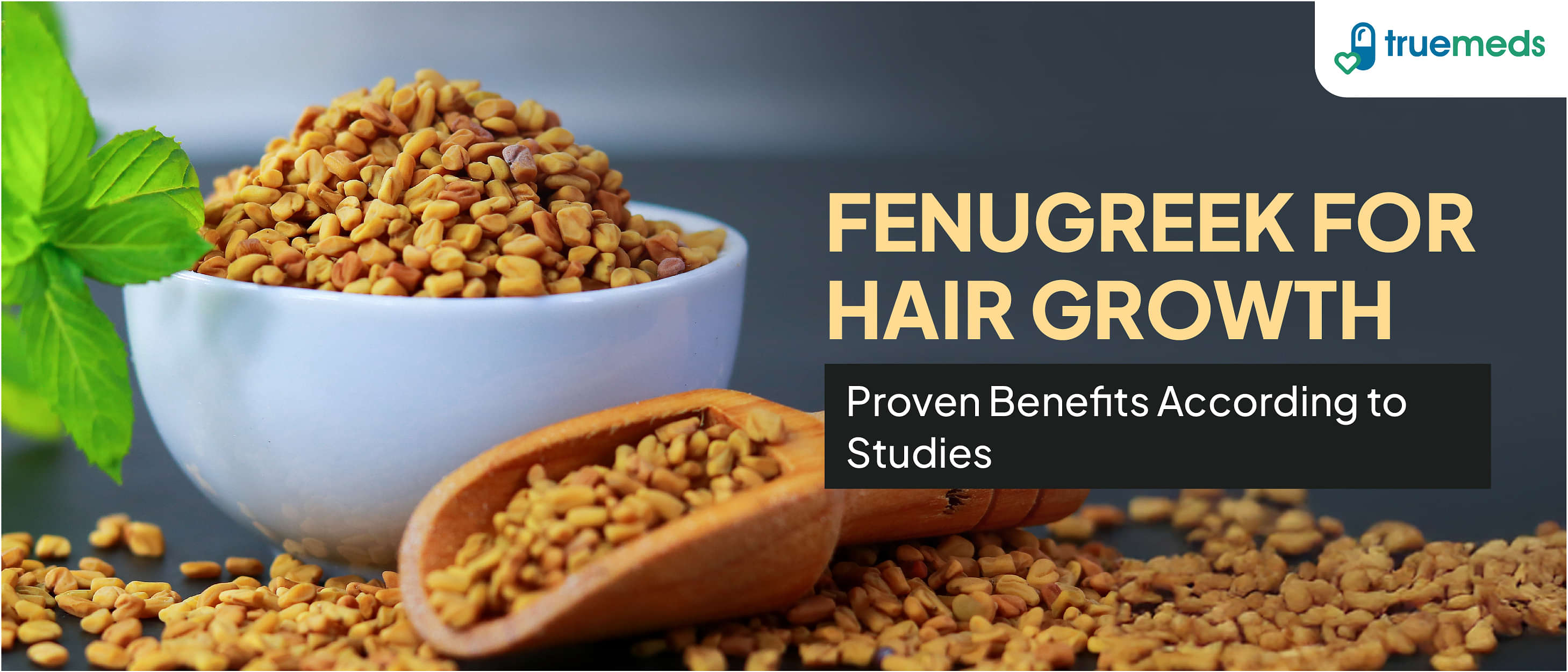
Fenugreek for Hair Growth: Benefits & Uses
Last updated on :02 Mar, 2026
Read time :12 min
Fenugreek has gained significant popularity in the natural hair care community as a traditional ingredient that supports hair vitality and addresses common concerns such as thinning. Commonly used in both culinary and traditional practices, fenugreek seeds are rich in protein and nicotinic acid, which may support hair health and scalp nourishment.
Today, we’ll break down all you need to know about this traditional remedy, including the current scientific evidence and safety considerations for healthy hair.
What is Fenugreek?
Known scientifically as Trigonella foenum-graecum, fenugreek is a herb native to the Mediterranean region, Southern Europe, and Western Asia. In Indian cuisine, fenugreek is commonly called “methi” and is widely used both as a spice and in herbal remedies. The key interest in fenugreek for hair stems from its complex nutritional and phytochemical profile.
Nutritional Composition
Fenugreek seeds are particularly rich in steroidal sapogenins, including diosgenin, which is concentrated in the oily part of the seed embryo [1]. Fenugreek also contains furastanol glycosides, which are precursors to diosgenin, as well as hederagenin glycosides, contributing to its phytochemical complexity.
Fenugreek seeds provide about 23–26% protein, 6–7% fat, and nearly 58% carbohydrates, of which 25% is dietary fibre, according to USDA data. The seeds are also a substantial source of iron, providing around 33 mg per 100 grams of dry weight [3], which explains why they have been valued in traditional remedies and nutrition.
- Vitamins: Fenugreek seeds contain Vitamins A, C, K, and several B vitamins, such as folic acid, which are essential micronutrients for overall hair health.
- Minerals: The seeds contain iron and magnesium, essential nutrients that support a healthy scalp environment.
- Proteins and Fibre: Rich in protein, fenugreek can help condition the hair cuticle, which supports the appearance of strength and resilience in the hair strands [3].
- Plant Compounds: Fenugreek contains flavonoids and saponins, which are traditionally valued for their ability to soothe the scalp and maintain a clean environment [4]. These compounds are often used in natural hair care to support scalp vitality, which is a key factor in maintaining healthy-looking hair [5].
Due to its nutrient-dense profile, fenugreek water has become a popular, affordable addition to natural hair care routines.
Traditional Applications and Potential Benefits of Fenugreek for Hair
For generations, fenugreek or methi has been a favourite ingredient in traditional hair care remedies. Traditionally, fenugreek seeds and leaves have been valued in hair care for their role in supporting hair density and maintaining a flake-free scalp. Scientific investigation is ongoing to validate these traditional uses.
Fenugreek is a nutrient-rich herb known for its hair benefits. Its primary roles are often attributed to its protein and nicotinic acid content [6]. Here are some potential benefits of fenugreek to support hair growth and scalp health.
1. Supporting Hair Follicle Health
The high levels of nicotinic acid (Niacin, a B vitamin) and potassium in fenugreek may stimulate the scalp, creating an ideal environment for the hair’s natural growth cycle [6], [7].
2. Potential Role as a Natural 5-alpha Reductase Inhibitor
Preliminary research has explored the role of certain plant compounds in fenugreek and their influence on the scalp environment. However, more extensive human studies are required to understand its role compared to established hair care ingredients.
3. Reducing Hair Loss and Strengthening Strands
Fenugreek is a rich source of protein (up to 26%) and iron, which may help strengthen the hair shafts and improve follicle anchorage [3]. Incorporating fenugreek into a consistent routine may help minimise breakage by conditioning the hair shaft and supporting the appearance of thicker, stronger hair [6].
4. Managing Dandruff and Scalp Infections
Struggling with dandruff and an itchy scalp? Traditionally, fenugreek has been used to clarify the scalp and manage the appearance of flakes. Its natural compounds may help maintain a balanced scalp environment and provide a soothing sensation [4],[5].
5. Reducing Scalp Inflammation
The saponins and flavonoids present in fenugreek exhibit antioxidant activity and may have anti-inflammatory effects, which could help reduce scalp inflammation, a condition often linked to poor hair growth [4].
- Enhancing Hair Shine and Manageability: Fenugreek seeds are rich in mucilage and natural oils, which act as humectants. These compounds coat the hair strands, providing deep hydration and potentially enhancing shine and reducing frizz, acting as a natural conditioner [9].
- Nourishing and Thickening Hair: The combination of proteins, lecithin, vitamins, and minerals deeply nourishes the scalp, promoting a healthy growth environment. By coating the hair with natural mucilage, fenugreek can improve hair manageability and surface resilience, making it appear more voluminous [6].
How to Use Fenugreek for Hair
Fenugreek can be used in various ways to promote hair growth and improve scalp health. Here are some commonly used methods:
1. Topical Applications
- Powder and Paste Mask: To create a fenugreek paste, first, you soak the seeds overnight. The next morning, grind these seeds into a smooth paste. Applying this paste to the scalp for 30–60 minutes can help soothe the skin and manage the appearance of flakes through gentle exfoliation.
- Fenugreek-Infused Oil: Gently heating fenugreek seeds in a carrier oil (like coconut or olive oil) creates an infusion. Massaging the infused oil into your scalp helps stimulate the area and provides deep conditioning to the hair roots and strands. This practice may support scalp health and encourage stronger hair.
- Fenugreek Water Rinse: Soaking the seeds overnight and using the strained water as a final rinse after shampooing can impart shine and light conditioning to the hair.
2. Consumption Methods
- Raw Seeds: Raw fenugreek seeds can be soaked in water overnight and consumed on an empty stomach. This provides your body with essential nutrients that contribute to healthier hair as part of a balanced diet.
- Supplements: While fenugreek extracts are available as supplements, it is essential to consult a healthcare provider before starting any new supplement to ensure it is appropriate for your specific health needs, especially concerning proper dosage and interactions [6],[8].
Safety and Risk Considerations
While generally safe for consumption and topical use, fenugreek may cause certain side effects or interact with medications [2],[10].
| Risk Category | Potential Effects | Clinical Recommendation |
| Possible Side Effects | The most common side effects are gastrointestinal disturbances (bloating, gas, or diarrhoea) especially when consumed orally. Fenugreek may also impart a maple syrup-like odour to sweat or urine. | Start with small doses when consuming orally and discontinue use if GI distress persists. |
| Allergic Reactions | In rare cases, individuals may be allergic to fenugreek, especially those with allergies to peanuts or chickpeas (both in the same legume family). Symptoms could include skin rashes, itching, or swelling. | Always perform a patch test before topical application. Discontinue use immediately if any reaction occurs. |
| Medication Interactions | Fenugreek may potentially interact with certain medications, most notably anti-diabetic drugs (due to its blood sugar-lowering properties) and blood thinners (due to its potential anti-platelet effects). | It is strictly recommended to consult your family doctor or pharmacist before starting any fenugreek regimen, particularly if you are on prescription medication. |
Adhering to recommended dosages is crucial as excessive consumption could lead to adverse effects. For supplements, strictly follow the manufacturer’s recommended dose or the dosage your healthcare provider has advised.
Holistic Approach to Hair Growth
To fully realise the potential of fenugreek for hair growth, it’s important to embrace a holistic approach that includes proper nutrition, stress management, and a healthy lifestyle.
- Nutrition: A balanced diet rich in protein (such as eggs, poultry, and legumes) and essential micronutrients (such as iron, zinc, and B vitamins) is the cornerstone of maintaining healthy hair.
- Stress Management: Chronic stress can precipitate hair loss (telogen effluvium). Managing stress through practices such as mindfulness or yoga can support overall well-being, an important factor in maintaining a healthy environment for the hair growth cycle [11].
- Genetic Factors & Professional Care: It’s important to remember that genetics play a significant role in hair loss, particularly in conditions like androgenetic alopecia. If you experience persistent or significant hair loss, seeking advice from a board-certified dermatologist or trichologist is essential for an accurate diagnosis and evidence-based treatment plan.
Conclusion
To wrap up, fenugreek is a nutrient-dense traditional ingredient that can support hair and scalp vitality thanks to its rich protein and vitamin profile. Remember to combine this with a balanced diet, stress management techniques, and a gentle hair care routine for optimal results. However, due to the potential for allergic reactions and drug interactions, it is always advisable to consult with your doctor before incorporating fenugreek in therapeutic doses into your regular routine, especially if you have a pre-existing health condition or are on medication.
FAQs
Is fenugreek scientifically proven for hair growth?
Fenugreek contains compounds and nutrients (like nicotinic acid, protein, and saponins) that have been shown in preliminary studies and traditional use to support hair growth and strengthen hair. While the evidence is promising, it is generally considered an adjunct or complementary therapy, not a primary, standalone treatment.
How long does fenugreek take to work for hair growth?
Clinical studies using standardised extracts show that results may be observed after 3 to 6 months of consistent use. Noticeable results are not typically seen in the short timeframe of 3 to 4 weeks, as is often cited for home remedies.
Can fenugreek block DHT?
Some in vitro and animal studies suggest that fenugreek may act as a mild inhibitor of the 5-alpha-reductase enzyme, thereby reducing DHT. However, its effectiveness as a potent DHT blocker in humans for hair loss is not yet established and should not replace prescription treatments recommended by a dermatologist.
How to use fenugreek seeds for hair growth review?
You can use fenugreek paste for hair by mixing ground fenugreek seeds with water, applying it to the scalp, and rinsing after 30 minutes. Ensure you perform a patch test first. This method provides topical conditioning and may help soothe the scalp.
References
[1] Wani, S. A., & Kumar, P. (2018). Fenugreek: A review on its nutraceutical properties and utilization in various food products. Journal of the Saudi Society of Agricultural Sciences, 17(2), 97–106. https://doi.org/10.1016/j.jssas.2016.01.007
[2] Visuvanathan, T., Than, L. T. L., Stanslas, J., Chew, S. Y., & Vellasamy, S. (2022). Revisiting Trigonella foenum-graecum L.: Pharmacology and Therapeutic Potentialities. Plants, 11(11), 1450. https://doi.org/10.3390/plants11111450
[3] Faisal, Z., Irfan, R., Akram, N., Irfan Manzoor, H. M., Aabdi, M. A., Anwar, M. J., Khawar, S., Saif, A., Shah, Y. A., Afzaal, M., & Desta, D. T. (2024). The multifaceted potential of fenugreek seeds: From health benefits to food and nanotechnology applications. Food Science & Nutrition, 12(4), 2294. https://doi.org/10.1002/fsn3.3959
[4] Sakthi, D. (2014). Effectiveness of Fenugreek Seed Paste on Dandruff among Adolescent Girls in Selected Women’s Hostel, Coimbatore. International Journal of Nursing Education and Research, 2(2). Retrieved from https://ijneronline.com/HTMLPaper.aspx?Journal=International%20Journal%20of%20Nursing%20Education%20and%20Research;PID=2014-2-2-13
[5] Zameer, S., Najmi, A. K., Vohora, D., & Akhtar, M. (2017). A review on therapeutic potentials of Trigonella foenum graecum (fenugreek) and its chemical constituents in neurological disorders: Complementary roles to its hypolipidemic, hypoglycemic, and antioxidant potential.Nutritional Neuroscience, 21(8), 539–545. https://doi.org/10.1080/1028415x.2017.1327200
[6] Khanna, A., Thomas, J., John, F., Maliakel, B., & Krishnakumar, I. M. (2021). Safety and influence of a novel extract of fenugreek on healthy young women: a randomized, double-blinded, placebo-controlled study. Clinical Phytoscience, 7(1). https://doi.org/10.1186/s40816-021-00296-y
[7] Semalty, M., Semalty, A., Joshi, G. P., & Rawat, M. S. M. (2010). Hair growth and rejuvenation: An overview. Journal of Dermatological Treatment, 22(3), 123–132. https://doi.org/10.3109/09546630903578574
[8] Dhurat, R., Sharma, A., Rudnicka, L., Kroumpouzos, G., Kassir, M., Galadari, H., Wollina, U., Lotti, T., Golubovic, M., Binic, I., Grabbe, S., & Goldust, M. (2020). 5‐Alpha reductase inhibitors in androgenetic alopecia: Shifting paradigms, current concepts, comparative efficacy, and safety. Dermatologic Therapy, 33(3), e13379. https://doi.org/10.1111/dth.13379
[9] Hanwate, R., Kawade, R., Chavan, S., Pandit, M., Kale, G., Wagh, S., & VALMIK NAIK COLLEGE OF PHARMACY TELWADI KANNED. (2025). Research on formulation and evaluation of herbal hair conditioner. International Journal of Research Publication and Reviews, 6(6), 695–705. Retrieved from https://ijrpr.com/uploads/V6ISSUE6/IJRPR47606.pdf
[10] Headquarters, W. (2006, December 12). WHO monographs on selected medicinal plants. https://www.who.int/publications/i/item/9241545178
[11] Bai, J. Q. A., McMullen, E., Sibbald, C., Dumont, S., Mainville, L., Julanon, N., & Donovan, J. (2026). The role of psychological stress in hair loss: A review. JAAD Reviews, 7, 9–19. https://doi.org/10.1016/j.jdrv.2025.10.002














Disclaimer
Our healthcare experts have carefully reviewed and compiled the information presented here to ensure accuracy and trustworthiness. It is important to note that this information serves as a general overview of the topic and is for informational purposes only. It is not intended to diagnose, prevent, or cure any health problem. This page does not establish a doctor-patient relationship, nor does it replace the advice or consultation of a registered medical practitioner. We recommend seeking guidance from your registered medical practitioner for any questions or concerns regarding your medical condition.
Recent Articles



Company
About UsHealth ArticleHealth StoriesHealth LibraryDiseases & Health ConditionsAyurvedaUnderstanding Generic MedicinesAll MedicinesAll BrandsNeed HelpFAQSecuritySavings CalculatorSubscribe
Registered Office Address
Grievance Officer
Download Truemeds


Contact Us
Our customer representative team is available 7 days a week from 9 am - 9 pm.
v4.20.1

2026 - Truemeds | All rights reserved. Our content is for informational purposes only. See additional information.

Our Payment Partners




