

- Medicines
- Personal Care
- Skin Cream
- Sunscreen
- Face Wash
- Skin and Body Soap
- Acne Care
- Body Lotions
- Moisturising Lotion
- Moisturising Cream
- Mosquito Repellent
- Moisturising Gel
- Body Wash
- Hair Oils
- Hair Shampoo
- Hair Conditioners
- Hair Supplements
- Hair Colour
- Hair Serum
- Hair Mask
- Hair Solutions
- Baby Diapers and Wipes
- Baby Lotion and Moisturising Cream
- Baby Bath Essentials
- Baby Skin Care
- Baby and Infant Food
- Baby Healthcare
- Women Multivitamins
- Ovulation Test Kit and Women Intimate Care
- Sanitary Pads
- Nutritional Drinks
- Condoms
- Lubricants
- Massage Gels
- Personal Body Massagers
- Men Performance Booster
- Sexual Health Supplements
- Massage Oils
- Ayurveda
- Tooth Paste
- Mouth Ulcer Gel
- Mouthwash
- Toothache and Gum Pain
- Tooth Brush
- Gargle Solution
- Orthopaedic Supports
- Adult Diapers
- Footwear
- Mobility and Support Accessories
- Urinary Support and Care
- Health Conditions
- Bone and Joint Care
- Digestive Care
- Eye Care
- Pain Relief
- Smoking Cessation
- Liver Care
- Stomach Care
- Cold and Cough
- Heart Care
- Kidney Care
- Piles, Fissures & Fistula
- Respiratory Care
- Mental Wellness
- Derma Care
- Pre and Probiotics
- Acidity
- Gas
- Constipation
- Loose Motion/Diarrhoea
- Digestive Fibres
- Digestive Enzymes
- Eye Lubricant Drops
- Lens Solution
- Safety Eye Wear
- Eye Cream
- Eye Vitamins and Supplements
- Eye Drops
- Eye Ointment and Gel
- Nicotine Patch
- Nicotine Gum
- Nicotine Lozenges
- Cough Syrups
- Chest Rubs and Balms
- Nasal Spray
- Lozenges
- Inhalant Capsules
- Cold and Cough Tablets
- Vitamins & Supplements
- Diabetes Care
- Healthcare Devices
- Homeopathic Medicine
- Health Guide
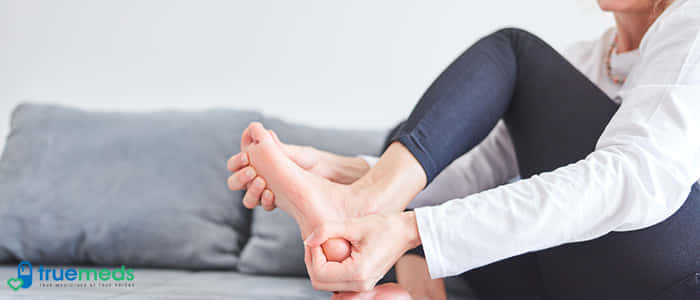
Achilles Tendinitis Exercises
Last updated on :24 Feb, 2026
Read time :8 min
Achilles tendinitis, also known as Achilles tendonitis, is a condition affecting the Achilles tendon that is commonly associated with increased or sudden changes in physical activity levels. The term Achilles tendinitis is commonly used, although many clinicians now use Achilles tendinopathy to describe chronic cases. Commonly reported symptoms may include tightness, discomfort, or pain in the tendon area, along with reduced ankle mobility.
It is important to differentiate this from related, more severe conditions:
- Achilles tendinosis: A condition involving degenerative changes within the tendon structure, which may develop over time in cases of longstanding tendon overload.
- Achilles tendon rupture: A partial or complete tear of the tendon that typically warrants prompt medical evaluation.
If early symptoms are not addressed, Achilles tendinitis may affect mobility and functional movement over time [1]. To help promote healing and restore mobility, the following Achilles tendonitis exercises and stretches are often recommended by orthopaedic surgeons and physical therapists [1].
Important Safety Note: We strongly recommend that these exercises and stretches be performed under the supervision of a physical therapist to ensure proper form and to prevent further injury.
Exercises To Help You Improve Strength and Mobility
These exercises focus on controlled movements that are commonly used to place a gradual load on the Achilles tendon and surrounding muscles [3].
1. Tiptoes (Heel Raises)
Perform the following steps for this exercise:
- Stand on both feet with your legs straight. You may use a counter or chair for balance.
- Slowly rise up on both tiptoes.
- Hold at the top momentarily.
- Slowly lower your heels back down.
- Depending on individual comfort and tolerance, some programmes may suggest up to three sets of 15 repetitions when symptoms are mild. If discomfort or pain increases, reducing the volume or pausing the exercise may be appropriate [1].
2. Bilateral Heel Drop (Eccentric Exercise)
Eccentric exercises, which involve muscle lengthening under tension, are commonly used in rehabilitation programmes for tendon-related conditions [2].
The following steps describe how this exercise is typically performed:
- Stand on the edge of a raised platform (like the bottom step of a staircase) with only the balls of your feet on the step. Your heels should be comfortably suspended over the edge.
- Rise up on your tiptoes using both legs.
- Maintaining control, slowly lower your heels below the level of the step until you feel a gentle stretch in the calf.
- Repeat the movement. A minimum of 15 repetitions is often suggested [1].
3. Single Heel Drop (Advanced)
A single heel drop is similar to a bilateral heel drop, but the entire body weight is placed on the affected leg during the lowering phase. A person should only attempt this exercise when comfortable and pain-free performing the bilateral heel drop [1].
Achilles Stretching Exercises
Stretches for the Achilles tendon and calf muscles may support flexibility and help manage mechanical load on the tendon. You should only perform them under the supervision of a physical therapist if you find them difficult or uncomfortable.
1. Runner’s Stretch (Gastrocnemius Stretch)
This stretch targets the larger calf muscle (gastrocnemius).
- Stand facing a wall, placing your hands at eye level.
- Take the leg you want to stretch back, ensuring your heel stays flat on the ground, and keep your toes pointing forward.
- Slowly bend your front knee toward the wall while keeping your back leg straight.
- Lean your body into the wall until you feel a stretch in the calf of the back leg.
- Hold the position for up to 30 seconds, based on comfort, and repeat as tolerated.
2. Toe-to-Wall Stretch (Soleus Stretch)
This stretch is effective for individuals who experience an uncomfortable pull during the runner’s stretch, as it specifically targets the lower calf muscle (soleus) and may improve ankle mobility.
Perform the following steps:
- Position yourself facing the wall with the toes of the affected foot resting against the wall while the heel remains on the floor.
- Gently lean your body forward while keeping the heel in contact with the floor, as comfortably as possible.
- Maintain this position for the duration of your stretch.
Calf-Focused Movement Exercises
The calf muscles are closely linked to the Achilles tendon and play a supportive role in lower-leg movement and stability.
1. Seated Heel Raises
This movement engages the calf muscles through controlled heel lifts.
- Position yourself in a chair, with your feet shoulder-width apart and your back straight.
- Place your hands on your thighs for gentle, consistent resistance (optional).
- Elevate your heels as high as you can, hold for a moment, and then slowly lower.
- This movement can be repeated in a controlled manner based on individual comfort and tolerance.
2. Standing Heel Raises
This exercise engages the full range of the calf muscle group.
- This exercise is performed while standing, similar to the Tiptoes exercise described above.
- Slow, controlled movement is generally encouraged for better body awareness.
3. Resistance Band Calf Exercise
This exercise may help strengthen the muscles around the ankle and calf against resistance.
- Position yourself on the floor, extending your legs directly in front of you.
- Secure a light resistance band around the ball of the foot you wish to exercise, keeping the knee slightly bent.
- Gently pull the band to flex the foot towards you.
- Slowly point your foot away from you, working against the tension of the band.
- Pause for a moment at the end of the range, then return to the start.
- You can repeat the exercise as many times as you are comfortable, aiming for 2-3 sets of 15-20 repetitions. Gradually increase the band’s resistance (thickness) as your strength improves.
Resuming Routine Movement
During periods of lower-leg discomfort, high-impact movements such as running or jumping are commonly limited. When you feel you are ready to resume daily exercise, a gradual increase (often discussed as no more than 10–20% per week) is commonly recommended [1]. If symptoms are mild, stretching may be possible in the early stages of Achilles tendinitis.
It is always recommended that you consult your physiotherapist or physician before performing any exercises or stretching for Achilles tendinitis. Based on your symptoms and pain level, they can suggest an individualised recovery plan best suited for you.
Controlled lower-leg movements are commonly discussed in educational contexts when talking about muscle engagement and load awareness.
Important Note: Mild discomfort during exercises may be acceptable, but sharp or worsening pain should be avoided.
Frequently Asked Questions (FAQs)
What exercises may aggravate Achilles tendinitis?
Exercises that involve repetitive, high-impact strain, such as consistently walking up and down stairs, running on uneven ground, or sudden hill climbing, may contribute to or aggravate Achilles tendon injury [1].
Is massaging Achilles tendinitis helpful?
Some people explore professional massage techniques as part of a broader wellness approach focused on comfort and movement awareness.
What are the common self-care methods for Achilles tendinitis?
Basic comfort-focused measures are often discussed in educational content when addressing short-term lower-leg discomfort.
How should I approach intense exercise after recovering from Achilles tendinitis?
It is strongly recommended to gradually increase your exercise duration and intensity once you recover from Achilles tendinitis to avoid overloading the tendon and causing a relapse. Avoid sharp, sudden increases in activity.
Are Achilles tendinitis stretching exercises beneficial?
Stretching is often mentioned in educational discussions about movement range and muscle flexibility in the lower leg.
Disclaimer: This article is for informational purposes only and is not a substitute for professional medical advice, diagnosis, or treatment. Please consult a qualified healthcare provider or physical therapist before beginning any new wellness practice, especially if you have an existing medical condition, severe pain, or are on medication.
References
[1] American Academy of Orthopaedic Surgeons (AAOS). (2020, October). Achilles Tendinitis. OrthoInfo. https://www.orthoinfo.org/en/diseases–conditions/achilles-tendinitis/
[2] Silbernagel, K. G., Hanlon, S., & Sprague, A. (2020). Current Clinical Concepts: Conservative Management of Achilles Tendinopathy. Journal of Athletic Training, 55(5), 438–447. https://doi.org/10.4085/1062-6050-356-19
[3] Radovanović, G., Bohm, S., Peper, K. K., Arampatzis, A., & Legerlotz, K. (2022). Evidence-Based High-Loading Tendon Exercise for 12 Weeks Leads to Increased Tendon Stiffness and Cross-Sectional Area in Achilles Tendinopathy: A Controlled Clinical Trial. Sports Medicine – Open, 8(1). https://doi.org/10.1186/s40798-022-00545-5












Disclaimer
Our healthcare experts have carefully reviewed and compiled the information presented here to ensure accuracy and trustworthiness. It is important to note that this information serves as a general overview of the topic and is for informational purposes only. It is not intended to diagnose, prevent, or cure any health problem. This page does not establish a doctor-patient relationship, nor does it replace the advice or consultation of a registered medical practitioner. We recommend seeking guidance from your registered medical practitioner for any questions or concerns regarding your medical condition.
Recent Articles












Company
About UsHealth ArticleHealth StoriesHealth LibraryDiseases & Health ConditionsAyurvedaUnderstanding Generic MedicinesAll MedicinesAll BrandsNeed HelpFAQSecuritySavings CalculatorSubscribe
Registered Office Address
Grievance Officer
Download Truemeds


Contact Us
Our customer representative team is available 7 days a week from 9 am - 9 pm.
v4.23.3

2026 - Truemeds | All rights reserved. Our content is for informational purposes only. See additional information.

Our Payment Partners




