

- Medicines
- Personal Care
- Skin Cream
- Sunscreen
- Face Wash
- Skin and Body Soap
- Acne Care
- Body Lotions
- Moisturising Lotion
- Moisturising Cream
- Mosquito Repellent
- Moisturising Gel
- Body Wash
- Hair Oils
- Hair Shampoo
- Hair Conditioners
- Hair Supplements
- Hair Colour
- Hair Serum
- Hair Mask
- Hair Solutions
- Baby Diapers and Wipes
- Baby Lotion and Moisturising Cream
- Baby Bath Essentials
- Baby Skin Care
- Baby and Infant Food
- Baby Healthcare
- Women Multivitamins
- Ovulation Test Kit and Women Intimate Care
- Sanitary Pads
- Nutritional Drinks
- Condoms
- Lubricants
- Massage Gels
- Personal Body Massagers
- Men Performance Booster
- Sexual Health Supplements
- Massage Oils
- Ayurveda
- Tooth Paste
- Mouth Ulcer Gel
- Mouthwash
- Toothache and Gum Pain
- Tooth Brush
- Gargle Solution
- Orthopaedic Supports
- Adult Diapers
- Footwear
- Mobility and Support Accessories
- Urinary Support and Care
- Health Conditions
- Bone and Joint Care
- Digestive Care
- Eye Care
- Pain Relief
- Smoking Cessation
- Liver Care
- Stomach Care
- Cold and Cough
- Heart Care
- Kidney Care
- Piles, Fissures & Fistula
- Respiratory Care
- Mental Wellness
- Derma Care
- Pre and Probiotics
- Acidity
- Gas
- Constipation
- Loose Motion/Diarrhoea
- Digestive Fibres
- Digestive Enzymes
- Eye Lubricant Drops
- Lens Solution
- Safety Eye Wear
- Eye Cream
- Eye Vitamins and Supplements
- Eye Drops
- Eye Ointment and Gel
- Nicotine Patch
- Nicotine Gum
- Nicotine Lozenges
- Cough Syrups
- Chest Rubs and Balms
- Nasal Spray
- Lozenges
- Inhalant Capsules
- Cold and Cough Tablets
- Vitamins & Supplements
- Diabetes Care
- Healthcare Devices
- Homeopathic Medicine
- Health Guide
Guggul
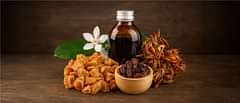
Guggul is the purified oleo-gum resin of the Commiphora wightii tree, used in Ayurveda for more than two thousand years. It is best known as the base of many classical “guggulu” formulations, traditionally used to support joint health, skin care and metabolism. It is taken as a purified resin, tablet, capsule or powder, usually within a formulation. Guggul can interact with several medicines, so it should be used under qualified professional guidance.
 50
50Last updated on : 08 Sep, 2026
Read time : 12 mins
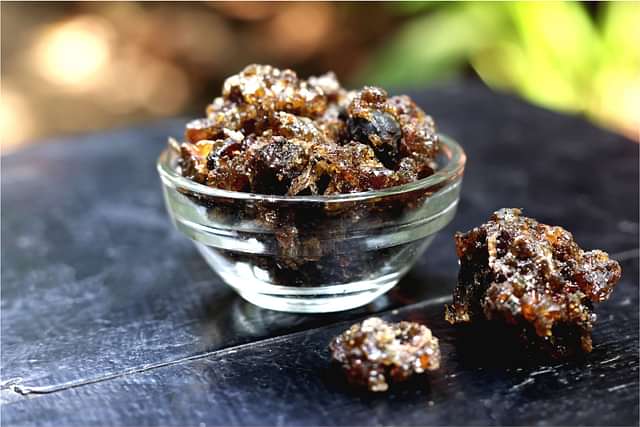
What is Guggul?
Guggul is the sticky oleo-gum resin that seeps from the bark of the Commiphora wightii tree, formerly known as Commiphora mukul, a small thorny tree of the Burseraceae family that grows in the dry regions of India and neighbouring countries (Sarup et al., 2015). In Ayurveda, the resin is called Guggulu, and after purification, it forms the base of a whole family of classical medicines known as the guggulu yogas (Sarup et al., 2015).
In classical terms, Guggulu is described as bitter, pungent and astringent in taste (tikta, katu, kashaya), light, dry and penetrating in quality, hot in potency (ushna virya) and pungent after digestion (katu vipaka). It is traditionally said to balance all three doshas and is valued as a lekhana (scraping) herb that is traditionally associated with reducing excess fat and supporting healthy channels of the body.
Key Facts
| Feature | Details |
| Botanical name | Commiphora wightii (syn. Commiphora mukul) |
| Family | Burseraceae
|
| Part used | Purified oleo-gum resin (shuddha guggulu)
|
| Ayurvedic category | Lekhana (scraping) resin; traditionally associated with balancing Kapha and Vata
|
| Ayurvedic properties | Taste: bitter, pungent, astringent. Potency: hot. Post-digestive: pungent. Traditionally considered to balance all three doshas. |
| Key active compounds | Guggulsterones (E and Z), with essential oils, lignans and flavonoids |
| Traditional uses | Traditionally used for joint comfort, skin care and metabolic support; base of many classical guggulu formulations
|
| Common forms | Purified resin, tablet, capsule and powder
|
| General dosage | As advised by an Ayurvedic physician, usually within a prescribed formulation
|
| Best taken | After food, within a prescribed formulation
|
| Key safety note | Guggul may interact with some medicines, including certain blood-thinning, thyroid and hormonal medicines. Avoid during pregnancy and breastfeeding unless specifically advised by a qualified healthcare professional. Use only purified guggul. |
Alternative Names of Guggul
Guggul is known by several names.
- Botanical name: Commiphora wightii (syn. Commiphora mukul)
- English: Indian bdellium, gum guggul
- Sanskrit: Guggulu (also Devadhupa, Pura)
- Hindi: Guggul, gugal
- Gujarati: Gugal
- Marathi: Guggul
Chemical Constituents of Guggul
Guggul resin contains several bioactive compounds that contribute to its chemical profile (Sarup et al., 2015) . The main constituents include:
- Guggulsterones (E- and Z-guggulsterone): These are among the best-studied compounds in guggul resin and have been investigated for their potential biological activities, including effects on lipid metabolism and inflammation (Sarup et al., 2015).
- Essential (volatile) oils: These aromatic compounds contribute to the characteristic smell of guggul. Their composition can vary depending on the plant source and extraction method (Sarup et al., 2015).
- Lignans: Lignans are plant-derived polyphenolic compounds found in guggul resin. They have been studied for antioxidant and other biological activities, although evidence from human studies is limited (Sarup et al., 2015).
- Flavonoids: These plant compounds are known for their antioxidant properties and contribute to the overall phytochemical profile of guggul (Sarup et al., 2015).
- Sterols and other resin compounds: Guggul also contains sterols and other resinous constituents that contribute to its chemical composition and have been investigated for various biological effects (Sarup et al., 2015) .
Medicinal Properties of Guggul
Guggul is studied for several actions, most shown so far in laboratory and animal studies, with mixed findings in humans. The main properties studied for this herb include:
- Anti-inflammatory
- Antioxidant
- Lipid-modifying (studied for effects on blood fats, with mixed human results)
- Antimicrobial
- Lekhana (traditionally associated with reducing excess fat)
Human evidence for several of these is limited or mixed, so the uses below are described as traditional or investigational rather than proven.
Key Health Benefits of Guggul
Guggul is valued mainly for the joints, skin and metabolism. The points below explain how it is traditionally thought to help. It is a herbal medicine, not a proven cure for any condition.
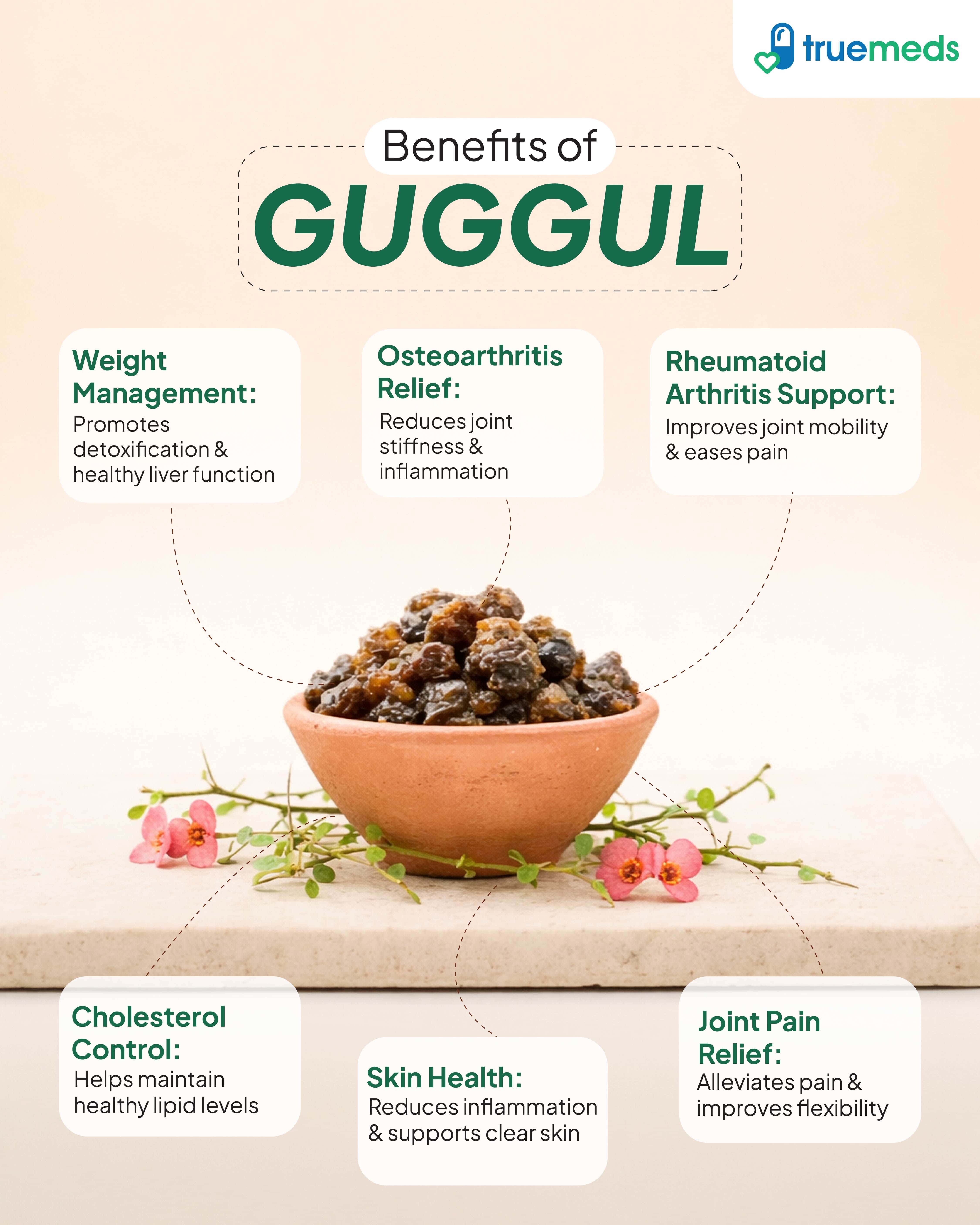
1. Traditionally used to support joint comfort
Guggul is a classical joint herb in Ayurveda. Its anti-inflammatory activity has been studied in laboratory research and is traditionally associated with easing joint stiffness, swelling and discomfort, and supporting movement. It is used for general joint comfort and is not an established treatment for arthritis, which requires medical care.
2. Anti-inflammatory activity
The guggulsterones in the resin show anti-inflammatory activity in laboratory studies. This action may contribute to guggul’s long traditional use in joint and skin complaints, although human evidence is still limited.
3. Traditionally used in skin care
Guggul has traditionally been used, often as a paste, for acne and minor skin complaints. Its anti-inflammatory and antimicrobial activity has been studied in preclinical research, though it is best used as part of a wider routine.
4. Traditionally used to support metabolism
As a lekhana (scraping) herb, guggul is traditionally used to support metabolism and healthy weight, alongside diet and activity. Evidence from human studies is limited and mixed, and it is not a stand-alone weight-loss treatment.
5. Studied for its effect on cholesterol
Guggul’s guggulsterones have been studied for their effect on blood fats. Results are mixed: some Indian studies reported benefit, but a well-conducted Western trial found no benefit and a slight rise in LDL, with skin rash reported in some people (Szapary et al., 2003). It should not replace prescribed cholesterol treatment.
Note: These are traditional and studied uses, not proven cures. If you have a medical condition, consult your doctor or qualified Ayurvedic physician.
Common Uses of Guggul
While the benefits above explain how guggul is thought to help, the uses below show how it is traditionally used in practice.
1. As the base of classical formulations
Purified guggul is the base of many classical Ayurvedic medicines, such as Yogaraja Guggulu, Kaishora Guggulu and Triphala Guggulu, traditionally used for joint and metabolic concerns.
2. In joint-care preparations
It is used in tablets, capsules and medicated oils traditionally intended to support joint comfort.
3. In skin-care preparations
As a paste, purified guggul is traditionally applied to the skin for acne and minor skin complaints.
4. Within a metabolism routine
It is taken, under guidance, alongside diet and activity as part of a wider metabolic-support routine.
Precautions While Taking Guggul
Guggul is potent and may interact with some medicines, so the following precautions are important.
- Use only purified guggul: Only purified (shuddha) guggul should be taken internally. Raw resin may be more likely to cause stomach upset and skin reactions.
- Pregnancy and breastfeeding: Avoid guggul in pregnancy and while breastfeeding. Its safety during these periods has not been established, so medicinal use should be avoided unless specifically advised by a qualified healthcare professional.
- Thyroid conditions: Guggul may affect thyroid activity. If you have a thyroid disorder or take thyroid medicine, use it only under medical supervision, and do not use it to replace prescribed thyroid treatment.
- Bleeding and surgery: Guggul may affect blood clotting, although evidence in humans is limited. Use caution with blood thinners, and inform your doctor before any planned surgery.
- Allergy: Guggul can cause a skin rash or itching in some people. Stop it and seek advice if this happens.
- Existing conditions and medicines: If you have a liver condition, or take medicines for blood pressure, cholesterol, the thyroid or the heart, consult your doctor before using guggul regularly or in medicinal amounts.
How to use Guggul
Guggul comes in several forms, for internal and external use. Use only purified guggul, and follow the advice of your Ayurvedic physician.
Powder
Mix the powder with warm water or honey, and take it after food, in the amount advised by your physician. It is often combined with other herbs within a formulation.
Tablets and capsules
Take the tablets or capsules with water or milk after food, following the product label or your physician’s advice. These are a convenient way to take a consistent amount.
Medicated oil
For joint discomfort, warm a little guggul oil and massage it gently into the affected area. It is for external use only.
Paste (lepa)
Mix the powder with water or rose water to form a paste, apply it to the affected skin, leave it for 20 to 30 minutes, then rinse off with lukewarm water.
Decoction
Where a physician advises a decoction, the resin is boiled in water, strained and taken warm.
Herbs Traditionally Used With Guggul
Guggul is rarely used alone; it is combined with other herbs in classical formulations. Some common pairings are below.
Herb | Traditional reason for pairing |
Triphala | Combined in Triphala Guggulu; traditionally used together to support joint comfort and digestive health. |
Trikatu (pepper, long pepper, ginger) | Trikatu is traditionally added to support digestion and improve the uptake of the formulation. |
Guduchi (Tinospora cordifolia) | Combined in Kaishora Guggulu; traditionally used together for joint and skin complaints. |
Ashwagandha | Ashwagandha is traditionally combined in some joint formulations to support strength and recovery. |
Recommended Dosage of Guggul
Guggul is potent and is usually taken within a prescribed formulation, so the right amount depends on the product and the person. Follow your Ayurvedic physician’s advice.
Adults
Commonly, the purified resin is used in small amounts, or one to two tablets of a standardised guggulu formulation, taken after food, as advised by your physician.
Children and older adults
Use only on the advice of an Ayurvedic physician, who will determine a suitable amount based on individual needs.
Pregnancy and breastfeeding
Do not use guggul during pregnancy or breastfeeding.
Note: This dosage information is general. Always consult a qualified Ayurvedic practitioner or doctor before starting guggul, especially if you have a medical condition or take other medicines.
Side Effects of Guggul
Guggul products can cause adverse effects, and tolerability varies with the extract, dose and formulation.
1. Stomach upset
It may cause nausea, loose motions or stomach discomfort, especially in higher doses or if the resin is not purified.
2. Skin rash (hypersensitivity)
Some people develop an itchy skin rash. In a clinical trial, this hypersensitivity rash was one of the more notable effects (Szapary et al., 2003). Stop guggul and consult a doctor if a rash appears.
3. Headache and other effects
Headache and, less commonly, hiccups have been reported.
4. Effects on the thyroid
Because guggul may affect thyroid activity, it can be a problem for people with thyroid conditions. Those with a thyroid disorder should consult their doctor before using guggul.
Interaction of Guggul With Other Drugs
Guggul may interact with some medicines, although the strength of evidence varies between interactions. Tell your doctor about everything you take.
Heart and blood-pressure medicines (propranolol, diltiazem)
Guggul can reduce how much of these medicines the body absorbs, which may make them less effective (NTP, 2020). Guggul should therefore be used with caution with these medicines and only under medical advice.
Blood thinners and antiplatelet medicines
Guggul may affect blood clotting, but a clinically significant interaction has not been firmly established in humans. Because of the potential bleeding risk, consult your doctor before combining it with warfarin, aspirin or similar medicines.
Thyroid medicines
Guggul may affect thyroid activity and could interfere with thyroid treatment. Use it only under medical supervision, and do not use it to replace prescribed thyroid treatment.
Oestrogen-containing medicines and hormonal contraceptives
Guggulsterones have shown activity at oestrogen and other hormone receptors in laboratory studies, but it is not established whether this affects hormonal medicines or contraceptives in humans. Consult your doctor before combining them.
Medicines processed by the liver
Guggulsterones can affect drug-metabolising enzymes such as CYP3A4 in laboratory and animal studies, suggesting a potential to alter the levels of some medicines. A clinically significant interaction has not been established for most medicines, so caution is appropriate, particularly with medicines with a narrow safety margin.
Storage of Guggul
Store guggul in an airtight container in a cool, dry place, away from direct sunlight and moisture. Keep it out of the reach of children, and check the pack for the best-before date.
Key Takeaways
- Guggul is the purified resin of Commiphora wightii, used in Ayurveda mainly for traditional joint, skin-care and metabolic uses, and as the base of many classical guggulu formulations.
- It is best used within a prescribed formulation, under the guidance of an Ayurvedic physician.
- Evidence for a cholesterol-lowering effect is mixed, and a well-conducted trial found no benefit and a slight rise in LDL, so it should not replace prescribed treatment.
- It may interact with several medicines, including heart, thyroid, blood-thinning and hormonal medicines.
- Avoid it in pregnancy and breastfeeding, use only purified guggul, and inform your doctor before planned surgery.
FAQs
What is guggul?
What forms does guggul come in?
Does guggul lower cholesterol?
Can guggul help with weight management?
Can guggul be used for thyroid problems?
Is guggul safe in pregnancy?
Can I take guggul with my regular medicines?
Does guggul cause side effects?
References
- Sarup, P., Bala, S., & Kamboj, S. (2015). Pharmacology and phytochemistry of oleo-gum resin of Commiphora wightii (Guggulu). Scientifica, 2015, Article 138039. https://doi.org/10.1155/2015/138039
- Szapary, P. O., Wolfe, M. L., Bloedon, L. T., Cucchiara, A. J., DerMarderosian, A. H., Cirigliano, M. D., & Rader, D. J. (2003). Guggulipid for the treatment of hypercholesterolemia: A randomized controlled trial. JAMA, 290(6), 765–772. https://doi.org/10.1001/jama.290.6.765
- National Toxicology Program. (2020). NTP technical report on the toxicity studies of a gum guggul extract formulation administered by gavage to Sprague Dawley (Hsd:Sprague Dawley® SD®) rats and B6C3F1/N mice: Toxicity report 99. National Toxicology Program. https://www.ncbi.nlm.nih.gov/books/NBK561197/


Explore other categories
Latest health articles





Top Health Essentials
Top-selling ayurvedic products












Disclaimer
Top-Selling Medicines:
...View more
Top-OTC medicines:
...View more
Top-selling healthcare devices:
...View more
Company
About UsHealth ArticleHealth StoriesHealth LibraryDiseases & Health ConditionsAyurvedaUnderstanding Generic MedicinesAll MedicinesAll BrandsNeed HelpFAQSecuritySavings CalculatorAdvertise with UsSubscribe
Registered Office Address
Grievance Officer
Download Truemeds


Contact Us
Our customer representative team is available 7 days a week from 9 am - 9 pm.
v4.28.13

2026 - Truemeds | All rights reserved. Our content is for informational purposes only. See additional information.

Our Payment Partners




