

- Medicines
- Personal Care
- Skin Cream
- Sunscreen
- Face Wash
- Skin and Body Soap
- Acne Care
- Body Lotions
- Moisturising Lotion
- Moisturising Cream
- Mosquito Repellent
- Moisturising Gel
- Body Wash
- Hair Oils
- Hair Shampoo
- Hair Conditioners
- Hair Supplements
- Hair Colour
- Hair Serum
- Hair Mask
- Hair Solutions
- Baby Diapers and Wipes
- Baby Lotion and Moisturising Cream
- Baby Bath Essentials
- Baby Skin Care
- Baby and Infant Food
- Baby Healthcare
- Women Multivitamins
- Ovulation Test Kit and Women Intimate Care
- Sanitary Pads
- Nutritional Drinks
- Condoms
- Lubricants
- Massage Gels
- Personal Body Massagers
- Men Performance Booster
- Sexual Health Supplements
- Massage Oils
- Ayurveda
- Tooth Paste
- Mouth Ulcer Gel
- Mouthwash
- Toothache and Gum Pain
- Tooth Brush
- Gargle Solution
- Orthopaedic Supports
- Adult Diapers
- Footwear
- Mobility and Support Accessories
- Urinary Support and Care
- Health Conditions
- Bone and Joint Care
- Digestive Care
- Eye Care
- Pain Relief
- Smoking Cessation
- Liver Care
- Stomach Care
- Cold and Cough
- Heart Care
- Kidney Care
- Piles, Fissures & Fistula
- Respiratory Care
- Mental Wellness
- Derma Care
- Pre and Probiotics
- Acidity
- Gas
- Constipation
- Loose Motion/Diarrhoea
- Digestive Fibres
- Digestive Enzymes
- Eye Lubricant Drops
- Lens Solution
- Safety Eye Wear
- Eye Cream
- Eye Vitamins and Supplements
- Eye Drops
- Eye Ointment and Gel
- Nicotine Patch
- Nicotine Gum
- Nicotine Lozenges
- Cough Syrups
- Chest Rubs and Balms
- Nasal Spray
- Lozenges
- Inhalant Capsules
- Cold and Cough Tablets
- Vitamins & Supplements
- Diabetes Care
- Healthcare Devices
- Homeopathic Medicine
- Health Guide
Sadabahar: Traditional Uses, Potential Properties, and Safety
Last updated on : 12 Jan, 2026
Read time : 8 min
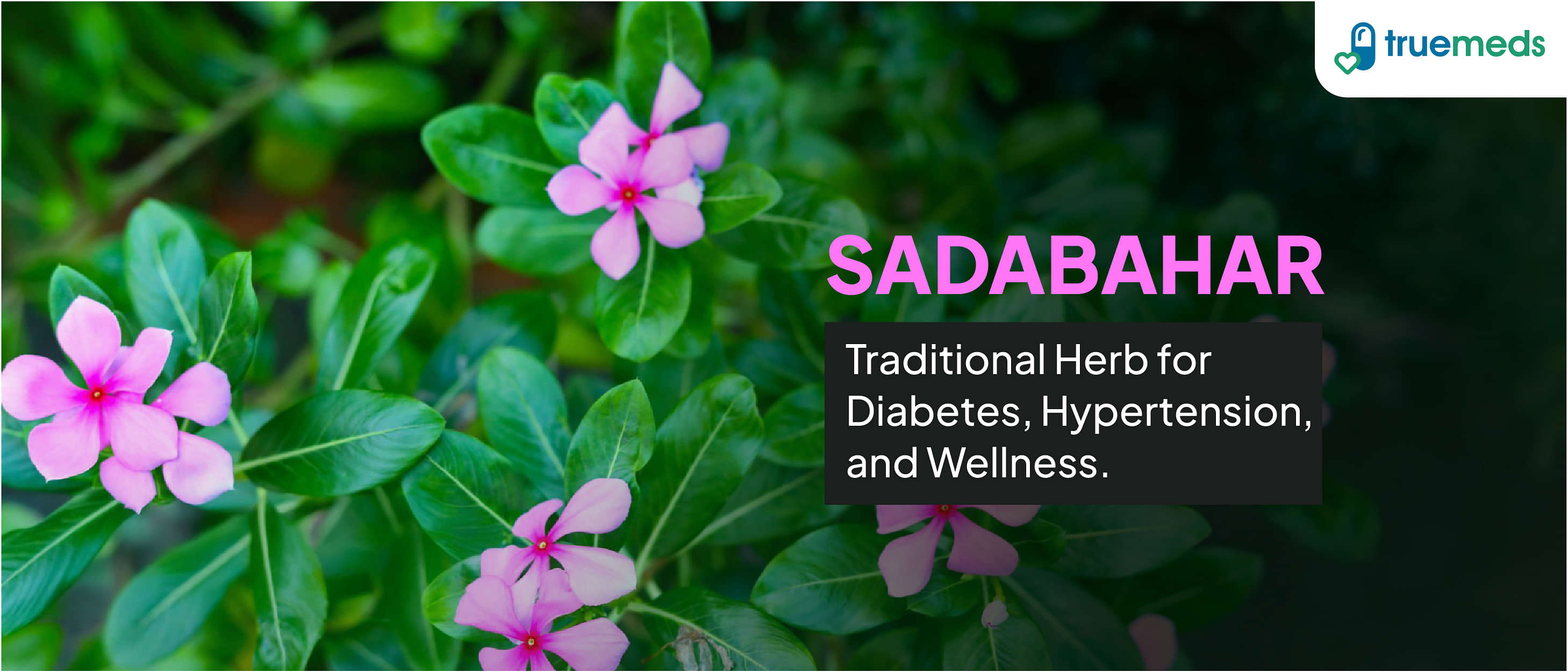
Sadabahar (Catharanthus roseus), widely known for its vibrant flowers and resilience as an ornamental plant, has been a component of traditional Indian folk practices for centuries. It is often called Periwinkle or Vinca rosea. While beautiful, this plant contains various compounds, including specific alkaloids, that have prompted considerable research into its potential pharmacological properties [1], [2]. Historically, various parts of the plant have been used in folk medicine to support metabolic balance and address certain ailments. This article explores the traditional uses, scientifically researched properties, and crucial safety considerations for Sadabahar.
Traditional and General Uses of Sadabahar
Sadabahar is a versatile plant appreciated across several contexts:
- Traditional Folk Practices: In various folk traditions across India and the Caribbean, decoctions (teas) or infusions of Sadabahar leaves have been used historically for general wellness, particularly to support balanced blood sugar levels as a dietary aid [3], [4].
- Medicinal Research Interest: Sadabahar is a significant source of over 130 bioactive compounds, including indole alkaloids like vincristine and vinblastine. It is crucial to understand that while these two specific alkaloids are isolated and used as potent, life-saving chemotherapeutic drugs in modern medicine, their presence in the whole plant is in trace amounts and should not be equated with their pharmaceutical action [1], [5]. Research on whole-plant extracts focuses on other properties, such as its antioxidant potential [6].
- Agricultural and Horticultural Uses: Sadabahar is primarily known as a popular ornamental plant due to its aesthetic value, vibrant, year-round flowers, and ability to thrive as ground cover, which can help prevent soil erosion.
- Cosmetic Uses (Traditional): Extracts from Sadabahar are sometimes incorporated into traditional or herbal cosmetic formulations. Its traditional use is often cited for its potential astringent and mild anti-inflammatory properties, suggesting a role in general skin care [1].
Potential Health Properties of Sadabahar
Scientific investigation into Sadabahar extracts supports some of its traditional applications and suggests additional properties. It is essential to note that most of these findings are from in vitro (test tube) or animal studies, and human clinical trials are limited or inconclusive for most benefits.
1. Support for Healthy Blood Sugar Levels
Traditional use for supporting metabolic balance is the most widely studied potential property.
- Mechanism: Studies indicate that extracts from Catharanthus roseus may possess hypoglycemic properties by potentially improving insulin secretion or enhancing peripheral glucose uptake in animal models [7]
- Granularity: A study in streptozotocin-induced diabetic rats showed that a leaf extract significantly reduced blood glucose levels after a 21-day period, supporting its traditional use [7].
- Crucial Note: The effects observed in laboratory animals do not automatically translate to humans. It is a dietary supplement, not a replacement for prescribed antidiabetic medications.
2. Antioxidant Potential
Sadabahar is recognized as rich in various phytochemicals, including phenolic compounds and flavonoids, which act as antioxidants.
- Mechanism: These compounds help neutralize harmful free radicals in the body, which can contribute to oxidative stress and cellular damage [6], [8].
- Benefit: By supporting the body’s natural antioxidant defense system, it may indirectly contribute to overall cellular health and healthy aging processes.
3. Support for Cardiovascular Markers (Traditional Use)
Traditionally, Sadabahar has been associated with effects on blood pressure, though specific mechanisms are under ongoing study.
- Traditional Belief: It is traditionally believed to possess mild antihypertensive properties and is used in folk remedies to support stable blood pressure levels [4].
- Caution: Any use for high blood pressure must be supervised by a healthcare professional, as the effect can be unpredictable and interact with medication.
Traditional Methods for Use
In traditional folk practices, Sadabahar is used in simple preparations. I strongly advise consulting an Ayurvedic physician or qualified healthcare provider before initiating any of these practices to determine the correct, safe, and personalized dosage and form.
- Leaf Decoction (Tea): Boil 3-4 freshly washed Sadabahar leaves in about 250 ml of water until the volume reduces slightly. Strain and allow to cool. This is the most common traditional preparation.
- Fresh Leaf Chewing (Traditional): Some traditions involve chewing 1-2 fresh, washed Sadabahar leaves once a day.
- Root Powder: The roots are sometimes dried and powdered. A very small pinch (e.g., 50-100 mg) is traditionally consumed with lukewarm water. The alkaloid concentration may be higher in the roots, necessitating extreme caution.
Dosage and Duration: There is no standardized safe human dosage established through modern clinical trials. Traditional use generally dictates small, infrequent amounts. Long-term, high-dose consumption is highly discouraged due to the risk of toxicity.
Side Effects, Safety, and Drug Interactions
Sadabahar is a potent medicinal plant containing numerous alkaloids. While beneficial in small, traditional doses, excessive or prolonged consumption can lead to severe adverse effects. Sadabahar is NOT a mild herb.
1. Risk of Hypotension (Low Blood Pressure)
- Severity: Due to its potential hypotensive (blood pressure-lowering) effects, overconsumption can lead to dangerously low blood pressure (hypotension), causing dizziness, fainting, or shock, especially in sensitive individuals.
- Interaction: This risk is significantly increased for individuals already taking antihypertensive medications (for high blood pressure).
2. Gastrointestinal and Liver Toxicity
- Severity: Overconsumption may lead to common gastrointestinal issues such as nausea, vomiting, and diarrhea.
- Crucial Risk: Due to the presence of potent alkaloids, excessive use of the whole plant or its extracts has been associated with potential hepatotoxicity (liver damage) in documented cases and studies, sometimes presenting as elevated liver enzymes [9], [10].
3. Drug Interactions
Sadabahar may interact with several categories of pharmaceutical drugs:
- Antidiabetic Drugs: The potential hypoglycemic effect can dangerously amplify the effect of prescribed diabetes medication, leading to severe hypoglycemia (low blood sugar) [7].
- Antihypertensive Drugs: As noted above, the risk of severe hypotension is high.
- Medications Metabolized by the Liver (Cytochrome P450 enzymes): Some components of Sadabahar may interfere with liver enzymes that metabolize a wide range of common medications, potentially leading to increased or decreased drug efficacy and toxicity [11].
4. Allergic Reactions
Like any plant material, Sadabahar can cause allergic reactions in susceptible individuals, presenting as itching, rash, swelling, or, rarely, anaphylaxis.
NEVER use Sadabahar during pregnancy or breastfeeding.
Conclusion:
Sadabahar is a historically significant plant with promising traditional uses and researched properties, particularly in supporting blood sugar regulation and offering antioxidant potential. However, its status as a potent alkaloid-containing plant means it must be used with extreme caution and moderation.
Before incorporating Sadabahar into your regimen, whether as a tea, powder, or supplement, it is mandatory to consult a certified Ayurvedic physician or your primary care provider. This consultation is essential to determine the correct, safe dosage, rule out critical drug interactions, and ensure it is appropriate for your specific health condition. Responsible use requires prioritizing safety over purported benefits.
Frequently Asked Questions (FAQs)
Q. Can we eat Sadabahar leaves daily?
A. While traditional practices include daily consumption, it is strongly advised not to consume Sadabahar daily without the explicit guidance and monitoring of a qualified healthcare professional due to the potential for cumulative toxicity and liver risk from its potent alkaloids. Moderation and professional supervision are key.
Q. What are the 3 main potential properties of Periwinkle?
A. Based on research, the three main potential properties include: support for healthy blood sugar levels (hypoglycemic effects in studies), antioxidant activity, and traditional use for cardiovascular support (antihypertensive effects).
Q. What are the severe side effects of Sadabahar?
A. Severe side effects from overconsumption or misuse include dangerously low blood pressure (hypotension), acute gastrointestinal distress (nausea/vomiting), and potential liver damage (hepatotoxicity). It is NOT safe to assume mildness.
References
[1] Ali, S., Farooqui, N., Ahmad, S., Salman, M., & Mandal, S. (2021). Catharanthus roseus (Sadabahar): A brief study on medicinal plant having different pharmacological activities. Plant Archives, 21(2), 972–980. https://doi.org/10.51470/PLANTARCHIVES.2021.v21.no2.085
[2] Hameed, A., Srivastav, Y., & Chauhan, A. S. (2024). Catharanthus Roseus (Vinca Rosea), taxonomy, phytochemicals and pharmacological (Anti-Cancer) properties: A comprehensive overview. International Journal of Pharmaceutical Sciences. https://doi.org/10.5281/zenodo.13894530
[3] Bisla, G., Choudhary, S., & Chaudhary, V. (2014). Evaluation of the nutritive and organoleptic values of food products developed by incorporated Catharanthus roseus (Sadabahar) fresh leaves explore their hypoglycemic potential. The1 Scientific World Journal, 2014, 304120. https://doi.org/10.1155/2014/304120
[4] Radali, D., & Alka, G. (2018). Periwinkle (Catharanthus roseus) leaves and lemongrass (Cymbopogon citratus): An analysis of their nutritional composition, anti-nutritional factors and antioxidant content. International Journal of Current Microbiology and Applied Sciences, 7(06), 2130–2135. https://doi.org/10.20546/ijcmas.2018.706.253
[5] Newman, D. J., & Cragg, G. M. (2016). Natural products as sources of new drugs from 1981 to 2014. Journal of Natural Products, 79(3), 629–661. https://doi.org/10.1021/acs.jnatprod.5b01055
[6] Priyadarshini, L., Rout, A. R., & Choudhury, S. (2024). Study on the antioxidant potential of Catharanthus species. Cogent Food & Agriculture, 10(1). https://doi.org/10.1080/23311932.2024.2328429
[7] Singh, S., Varma, P., & Balwani, S. (2015). Antidiabetic activity of Catharanthus roseus (Linn.) G. Don in streptozotocin-induced diabetic rats. Journal of Applied Pharmaceutical Science, 5(10), 025–031. https://doi.org/10.7324/JAPS.2015.501005
[8] Ask-Ayurveda. (2025). Catharanthus roseus (Sada Bahar) – Ayurvedic uses, benefits & botanical overview. https://ask-ayurveda.com/wiki/article/3963-catharanthus-roseus–sada-bahar
[9] Tiong, K. F., & Tan, G. B. (2020). Liver toxicity associated with herbal preparations: A case series of hepatotoxicity due to Catharanthus roseus. Journal of Gastrointestinal & Liver Diseases, 29(4), 543–548. https://doi.org/10.15403/jgld-473
[10] Lokesh, K., Pradeep, S., Shivakumar, H., & Pradeepa, S. (2019). Hepatotoxicity of Catharanthus roseus extracts in rats. Journal of Clinical and Diagnostic Research, 13(7), FF01–FF04. https://doi.org/10.7860/JCDR/2019/39322.13110
[11] Zhou, S., Koh, H. L., Gao, Y., & Roufogalis, B. D. (2004). In vitro and in vivo studies of Catharanthus roseus on liver microsomal cytochrome P450 enzymes. Life Sciences, 75(1), 47–60. https://doi.org/10.1016/j.lfs.2003.11.002













Disclaimer
Our healthcare experts have carefully reviewed and compiled the information presented here to ensure accuracy and trustworthiness. It is important to note that this information serves as a general overview of the topic and is for informational purposes only. It is not intended to diagnose, prevent, or cure any health problem. This page does not establish a doctor-patient relationship, nor does it replace the advice or consultation of a registered medical practitioner. We recommend seeking guidance from your registered medical practitioner for any questions or concerns regarding your medical condition.
Recent Articles






Company
About UsHealth ArticleHealth StoriesHealth LibraryDiseases & Health ConditionsAyurvedaUnderstanding Generic MedicinesAll MedicinesAll BrandsNeed HelpFAQSecuritySavings CalculatorSubscribe
Registered Office Address
Grievance Officer
Download Truemeds


Contact Us
Our customer representative team is available 7 days a week from 9 am - 9 pm.
v4.15.1

2026 - Truemeds | All rights reserved. Our content is for informational purposes only. See additional information.

Our Payment Partners




