

- Medicines
- Personal Care
- Skin Cream
- Sunscreen
- Face Wash
- Skin and Body Soap
- Acne Care
- Body Lotions
- Moisturising Lotion
- Moisturising Cream
- Mosquito Repellent
- Moisturising Gel
- Body Wash
- Hair Oils
- Hair Shampoo
- Hair Conditioners
- Hair Supplements
- Hair Colour
- Hair Serum
- Hair Mask
- Hair Solutions
- Baby Diapers and Wipes
- Baby Lotion and Moisturising Cream
- Baby Bath Essentials
- Baby Skin Care
- Baby and Infant Food
- Baby Healthcare
- Women Multivitamins
- Ovulation Test Kit and Women Intimate Care
- Sanitary Pads
- Nutritional Drinks
- Condoms
- Lubricants
- Massage Gels
- Personal Body Massagers
- Men Performance Booster
- Sexual Health Supplements
- Massage Oils
- Ayurveda
- Tooth Paste
- Mouth Ulcer Gel
- Mouthwash
- Toothache and Gum Pain
- Tooth Brush
- Gargle Solution
- Orthopaedic Supports
- Adult Diapers
- Footwear
- Mobility and Support Accessories
- Urinary Support and Care
- Health Conditions
- Bone and Joint Care
- Digestive Care
- Eye Care
- Pain Relief
- Smoking Cessation
- Liver Care
- Stomach Care
- Cold and Cough
- Heart Care
- Kidney Care
- Piles, Fissures & Fistula
- Respiratory Care
- Mental Wellness
- Derma Care
- Pre and Probiotics
- Acidity
- Gas
- Constipation
- Loose Motion/Diarrhoea
- Digestive Fibres
- Digestive Enzymes
- Eye Lubricant Drops
- Lens Solution
- Safety Eye Wear
- Eye Cream
- Eye Vitamins and Supplements
- Eye Drops
- Eye Ointment and Gel
- Nicotine Patch
- Nicotine Gum
- Nicotine Lozenges
- Cough Syrups
- Chest Rubs and Balms
- Nasal Spray
- Lozenges
- Inhalant Capsules
- Cold and Cough Tablets
- Vitamins & Supplements
- Diabetes Care
- Healthcare Devices
- Homeopathic Medicine
- Health Guide
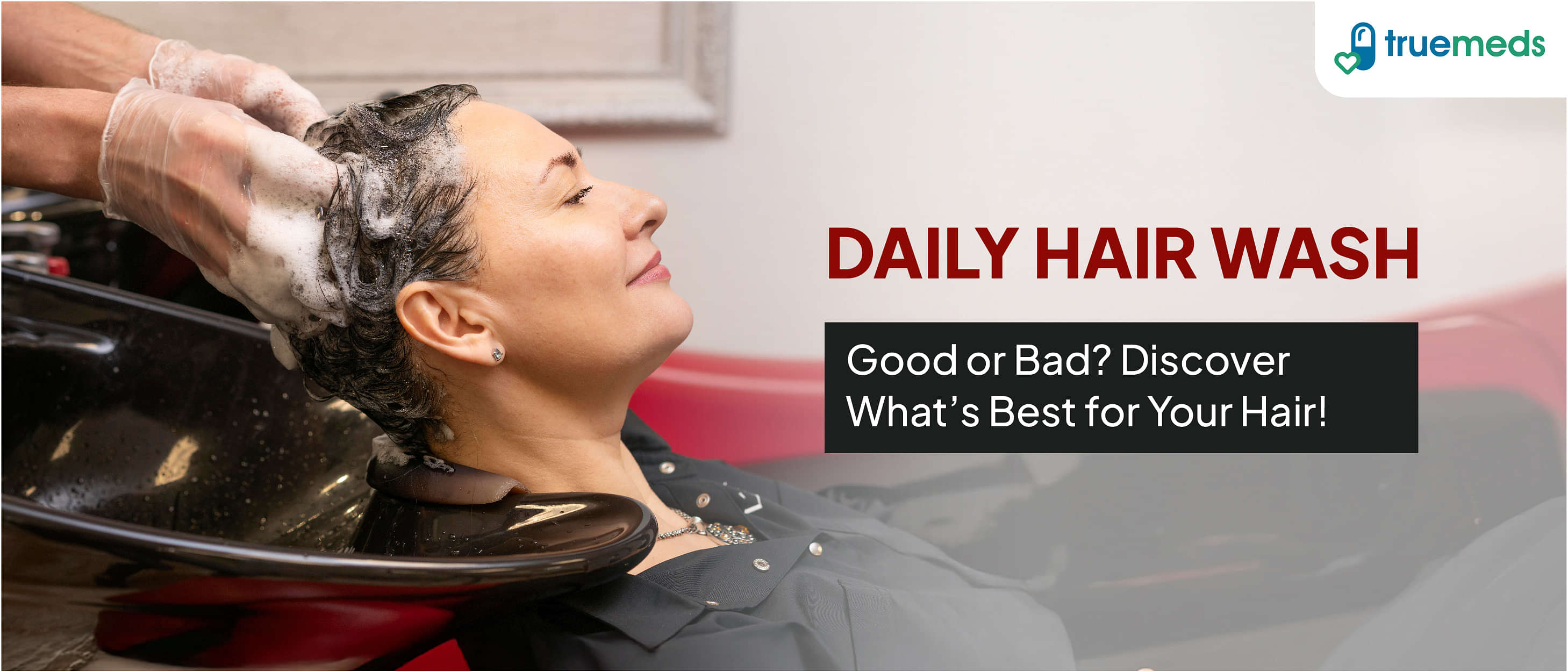
Is Daily Hair Washing Beneficial? What Your Hair Really Needs?
Last updated on :02 Mar, 2026
Read time :10 min
“Can I wash my hair daily?” “Is daily hair washing good or bad?” These are common questions that many people ask. For some, washing hair is a daily habit. But is it necessary, or even healthy, to shampoo every day? The ideal washing frequency varies greatly based on individual factors. Regular washing helps maintain a balanced scalp environment by removing excess sebum, environmental pollutants, and product residue, which can otherwise contribute to a feeling of congestion or discomfort.
In this blog, we will explore the factors that determine your optimal hair-washing routine and offer practical tips to help you care for your scalp and hair based on your specific hair type and lifestyle.
To Determine the Ideal Frequency of Your Hair Wash, Consider These Factors:
Finding the right hair-washing frequency isn’t a one-size-fits-all approach. A healthy routine requires a personalised approach that takes several key factors into account.
Understanding Hair and Scalp Physiology
Your hair type and scalp condition are the most significant factors in your hair-wash routine. Understanding your scalp’s natural oil production is key to determining a frequency that maintains cleanliness without causing unnecessary dryness or irritation.
- Hair Type & Sebum Production:
- Oily Hair: Individuals with high sebum production may benefit from daily washing to clear excess oils and prevent the accumulation of dead skin cells and environmental debris [1].
- Dry or Damaged Hair: For hair that lacks natural moisture or is chemically treated, washing less frequently (typically every 3-5 days) helps preserve natural oils and the lipid barrier, thereby retaining moisture and shine [6].
- Normal Hair: Those with a balanced scalp and moderate oil production may find that washing every 2-3 days keeps hair fresh.
- Hair Texture:
- Straight Hair: Because oil travels easily down the smooth hair shaft, this texture tends to get oily faster, often requiring more frequent washes.
- Wavy Hair: Wavy hair often lasts longer between washes, typically 2-4 days.
- Curly/Coily Hair: Because of the hair shaft’s shape, natural oils take longer to travel from the scalp to the ends. Washing every 5–7 days helps preserve these protective lipids, which are essential for maintaining curl definition and reducing frizz.
- Lifestyle and Environment:
- Physical Activity: Regular exercise leads to salt and moisture buildup from sweat. Rinsing or washing after intense workouts helps maintain scalp comfort and prevents the hair from feeling weighed down.
- Environmental Factors: High humidity, pollution, or exposure to dust and dirt may require a more frequent cleansing schedule.
The Potential Benefits of Daily Hair Washing
Daily hair washing can offer several benefits, particularly for specific hair types and lifestyles:
- Controls Excess Oiliness: For those with hyperactive sebaceous glands, washing daily helps remove excess sebum, preventing an oily appearance and reducing microbial accumulation associated with oil buildup, which is essential for minimising the occurrence of flakes.
- Promotes Scalp Hygiene: Daily cleansing can help keep the scalp surface clear of dead skin cells and product residue, promoting a refreshed feeling and supporting overall scalp clarity.
- Removes Environmental Contaminants: Daily cleansing effectively removes pollution, smoke, and fine particulate matter that can otherwise weigh hair down and dull its natural shine. Keeping the scalp clean helps remove environmental stressors regularly.
- Enhances Appearance (Especially for Fine Hair): For those with very fine strands, daily washing prevents oils from weighing the hair down, helping to maximise natural volume and bounce.
The Potential Drawbacks of Daily Hair Washing
While there are benefits, daily hair washing may not be suitable for everyone and comes with certain risks:
- Strips Natural Protective Oils: Frequent washing, particularly with harsh surfactants, can remove beneficial natural oils (sebum), leading to dryness, dullness, and potential damage, especially for those with naturally dry, curly, or colour-treated hair.
- Increases Frizz and Dryness: For textured or curly hair, daily washing can agitate the cuticle layer, making it frizzier and disrupting its natural curl patterns.
- Potential for Scalp Barrier Compromise: Excessive washing, especially with harsh surfactants, can disrupt the scalp’s moisture barrier, leading to a feeling of tightness or sensitivity for some individuals.
- Color Fading: Daily washing accelerates the stripping of hair dye, causing colour-treated hair to fade much faster.
What Your Hair Really Needs: Expert Recommendations
The ideal hair-washing frequency largely depends on your specific needs. Dermatologists typically advise washing every 2-3 days for the average person to maintain a healthy scalp and prevent excessive dryness [6].
- Assess Your Hair Type: If your hair feels greasy within 24 hours of washing, you are likely an oily type who can wash more frequently (daily or every other day). If it stays fresh for 3+ days, a less frequent schedule is appropriate.
- Listen to Your Scalp: Pay attention to signs of irritation, itchiness, or excessive oiliness. Scalp discomfort or visible buildup is a stronger indicator for a wash than a set schedule.
- Choose Gentle Products: If your lifestyle requires daily cleansing, look for formulas labelled ‘pH-balanced’ or ‘Sulfate-Free.’ These are designed to cleanse the hair surface without excessively agitating the cuticle layer.
Expert Opinions and Clarified Claims
Experts in the field of hair and skin care guide the ideal washing frequency based on scientific understanding:
- Dermatologists (Skin Experts): Many skin specialists recommend washing every 2-3 days to allow natural oils to condition the hair while maintaining overall scalp health, as supported by research on scalp conditions and wash frequency [1].
- Hairstylists (Hair Structure Experts): Advise adjusting washing frequency based on hair type, texture, and lifestyle. Their consensus is that frequent washing is appropriate for oil management, but caution is needed to preserve hair integrity.
| Common Misconception | Fact-Based Clarification |
| Myth: “Washing hair daily is always better for growth.” | Fact: There is limited high-quality evidence that daily washing directly stimulates significant hair growth. While scalp massage improves circulation, genetic and nutritional factors are the primary determinants of growth rate. |
| Myth: “The more you wash, the more oil your scalp produces.” | Fact: While over-washing can temporarily disrupt the scalp barrier, leading to irritation, oil production is primarily governed by genetics and hormones, not just washing frequency. |
| Myth: “You should use a deep-cleansing shampoo every time.” | Fact: Regular use of harsh, deep-cleansing or clarifying shampoos can be overly drying. It is better to use a gentle shampoo for daily/frequent washes and a clarifying shampoo only once or twice a month. |
Practical Tips for Long-Term Hair and Scalp Health
Here are some dermatologist-approved tips to maintain healthy hair, regardless of your washing frequency:
- Mind the Temperature: Always use lukewarm or cool water for rinsing. Hot water can strip beneficial oils, damage the hair shaft, and potentially increase frizz.
- Conditioner Application: Apply conditioner only from the mid-lengths to the ends of your hair. Avoid applying it directly to the scalp to prevent follicle clogging and unnecessary greasiness [5].
- Heat Protection is Mandatory: Limit the use of hot styling tools. If they are indispensable, always use a silicone-free, broad-spectrum heat-protectant product beforehand.
- Detangle Carefully: Brush your hair gently when wet using a wide-tooth comb, starting from the ends and working up. Avoid aggressive brushing, as it can cause breakage.
- Protect from the Elements: Shield your hair from harsh sun and UV rays by wearing a hat or using a UV-protectant hair spray.
- Nutrition: Nutrition plays a supportive role in hair health; for example, adequate protein intake provides the amino acids necessary for the production of keratin, the primary structural component of hair.
- Professional Trims: Regular trims (every 6-8 weeks) are essential to prevent split ends from travelling up the hair shaft, which preserves the overall health and look of the hair.
Conclusion
So, is it okay to wash your hair daily? The consensus among hair care experts is that the optimal washing frequency is highly individual and depends on your unique biological profile. Daily washing may be necessary for those with oily scalps or high activity levels to prevent the buildup of oil and environmental particles, which can otherwise cause scalp discomfort. However, others, particularly those with dry, curly, or coarse hair, should wash less frequently to maintain their hair’s natural moisture and structural integrity. By understanding your scalp’s specific needs and practising a balanced routine, you can customise a hair care regimen that promotes long-term health and vitality.
FAQs
Is it good to wash your hair every day?
The decision depends entirely on your scalp’s oil production. For an oily scalp, daily or every-other-day washing is fine, provided you use a gentle product. For a dry scalp, washing daily can strip necessary moisture, making the hair brittle.
Why does my hair feel better when I wash it every day?
Your hair may feel better with daily washing because it effectively removes sebum, sweat, and product residue. This removal results in a lighter, cleaner, and fresher appearance. However, if you notice increasing dryness or frizz, this routine may be counterproductive.
Is it okay to wet your hair every day?
Yes, wetting your hair daily is generally fine, especially if it helps with styling or managing curls. However, avoid using shampoo every time, as the repeated use of surfactants can deplete natural oils, leading to dryness and breakage over time.
Is it good to let your hair get greasy?
Allowing your hair to get slightly greasy allows natural oils to moisturise and protect the scalp and hair, promoting healthier hair. However, letting it become excessively greasy (for some, more than 3-4 days) can create an oily environment that promotes overgrowth of Malassezia yeast, which is associated with seborrheic dermatitis.
References
[1] Punyani, S., Tosti, A., Hordinsky, M., Yeomans, D., & Schwartz, J. (2021). The impact of shampoo wash frequency on scalp and hair conditions. Skin Appendage Disorders, 7(3), 183–193. https://doi.org/10.1159/000512786
[2] Hamel, A. F., Meyer, J. S., Henchey, E., Dettmer, A. M., Suomi, S. J., & Novak, M. A. (2011). Effects of shampoo and water washing on hair cortisol concentrations. Clinica Chimica Acta, 412(3-4), 382–385. https://doi.org/10.1016/j.cca.2010.10.019
[3] Kobayashi, M., Ito, K., Sugita, T., Murakami, Y., Yamashita, R., Matsunaka, H., & Nakamura, M. (2016). Physiological and microbiological verification of the benefit of hair washing in patients with skin conditions of the scalp. Journal of Cosmetic Dermatology, 15(4), e1–e8. https://doi.org/10.1111/jocd.12228
[4] Xiang, L., Sunesara, I., Rehm, K. E., & Marshall, G. D. Jr. (2017). Hair cortisol concentrations are associated with hair growth rate and washing frequency. Therapeutic Drug Monitoring, 39(2), 180–186. https://doi.org/10.1159/000455867
[5] Punyani, S., Tosti, A., Hordinsky, M., Yeomans, D., & Schwartz, J. (2021). The impact of shampoo wash frequency on scalp and hair conditions. Skin appendage disorders, 7(3), 183-193. https://karger.com/sad/article/7/3/183/295193
[6] Tips for healthy hair. (n.d.). American Academy of Dermatology Association (AAD). https://www.aad.org/public/everyday-care/hair-scalp-care/hair/healthy-hair-tips














Disclaimer
Our healthcare experts have carefully reviewed and compiled the information presented here to ensure accuracy and trustworthiness. It is important to note that this information serves as a general overview of the topic and is for informational purposes only. It is not intended to diagnose, prevent, or cure any health problem. This page does not establish a doctor-patient relationship, nor does it replace the advice or consultation of a registered medical practitioner. We recommend seeking guidance from your registered medical practitioner for any questions or concerns regarding your medical condition.
Recent Articles





Company
About UsHealth ArticleHealth StoriesHealth LibraryDiseases & Health ConditionsAyurvedaUnderstanding Generic MedicinesAll MedicinesAll BrandsNeed HelpFAQSecuritySavings CalculatorSubscribe
Registered Office Address
Grievance Officer
Download Truemeds


Contact Us
Our customer representative team is available 7 days a week from 9 am - 9 pm.
v4.21.3

2026 - Truemeds | All rights reserved. Our content is for informational purposes only. See additional information.

Our Payment Partners




