

- Medicines
- Personal Care
- Skin Cream
- Sunscreen
- Face Wash
- Skin and Body Soap
- Acne Care
- Body Lotions
- Moisturising Lotion
- Moisturising Cream
- Mosquito Repellent
- Moisturising Gel
- Body Wash
- Hair Oils
- Hair Shampoo
- Hair Conditioners
- Hair Supplements
- Hair Colour
- Hair Serum
- Hair Mask
- Hair Solutions
- Baby Diapers and Wipes
- Baby Lotion and Moisturising Cream
- Baby Bath Essentials
- Baby Skin Care
- Baby and Infant Food
- Baby Healthcare
- Women Multivitamins
- Ovulation Test Kit and Women Intimate Care
- Sanitary Pads
- Nutritional Drinks
- Condoms
- Lubricants
- Massage Gels
- Personal Body Massagers
- Men Performance Booster
- Sexual Health Supplements
- Massage Oils
- Ayurveda
- Tooth Paste
- Mouth Ulcer Gel
- Mouthwash
- Toothache and Gum Pain
- Tooth Brush
- Gargle Solution
- Orthopaedic Supports
- Adult Diapers
- Footwear
- Mobility and Support Accessories
- Urinary Support and Care
- Health Conditions
- Bone and Joint Care
- Digestive Care
- Eye Care
- Pain Relief
- Smoking Cessation
- Liver Care
- Stomach Care
- Cold and Cough
- Heart Care
- Kidney Care
- Piles, Fissures & Fistula
- Respiratory Care
- Mental Wellness
- Derma Care
- Pre and Probiotics
- Acidity
- Gas
- Constipation
- Loose Motion/Diarrhoea
- Digestive Fibres
- Digestive Enzymes
- Eye Lubricant Drops
- Lens Solution
- Safety Eye Wear
- Eye Cream
- Eye Vitamins and Supplements
- Eye Drops
- Eye Ointment and Gel
- Nicotine Patch
- Nicotine Gum
- Nicotine Lozenges
- Cough Syrups
- Chest Rubs and Balms
- Nasal Spray
- Lozenges
- Inhalant Capsules
- Cold and Cough Tablets
- Vitamins & Supplements
- Diabetes Care
- Healthcare Devices
- Homeopathic Medicine
- Health Guide
Lady Finger
Lady Finger, also called Okra or Bhindi, is a green, edible pod vegetable rich in fibre, vitamin C and antioxidants. In Ayurveda, ladyfinger is traditionally included in meals to support digestion, although individual tolerance may vary.
 50
50Last updated on : 08 Sep, 2026
Read time : 10 mins
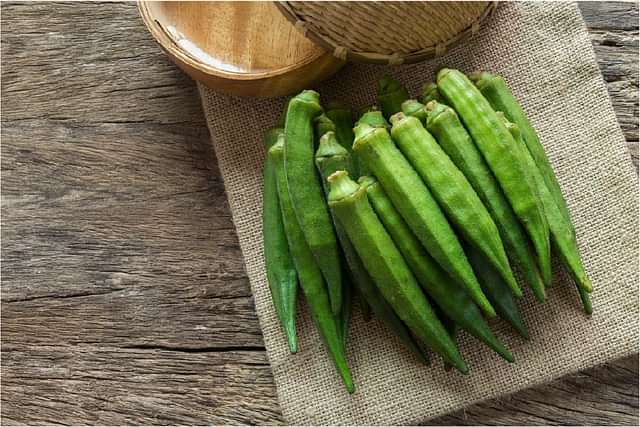
Lady Finger (Bhindi)
Lady Finger, known as Bhindi in Hindi and Okra in English, is the edible seed pod of a flowering plant from the Malvaceae family. Lady Finger is thought to have originated in tropical Africa, although its precise geographical origin remains debated. It is now widely cultivated across Asia, Africa, the Middle East, and the Americas.
In Ayurveda, Lady Finger is generally classified as sweet in taste (madhura rasa), cooling in potency (sheeta virya), with a sweet post-digestive effect (madhura vipaka). It is traditionally considered to pacify Pitta and Vata dosha, and is regarded as a light, easily digestible vegetable suitable for regular use in a balanced diet.
Lady Finger is low in calories and rich in dietary fibre, vitamin C, vitamin A, vitamin K, calcium and magnesium. Its natural mucilage (a gel-like soluble fibre) is one of its most distinctive features and is discussed further under Key Nutrients and Health Benefits below.
Key Facts
| Feature | Details |
| Botanical name | Abelmoschus esculentus
|
| Family | Malvaceae
|
| Also known as | Bhindi (Hindi), Okra (English), Gumbo (American English), Lady's Fingers (British English)
|
| Origin | Native to West Africa; now cultivated widely across Asia, Africa and the Americas |
| Part eaten | The tender, immature green seed pod
|
| Ayurvedic classification | Madhura rasa (sweet taste), sheeta virya (cooling potency), madhura vipaka (sweet post-digestive effect); traditionally considered to pacify Pitta and Vata dosha
|
| Key nutrients | Dietary fiber, vitamin C, vitamin A, vitamin K, folate, calcium and magnesium
|
| Common forms | Fresh or cooked pods, dried pod powder, and pods soaked overnight in water |
| Typical serving | Around 4 to 5 medium pods (roughly 100 g) as part of a meal, depending on individual dietary needs
|
| Best eaten | Fresh or cooked as part of a meal. Refrigerate cooked leftovers promptly and consume them within the recommended storage period
|
| Key safety note | People taking diabetes medication should monitor their blood sugar, as dietary changes may affect blood glucose control. Consult a doctor before making significant dietary changes. See Precautions below.
|
Alternative Name of Lady Finger
Lady Finger is known by several names across regions and languages. The main ones are set out below.
- English: Okra
- Hindi: Bhindi (used across India)
Lady Finger Nutrition Value
Lady Finger is full of all the nutrients required for a healthy life. Here are the nutritional values per 100 grams of raw Lady Finger (U.S. Department of Agriculture, Agricultural Research Service, n.d.):
| Nutrient | Amount |
| Calcium | 82 mg |
| Vitamin K | 31.3 µg |
| Fibre | 3.2 g |
| Vitamin A | 375 µg RAE |
| Carbohydrates | 7.5 g |
| Magnesium | 57 mg |
| Fat | 0.2 g |
| Vitamin C | 23 mg |
| Protein | 2.0 g |
| Folate (B9) | 60 µg |
Key Health Benefits of Lady Finger
Lady Finger's benefits come mainly from its fibre, mucilage and antioxidant content. Here is how these components are understood to support health.
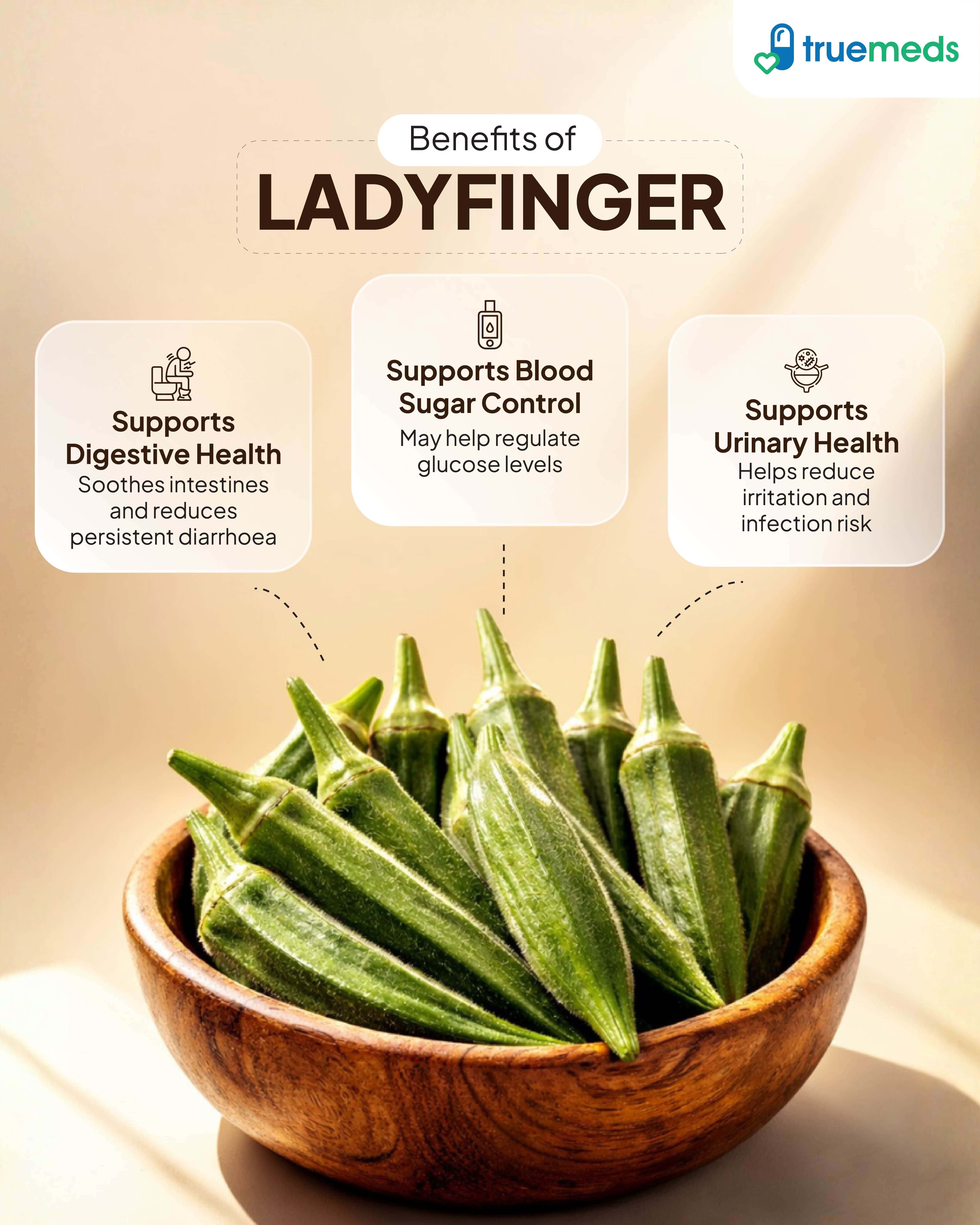
Supports Digestive Comfort
Lady Finger is not a treatment for dysentery or infectious diarrhoea, which require medical assessment, particularly when accompanied by dehydration, blood in the stool or fever (Elkhalifa et al., 2021).
May Help Support Blood Sugar Balance
Some laboratory and small human studies suggest Lady Finger's soluble fibre may slow carbohydrate absorption after meals (Elkhalifa et al., 2021). This is limited evidence in humans and does not establish a treatment effect, and Lady Finger is not a substitute for prescribed diabetes medication or monitoring.
Provides Antioxidant Nutrients
Lady Finger contains vitamin C and plant antioxidants such as flavonoids, which are associated with antioxidant activity and may help protect cells from oxidative stress (Elkhalifa et al., 2021).
Common Uses of Lady Finger
Beyond the kitchen, Lady Finger has a few traditional, non-medicinal uses worth knowing about.
As an Everyday Source of Dietary Fibre
Lady Finger is commonly included in daily meals as a low-calorie, fibre-rich vegetable, alongside other vegetables and fruit, to help meet daily fibre intake.
As a Traditional Home Preparation
In some households, pods are soaked in water overnight, and the water is consumed the next morning as a traditional practice. This is a customary use, not a clinically proven treatment, and should not replace prescribed medication for any condition.
Precautions While Taking Lady Finger
Lady Finger is generally well tolerated as part of a normal diet, but a few groups should take extra care.
Pregnancy and Breastfeeding
Lady Finger is generally considered safe in normal food amounts during pregnancy and breastfeeding, and provides folate, which supports normal foetal development. Eating large amounts may cause bloating or gas.
Diabetes
People taking diabetes medication should be aware that Lady Finger may affect blood glucose levels. Blood sugar should continue to be monitored as advised by the treating doctor, and Lady Finger should not be used to replace prescribed medication.
Kidney Disease or History of Kidney Stones
Lady Finger contains oxalates. People with kidney disease or a history of oxalate-containing kidney stones should discuss their intake with a doctor, particularly if they have been advised to follow a low-oxalate diet.
How to Use Lady Finger
Lady Finger can be used in a few different ways, from everyday cooking to traditional home preparations. Steps for each are set out below.
As a Vegetable in Daily Meals
- Wash the pods and trim both ends.
- Slice or chop into the desired shape.
- Cook with onions, tomatoes and spices, or add to curries, soups or stews.
- Alternatively, boil or steam the pods and serve as a side dish or in a salad.
As a Traditional Overnight Soak
- Take two to three pods and wash them well.
- Trim both ends and slit the pods lengthways.
- Place the pods in a glass of water and leave to soak overnight.
- The following morning, strain and drink the water on an empty stomach.
To Support Digestion
- Boil four to five pods in water until soft.
- Strain the pods and allow the water to cool.
- Drink once a day, or add lightly cooked pods to a meal.
In a Homemade Face Mask
- Grind a few raw pods to extract the juice.
- Apply to the face as a mask.
- Leave on for 15 to 20 minutes, then rinse with water.
This mask is traditionally used for its moisturising and soothing properties, and is not a treatment for any skin condition.
Foods and Spices Traditionally Used With Lady Finger
In everyday Ayurvedic cooking, Lady Finger is often paired with a few spices to support digestion.
| Spice / Food | Traditional Reason for Pairing |
| Ajwain (carom seeds) | Ajwain is commonly added during cooking to traditionally support digestion and reduce gas or bloating associated with Lady Finger. |
| Hing (asafoetida) | Hing is used in many Indian households when cooking Lady Finger, traditionally to help reduce bloating. |
| Dry mango powder (amchur) or lemon | Added during cooking in some regional cuisines, traditionally believed to reduce the perceived sliminess of the mucilage. |
Side Effects of Lady Finger
Lady Finger is well tolerated by most people, but a few effects are worth knowing about.
Bloating or Gas
Eating large amounts of Lady Finger can cause bloating, gas or mild stomach discomfort in some people, mainly due to its fibre content.
Allergic Reaction
A true allergy to Lady Finger is uncommon. Symptoms may include itching, rash or swelling. Anyone who notices these symptoms after eating it should stop eating it and seek medical advice.
Interaction of Lady Finger With Other Drugs
Lady Finger is a food, but it can still potentially interact with certain medicines, particularly when eaten in large amounts. Because Lady Finger may affect blood glucose levels, eating large amounts alongside insulin or other diabetes medication could increase the risk of low blood sugar. Anyone on diabetes treatment should monitor their blood sugar and consult their doctor before making significant dietary changes.
Storage of Lady Finger
Fresh Lady Finger pods should be stored unwashed in a paper or perforated bag in the refrigerator and used within two to three days for best quality. Dried Lady Finger powder should be kept in an airtight container, away from moisture and direct sunlight, and used within the period specified on the product label.
Key Takeaways
- Lady Finger is a nutrient-dense, low-calorie vegetable rich in fibre, vitamin C and antioxidants, and is traditionally valued in Ayurveda for supporting digestion.
- It is a good source of dietary fibre and may support regular bowel movements when eaten as part of a balanced diet.
- It provides useful amounts of vitamin C, vitamin A, vitamin K, calcium and magnesium.
- It can be eaten cooked, boiled or as traditional overnight-soaked water, according to preference.
- It is not a treatment for diabetes, urinary tract infection or dysentery, and people on diabetes medication or with kidney disease should consult their doctor before making significant changes to their diet.
FAQs
Does Lady Finger Cause Heart Disease?
Is Lady Finger Bad During Pregnancy?
Is Lady Finger Good for Diabetics?
Is Lady Finger Good for the Liver?
Is Lady Finger Good for Piles?
Is Lady Finger Good for Acid Reflux?
Is Lady Finger Good for Arthritis?
Is Lady Finger Good for Cholesterol?
Is Lady Finger Good for Bones?
References
- Elkhalifa, A. E. O., Alshammari, E., Adnan, M., Alcantara, J. C., Awadelkareem, A. M., Eltoum, N. E., Mehmood, K., Panda, B. P., & Ashraf, S. A. (2021). Okra (Abelmoschus Esculentus) as a Potential Dietary Medicine with Nutraceutical Importance for Sustainable Health Applications. Molecules, 26(3). https://doi.org/10.3390/molecules26030696
- FoodData Central. (n.d.). Fdc.nal.usda.gov. https://fdc.nal.usda.gov/fdc-app.html#/food-details/169260/nutrients
Explore other categories
Latest health articles




Top Health Essentials


Top-selling ayurvedic products












Disclaimer
Top-Selling Medicines:
...View more
Top-OTC medicines:
...View more
Top-selling healthcare devices:
...View more
Company
About UsHealth ArticleHealth StoriesHealth LibraryDiseases & Health ConditionsAyurvedaUnderstanding Generic MedicinesAll MedicinesAll BrandsNeed HelpFAQSecuritySavings CalculatorAdvertise with UsSubscribe
Registered Office Address
Grievance Officer
Download Truemeds


Contact Us
Our customer representative team is available 7 days a week from 9 am - 9 pm.
v4.28.13

2026 - Truemeds | All rights reserved. Our content is for informational purposes only. See additional information.

Our Payment Partners




