

- Medicines
- Personal Care
- Skin Cream
- Sunscreen
- Face Wash
- Skin and Body Soap
- Acne Care
- Body Lotions
- Moisturising Lotion
- Moisturising Cream
- Mosquito Repellent
- Moisturising Gel
- Body Wash
- Hair Oils
- Hair Shampoo
- Hair Conditioners
- Hair Supplements
- Hair Colour
- Hair Serum
- Hair Mask
- Hair Solutions
- Baby Diapers and Wipes
- Baby Lotion and Moisturising Cream
- Baby Bath Essentials
- Baby Skin Care
- Baby and Infant Food
- Baby Healthcare
- Women Multivitamins
- Ovulation Test Kit and Women Intimate Care
- Sanitary Pads
- Nutritional Drinks
- Condoms
- Lubricants
- Massage Gels
- Personal Body Massagers
- Men Performance Booster
- Sexual Health Supplements
- Massage Oils
- Ayurveda
- Tooth Paste
- Mouth Ulcer Gel
- Mouthwash
- Toothache and Gum Pain
- Tooth Brush
- Gargle Solution
- Orthopaedic Supports
- Adult Diapers
- Footwear
- Mobility and Support Accessories
- Urinary Support and Care
- Health Conditions
- Bone and Joint Care
- Digestive Care
- Eye Care
- Pain Relief
- Smoking Cessation
- Liver Care
- Stomach Care
- Cold and Cough
- Heart Care
- Kidney Care
- Piles, Fissures & Fistula
- Respiratory Care
- Mental Wellness
- Derma Care
- Pre and Probiotics
- Acidity
- Gas
- Constipation
- Loose Motion/Diarrhoea
- Digestive Fibres
- Digestive Enzymes
- Eye Lubricant Drops
- Lens Solution
- Safety Eye Wear
- Eye Cream
- Eye Vitamins and Supplements
- Eye Drops
- Eye Ointment and Gel
- Nicotine Patch
- Nicotine Gum
- Nicotine Lozenges
- Cough Syrups
- Chest Rubs and Balms
- Nasal Spray
- Lozenges
- Inhalant Capsules
- Cold and Cough Tablets
- Vitamins & Supplements
- Diabetes Care
- Healthcare Devices
- Homeopathic Medicine
- Health Guide
Kutajarishta
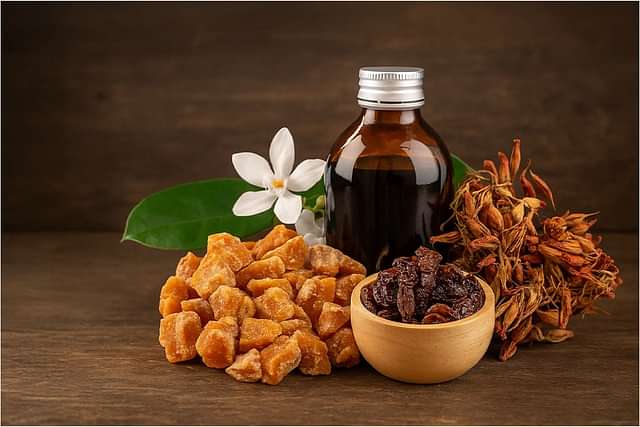
Kutajarishta is a classical Ayurvedic liquid formulation prepared mainly from Kutaja (Holarrhena antidysenterica). It is traditionally used to support digestion and is commonly taken for digestive discomfort associated with diarrhoea and dysentery. Kutajarishta contains naturally self-generated alcohol, formed during fermentation.
 50
Last updated on : 26 Oct, 2026
Read time : 11 mins
What is Kutajarishta?
Kutajarishta gets its name from its principal herb, Kutaja (Holarrhena antidysenterica), combined with the Ayurvedic Arishta method of preparation, a liquid extract that is allowed to ferment naturally. It is traditionally described for Atisara (diarrhoea) management, where it is prepared by fermenting a decoction of Kutaja bark along with supporting herbs such as Gmelina arborea (Shivanmool) and Woodfordia fruticosa (Dhataki flowers), which act as natural fermentation aids.
In Ayurveda, Kutajarishta is classified as a Kashaya rasa (astringent taste) and Ushna virya (hot potency) preparation, traditionally believed to primarily pacify aggravated Pitta and Kapha dosha. It is grouped among the Arishta and Asava class of fermented liquid medicines used chiefly for digestive and intestinal conditions.
Key Facts
| Feature | Details |
| Formulation name | Kutajarishta |
| Formulation type | Arishta (self-fermented liquid formulation) |
| Classical reference | Traditionally referenced in classical Ayurvedic texts on Atisara (diarrhoea) management.
|
| Composition | Kutaja (Holarrhena antidysenterica) bark, Indrajava (Holarrhena antidysenterica seed), Gmelina arborea (Shivanmool), Woodfordia fruticosa (Dhataki flowers, used as a fermentation aid), and other supporting herbs.
|
| Also known as | Kutajarishta Syrup |
| Dosha action | Traditionally believed to help balance aggravated Pitta and Kapha dosha
|
| Traditional uses | Diarrhoea (Atisaar), dysentery, sprue syndrome (Sangrahani), low digestive fire (Agnimandya)
|
| Common forms | Liquid (syrup)
|
| General dosage | 15 to 30 ml, diluted with an equal amount of lukewarm water, generally twice daily, or as directed by a physician |
| Best taken | After meals, with equal parts water |
| Key safety note | Contains naturally generated alcohol from fermentation. Use during pregnancy, in children, or by anyone advised to avoid alcohol should be discussed with a doctor. |
Alternative Names of Kutajarishta
Because regional pharmacies and local people often identify the medicine by the local name of its signature ingredient, knowing the regional names of the Kutaja plant helps when searching for this remedy across different Indian states:
- Sanskrit (Synonyms): Vatsaka, Girimallika, Kalinga, Indravriksha, Shakra
- Hindi: Kuda, Kudaiya, Kurchi, Kutaj
- English: Conessi tree, Conessi bark, Easter tree, Tellicherry bark
- Malayalam: Kodagapala, Kutukappaala
- Tamil: Veppalai, Kirimllikai
- Telugu: Kodisepala, Kodaga, Girimallika
- Kannada: Korachi, Kodasige, Kodagasana
- Marathi: Kuda
- Gujarati: Kudo, Kadavo
- Bengali: Kurchi, Karachi, Kurachi
- Oriya / Punjabi: Kurwa, Kewar, Kenara
- Assamese: Dudkhuri, Dhulkhari
Chemical Constituents of Kutajarishta
Kutajarishta contains various naturally occurring compounds derived from its herbal ingredients, particularly Kutaja (Holarrhena antidysenterica). Important phytochemicals reported in Kutaja include conessine, holarrhenine, kurchicine, kurchine, and holadysine. The exact chemical composition of Kutajarishta may vary depending on the ingredients, preparation method, and fermentation process.
Medicinal Properties of Kutajarishta
Kutajarishta is traditionally understood to have the following properties and actions on the body.
- Antidiarrhoeal, traditionally associated with helping manage loose stools
- Astringent, associated with its traditional use for reducing excess intestinal secretions
- Antispasmodic, associated with relieving intestinal cramping
- Carminative, associated with relieving bloating and gas
- Digestive stimulant, traditionally believed to support the digestive fire (Agni)
Some of these actions, such as the laboratory-studied antimicrobial activity of Kutaja against organisms linked to diarrhoea, have also been studied in laboratory settings, for example against E. coli (Pai et al., 2024). Human clinical trial evidence for Kutajarishta specifically remains limited, so these properties should be read as traditional uses and preliminary laboratory findings, rather than proven clinical effects.
Key Health Benefits of Kutajarishta
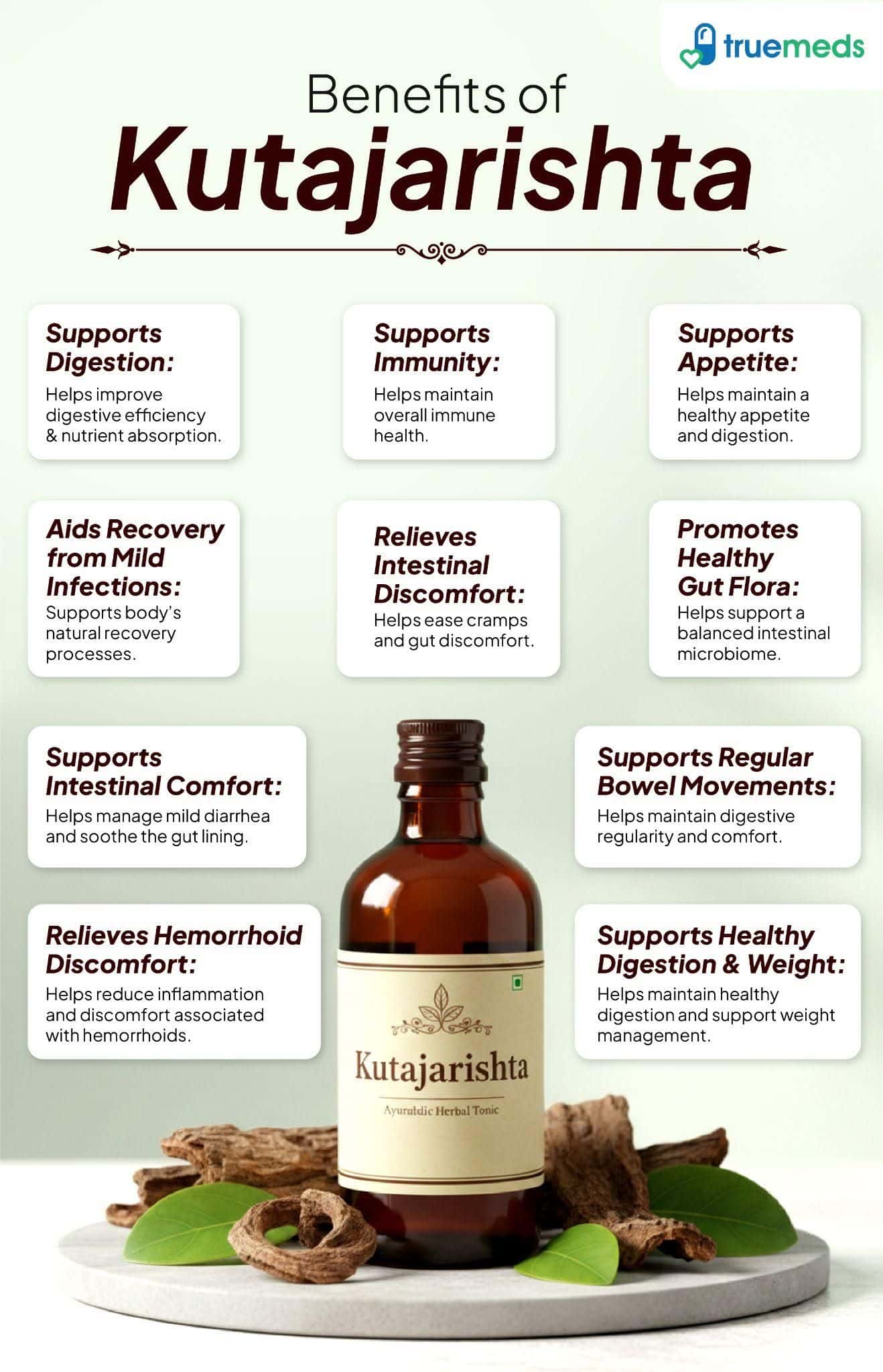
Kutajarishta is traditionally used to support digestive health, particularly during loose stools, mild abdominal cramping, bloating and reduced appetite. It is also traditionally used for digestive conditions associated with fever and may provide symptomatic support when piles are linked to irregular bowel habits. Evidence for the finished formulation remains limited, and Kutajarishta is not an established treatment for weight loss or other diagnosed medical conditions.
1. Supports Digestive Efficiency
Kutajarishta is traditionally believed to strengthen Agni, the digestive fire in Ayurveda. A stronger digestive fire is associated with more effective digestion of food, which may help ease bloating and mild discomfort after meals according to Ayurvedic principles.
2. Helps Firm Up Loose Stools
Kutaja, the primary herb in this formulation, is traditionally used for its astringent action and is traditionally associated with reducing intestinal secretions. This is why Kutajarishta is commonly used traditionally during diarrhoea, where it may help reduce loose stools and support stool consistency (Sharma et al., 2016).
3. Traditionally Used to Support Immunity
Kutajarishta is traditionally believed to support the body by helping manage Ama (metabolic waste) according to Ayurvedic principles. According to Ayurvedic philosophy, the accumulation of Ama is believed to impair immune function. From a traditional perspective, supporting the elimination of Ama is considered supportive of overall health and immunity.
4. May Ease Intestinal Cramping
Kutajarishta is traditionally believed to have an antispasmodic action on the gut (Gilani et al., 2010). This may help ease mild cramping and abdominal discomfort associated with digestive upset. Evidence for these effects from human clinical studies of Kutajarishta specifically remains limited.
5. May Support Appetite
Loss of appetite often accompanies digestive upset. By supporting the digestive fire, Kutajarishta is traditionally believed to help support appetite as digestive symptoms settle.
6. Weight Control
Kutajarishta is not established as a weight-loss remedy. Its traditional digestive properties do not provide sufficient evidence that it can regulate body weight or cause weight loss.
7. Traditionally Used During Fever With Gut Involvement
In Ayurveda, Kutajarishta is traditionally used to support recovery from fevers that arise alongside digestive or intestinal conditions, known as Jwara. It is not a fever medicine in the conventional sense; any fever that persists or is high needs medical assessment.
8. May Offer Symptomatic Comfort in Piles
Kutajarishta's astringent action is traditionally believed to support bowel regularity and stool consistency, which may offer some symptomatic comfort where piles are linked to irregular bowel habits. It does not treat the underlying condition, and persistent, painful or bleeding piles need medical assessment.
Common Uses of Kutajarishta
Kutajarishta is traditionally used for digestive conditions, particularly diarrhoea and bowel irregularity. In Ayurveda, it is also used in conditions described as Sangrahani and Raktajatisaar, which may involve changes in bowel movements, mucus or blood in the stool. These traditional uses should not replace medical assessment, especially when diarrhoea is severe, persistent or associated with blood or dehydration.
Atisaar (Diarrhoea)
Kutajarishta is traditionally used for diarrhoea. Laboratory research on its main herb, Kutaja, has shown activity against E. coli, a bacterium linked to infective diarrhoea (Pai et al., 2024). Persistent or severe diarrhoea, especially with blood, high fever or signs of dehydration, needs urgent medical attention.
Sangrahani (Malabsorption-type Digestive Disorders)
Sangrahani is a broad Ayurvedic term for disorders of impaired digestion and absorption, which can present with alternating loose stools and constipation, bloating and abdominal discomfort. It overlaps in some respects with irritable bowel syndrome, though the two are not identical, and a formal medical diagnosis is needed. Kutajarishta is traditionally used here to support regular bowel movements.
Raktajatisaar (Bloody Diarrhoea and Dysentery)
This refers to diarrhoea with blood or mucus, seen in conditions such as dysentery. Kutajarishta's astringent action is traditionally believed to support the intestinal mucosa in such presentations. Blood in the stool always needs prompt medical assessment; this is a symptom, not a condition to self-treat.
Precautions While Taking Kutajarishta
- Take Kutajarishta only in the amount and for the duration advised by your doctor or Ayurvedic practitioner, based on your individual condition and constitution.
- Kutajarishta contains naturally generated alcohol from fermentation (about 5 to 10%). It is not recommended during pregnancy or breastfeeding, for children, or for anyone advised to avoid alcohol, unless a doctor says otherwise.
- People with a known tendency towards constipation, or with existing gastrointestinal conditions, should use Kutajarishta with medical guidance, as higher doses may worsen constipation.
- If you have diabetes, liver disease, or are taking other medicines regularly, tell your doctor before starting Kutajarishta.
- This is general information and is not a substitute for advice from your doctor or a registered Ayurvedic practitioner.
How to Use Kutajarishta
Kutajarishta is available only as a liquid, so it is taken orally in this way.
Taking the Liquid
Measure the prescribed amount using the cap or a measuring cup, mix it with an equal quantity of water, and drink it after a meal, or as advised by your doctor. Shake the bottle well before each use.
Recommended Dosage of Kutajarishta
Dosage should always be personalised by a doctor or Ayurvedic practitioner. The following is general guidance only.
- Children: Kutajarishta is not generally recommended for children without a doctor's supervision, due to its alcohol content. Any use in children should be only on medical advice, with the dose set by the doctor.
- Teenagers: Dosage should be set individually by a doctor or Ayurvedic practitioner, taking age and body weight into account.
- Adults: The commonly advised amount is 15 to 30 ml, diluted with an equal quantity of lukewarm water, generally twice daily, for the duration advised by the doctor, typically one to two weeks.
- Elderly: Older adults may need a dose adjustment, particularly where kidney or liver function is reduced. Dosage should be confirmed by a doctor.
Disclaimer: Do not self-medicate. Do not exceed the advised dose or duration, as overuse may cause side effects such as constipation. Always follow your doctor's instructions.
Side Effects of Kutajarishta
Kutajarishta may be tolerated by some people when taken as advised. Some people may notice the following.
Constipation
Taking more than the advised amount may cause constipation. If this happens, speak with your doctor about reducing or stopping the dose.
Mild Stomach Discomfort
A small number of people may notice mild stomach discomfort, especially when Kutajarishta is not diluted with enough water. Taking it as directed and with adequate water may help reduce discomfort.
Tell your doctor if any side effect is severe, or does not settle after stopping.
Interaction of Kutajarishta With Other Drugs
Kutajarishta may interact with certain medicines and conditions. Always tell your doctor about everything you are taking.
Medicines That Cause Drowsiness or React With Alcohol
Because Kutajarishta contains self-generated alcohol, taking it alongside sedatives or medicines that may interact with alcohol, such as metronidazole, may increase the risk of side effects or cause an unpleasant reaction. Ask your doctor before combining them (Mergenhagen et al., 2020).
Other Antidiarrhoeal or Gut-Regulating Medicines
Taking Kutajarishta alongside other prescription antidiarrhoeal medicines is best done only under medical supervision, so bowel movements are not slowed more than intended.
Storage of Kutajarishta
Store Kutajarishta in a cool, dry place, away from direct sunlight. Keep the bottle tightly closed after use, and keep it out of reach of children. Do not use it beyond the expiry date printed on the pack.
Key Takeaways
- Kutajarishta is a classical Ayurvedic liquid formulation traditionally used to support the management of diarrhoea, dysentery and related digestive discomfort.
- Its main herb is Kutaja (Holarrhena antidysenterica), supported by Gmelina arborea and Woodfordia fruticosa.
- It is traditionally believed to support the digestive fire and help firm loose stools.
- It contains naturally generated alcohol from fermentation (about 5 to 10%), so it needs caution in pregnancy, breastfeeding, children, and for anyone advised to avoid alcohol.
- Take it only in the dose and for the duration advised by your doctor; exceeding the advised dose may cause constipation.
FAQs
What does Kutajarishta taste like?
Does Kutajarishta contain alcohol?
Are Kutajarishta and Kutajghan Vati the same?
Can Kutajarishta be taken every day?
Can Kutajarishta be used for constipation?
Can a person with diabetes take Kutajarishta?
Is Kutajarishta safe to take?
Can Kutajarishta be used for ulcerative colitis?
Can Kutajarishta be taken during pregnancy?
Can Kutajarishta help with weight loss?
References
- Pai, N. N., Pathade, G., Dhamankar, V., Ahmed, K., & Kumari, S. (2024). A comparative study on the antagonistic effect of an Ayurvedic preparation, Kutajarishta, and its components on E. coli. Annals of Ayurvedic Medicine, 13(3), 174–184. https://doi.org/10.5455/AAM.148584
- Mergenhagen, K. A., Wattengel, B. A., Skelly, M. K., Clark, C. M., & Russo, T. A. (2020). Fact versus fiction: A review of the evidence behind alcohol and antibiotic interactions. Antimicrobial Agents and Chemotherapy, 64(3), Article e02167-19. https://doi.org/10.1128/AAC.02167-19
- Sharma, D. K., Gupta, V. K., Kumar, S., Joshi, V., Mandal, R. S. K., Prakash, A. G. B., & Singh, M. (2015). Evaluation of antidiarrheal activity of ethanolic extract of Holarrhena antidysenterica seeds in rats. Veterinary World, 8(12), 1392–1395. https://pmc.ncbi.nlm.nih.gov/articles/PMC4774815/
- Gilani, A. H., Khan, A., Khan, A. U., Bashir, S., Rehman, N. U., & Mandukhail, S. U. R. (2010). Pharmacological basis for the medicinal use of Holarrhena antidysenterica in gut motility disorders. Pharmaceutical Biology, 48(11), 1240–1246. https://doi.org/10.3109/13880201003727960
- Angel, R., & Chadha, Y. R. (1978). The wealth of India. Raw materials. Kew Bulletin, 32(4), 802. https://doi.org/10.2307/4109779

Explore other categories
Latest health articles





Top Health Essentials










Top-selling ayurvedic products














Disclaimer
Top-Selling Medicines:
...View more
Top-OTC medicines:
...View more
Top-selling healthcare devices:
...View more
Company
About UsHealth ArticleHealth StoriesHealth LibraryDiseases & Health ConditionsAyurvedaUnderstanding Generic MedicinesAll MedicinesAll BrandsNeed HelpFAQSecuritySavings CalculatorAdvertise with UsSubscribe
Registered Office Address
Grievance Officer
Download Truemeds


Contact Us
Our customer representative team is available 7 days a week from 9 am - 9 pm.
v4.28.23

2026 - Truemeds | All rights reserved. Our content is for informational purposes only. See additional information.

Our Payment Partners




