

- Medicines
- Personal Care
- Skin Cream
- Sunscreen
- Face Wash
- Skin and Body Soap
- Acne Care
- Body Lotions
- Moisturising Lotion
- Moisturising Cream
- Mosquito Repellent
- Moisturising Gel
- Body Wash
- Hair Oils
- Hair Shampoo
- Hair Conditioners
- Hair Supplements
- Hair Colour
- Hair Serum
- Hair Mask
- Hair Solutions
- Baby Diapers and Wipes
- Baby Lotion and Moisturising Cream
- Baby Bath Essentials
- Baby Skin Care
- Baby and Infant Food
- Baby Healthcare
- Women Multivitamins
- Ovulation Test Kit and Women Intimate Care
- Sanitary Pads
- Nutritional Drinks
- Condoms
- Lubricants
- Massage Gels
- Personal Body Massagers
- Men Performance Booster
- Sexual Health Supplements
- Massage Oils
- Ayurveda
- Tooth Paste
- Mouth Ulcer Gel
- Mouthwash
- Toothache and Gum Pain
- Tooth Brush
- Gargle Solution
- Orthopaedic Supports
- Adult Diapers
- Footwear
- Mobility and Support Accessories
- Urinary Support and Care
- Health Conditions
- Bone and Joint Care
- Digestive Care
- Eye Care
- Pain Relief
- Smoking Cessation
- Liver Care
- Stomach Care
- Cold and Cough
- Heart Care
- Kidney Care
- Piles, Fissures & Fistula
- Respiratory Care
- Mental Wellness
- Derma Care
- Pre and Probiotics
- Acidity
- Gas
- Constipation
- Loose Motion/Diarrhoea
- Digestive Fibres
- Digestive Enzymes
- Eye Lubricant Drops
- Lens Solution
- Safety Eye Wear
- Eye Cream
- Eye Vitamins and Supplements
- Eye Drops
- Eye Ointment and Gel
- Nicotine Patch
- Nicotine Gum
- Nicotine Lozenges
- Cough Syrups
- Chest Rubs and Balms
- Nasal Spray
- Lozenges
- Inhalant Capsules
- Cold and Cough Tablets
- Vitamins & Supplements
- Diabetes Care
- Healthcare Devices
- Homeopathic Medicine
- Health Guide
Arjunarishta
Arjunarishta, also called Parthadyarishta, is a classical Ayurvedic fermented tonic (arishta) prepared from the bark of the Arjuna tree (Terminalia arjuna) with dry grapes, Madhuka and Dhataki flowers and jaggery. It is traditionally taken as a liquid cardiac tonic to support the heart and general strength. As a result of fermentation, it contains a small amount of naturally generated alcohol.
 50
50Last updated on : 18 Aug, 2026
Read time : 10 mins
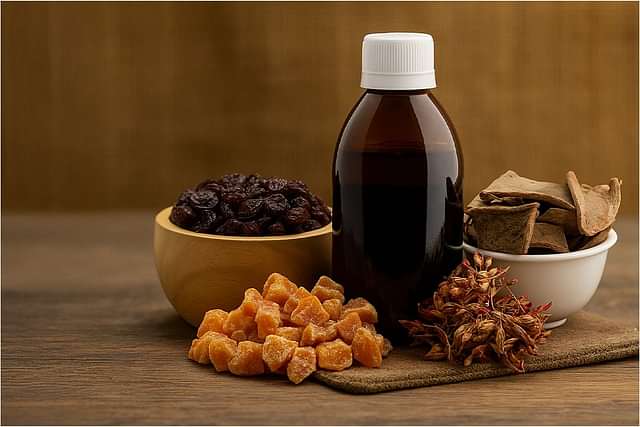
What is Arjunarishta?
Arjunarishta takes its name from Arjuna (Terminalia arjuna), the tree whose bark is its main ingredient, and from arishta, a class of fermented Ayurvedic liquids. It is described in the classical text Bhaishajya Ratnavali, in the chapter on heart disorders (Hridroga). It is prepared by boiling Arjuna bark with dry grapes (Draksha) and Madhuka flowers, then fermenting the strained decoction with Dhataki flowers and jaggery. Fermentation generates a small amount of alcohol, which acts as a natural preservative and helps carry the herbal compounds into the body.
In Ayurveda, Arjunarishta is regarded chiefly as a Hridya (cardiac tonic) and Balya (strengthening) preparation, traditionally used to support the heart and overall vigour. Its taste, potency and action on the doshas are set out in the Key Facts below.
Key Facts
| Feature | Details |
| Formulation name | Arjunarishta (also written Arjunarishtam) |
| Formulation type | Arishta, a fermented liquid preparation with self-generated alcohol |
| Classical reference | Bhaishajya Ratnavali, Hridrogadhikara
|
| Composition | Arjuna bark, Draksha (dry grapes), Madhuka flowers, Dhataki flowers, jaggery and water |
| Classical proportion | Arjuna bark 4.8 kg, Draksha 2.4 kg, Madhuka 960 g, Dhataki 960 g, jaggery 4.8 kg, water 49.152 L reduced to 12.288 L |
| Also known as | Parthadyarishta, Parthadyarishtam, Partharishtam |
| Key active compounds | Arjuna bark triterpenoids (arjunolic acid, arjunic acid, arjungenin, arjunetin), tannins (ellagic and gallic acid), flavonoids and beta-sitosterol
|
| Dosha action | Traditionally Hridya (cardiac tonic) and Balya (strengthening); pacifies Kapha and Vata
|
| Traditional uses | Used in Ayurveda as a cardiac tonic and general strength tonic |
| Common forms | Liquid (arishta / syrup)
|
| General dosage | About 15 to 30 ml (classically 12 to 24 ml) twice daily after food, diluted with an equal amount of water, or as prescribed |
| Best taken | After meals, diluted with water; under the guidance of a qualified practitioner
|
| Key safety note | Contains 5 to 10% self-generated alcohol. Avoid in pregnancy, in children, and people avoiding alcohol or with liver disease. Not a substitute for treatment of any heart condition
|
Alternative Names of Arjunarishta
Arjunarishta is a classical formulation whose name is transliterated from Sanskrit rather than translated, so its alternative names are mainly spelling and regional variants:
- Arjunarishta, Arjunarishtam
- Arjuna arishta
- Parthadyarishta, Parthadyarishtam
- Partharishtam
Composition of Arjunarishta
Arjunarishta is prepared from the following ingredients, in the proportions given in the classical text:
| Ingredient | Role and classical quantity |
| Arjuna bark (Terminalia arjuna) | The main ingredient; the bark decoction gives the tonic its cardiac-tonic reputation. 4.8 kg. |
| Draksha / dry grapes (Vitis vinifera) | The second-largest ingredient; sweet and nourishing, it supports the fermentation and taste. 2.4 kg. |
| Madhuka flowers (Madhuca indica) | Added for flavour and to support fermentation. 960 g. |
| Dhataki flowers (Woodfordia fruticosa) | The natural fermenting agent that starts the arishta fermentation. 960 g. |
| Jaggery (Guda) | Provides the sugar for fermentation and natural sweetness. 4.8 kg. |
| Water | Used to make the decoction; 49.152 L reduced to 12.288 L. |
Medicinal Properties of Arjunarishta
Arjunarishta is a classical Ayurvedic fermented preparation made mainly from Arjuna (Terminalia arjuna) bark and described in the Ayurvedic Formulary of India. In Ayurveda, it is traditionally used to support heart health and help maintain dosha balance. It is usually taken as a liquid in measured doses under the guidance of a qualified Ayurvedic practitioner or healthcare professional.
- Cardioprotective: is traditionally believed to help support the strength and function of heart tissue over time.
- Antioxidant: may help protect the body's cells from damage caused by free radicals.
- Anti inflammatory: is associated with a soothing effect on internal inflammation, which may support tissue comfort.
- Hypolipidemic: may help support healthy cholesterol and fat levels in the blood, though more research is needed to confirm this.
- Cardiotonic: is traditionally believed to gently support the heart muscle's pumping action.
- Antihypertensive: is traditionally believed to help support already normal blood pressure levels.
Disclaimer: This information is for educational purposes only and is not a substitute for professional medical advice. Please consult a qualified Ayurvedic practitioner or doctor before using Arjunarishta, especially if you have a heart condition or take other medicines.
Key Health Benefits of Arjunarishta
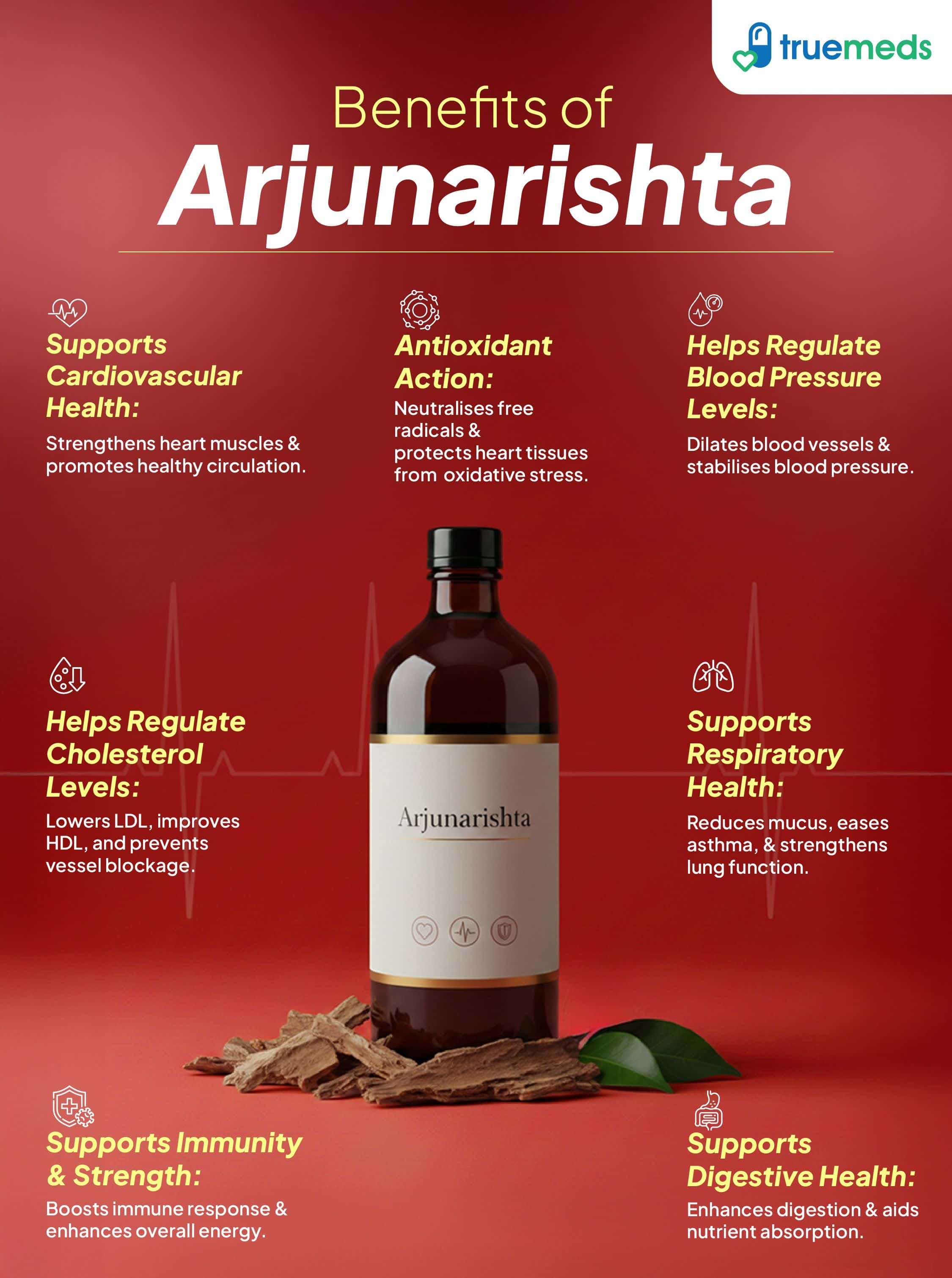
Arjunarishta is traditionally taken to support heart health and general strength. Its main traditional benefits, framed as support rather than treatment, are:
How does Arjunarishta support the heart?
Arjuna bark has a long history in Ayurveda as a Hridya, or cardiac tonic. Arjunarishta is traditionally used to support normal heart function and healthy circulation as part of a wider healthy lifestyle. It is not a treatment for heart disease, and anyone with a diagnosed heart condition should stay under medical care.
Can Arjunarishta help with blood pressure?
Arjuna contains antioxidant compounds such as arjunolic acid that have been studied for effects on blood vessels. Arjunarishta is traditionally used to support healthy circulation, but it is not a blood-pressure medicine and should not replace one. People on blood-pressure treatment should speak to their doctor before use.
Does Arjunarishta have antioxidant effects?
The tannins and flavonoids in Arjuna bark, such as ellagic and gallic acid, show antioxidant activity in laboratory studies, helping counter oxidative stress. This is background activity rather than a proven clinical benefit in people.
Is Arjunarishta good for digestion?
As a fermented preparation taken after food, Arjunarishta is traditionally felt to support appetite and digestion. Its bitter and astringent herbs are used in Ayurveda to ease occasional bloating or heaviness after meals.
How does Arjunarishta support strength and vigour?
Classified as a Balya (strengthening) tonic, Arjunarishta is traditionally taken to relieve tiredness and support overall stamina, especially during recovery, under the guidance of a practitioner.
Precautions While Taking Arjunarishta
Arjunarishta is generally well tolerated when used correctly, but note the following:
It contains alcohol
Arjunarishta contains about 5 to 10% self-generated alcohol. Avoid it if you have alcohol dependence or liver disease, or if you avoid alcohol for any reason. Take it diluted with an equal amount of water, and do not drive straight after a dose if you are sensitive to alcohol.
See a doctor first for heart conditions
If you have a diagnosed heart condition, high or low blood pressure, or take heart or blood-pressure medicines, speak to your doctor before using Arjunarishta. It supports wellbeing but is not a replacement for prescribed treatment.
Care in diabetes
The jaggery in Arjunarishta adds sugar, so people with diabetes should use it cautiously and monitor their blood sugar.
Avoid in pregnancy and breastfeeding
Due to its naturally occurring alcohol content and limited safety data, Arjunarishta should be avoided during pregnancy and breastfeeding unless advised by a qualified healthcare practitioner.
Not for children
The alcohol content means Arjunarishta is not suitable for children except under direct medical supervision.
Watch for allergic reactions
Stop taking it and see a doctor if you notice a rash, itching or swelling.
Do not exceed the recommended dose
Larger doses can cause stomach upset. Keep to the recommended amount.
How to Use Arjunarishta
Arjunarishta is a liquid tonic. To take it:
- Measure 15 to 30 ml (classically 12 to 24 ml) of Arjunarishta.
- Dilute it with an equal amount of water, as arishtas are traditionally taken diluted.
- Take it twice daily after meals, or as directed by your practitioner.
- Shake the bottle gently before use and close the lid tightly afterwards.
Recommended Dosage of Arjunarishta
The dosage of Arjunarishta should be determined by a qualified healthcare practitioner. As a general guide for the liquid form:
- Children and teenagers: It is not recommended because of the alcohol content, except under direct medical supervision.
- Adults: 15 to 30 ml (classically 12 to 24 ml) twice daily after food, diluted with an equal amount of water.
- Older adults: A lower dose is often more suitable; start at the smaller end and use under medical guidance, especially alongside heart or blood-pressure medicines.
Disclaimer: These are general traditional-use guides, not a prescription. Arjunarishta is not a substitute for treatment of any heart or blood-pressure condition. Speak to a doctor or qualified Ayurvedic practitioner before starting, especially if you take other medicines.
Side Effects of Arjunarishta
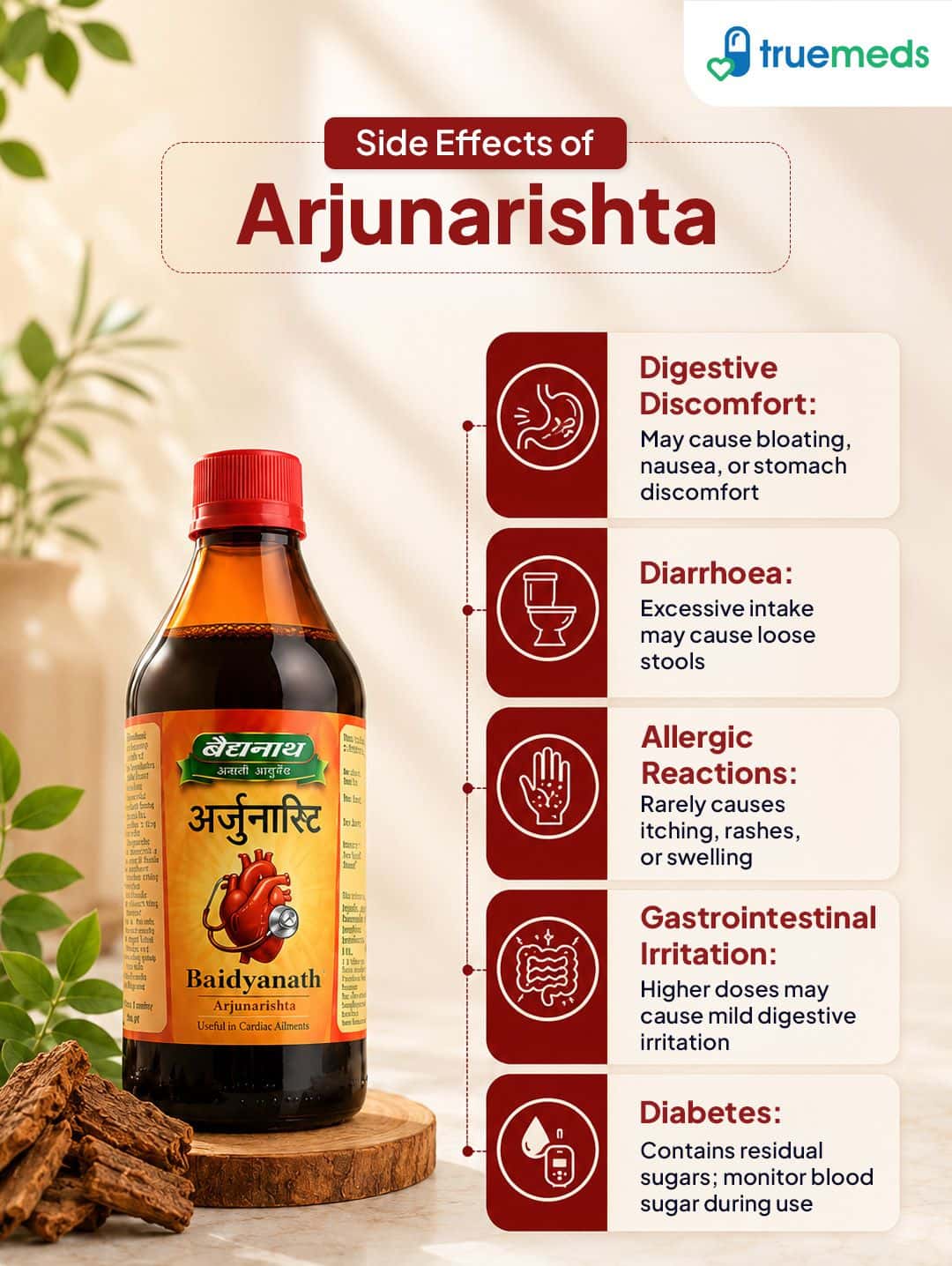
Used at the recommended dose, side effects are uncommon and usually mild:
Digestive discomfort
Some people notice mild bloating, nausea or loose stools, especially at higher doses or when starting. If it persists, lower the dose or stop and seek advice.
Allergic reactions
Rarely, a rash, itching or swelling can occur. Stop taking it and see a doctor if this happens.
Effect on blood sugar
The jaggery adds sugar, so large amounts can raise blood sugar. People with diabetes should monitor closely and check with their doctor.
What to do if side effects occur
If you notice ongoing stomach upset, an allergic reaction or changes in blood sugar, stop taking Arjunarishta and seek medical advice.
Interaction of Arjunarishta With Other Drugs
Arjunarishta may interact with certain medicines because it contains naturally occurring alcohol and sugar and may affect the cardiovascular system. Inform your doctor about all medicines and supplements you are taking before using it.
Heart and blood-pressure medicines
Arjunarishta may add to or interfere with the effect of heart or blood-pressure medicines. If you take any, use it only with your doctor’s knowledge and monitoring.
Diabetes medicines
The jaggery can raise blood sugar and affect how diabetes medicines work, so people with diabetes should monitor and take medical advice.
Alcohol-sensitive medicines
Arjunarishta contains a small amount of naturally occurring alcohol, which may interact with certain medicines, including metronidazole and disulfiram, and may increase drowsiness when taken with sedatives. Consult your doctor before combining these treatments.
Key Takeaways
- Arjunarishta (Parthadyarishta) is a classical Ayurvedic fermented tonic based on Arjuna bark, traditionally taken to support the heart and general strength.
- It is a traditional wellness tonic, not a treatment for heart disease, angina, heart failure or high blood pressure; these need proper medical care.
- It contains 5 to 10% self-generated alcohol, so it is not suitable in pregnancy, for children, or for people avoiding alcohol or with liver disease.
- The jaggery adds sugar, so people with diabetes should use it cautiously.
- It can interact with heart, blood-pressure, diabetes and alcohol-sensitive medicines, so tell your doctor before use.
FAQs
What is Arjunarishta used for?
Does Arjunarishta contain alcohol?
Is Arjunarishta safe to take?
Can Arjunarishta replace my heart or blood-pressure medicine?
Can it be taken long term?
Is Arjunarishta suitable for people with diabetes?
References
- Shengule, S. A., Mishra, S., Joshi, K., Apte, K., Patil, D., Kale, P., Shah, T., Deshpande, M., & Puranik, A. (2018). Anti-hyperglycemic and anti-hyperlipidaemic effect of Arjunarishta in high-fat fed animals. Journal of Ayurveda and Integrative Medicine, 9(1), 45–52. https://doi.org/10.1016/j.jaim.2017.07.004
- Dwivedi, S., & Chopra, D. (2014). Revisiting Terminalia arjuna – An Ancient Cardiovascular Drug. Journal of Traditional and Complementary Medicine, 4(4), 224–231. https://doi.org/10.4103/2225-4110.139103
Explore other categories
Latest health articles





Top Health Essentials


Top-selling ayurvedic products












Disclaimer
Top-Selling Medicines:
...View more
Top-OTC medicines:
...View more
Top-selling healthcare devices:
...View more
Company
About UsHealth ArticleHealth StoriesHealth LibraryDiseases & Health ConditionsAyurvedaUnderstanding Generic MedicinesAll MedicinesAll BrandsNeed HelpFAQSecuritySavings CalculatorAdvertise with UsSubscribe
Registered Office Address
Grievance Officer
Download Truemeds


Contact Us
Our customer representative team is available 7 days a week from 9 am - 9 pm.
v4.28.18

2026 - Truemeds | All rights reserved. Our content is for informational purposes only. See additional information.

Our Payment Partners