

- Medicines
- Personal Care
- Skin Cream
- Sunscreen
- Face Wash
- Skin and Body Soap
- Acne Care
- Body Lotions
- Moisturising Lotion
- Moisturising Cream
- Mosquito Repellent
- Moisturising Gel
- Body Wash
- Hair Oils
- Hair Shampoo
- Hair Conditioners
- Hair Supplements
- Hair Colour
- Hair Serum
- Hair Mask
- Hair Solutions
- Baby Diapers and Wipes
- Baby Lotion and Moisturising Cream
- Baby Bath Essentials
- Baby Skin Care
- Baby and Infant Food
- Baby Healthcare
- Women Multivitamins
- Ovulation Test Kit and Women Intimate Care
- Sanitary Pads
- Nutritional Drinks
- Condoms
- Lubricants
- Massage Gels
- Personal Body Massagers
- Men Performance Booster
- Sexual Health Supplements
- Massage Oils
- Ayurveda
- Tooth Paste
- Mouth Ulcer Gel
- Mouthwash
- Toothache and Gum Pain
- Tooth Brush
- Gargle Solution
- Orthopaedic Supports
- Adult Diapers
- Footwear
- Mobility and Support Accessories
- Urinary Support and Care
- Health Conditions
- Bone and Joint Care
- Digestive Care
- Eye Care
- Pain Relief
- Smoking Cessation
- Liver Care
- Stomach Care
- Cold and Cough
- Heart Care
- Kidney Care
- Piles, Fissures & Fistula
- Respiratory Care
- Mental Wellness
- Derma Care
- Pre and Probiotics
- Acidity
- Gas
- Constipation
- Loose Motion/Diarrhoea
- Digestive Fibres
- Digestive Enzymes
- Eye Lubricant Drops
- Lens Solution
- Safety Eye Wear
- Eye Cream
- Eye Vitamins and Supplements
- Eye Drops
- Eye Ointment and Gel
- Nicotine Patch
- Nicotine Gum
- Nicotine Lozenges
- Cough Syrups
- Chest Rubs and Balms
- Nasal Spray
- Lozenges
- Inhalant Capsules
- Cold and Cough Tablets
- Vitamins & Supplements
- Diabetes Care
- Healthcare Devices
- Homeopathic Medicine
- Health Guide
Punarnavadi Mandoor
Punarnavadi Mandoor is a classical Ayurvedic herbo-mineral formulation containing Punarnava (Boerhavia diffusa) and purified iron (Mandura). It is traditionally used to support the management of iron-deficiency anaemia, healthy digestion, and liver and urinary function. As an iron-based medicine, it should be used only after appropriate diagnosis and under professional guidance.
 50
50Last updated on : 08 Sep, 2026
Read time : 15 mins
What is Punarnavadi Mandoor?
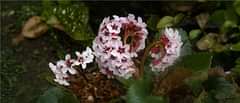
Punarnavadi Mandoor takes its name from Punarnava (Boerhaavia diffusa), its chief herb, combined with Mandura, a purified form of iron. In Ayurveda, it is classed as a herbo-mineral (Rasaushadhi) preparation and a Naimittika Rasayana, meaning a restorative used for a specific purpose, chiefly Pandu (anaemia).
It is traditionally used in Ayurveda for Pandu Roga (anaemia), and is traditionally used to support anaemia, digestion and urinary function. It is recognised widely enough that it is included in India’s community health (ASHA) kit for iron-deficiency anaemia (Samal & Dehury, 2016).
In Ayurvedic terms, the formulation is traditionally described as follows:
- Rasa (taste): mainly Tikta (bitter) and Kashaya (astringent)
- Virya (potency): Ushna (warming)
- Vipaka (post-digestive effect): Katu (pungent)
- Dosha action: traditionally described as reducing Kapha and Vata, and supporting Rakta (blood) and Pitta balance
Key Facts
| Feature | Details |
| Formulation name | Punarnavadi Mandoor (Punarnava Mandura) |
| Formulation type | Herbo-mineral (iron-based Mandura) preparation; tablet or powder
|
| Also known as | Punarnava Mandura, Punarnava Mandoor, Punarnavadi Mandur
|
| Key ingredients | Punarnava (Boerhavia diffusa) and purified iron (Mandura), with supportive digestive herbs
|
| Dosha action | Traditionally described as reducing Kapha and Vata; traditionally associated with supporting Rakta (blood)
|
| Traditional uses | Traditionally used to support the management of iron-deficiency anaemia (Pandu), and to support digestion and urinary function
|
| Common forms | Tablet and powder
|
| General dosage | As advised by an Ayurvedic practitioner, commonly 1 to 2 tablets twice daily after meals with water. Dose depends on the product strength and the person. |
| Best taken | After meals, with water, and only after iron deficiency has been confirmed. |
| Key safety note | It contains iron. Use only for diagnosed iron-deficiency anaemia, under supervision. Keep away from children. During pregnancy or breastfeeding, use only on medical advice. Use with caution in people with kidney, heart or liver conditions.
|
Alternative Names of Punarnavadi Mandoor
Punarnavadi Mandoor is mentioned by different names based on the region and the Ayurvedic physician. Some of its alternate names are as follows.
- Punarnavadi Mandoor Ras
- Punarnava Mandoor
- Punarnava Mandura
- Punarnavadi Mandur
Their name varies a little from their composition or preparation method, whereas they all represent the simple formulation used in the ancient Ayurvedic practice.
Composition of Punarnavadi Mandoor
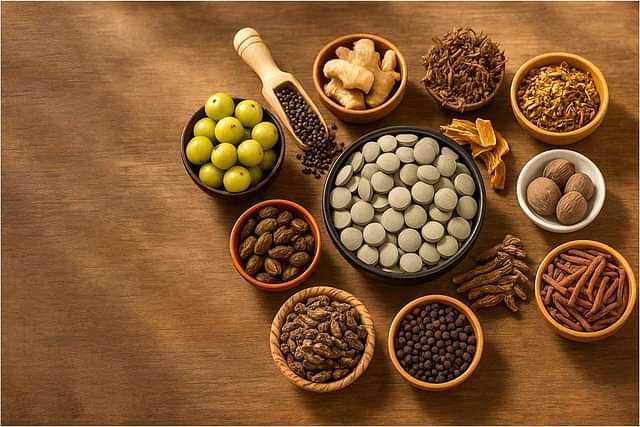
Punarnavadi Mandoor contains Punarnava and purified iron (Mandura) as its key ingredients, along with other herbs traditionally included to support digestion and the overall formulation:
Ingredient | Botanical / mineral name | Traditional role |
Punarnava | Boerhavia diffusa | Main herb; traditionally used to support urinary function and fluid balance |
Mandura (purified iron) | Processed iron oxide | Mineral base; source of iron traditionally used in formulations for Pandu (anaemia) |
Haritaki | Terminalia chebula | Traditionally used to support digestion and bowel regularity |
Amalaki | Emblica officinalis | Traditionally used for its antioxidant properties and to support overall nutritional health |
Pippali | Piper longum | Traditionally used to support digestion; may influence the absorption of other compounds |
Chemical Constituents of Punarnavadi Mandoor
Punarnavadi Mandoor contains iron and various naturally occurring plant compounds contributed by its herbal ingredients, including:
- Iron (from purified Mandura), which contributes to normal haemoglobin production
- Punarnavine and boeravinones, alkaloid and rotenoid compounds of Punarnava (Boerhaavia diffusa) (Mishra et al., 2014)
- Tannins and gallic acid, from Haritaki and Amalaki
- Vitamin C, from Amalaki, which can support the absorption of non-haem iron
- Piperine, from Pippali, which may influence the absorption of certain compounds (Bhardwaj et al., 2002)
Medicinal Properties of Punarnavadi Mandoor
Punarnavadi Mandoor is associated with the following medicinal and traditional properties:
- Haematinic (supports haemoglobin and red blood cell formation), from the iron content
- Diuretic (Mutral), a traditional property of Punarnava (Mishra et al., 2014)
- Anti-inflammatory, a traditional property (Mishra et al., 2014)
- Digestive stimulant (Deepana and Pachana), a traditional property
- Anthelmintic (anti-worm), a traditional property (Mishra et al., 2014)
The haematinic (iron-replenishing) property is the one most directly supported by evidence in people with iron-deficiency anaemia. The remaining properties are traditional descriptions and have limited clinical evidence in humans.
Key Health Benefits of Punarnavadi Mandoor
Punarnavadi Mandoor is an Ayurvedic preparation primarily used to support blood, liver, and digestive health. The health benefits of Punarnavadi Mandoor include:
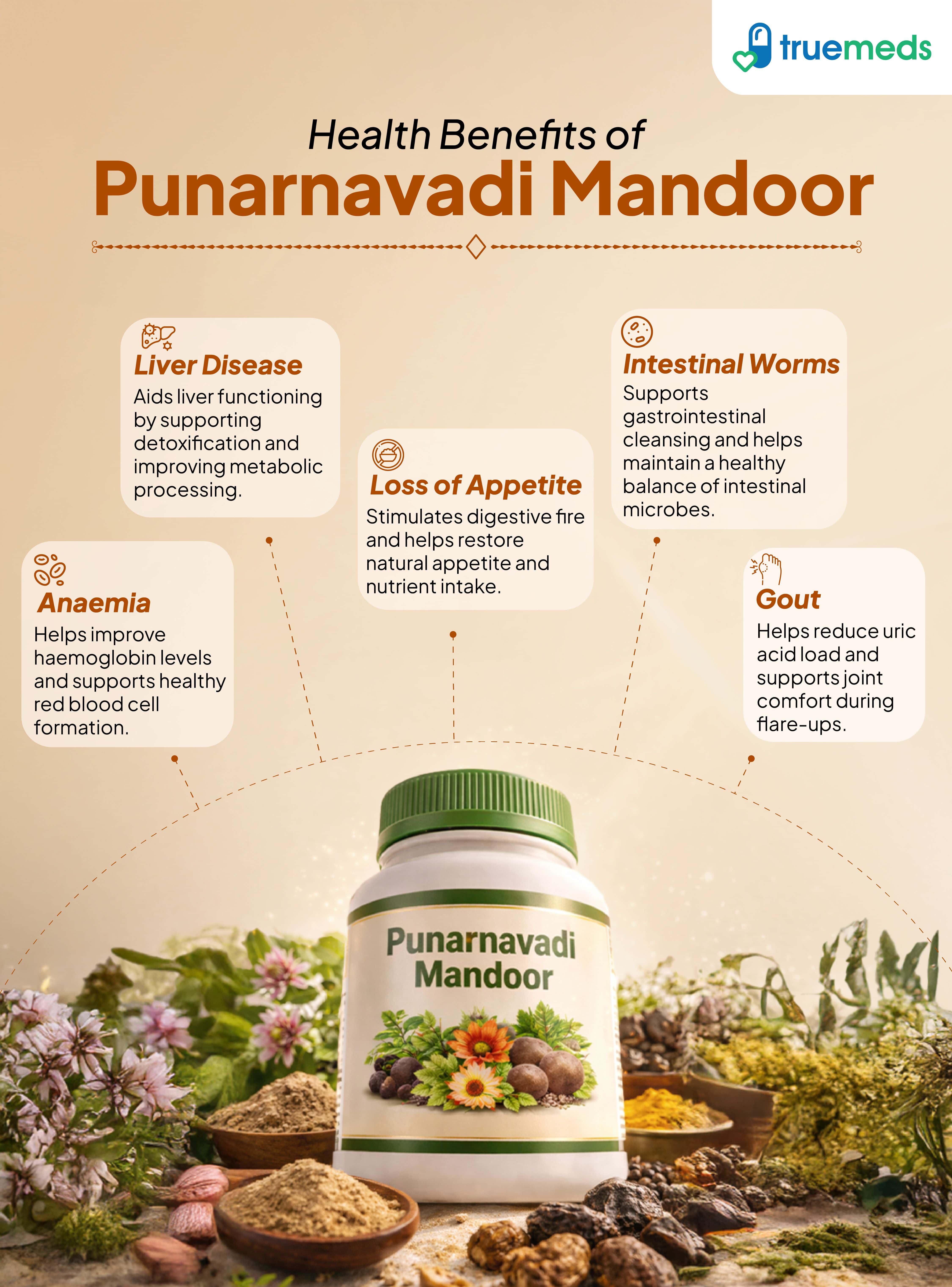
1. Anaemia
Punarnavadi Mandoor is traditionally used to treat anaemia, particularly iron deficiency anaemia (Pandu Roga), characterised by low red blood cell count or insufficient haemoglobin. Rich in iron, this Ayurvedic formulation supports the production of red blood cells and haemoglobin, addressing iron deficiency and improving oxygen levels in the body. It helps alleviate common symptoms of anaemia such as fatigue, weakness, and dizziness. Punarnavadi Mandoor is especially effective in treating microcytic anaemia caused by the vitiation of Pitta doshas.
How Punarnavadi Mandoor Helps:
- Iron Composition: The iron composition in Punarnavadi Mandoor reconstitutes the iron store, thus enabling healthy red blood cells to be produced within the body.
- Eradicating Fatigue: Punarnavadi Mandoor enhances energy because it cures anemia. This medication eradicates fatigue that occurs due to low iron levels.
- Improves Oxygen Circulation: After haemoglobin is enhanced because of Punarnavadi Mandoor intake, oxygen circulation improves, and vital organs receive the necessary oxygen supply.
2. Liver Disease
The liver plays a vital role in detoxification, metabolism, and the production of essential enzymes. Liver diseases, such as jaundice, fatty liver, and cirrhosis, can cause severe health impairments.
How Punarnavadi Mandoor Helps:
- Liver Purification: Punarnavadi Mandoor acts as a tonic that removes toxins from the liver, supports its function, and helps decrease bilirubin levels in the blood, promoting overall liver health.
- Generation of New Liver Cells: It supports the generation of new liver cells, benefiting individuals who have suffered liver damage due to alcohol consumption, infections, or fatty liver.
- Better Digestion and Metabolism: Punarnavadi Mandoor also improves digestion and metabolism due to its Deepan (appetiser) and Pachan (digestive) properties, enhancing nutrient absorption when the liver is functioning optimally.
3. Gout
Gout is one such form of arthritis that is caused by the deposition of excess uric acid in the blood, which in turn causes severe pain and inflammatory conditions. Ayurvedic texts and clinical experience suggest that Punarnavadi Mandoor may help balance excess uric acid levels and, due to its anti-inflammatory properties, support relief from pain and swelling during gout episodes. It also helps to reduce the symptoms of gout when taken regularly, owing to its Vata-Pitta balancing and Mutral (diuretic) properties.
How Punarnavadi Mandoor Helps:
- Reduction of Excess Uric Acid: Punarnavadi Mandoor depresses the excess uric acid in the blood, causing deposition in the form of crystals in the joints.
- Anti-inflammatory Activity: It cuts short the joint's pain and inflammation, providing relief in the gouty symptoms.
- Prevents Relapse: Chronic administration of Punarnavadi Mandoor prevents relapse of gout due to balanced levels of uric acid in the blood.
4. Intestinal Worms
Various digestive disorders, such as abdominal pain, bloating, and malnutrition, can be caused by intestinal worms or parasitic infections. Punarnavadi Mandoor is naturally anthelmintic, which helps expel all sorts of parasites from the digestive tract. It not only wipes out the intestinal worms but supports the digestive system.
How Punarnavadi Mandoor Helps:
- Anthelmintic Property: The remedy allows for the expulsion of roundworms and tapeworms from the digestive system.
- Improved Digestion: By eliminating parasites, Punarnavadi Mandoor helps restore the normal function of the intestines and improves digestion.
- Relief from Digestive Issues: It helps alleviate symptoms like bloating, indigestion, and abdominal pain commonly caused by parasitic infections.
5. Loss of Appetite
Loss of appetite can be a sign of many other health conditions, such as disorders involving the digestive system, problems with the liver, or chronic illness. It increases appetite by promoting healthy digestion and restoring normal liver function. So, it is very useful for patients in recovery or those with debilitated digestive systems.
How Punarnavadi Mandoor Helps:
- Indigestion Conditioner: The herbs of Punarnavadi Mandoor, particularly Punarnava, stimulate digestive fire or Agni, which is vital for ordinary digestion and appetite.
- Nutrient Absorption: Facilitating improvement in the condition of the liver and detoxification of the body impacts nutrient absorption of the food taken, making it even more pleasurable to eat.
- Promotes Overall Health: A healthy appetite enhances general health conditions and energy, mainly when applied to patients out of long-term illness or malnutrition.
Precautions While Taking Punarnavadi Mandoor
- Use only for confirmed iron deficiency: Do not self-diagnose anaemia. Anaemia has several causes, some serious, and taking iron when you are not iron-deficient can cause iron overload. Have appropriate blood tests before starting treatment.
- Keep away from children: Iron-containing medicines can cause serious poisoning if a child swallows them. Store securely and out of reach of children.
- Pregnancy and breastfeeding: Use only on medical advice.
- Kidney disease: Use with caution and only under medical guidance, particularly in advanced kidney disease.
- Heart and diabetes: Use with caution and check with your doctor, as your treatment may need monitoring.
- Product quality: Use a reputable, properly manufactured product from a qualified practitioner. Poorly prepared herbo-mineral medicines may carry a risk of heavy-metal contamination and liver injury.
- Allergic reactions: Stop the medicine and seek medical advice if a rash, itching or other signs of an allergic reaction develop.
How to Use Punarnavadi Mandoor
Punarnavadi Mandoor tablets should be taken as directed by a doctor, with dosage varying based on the specific health condition being treated, such as anaemia, liver disorders, or gout. Here’s how to use these tablets:
1. Treatment of Anaemia
Because Punarnavadi Mandoor contains iron, it is traditionally used in Ayurveda to support haemoglobin levels and promote healthy red blood cell production in anaemia. Hence, it helps nourish the blood and restore strength in individuals suffering from iron deficiency.
Steps to use:
- Take 1-2 Punarnavadi Mandoor tablets twice a day after meals.
- Wash it down with warm water or buttermilk for easier ingestion.
- Continue the treatment for 1 to 3 months or as your doctor directs.
2. For Liver Health
Punarnavadi Mandoor is excellent in detoxifying the liver, activating its regeneration process, and enhancing its function. It is more or less suggested to patients suffering from jaundice or any other liver disorder.
Steps to use:
- You have to take 1-2 Punarnavadi Mandoor tablets after a meal. Take it twice daily. You must take Punarnavadi Mandoor with warm water.
- Consult your physician to determine the length of time that you should use this medicine according to your liver condition.
3. To Reduce Uric Acid
Punarnavadi Mandoor aids in the treatment of gouty-type conditions by reducing excessive uric acid levels. Anti-inflammatory activity reduces pain and swelling in the body, especially in the joints.
Steps to use:
- Take 1 Punarnavadi Mandoor tablet two times a day after meals.
- Increase fluid intake to eliminate excess uric acid from your body.
- It is to be used for a few months, as a doctor advises.
4. Digestive Health and Loss of Appetite
Punarnavadi Mandoor keeps digestive health in place by upholding digestive fire (Agni) or conditions like loss of appetite or bloating. It induces appetite and facilitates the absorption of nutrients.
Steps to use:
- Swallow Punarnavadi Mandoor 1 tablet dose before each meal, twice daily.
- Taken with lukewarm water for adequate digestion.
- It may also display general improvements in appetite and digestion after a few weeks of continuous use.
5. For Intestinal Worms
Punarnavadi Mandoor is also used to treat intestinal worms. An herbal medicine with natural anthelmintic properties, it aids in riding parasitic infections in the digestive tract.
Steps to use:
- Take a tablet of Punarnavadi Mandoor twice a day on an empty stomach.
- Take this medication with warm water consumption and direct worms to be expelled quickly.
- Continue treatment for a few weeks or as directed by the primary care physician.
Recommended Dosage of Punarnavadi Mandoor
Dosage should be individualised based on age, iron status, health condition and the strength of the product. All doses are taken after meals with water, and only when a practitioner has advised the medicine:
- Adults: Commonly 1 to 2 tablets twice daily, or the equivalent powder dose, as set by the practitioner and the product strength.
- Elderly: Often started at the lower end and adjusted on advice, as older adults may be more sensitive; clinical research has also examined its use in older adults with anaemia.
- Teenagers (13 to 17 years): Only under the guidance of an Ayurvedic practitioner or doctor, who will set the dose for the individual after confirming iron deficiency.
- Children (under 13 years): Only under direct medical supervision. Iron dosing in children must be based on age and weight, and iron products must be kept out of reach, as accidental iron overdose in children can be serious.
Do not exceed the advised dose. More iron is not better, and taking iron when it is not needed can cause adverse effects and, with excessive intake, iron overload.
Disclaimer: This dosage information is for general guidance only. Punarnavadi Mandoor should be taken only after a doctor or Ayurvedic practitioner has confirmed you need it, especially if you have an existing condition or take other medicines.
Side Effects of Punarnavadi Mandoor
Punarnavadi Mandoor may cause side effects, particularly because it contains iron. The risk can vary with the dose and individual tolerance.
Digestive upset
Iron can cause nausea, stomach discomfort or a metallic taste in some people, especially when taken on an empty stomach.
Constipation
Oral iron commonly causes constipation. Adequate fluid intake and fibre can help.
Black stools
Iron often darkens the stool. This is usually harmless, but it can make gastrointestinal bleeding harder to recognise, so mention it to your doctor if you are being checked for stomach or bowel problems.
Allergic reactions
Some people may react to the herbs. A skin reaction to Punarnava Mandura has been documented in a case report (Sharma et al., 2018). Stop the medicine and seek medical advice if a rash, itching or other signs of an allergic reaction develop.
Iron overload
Taking iron when it is not needed, or taking too much, can lead to iron accumulation in the body. Use it only for a confirmed Iron deficiency and at the advised dose.
Interaction of Punarnavadi Mandoor With Other Drugs
Punarnavadi Mandoor contains iron, which can reduce the absorption of certain medicines and supplements when taken together (Campbell & Hasinoff, 1991). The following interactions are particularly important:
Thyroid medicine (levothyroxine)
Iron reduces the absorption of thyroid medicine. Separate the two by at least four hours and tell your doctor that you are taking an iron-containing medicine.
Certain antibiotics
Iron lowers the absorption of some antibiotics, such as tetracyclines and fluoroquinolones. Separate the doses according to the specific antibiotic's prescribing instructions and follow your doctor's advice.
Antacids and calcium
Antacids and calcium supplements can reduce iron absorption. Do not take them at the same time as this medicine unless advised otherwise by a healthcare professional.
Other iron supplements
Do not combine Punarnavadi Mandoor with other iron products unless a doctor advises it, to avoid excessive iron intake and the risk of iron overload.
Disclaimer: Tell your doctor or pharmacist about all your medicines and supplements before starting Punarnavadi Mandoor, so that potential interactions can be assessed.
Storage of Punarnavadi Mandoor
Store Punarnavadi Mandoor in a cool, dry place, away from direct sunlight and moisture. Keep the container tightly closed. Store it out of the sight and reach of children, as iron medicines can be dangerous if a child swallows them. Do not use it after the expiry date printed on the pack.
Key Takeaways
- Punarnavadi Mandoor is a classical Ayurvedic iron-based (Mandura) formulation, used mainly to support the management of iron-deficiency anaemia (Pandu).
- Its chief herb is Punarnava (Boerhaavia diffusa), combined with purified iron and supportive digestive herbs.
- It is also used traditionally to support digestion, appetite and urinary function, though evidence for these uses in humans is limited.
- Because it contains iron, it should be used only for a confirmed iron deficiency, at the advised dose, and kept away from children.
- It is supportive care, not a cure. Anaemia, liver or joint symptoms need a proper diagnosis, and you should always consult a doctor or qualified Ayurvedic practitioner before use.
FAQs
Can I take Punarnava daily?
Is Punarnava good for the kidneys?
Is Punarnava good for the liver?
Is Punarnava good for uric acid?
Does Punarnava reduce blood pressure?
Is Punarnava good for constipation?
Is Punarnava good for cholesterol?
Is Punarnava good for the bladder?
References
- Samal, J., & Kumar Dehury, R. (2016). A review of literature on Punarnavadi Mandura: An Ayurvedic herbo-mineral preparation. Pharmacognosy Journal, 8(3), 180–184. https://doi.org/10.5530/pj.2016.3.2
- Mishra, S., Aeri, V., Gaur, P. K., & Jachak, S. M. (2014). Phytochemical, therapeutic, and ethnopharmacological overview for a traditionally important herb: Boerhavia diffusa Linn. BioMed Research International, 2014, 808302. https://doi.org/10.1155/2014/808302
- Bhardwaj, R. K., Glaeser, H., Becquemont, L., Klotz, U., Gupta, S. K., & Fromm, M. F. (2002). Piperine, a major constituent of black pepper, inhibits human P-glycoprotein and CYP3A4. Journal of Pharmacology and Experimental Therapeutics, 302(2), 645–650. https://doi.org/10.1124/jpet.102.034728
- Campbell, N. R. C., & Hasinoff, B. B. (1991). Iron supplements: A common cause of drug interactions. British Journal of Clinical Pharmacology, 31(3), 251–255. https://doi.org/10.1111/j.1365-2125.1991.tb05525.x
Explore other categories
Latest health articles




Top Health Essentials

Top-selling ayurvedic products












Disclaimer
Top-Selling Medicines:
...View more
Top-OTC medicines:
...View more
Top-selling healthcare devices:
...View more
Company
About UsHealth ArticleHealth StoriesHealth LibraryDiseases & Health ConditionsAyurvedaUnderstanding Generic MedicinesAll MedicinesAll BrandsNeed HelpFAQSecuritySavings CalculatorAdvertise with UsSubscribe
Registered Office Address
Grievance Officer
Download Truemeds


Contact Us
Our customer representative team is available 7 days a week from 9 am - 9 pm.
v4.28.18

2026 - Truemeds | All rights reserved. Our content is for informational purposes only. See additional information.

Our Payment Partners




