

- Medicines
- Personal Care
- Skin Cream
- Sunscreen
- Face Wash
- Skin and Body Soap
- Acne Care
- Body Lotions
- Moisturising Lotion
- Moisturising Cream
- Mosquito Repellent
- Moisturising Gel
- Body Wash
- Hair Oils
- Hair Shampoo
- Hair Conditioners
- Hair Supplements
- Hair Colour
- Hair Serum
- Hair Mask
- Hair Solutions
- Baby Diapers and Wipes
- Baby Lotion and Moisturising Cream
- Baby Bath Essentials
- Baby Skin Care
- Baby and Infant Food
- Baby Healthcare
- Women Multivitamins
- Ovulation Test Kit and Women Intimate Care
- Sanitary Pads
- Nutritional Drinks
- Condoms
- Lubricants
- Massage Gels
- Personal Body Massagers
- Men Performance Booster
- Sexual Health Supplements
- Massage Oils
- Ayurveda
- Tooth Paste
- Mouth Ulcer Gel
- Mouthwash
- Toothache and Gum Pain
- Tooth Brush
- Gargle Solution
- Orthopaedic Supports
- Adult Diapers
- Footwear
- Mobility and Support Accessories
- Urinary Support and Care
- Health Conditions
- Bone and Joint Care
- Digestive Care
- Eye Care
- Pain Relief
- Smoking Cessation
- Liver Care
- Stomach Care
- Cold and Cough
- Heart Care
- Kidney Care
- Piles, Fissures & Fistula
- Respiratory Care
- Mental Wellness
- Derma Care
- Pre and Probiotics
- Acidity
- Gas
- Constipation
- Loose Motion/Diarrhoea
- Digestive Fibres
- Digestive Enzymes
- Eye Lubricant Drops
- Lens Solution
- Safety Eye Wear
- Eye Cream
- Eye Vitamins and Supplements
- Eye Drops
- Eye Ointment and Gel
- Nicotine Patch
- Nicotine Gum
- Nicotine Lozenges
- Cough Syrups
- Chest Rubs and Balms
- Nasal Spray
- Lozenges
- Inhalant Capsules
- Cold and Cough Tablets
- Vitamins & Supplements
- Diabetes Care
- Healthcare Devices
- Homeopathic Medicine
- Health Guide
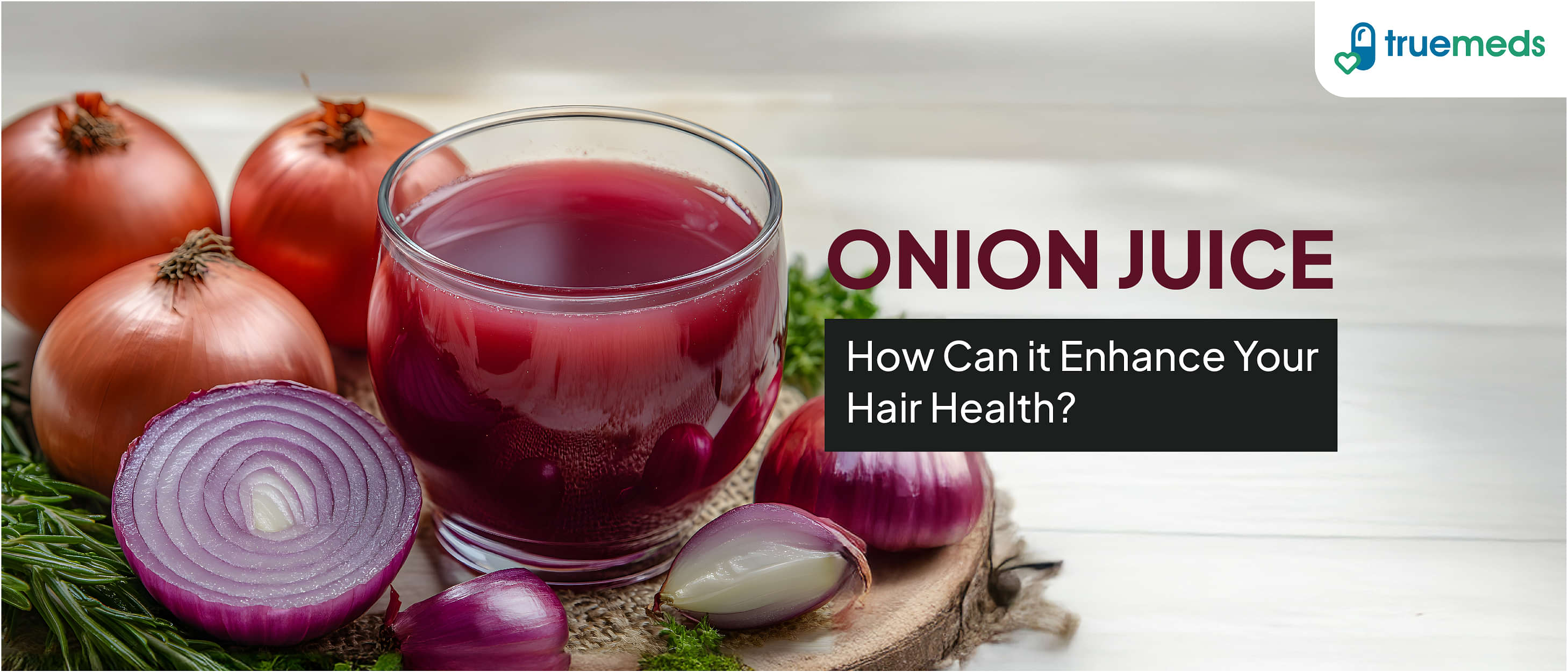
Onion Juice for Hair: Potential Benefits, Uses & Side Effects
Last updated on :23 Feb, 2026
Read time :9 min
Using onion juice for hair is a trend that’s been catching on in the world of natural hair care. Limited studies suggest it may help combat hair fall, boost hair growth, and even help manage scalp issues like dandruff [1]. It’s often used to manage hair fall, support scalp health, and promote hair strength.
Why Onion Juice May Benefit Hair Health
Onion juice has many beneficial properties, making it a potent ingredient for improving your hair health. Its high sulphur content and antimicrobial and antioxidant properties are believed to help hair growth [2].
How to Make Onion Juice at Home
Making onion juice at home is relatively straightforward and requires minimal time and effort. Here’s how you can do it:
Ingredients
- 2-3 large onions
Tools
- Blender or food processor
- Cheesecloth or fine strainer
- Clean bowl
- An airtight container or bottle for storage
Process
- Begin by peeling and chopping the onions into small pieces.
- Put the chopped onions in a blender or food processor and blend until you obtain a smooth paste.
- Pour the onion paste into a bowl lined with cheesecloth. Gather the edges of the cloth and squeeze to extract the juice into the bowl.
- You can also use a fine strainer instead of cheesecloth to separate the juice from the pulp. Simply press down on the pulp with a spoon to extract more juice.
- Transfer the onion juice into an airtight container or bottle for storage.
- With these easy steps, you have your homemade onion juice ready for application. Remember to always perform a patch test before applying it to your scalp, to ensure there’s no allergic reaction.
How to Apply Onion Juice for Best Results
To get maximum benefit for your hair, it is important to apply the onion juice correctly. Here is a simple, step-by-step guide on how to use onion juice on your hair:
- Apply the juice directly to your scalp using a cotton pad or your fingertips. Ensure that you cover all areas from the roots to the tips of your hair.
- Leave it on for at least 30 minutes to allow the nutrients to penetrate your scalp and hair follicles.
- Finally, rinse your hair thoroughly with lukewarm water and a mild shampoo.
- Consistency is key, and regular application of onion juice (once or twice a week) can help you see noticeable improvements over time.
5 Suggested Benefits of Onion Juice for Hair
Onion juice offers numerous potential benefits for hair health, thanks to its rich sulphur content and a host of nutrients.
1. May Promote Hair Growth
Hair fall is a common concern, and a small 2002 study suggested that topical application of onion juice could promote hair regrowth in cases of alopecia areata [1]. Sulphur is involved in keratin and collagen structure, which are important components of hair. These proteins help strengthen hair follicles and promote thicker, healthier hair over time. However, direct evidence linking sulphur from topical onion juice to increased hair growth remains limited.
2. May Help Prevent Premature Greying of Hair
Premature greying occurs when hair follicles lose pigment earlier than determined by genetics or age. Onion juice contains antioxidants like quercetin and catalase [3] that protect your hair follicles from damage caused by free radicals. Oxidative stress is also an underlying cause of premature greying [4]. Antioxidants in onion juice may help reduce oxidative stress, a factor linked with early greying, however there is currently no strong clinical evidence.
3. May Nourish and Moisturise Dry Hair
Dry, brittle hair can not only look unhealthy but can also lead to damage over time. Onion juice, with its rich nutrient profile, is thought to act as a natural conditioner, providing deep hydration to your hair, improving its texture and potentially preventing split ends. However, individual results may vary greatly.
4. May Help Combat Dandruff
The itching and flaking associated with dandruff can be embarrassing and uncomfortable. Fortunately, the suggested antimicrobial properties of onion juice [3] may help combat bacteria and fungi that can cause dandruff. By removing dead skin cells and decreasing scalp irritation, it may leave your scalp healthier and dandruff-free. Please note that laboratory studies suggest onion extracts possess antimicrobial activity, but clinical studies confirming effectiveness for dandruff are limited.
5. May Soothe Dry and Itchy Scalp
For those experiencing scalp discomfort, the potential anti-inflammatory properties of onion juice may provide soothing relief. Regular application may also enhance overall scalp health, resulting in healthier hair growth.
These are some of the proposed benefits of onion juice for hair. Incorporating it into your hair care routine may support substantial improvements in hair health, thickness, and vitality. Adding onion juice to your topical routine may support the appearance of healthier, more vibrant hair over time.
Onion Juice for Hair: Safety & Side Effects
Despite its popularity, the high concentration of sulphur in onions requires careful application to avoid adverse reactions. Tolerance for onion juice varies significantly based on scalp sensitivity and existing skin conditions. Let’s discuss the notable side effects of using onion juice and how to manage them.
- Scalp Irritation/Contact Dermatitis: The high acidity and concentration of sulphur compounds in raw onion juice may irritate, potentially leading to redness, itching, or a burning sensation, especially on sensitive or broken skin [1]. This is the most common adverse reaction.
- Hair Loss: Although onion juice is often used to tackle hair fall, some individuals may experience an increase in hair loss as a reaction to the juice, particularly those with sensitive skin or scalp conditions. This could be due to the strong nature of the juice causing temporary telogen effluvium if severe irritation occurs.
- Eye Irritation: The potent sulphur compounds inherent in onions may cause eye irritation if the juice comes into contact with your eyes. To prevent eye irritation, apply the onion juice using a precision applicator or cotton ball and avoid the forehead line.
- Unpleasant Odour: Onion juice possesses a strong, pungent smell that can linger in your hair long after rinsing. This odour may be off-putting to some individuals and may require additional washes to eliminate.
- Allergic Reactions: Although rare, some people may experience allergic reactions to onion juice, which can manifest as itching, swelling, or even severe symptoms, such as difficulty breathing. If you have a known allergy to onions, avoid topical application and consult an allergist before use.
Recommendation: Before using onion juice, it is highly recommended that you conduct a patch test (apply a small amount behind the ear or on the inner elbow and wait 24 hours) and consult with your doctor or a dermatologist. This is a small step that may help decrease risks and ensure the safe use of onion juice for your hair health.
Takeaway
Onion juice is a nutrient-rich traditional remedy that may help support scalp vitality and improve the appearance of hair density when used as part of a consistent care routine. However, it’s essential to apply it correctly and be aware of possible side effects, such as irritation or allergic reactions. Start with a patch test, use it 1–2 times weekly, and pair it with gentle shampooing to manage odour. With consistent and cautious use, onion juice may support scalp health and hair strength as part of a broader hair care routine. Always prioritise consulting a healthcare professional for persistent hair loss or scalp concerns.
Expert Quote
“Natural remedies like onion juice contain compounds such as sulphur and antioxidants, which can be surprisingly effective. While not a guaranteed cure, its properties help nourish the scalp and may create a healthier environment for hair to grow.”
-Dr Anubha Karol
Frequently Asked Questions (FAQs)
How long does it take for onion juice to potentially increase hair growth?
In a small 2002 study on alopecia areata, participants applying onion juice twice daily for six weeks showed some hair regrowth. However, results will vary from person to person, depending on the type of hair and any associated hair issues.
Can I apply onion juice to hair that has been oiled?
Using a carrier oil (like coconut or olive oil) acts as a protective barrier, helping those with sensitive skin tolerate the juice’s high acidity.
Can I apply onion juice overnight?
You can, but it’s not generally advisable. It may irritate the scalp due to its potent properties, especially if left on for more than a few hours. Extended exposure also increases the risk of the strong odour lingering.
Can I wash my hair only with water after applying onion juice?
It’s best to use a mild shampoo post-application. This will remove the strong onion smell and effectively clean your scalp.
Is onion juice good for organic hair growth?
As a natural topical treatment, onion juice provides essential nutrients that support the structural proteins of hair. While a popular organic remedy, its effectiveness varies compared to clinical treatments.
What specific components of onion juice benefit hair health?
Onion juice contains high levels of sulphur, which aids in collagen production, and antioxidants like catalase, which may help reduce oxidative stress on the scalp.
Can onions help in treating dandruff?
Yes, some studies suggest that onions possess antimicrobial properties that may help manage a scalp environment prone to dandruff.
References
[1] Sharquie, K. E., & Al‐Obaidi, H. K. (2002). Onion juice (Allium cepa L.), a new topical treatment for alopecia areata. The Journal of Dermatology, 29(6), 343–346. https://doi.org/10.1111/j.1346-8138.2002.tb00277.x
[2]Gaurav, V., Bhoi, A. K., & Mehta, N. (2023). Home remedies in dermatology. Indian Dermatology Online Journal, 14(6), 864–870. https://doi.org/10.4103/idoj.idoj_166_23
[3]Marefati, N., Ghorani, V., Shakeri, F., Boskabady, M., Kianian, F., Rezaee, R., & Boskabady, M. H. (2021). A review of anti-inflammatory, antioxidant, and immunomodulatory effects of Allium cepa and its main constituents. Pharmaceutical Biology, 59(1), 285–300. https://doi.org/10.1080/13880209.2021.1874028
[4] Trueb, R., Henry, J., Davis, M., & Schwartz, J. (2018). Scalp condition impacts hair growth and retention via oxidative stress. International Journal of Trichology, 10(6), 262–270. https://doi.org/10.4103/ijt.ijt_57_18














Disclaimer
Our healthcare experts have carefully reviewed and compiled the information presented here to ensure accuracy and trustworthiness. It is important to note that this information serves as a general overview of the topic and is for informational purposes only. It is not intended to diagnose, prevent, or cure any health problem. This page does not establish a doctor-patient relationship, nor does it replace the advice or consultation of a registered medical practitioner. We recommend seeking guidance from your registered medical practitioner for any questions or concerns regarding your medical condition.
Recent Articles










Company
About UsHealth ArticleHealth StoriesHealth LibraryDiseases & Health ConditionsAyurvedaUnderstanding Generic MedicinesAll MedicinesAll BrandsNeed HelpFAQSecuritySavings CalculatorSubscribe
Registered Office Address
Grievance Officer
Download Truemeds


Contact Us
Our customer representative team is available 7 days a week from 9 am - 9 pm.
v4.23.1

2026 - Truemeds | All rights reserved. Our content is for informational purposes only. See additional information.

Our Payment Partners