

- Medicines
- Personal Care
- Skin Cream
- Sunscreen
- Face Wash
- Skin and Body Soap
- Acne Care
- Body Lotions
- Moisturising Lotion
- Moisturising Cream
- Mosquito Repellent
- Moisturising Gel
- Body Wash
- Hair Oils
- Hair Shampoo
- Hair Conditioners
- Hair Supplements
- Hair Colour
- Hair Serum
- Hair Mask
- Hair Solutions
- Baby Diapers and Wipes
- Baby Lotion and Moisturising Cream
- Baby Bath Essentials
- Baby Skin Care
- Baby and Infant Food
- Baby Healthcare
- Women Multivitamins
- Ovulation Test Kit and Women Intimate Care
- Sanitary Pads
- Nutritional Drinks
- Condoms
- Lubricants
- Massage Gels
- Personal Body Massagers
- Men Performance Booster
- Sexual Health Supplements
- Massage Oils
- Ayurveda
- Tooth Paste
- Mouth Ulcer Gel
- Mouthwash
- Toothache and Gum Pain
- Tooth Brush
- Gargle Solution
- Orthopaedic Supports
- Adult Diapers
- Footwear
- Mobility and Support Accessories
- Urinary Support and Care
- Health Conditions
- Bone and Joint Care
- Digestive Care
- Eye Care
- Pain Relief
- Smoking Cessation
- Liver Care
- Stomach Care
- Cold and Cough
- Heart Care
- Kidney Care
- Piles, Fissures & Fistula
- Respiratory Care
- Mental Wellness
- Derma Care
- Pre and Probiotics
- Acidity
- Gas
- Constipation
- Loose Motion/Diarrhoea
- Digestive Fibres
- Digestive Enzymes
- Eye Lubricant Drops
- Lens Solution
- Safety Eye Wear
- Eye Cream
- Eye Vitamins and Supplements
- Eye Drops
- Eye Ointment and Gel
- Nicotine Patch
- Nicotine Gum
- Nicotine Lozenges
- Cough Syrups
- Chest Rubs and Balms
- Nasal Spray
- Lozenges
- Inhalant Capsules
- Cold and Cough Tablets
- Vitamins & Supplements
- Diabetes Care
- Healthcare Devices
- Homeopathic Medicine
- Health Guide
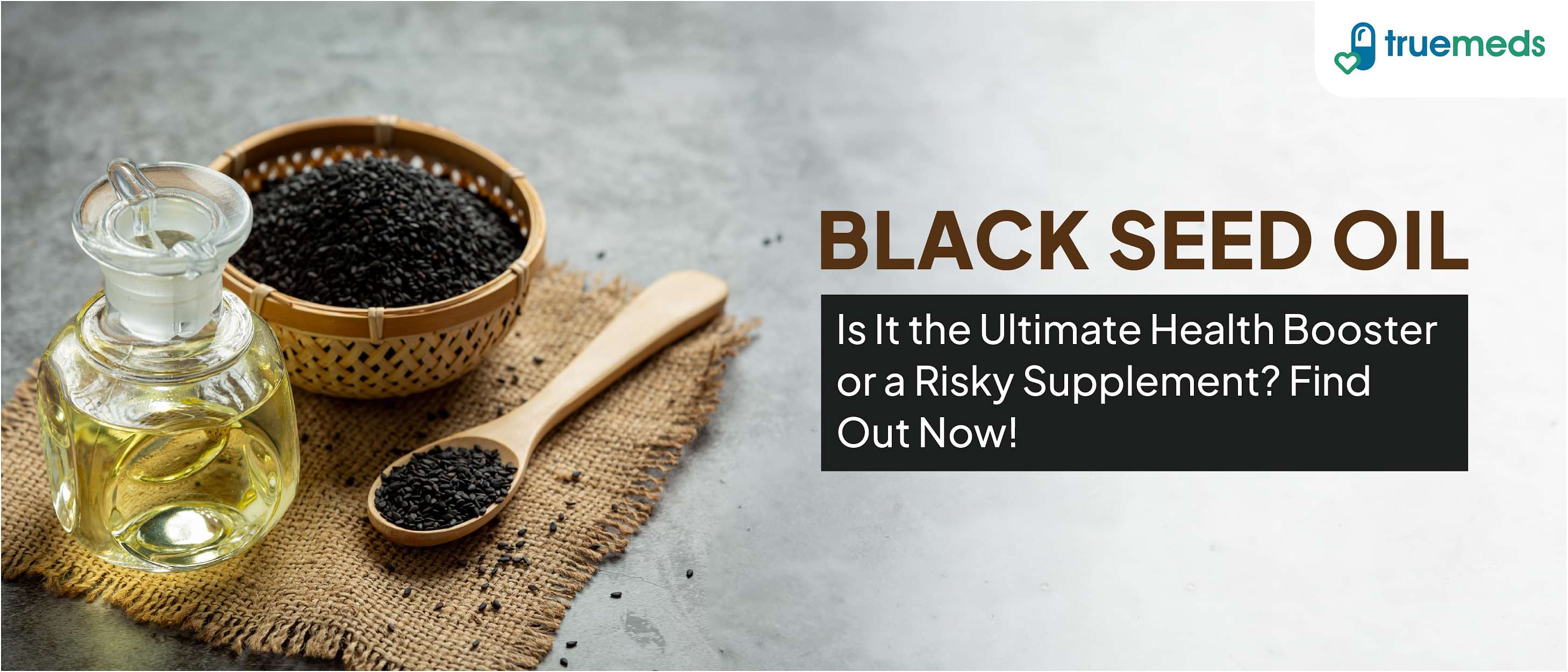
Black Seed Oil: Potential Health Benefits and Precautions
Last updated on : 01 Dec, 2025
Read time : 7 min
Black seed oil, derived from the Nigella sativa plant, is an ancient herbal remedy recognized for its potent bioactive compound, thymoquinone [1]. This oil is increasingly studied for its antioxidant, anti-inflammatory, and antimicrobial properties, suggesting a wide range of potential applications from supporting metabolic health to skin care. We will examine the evidence-based potential benefits, nutritional components, and essential precautions associated with black seed oil consumption.
Potential Benefits of Black Seed Oil
Black seed oil, due to its complex blend of fatty acids and thymoquinone, is associated with several potential health benefits:
1. May Support Weight Management
Limited clinical studies suggest that black seed oil supplementation may contribute to modest reductions in Body Mass Index (BMI) and waist circumference, particularly when combined with dietary changes [5]. The component thymoquinone is thought to potentially influence the expression of hunger-regulating genes, which may help manage appetite. Furthermore, its anti-inflammatory action may help address the chronic low-grade inflammation often associated with obesity [4].
2. Potential Benefits for Skin Health
Applied topically or taken orally, black seed oil’s anti-inflammatory and antibacterial properties may offer relief for various skin conditions. It has been studied for its potential in managing symptoms associated with acne, eczema, and mild psoriasis by calming irritation and promoting skin nourishment and regeneration [1], [2]. Black seed oil may also help improve skin hydration and elasticity.
3. Supports Minor Wound Healing
When applied externally, black seed oil has shown promise in accelerating the healing process of minor cuts and burns in animal models [2]. Its inherent antimicrobial qualities are thought to help protect the area from superficial infection, while its anti-inflammatory effects can aid in reducing scarring and promoting faster tissue repair. (Note: This should not replace standard medical treatment for serious wounds.)
4. May Support Kidney Health
Preliminary research, primarily from animal studies, suggests that black seed oil may have a protective effect on kidney tissue [4]. Some historical studies have explored its potential to reduce the size of certain types of renal stones [1]. It is also being investigated for its potential to help maintain kidney function, especially in individuals dealing with metabolic challenges like diabetes or high blood pressure [4].
5. May Support Healthy Blood Pressure
A meta-analysis of randomized controlled trials suggests that black seed oil supplementation may lead to a small but statistically significant reduction in both systolic and diastolic blood pressure [1], [5]. This heart-protective effect, along with its ability to potentially help regulate LDL (“bad”) cholesterol levels, makes it a subject of interest in cardiovascular wellness research [4].
6. Potential for Acne Reduction
Due to its demonstrated antibacterial activity against certain strains [2], black seed oil is explored as a natural adjunct therapy for managing acne. Its application may help reduce the associated redness and inflammation. Its potential to modulate sebum production may also help reduce the frequency of clogged pores, supporting clearer skin.
7. Promotes Hair and Scalp Health
Black seed oil is commonly used to moisturise the scalp, combat mild dandruff, and strengthen hair follicles [2]. While often cited, the highly specific claim of a “76% reduction in hair fall” stems from a small, older, and potentially biased study; however, multiple modern studies confirm its potential to reduce general hair thinning and promote growth by nourishing the scalp [4].
Key Nutrients in Black Seed Oil
Black seed oil is a nutrient powerhouse. Just a typical dose (approx. 5 ml or 1 teaspoon) of this oil contains:
Essential Fatty Acids: Rich in linoleic acid (Omega-6, approximately 50-60%) and oleic acid (Omega-9, approximately 20%), important for cellular health.
Thymoquinone: This is the primary bioactive compound, responsible for most of the oil’s recognized antioxidant and anti-inflammatory effects [1], [4].
Vitamins and Minerals: It provides small amounts of B vitamins (B1, B2, B3), along with essential minerals such as calcium, iron, zinc, and phosphorus, which collectively support immune function and overall health [2].
Conclusion
Black seed oil, distinguished by its high content of thymoquinone and essential fatty acids, is a subject of ongoing research due to its associated anti-inflammatory, antioxidant, and antimicrobial properties. While historical use and modern studies point to potential benefits for metabolic health, skin, and inflammation, it is a medicinal supplement, not a cure-all food [4].
It is imperative to use this oil responsibly. Always adhere to recommended, small dosages and seek guidance from a qualified healthcare professional or a Registered Dietitian before incorporating any new supplement into your health regimen to minimize the risk of adverse effects and serious drug interactions.
Frequently Asked Questions (FAQs)
Does black seed oil help with weight loss?
Black seed oil may offer modest support for weight management by potentially helping to reduce appetite and inflammation [5]. However, it is not a substitute for a balanced diet and consistent exercise and should be used as an adjunct to a healthy lifestyle.
Is black seed oil good for the immune system?
Yes, black seed oil contains thymoquinone, which is recognized for its immunomodulatory properties [4]. This means it may help regulate and strengthen the immune system’s response to infections and inflammation.
Does black seed oil help with joint pain?
Black seed oil may help reduce mild joint pain and stiffness due to its documented anti-inflammatory properties [1]. It has been explored in conditions like arthritis, but it must be used only in conjunction with—not in place of—medical treatments prescribed for joint pain.
Is black seed oil safe during pregnancy?
No. Pregnant women should strictly avoid black seed oil in medicinal doses [4]. Historically, it has been suggested to possess properties that may stimulate uterine contractions. Always consult an Obstetrician before considering any supplement during pregnancy or breastfeeding.
Can black seed oil improve digestion?
Yes, black seed oil may traditionally aid digestion by reducing gas, bloating, and indigestion. Its components may also support a healthy balance in the gut microbiome [2].
How should black seed oil be taken?
Black seed oil is typically taken orally in small doses (½ to 1 teaspoon daily) or mixed into honey, water, or smoothies. Always start with the lowest dose to assess tolerance, and never exceed the recommended dosage without medical advice.
Disclaimer
This article is for informational and educational purposes only and is not a substitute for professional medical advice, diagnosis, or treatment. Please consult a healthcare provider before beginning any new wellness practice, especially if you have an existing medical condition or are on medication.
References
[1] Hosseinzadeh, H., Tavakkoli, A., Mahdian, V., & Razavi, B. M. (2017). Review on Clinical Trials of Black Seed (Nigella sativa) and Its Active Constituent, Thymoquinone. Journal of Pharmacopuncture, 20(3), 179–193. https://doi.org/10.3831/kpi.2017.20.021
[2] Ahmad, M. F., Ahmad, F. A., Ashraf, S. A., Saad, H. H., Wahab, S., Khan, M. I., Ali, M., Mohan, S., Hakeem, K. R., & Athar, M. T. (2021). An updated knowledge of Black seed (Nigella sativa Linn.): Review of phytochemical constituents and pharmacological properties. Journal of Herbal Medicine, 25, 100404. https://doi.org/10.1016/j.hermed.2020.100404
[3] Adedokun, M. A., Enye, L. A., Akinluyi, E. T., Ajibola, T. A., & Edem, E. E. (2024). Black seed oil reverses chronic antibiotic-mediated depression and social behaviour deficits via modulation of hypothalamic mitochondrial-dependent markers and insulin expression. IBRO Neuroscience Reports, 16, 267–279. https://doi.org/10.1016/j.ibneur.2024.01.008
[4] Hannan, Md. A., Rahman, Md. A., Sohag, A. A. M., Uddin, Md. J., Dash, R., Sikder, M. H., Rahman, Md. S., Timalsina, B., Munni, Y. A., Sarker, P. P., Alam, M., Mohibbullah, Md., Haque, Md. N., Jahan, I., Hossain, Md. T., Afrin, T., Rahman, Md. M., Tahjib-Ul-Arif, Md., Mitra, S., & Oktaviani, D. F. (2021). Black Cumin (Nigella sativa L.): A Comprehensive Review on Phytochemistry, Health Benefits, Molecular Pharmacology, and Safety. Nutrients, 13(6), 1784. https://doi.org/10.3390/nu13061784
[5] Naghsh, N., Moridpour, A. H., Kavyani, Z., Musazadeh, V., Jafarzadeh, J., Safaei, E., Clark, & Faghfouri, A. H. (2023). The effect of Nigella sativa (black seed) supplementation on body weight and body composition: A GRADE-assessed systematic review and dose-response meta-analysis of randomized controlled trials. Journal of Functional Foods, 105, 105565. https://doi.org/10.1016/j.jff.2023.105565
[6] International Journal of Pharmaceutical Sciences and Research. (2016). 7(8). https://doi.org/10.13040/ijpsr.0975-8232.7(8).3185-96















Disclaimer
Our healthcare experts have carefully reviewed and compiled the information presented here to ensure accuracy and trustworthiness. It is important to note that this information serves as a general overview of the topic and is for informational purposes only. It is not intended to diagnose, prevent, or cure any health problem. This page does not establish a doctor-patient relationship, nor does it replace the advice or consultation of a registered medical practitioner. We recommend seeking guidance from your registered medical practitioner for any questions or concerns regarding your medical condition.
Popular Articles



Recommended Articles




Recent Articles










Company
About UsHealth ArticleHealth StoriesDiseases & Health ConditionsAyurvedaAll MedicinesAll BrandsNeed HelpFAQSecuritySubscribe
Registered Office Address
Grievance Officer
Download Truemeds


Contact Us
Our customer representative team is available 7 days a week from 9 am - 9 pm.
v4.8.0

2025 - Truemeds | All rights reserved. Our content is for informational purposes only. See additional information.

Our Payment Partners




