

- Medicines
- Personal Care
- Skin Cream
- Sunscreen
- Face Wash
- Skin and Body Soap
- Acne Care
- Body Lotions
- Moisturising Lotion
- Moisturising Cream
- Mosquito Repellent
- Moisturising Gel
- Body Wash
- Hair Oils
- Hair Shampoo
- Hair Conditioners
- Hair Supplements
- Hair Colour
- Hair Serum
- Hair Mask
- Hair Solutions
- Baby Diapers and Wipes
- Baby Lotion and Moisturising Cream
- Baby Bath Essentials
- Baby Skin Care
- Baby and Infant Food
- Baby Healthcare
- Women Multivitamins
- Ovulation Test Kit and Women Intimate Care
- Sanitary Pads
- Nutritional Drinks
- Condoms
- Lubricants
- Massage Gels
- Personal Body Massagers
- Men Performance Booster
- Sexual Health Supplements
- Massage Oils
- Ayurveda
- Tooth Paste
- Mouth Ulcer Gel
- Mouthwash
- Toothache and Gum Pain
- Tooth Brush
- Gargle Solution
- Orthopaedic Supports
- Adult Diapers
- Footwear
- Mobility and Support Accessories
- Urinary Support and Care
- Health Conditions
- Bone and Joint Care
- Digestive Care
- Eye Care
- Pain Relief
- Smoking Cessation
- Liver Care
- Stomach Care
- Cold and Cough
- Heart Care
- Kidney Care
- Piles, Fissures & Fistula
- Respiratory Care
- Mental Wellness
- Derma Care
- Pre and Probiotics
- Acidity
- Gas
- Constipation
- Loose Motion/Diarrhoea
- Digestive Fibres
- Digestive Enzymes
- Eye Lubricant Drops
- Lens Solution
- Safety Eye Wear
- Eye Cream
- Eye Vitamins and Supplements
- Eye Drops
- Eye Ointment and Gel
- Nicotine Patch
- Nicotine Gum
- Nicotine Lozenges
- Cough Syrups
- Chest Rubs and Balms
- Nasal Spray
- Lozenges
- Inhalant Capsules
- Cold and Cough Tablets
- Vitamins & Supplements
- Diabetes Care
- Healthcare Devices
- Homeopathic Medicine
- Health Guide
Jatamansi
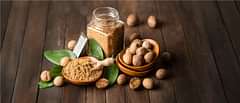
Jatamansi (Nardostachys jatamansi) is an aromatic Himalayan herb long used in Ayurveda, where its dried rhizomes and roots are the parts used. It is traditionally taken to calm the mind, support restful sleep, ease everyday stress, and support memory and focus. Available as a powder, tablet, capsule or medicated oil, it is traditionally valued for its cooling and grounding qualities in Ayurveda.
 50
50Last updated on : 12 Aug, 2026
Read time : 13 mins
Overview
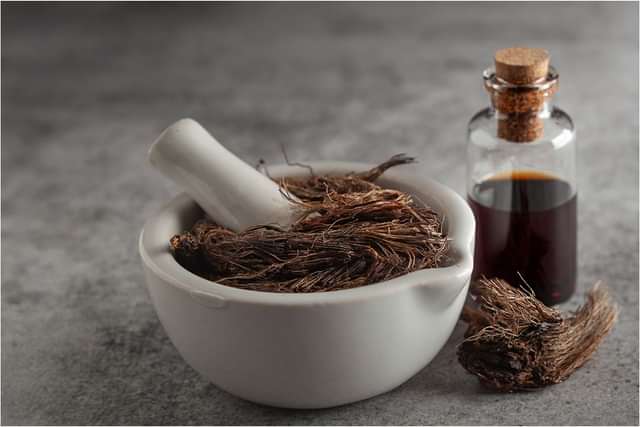
The name Jatamansi is derived from the Sanskrit word jata, meaning matted or twisted locks of hair, referring to the hair-like fibres associated with its rhizomes. Botanically it is Nardostachys jatamansi, a small perennial of the Caprifoliaceae family (older Ayurvedic texts place it in Valerianaceae, which modern botany now treats as part of Caprifoliaceae). It grows in the high-altitude Himalayas across India, Nepal, Bhutan and parts of China, where the dried rhizomes and roots are used.
In classical Ayurveda, Jatamansi is described as a Medhya Rasayana, a rejuvenative for the mind and intellect. It is traditionally regarded as tridoshahara, meaning it is considered balancing for all three doshas, with particular relevance to aggravated Vata. Its Ayurvedic properties are summarised below and in the Key Facts table.
Key Facts
| Feature | Details |
| Botanical name | Nardostachys jatamansi (D.Don) DC. |
| Family | Caprifoliaceae (older texts: Valerianaceae, now merged into Caprifoliaceae) |
| Part used | Dried rhizomes and roots |
| Ayurvedic category | Medhya Rasayana (rejuvenative for the mind and intellect) |
| Ayurvedic properties | Rasa: Tikta, Kashaya, Madhura; Virya: Sheeta (cooling); Vipaka: Katu; Dosha: balances all three, chiefly Vata and Pitta
|
| Key active compounds | Jatamansone (valeranone), nardosinone, jatamansic acid, actinidine, nardol, spirojatamol |
| Traditional uses | Calming the mind, sleep support, stress relief, memory and focus, hair and scalp care |
| Common forms | Powder (churna), tablet, capsule, medicated oil (taila) |
| General dosage | Powder about 1 to 3 g a day; tablets/capsules one to two per dose (see Dosage)
|
| Best taken | Typically in the evening for sleep support
|
| Key safety note | May cause drowsiness and lower blood pressure. Avoid in pregnancy and breastfeeding unless advised. May interact with sedatives, antidepressants and blood-pressure medicines |
Alternative Names of Jatamansi
Jatamansi is known by several names across botanical Latin, English and Indian languages:
- Botanical name: Nardostachys jatamansi
- English: Indian spikenard, muskroot, nard
- Hindi: Balchhar, Jatamansi
- Sanskrit: Jatamansi, Tapasvini, Mamsi, Bhutajata
- Bengali: Jatamansi
- Gujarati: Jatamansi, Baalchhad
- Marathi: Jatamansi
- Kannada: Jatamavashi
- Tamil: Jatamanchi
- Telugu: Jatamamsi
- Malayalam: Jatamanji
- Odia: Jatamansi
- Kashmiri: Bhutijatt
Chemical Constituents of Jatamansi
The calming and aromatic actions of Jatamansi are linked mainly to its sesquiterpenes and related compounds:
- Jatamansone (also called valeranone), a key sesquiterpene
- Nardosinone, spirojatamol, jatamol A and jatamol B
- Nardol and calarene (aromatic terpenoids)
- Jatamansic acid
- Actinidine, an alkaloid
- Smaller amounts of coumarins and lignans
Medicinal Properties of Jatamansi
Jatamansi is valued in Ayurveda for a small set of well-defined actions, supported in part by early laboratory research:
- Traditional Status: Classical texts list Jatamansi as a Medhya Rasayana, a rejuvenative for the mind, and as a leading Nidrajanana (sleep-supporting) and Manasa Prashamana (mind-calming) herb.
- Therapeutic Properties: It is traditionally regarded as calming, grounding and mildly antispasmodic, with a cooling and unctuous quality that soothes an aggravated nervous system.
- Antioxidant Activity: Laboratory studies have reported free-radical-scavenging activity in Jatamansi extracts. However, the clinical significance of these findings in humans remains unclear.
- Ayurvedic Principles: Its Sheeta (cooling) and Snigdha (unctuous) qualities are said to pacify Vata and Pitta, which underpins its use for restlessness, poor sleep and mental strain.
- Evidence Status: Most pharmacological data so far come from laboratory and animal studies. Good-quality human trials are limited, so claims are best framed as traditional use with emerging support.
Key Health Benefits of Jatamansi
Jatamansi is best known for its calming action on the mind and nervous system. The benefits below reflect its traditional use, with early research noted where it exists.
1. Calms the Mind and Eases Everyday Stress
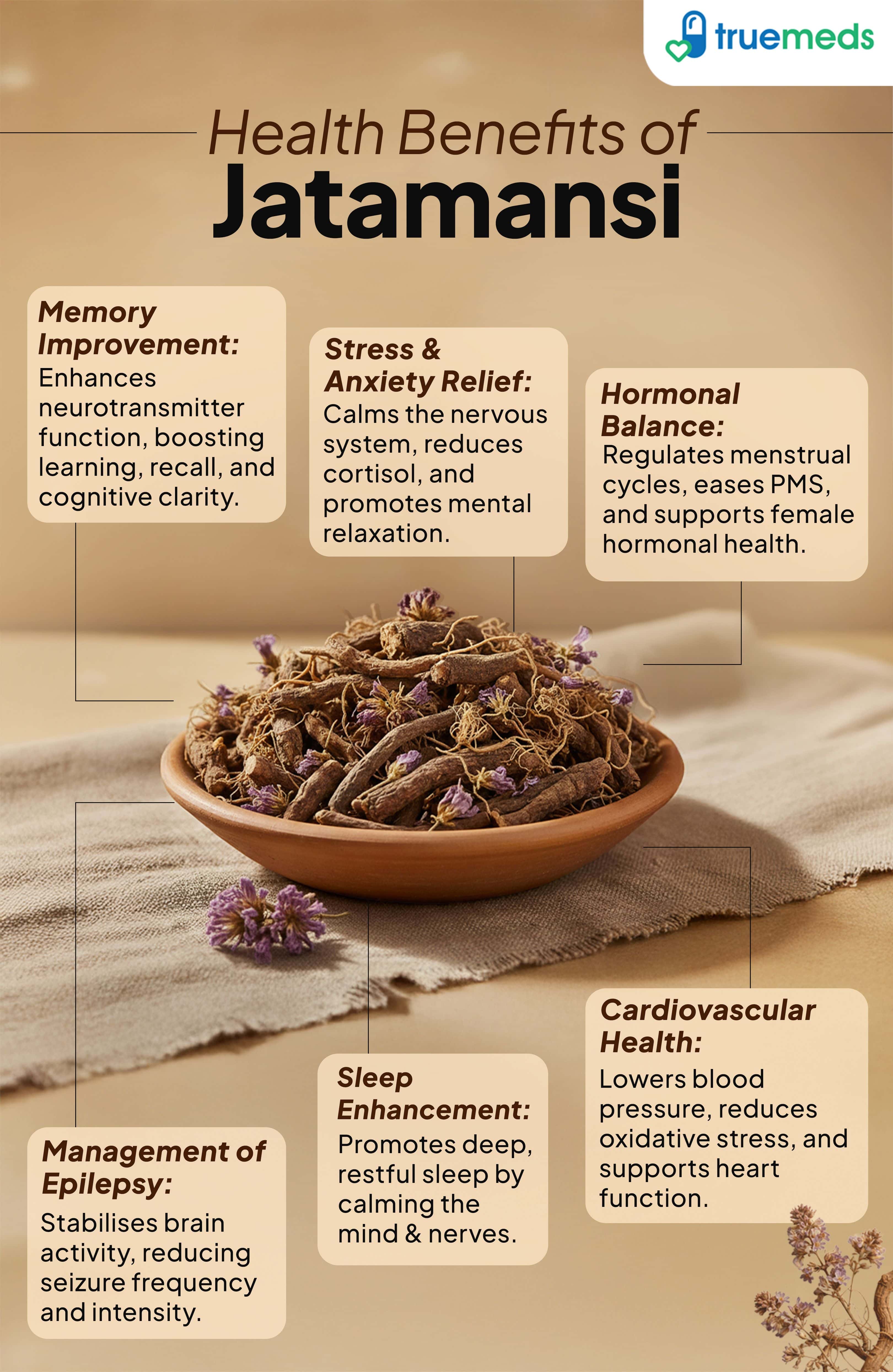
In Ayurveda, Jatamansi is valued as a Manasa Prashamana, or mind-calming, herb that helps settle an overactive, Vata-aggravated mind. Laboratory studies suggest its compounds may influence calming brain chemicals such as GABA, which may support its long-standing use for everyday stress, tension and restlessness.
2. Supports Deeper, More Restful Sleep
Jatamansi is a classical Nidrajanana, or sleep-promoting, herb. It is traditionally used as a sleep-supporting herb and may help promote relaxation at bedtime, particularly during periods of stress.
3. Supports Memory, Focus and Mental Clarity
As a Medhya Rasayana, Jatamansi is traditionally used to nourish the mind and sharpen focus. Early laboratory research points to antioxidant activity in brain tissue, which researchers suggest may help protect nerve cells, although good-quality human studies on memory are still limited.
4. Provides Antioxidant and Nerve-Soothing Support
Compounds in Jatamansi show antioxidant activity in laboratory studies, meaning they help neutralise free radicals. In traditional use this is linked to its reputation for calming and protecting the nervous system and supporting overall mental wellbeing, rather than treating any specific nervous-system disease.
5. Traditionally Used to Ease Monthly Discomfort
Because of its Vata-balancing and mildly antispasmodic reputation, Jatamansi has traditionally been used to ease the cramping and low mood that some women feel around their monthly cycle. The evidence here is largely traditional, so it should support, not replace, medical care where symptoms are severe.
Important: Jatamansi is a supportive wellness herb, not a treatment for any diagnosed condition. If you have an ongoing health problem or take regular medication, speak to a qualified doctor or Ayurvedic practitioner before using it.
Common Uses of Jatamansi
These are the common conditions in which Jatamansi is traditionally used. This section is about when it is used, which is different from how it may benefit the body above.
1. As a Bedtime Calming Aid
Traditionally used in the evening to help promote relaxation and support restful sleep, particularly during periods of stress or restlessness.
2. During Busy or High-Pressure Phases
Used as a daytime calming tonic when mental strain, worry or restlessness build up, for example during exams, deadlines or emotional upheaval.
3. In Hair Oils and Scalp Care
Jatamansi-infused oil is massaged into the scalp in traditional hair care routines, where it is valued for supporting healthy roots and a soothed scalp.
4. In Skin and Complexion Care
Applied in traditional skin preparations for its soothing, cooling reputation and to support calm, comfortable skin. It is a comfort measure, not a treatment for skin disease.
Precautions While Taking Jatamansi
Jatamansi may be well tolerated when used appropriately, but it may not be suitable for everyone. The following situations require you to consult a doctor before using Jatamansi, if any of them apply to you.
1. Pregnancy
There is very little safety data on Jatamansi in pregnancy, so it is best avoided during pregnancy unless a qualified practitioner has specifically advised it.
2. Breastfeeding
Safety while breastfeeding has not been established, so nursing mothers should check with a doctor before use to be sure it is suitable for them and their baby.
3. People Managing Blood Sugar
Jatamansi may affect blood sugar levels, so anyone monitoring their blood sugar or taking related medication should keep a closer watch and seek advice.
4. People With Heart Concerns
It may influence heart rate and blood pressure, so anyone with a heart condition or on heart or blood-pressure medication should use it only under medical guidance.
5. People With Kidney Concerns
Its effect on the kidneys is not well studied, so those with kidney problems should use it only if a doctor advises it.
6. Taking It With Alcohol
Combining Jatamansi with alcohol can add to drowsiness and dull alertness, so the two should not be taken together.
How to Use Jatamansi
Jatamansi is taken in a few simple forms. Choose the one that suits you and follow the general steps below, adjusting to any advice from your practitioner.
1. As a Powder (Churna)
- Measure a small dose of powder, around one quarter to one half of a teaspoon.
- Stir it into warm water or a little honey so it is easy to take.
- Take it once or twice a day, ideally in the evening if you are using it for sleep.
2. Jatamansi Tablets
- Take one to two tablets as a single dose.
- Swallow with a full glass of water.
- Use once or twice a day, or as directed by your practitioner.
3. Jatamansi as Capsules
- Take one to two capsules as a single dose.
- Swallow with water to help them go down easily.
- Use once or twice a day, in line with the tablet guidance above.
4. As a Medicated Oil
- Warm a little Jatamansi oil, on its own or blended with a carrier oil such as coconut or sesame.
- Massage gently into the scalp in small circles.
- Use it a few times a week, leaving it on for a while before washing out.
Herbs Traditionally Used With Jatamansi
In classical practice, Jatamansi is rarely used alone for the mind. It is often paired with other calming, memory-supporting herbs, for example:
Herb | How it is used with Jatamansi |
Brahmi (Bacopa monnieri) | Often paired with Jatamansi to support memory, concentration and a calm, steady mind, making it a classic combination in Medhya (brain-supporting) formulations. |
Shankhpushpi (Convolvulus pluricaulis) | Combined for its calming, memory-supporting reputation, complementing Jatamansi in traditional tonics aimed at mental clarity and relaxation. |
Ashwagandha (Withania somnifera) | Added for its grounding, stress-easing action, balancing Jatamansi so the blend supports both a calm mind and steady daytime energy. |
Tagar (Valeriana wallichii) | A close botanical herb used for its strong sleep-supporting quality, often blended with Jatamansi in preparations for restlessness and disturbed sleep. |
Mandukaparni (Centella asiatica) | Included in brain tonics alongside Jatamansi to support focus and a settled mind, rounding out a gentle, calming formulation. |
Recommended Dosage of Jatamansi
Doses vary with the form and the person. The general guidance below is a starting point only; the right dose should be confirmed by a qualified Ayurvedic practitioner or doctor, especially for the young, the elderly and anyone on medication.
1. Children
Not recommended for young children except on the specific advice and under the supervision of a qualified Ayurvedic practitioner or doctor.
2. Teenagers
Only under the guidance of a qualified practitioner, usually at a reduced dose.
3. Adults
- Powder (churna): About 1 to 3 g a day, in one or two doses.
- Tablets: One to two 500 mg tablets, once or twice daily.
- Capsules: One to two, once or twice daily. Take with water or a little honey.
4. Elderly
Start at the lower end of the adult range and increase only if needed and well tolerated, as older adults can be more sensitive to its calming and blood-pressure-lowering effects.
Side Effects of Jatamansi
Jatamansi is usually well tolerated when used sensibly, but taking too much can cause the following. Stop use and seek advice if any effect is troublesome.
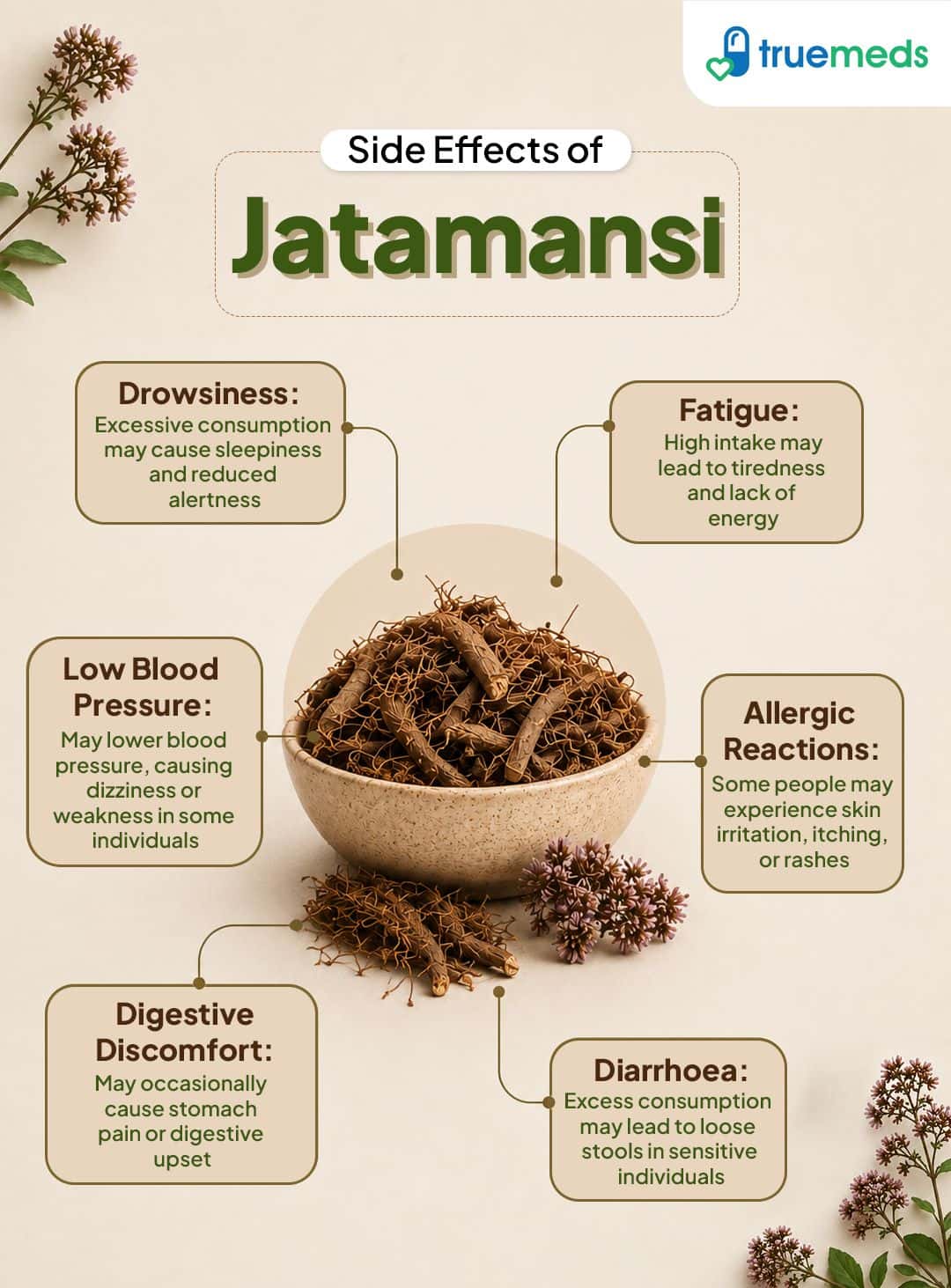
1. Drowsiness
Jatamansi may cause drowsiness in some people because of its traditionally recognised calming properties. If you experience drowsiness, avoid driving, operating machinery, or carrying out tasks that require full alertness.
2. Low Blood Pressure
It may lower blood pressure, so a large dose can leave some people feeling dizzy, faint or weak, particularly if they already have low blood pressure.
3. Allergic Reactions
Some people may react with a rash or skin irritation. If you have not used Jatamansi oil on your skin before, do a patch test first.
4. Digestive Discomfort
It may cause stomach upset such as cramps or diarrhoea. If your stomach is affected, stop using it and speak to a doctor for advice.
Interaction of Jatamansi With Other Drugs
Jatamansi can add to or interfere with the effect of some medicines. If you take any regular medication, check with your doctor before using it.
1. Sedatives and Sleep Medicines
Jatamansi can enhance the effect of sedatives such as benzodiazepines or barbiturates, adding to drowsiness and slowing reactions. Do not combine them without medical advice.
2. Antidepressants
With medicines that raise serotonin, such as SSRIs, there is a theoretical risk of too much serotonin. Use them together only under a doctor's supervision and watch for symptoms like confusion or a racing heart.
3. Blood-Pressure Medicines
Jatamansi may have blood pressure-lowering effects. If taken alongside medicines used to lower blood pressure, it may increase the risk of low blood pressure, which can lead to symptoms such as dizziness or lightheadedness. Consult your doctor before using Jatamansi if you are taking blood pressure medicines.
4. Anti-Epileptic Medicines
As Jatamansi affects the nervous system, it may alter how anti-epileptic medicines work. It should never be used as a substitute for prescribed treatment, and only alongside it if a doctor agrees.
Note: Always tell your doctor or pharmacist about any herbal supplement you are taking, so they can check it against your prescriptions.
Storage of Jatamansi
To keep Jatamansi fresh and effective:
- Store the powder, tablets, capsules or oil in a cool, dry place away from direct sunlight.
- Keep containers tightly closed to protect the aroma and prevent moisture getting in.
- Keep it out of the reach of children.
- Use within the shelf life shown on the pack, and check the oil for any change in smell before use.
Key Takeaways
- Jatamansi is a calming Ayurvedic herb best known for supporting sleep, easing everyday stress and helping mental focus.
- It is taken as a powder, tablet, capsule or oil, and is traditionally used at night for its settling effect.
- It is a supportive wellness herb, not a treatment for epilepsy, heart conditions or any diagnosed illness.
- Jatamansi may cause drowsiness and may lower blood pressure. Avoid consuming it with alcohol, and consult your doctor before use if you have low blood pressure or are taking blood pressure medicines.
- Avoid it in pregnancy and breastfeeding unless advised, and check with a doctor if you take sedatives, antidepressants or blood-pressure medicines.
FAQs
What is Jatamansi used for?
How does Jatamansi help with sleep?
Who should not take Jatamansi?
Does Jatamansi affect serotonin?
Is Jatamansi good for hair?
Is Jatamansi heating or cooling?
References
- Pandey, M. M., Katara, A., Pandey, G., Rastogi, S., & Rawat, A. K. S. (2013). An important Indian traditional drug of ayurveda jatamansi and its substitute bhootkeshi: chemical profiling and antioxidant activity. Evidence-Based Complementary and Alternative Medicine: ECAM, 2013, 142517. https://doi.org/10.1155/2013/142517
- Sahu, R., Dhongade, H. J., Pandey, A., Sahu, P., Sahu, V., Patel, D., & Kashyap, P. (2016). Medicinal Properties of Nardostachys jatamansi (A Review). Oriental Journal of Chemistry, 32(2), 859–866. https://doi.org/10.13005/ojc/320211
- Nardostachys jatamansi (D.Don) DC. (n.d.). Plants of the World Online. Retrieved July 29, 2026, from http://powo.science.kew.org/taxon/urn:lsid:ipni.org:names:859418-1
Other Ayurvedic Ingredients

Explore other categories
Latest health articles





Top Health Essentials

Top-selling ayurvedic products












Disclaimer
Top-Selling Medicines:
...View more
Top-OTC medicines:
...View more
Top-selling healthcare devices:
...View more
Company
About UsHealth ArticleHealth StoriesHealth LibraryDiseases & Health ConditionsAyurvedaUnderstanding Generic MedicinesAll MedicinesAll BrandsNeed HelpFAQSecuritySavings CalculatorAdvertise with UsSubscribe
Registered Office Address
Grievance Officer
Download Truemeds


Contact Us
Our customer representative team is available 7 days a week from 9 am - 9 pm.
v4.28.19

2026 - Truemeds | All rights reserved. Our content is for informational purposes only. See additional information.

Our Payment Partners




