- Medicines
- Personal Care
- Skin Cream
- Sunscreen
- Face Wash
- Skin and Body Soap
- Acne Care
- Body Lotions
- Moisturising Lotion
- Moisturising Cream
- Mosquito Repellent
- Moisturising Gel
- Body Wash
- Hair Oils
- Hair Shampoo
- Hair Conditioners
- Hair Supplements
- Hair Colour
- Hair Serum
- Hair Mask
- Hair Solutions
- Baby Diapers and Wipes
- Baby Lotion and Moisturising Cream
- Baby Bath Essentials
- Baby Skin Care
- Baby and Infant Food
- Baby Healthcare
- Women Multivitamins
- Ovulation Test Kit and Women Intimate Care
- Sanitary Pads
- Nutritional Drinks
- Condoms
- Lubricants
- Massage Gels
- Personal Body Massagers
- Men Performance Booster
- Sexual Health Supplements
- Massage Oils
- Ayurveda
- Tooth Paste
- Mouth Ulcer Gel
- Mouthwash
- Toothache and Gum Pain
- Tooth Brush
- Gargle Solution
- Orthopaedic Supports
- Adult Diapers
- Footwear
- Mobility and Support Accessories
- Urinary Support and Care
- Health Conditions
- Bone and Joint Care
- Digestive Care
- Eye Care
- Pain Relief
- Smoking Cessation
- Liver Care
- Stomach Care
- Cold and Cough
- Heart Care
- Kidney Care
- Piles, Fissures & Fistula
- Respiratory Care
- Mental Wellness
- Derma Care
- Pre and Probiotics
- Acidity
- Gas
- Constipation
- Loose Motion/Diarrhoea
- Digestive Fibres
- Digestive Enzymes
- Eye Lubricant Drops
- Lens Solution
- Safety Eye Wear
- Eye Cream
- Eye Vitamins and Supplements
- Eye Drops
- Eye Ointment and Gel
- Nicotine Patch
- Nicotine Gum
- Nicotine Lozenges
- Cough Syrups
- Chest Rubs and Balms
- Nasal Spray
- Lozenges
- Inhalant Capsules
- Cold and Cough Tablets
- Vitamins & Supplements
- Diabetes Care
- Healthcare Devices
- Homeopathic Medicine
- Health Guide
Brahmi
Brahmi (Bacopa monnieri) is an Ayurvedic herb classified as a Medhya Rasayana, or brain tonic. It is traditionally used to support memory, learning and concentration, and is commonly taken to help promote mental calmness and manage everyday stress. It is also traditionally associated with supporting overall mental wellbeing and cognitive function.
 50
Last updated on : 29 Sep, 2026
Read time : 10 mins

What is Brahmi?
Brahmi takes its Sanskrit name from Brahma, reflecting its long-standing traditional association with awareness and clear thinking. It is prepared from the leaves of Bacopa monnieri, a creeping plant that grows in wetland and marshy areas across India and other tropical regions, and is described in Ayurvedic texts among the Medhya Rasayana, a group of herbs traditionally used to support memory and mental function.
In Ayurveda, Brahmi is classified as Tikta rasa (bitter taste), Sheeta virya (cooling potency), and is traditionally believed to help balance aggravated Pitta and Vata dosha.
Key Facts
| Feature | Details |
| Botanical name | Bacopa monnieri |
| Family | Plantaginaceae |
| Part used | Leaves |
| Ayurvedic category | Medhya Rasayana (traditionally classified among herbs used to support memory and mental function) |
| Ayurvedic properties | Tikta rasa (bitter), Sheeta virya (cooling), traditionally believed to help balance Pitta and Vata dosha |
| Key active compounds | Bacosides, alkaloids and flavonoids |
| Traditional uses | Supporting memory, learning and concentration, and traditionally used for stress and general nervous system support |
| Common forms | Powder, juice, oil, leaves, capsules, tablets |
| General dosage | 300 to 450 mg of standardised extract or 1 to 2 grams of powder daily, or as directed by a doctor |
| Best taken | With meals, or as directed by a doctor |
| Key safety note | Avoid in pregnancy and breastfeeding without medical advice, and use with caution alongside thyroid medicines or sedatives |
Alternative Name of Brahmi
Brahmi is known by its botanical name and by various Sanskrit, Hindi and regional Indian names.
- Hindi: Jalaneem, Brahmi
- Sanskrit: Brahmi, Saraswata, Vayastha
- Bengali: Brahmshak
- Gujarati: Brahmi
- Kannada: Neeru Brahmi
- Telugu: Brahmi, Neeti Sambrani, Sambrani Chettu
- Tamil: Vallarai
- Malayalam: Neerbrahmi, Bhrammi
- Marathi: Nira-brahmi
- Odia: Panikundi
- English: Water Hyssop
Chemical Constituents of Brahmi
Brahmi contains a range of bioactive compounds. These include the following.
- Bacosides: the main saponins studied for their potential effects on memory and learning
- Alkaloids: nitrogen-containing compounds found in Brahmi
- Flavonoids: plant compounds associated with antioxidant activity
Key Health Benefits of Brahmi
Brahmi may support memory, learning, attention, stress management and general nervous system function (Kongkeaw et al., 2014). It also provides antioxidant and anti-inflammatory activity and may support hair and scalp health. However, evidence for specific medical conditions remains limited, so Brahmi should not replace prescribed treatment or professional medical care.

1. May Support Memory and Learning
Bacosides, the main compounds studied in Brahmi, may support processes involved in memory, learning and attention (Kongkeaw et al., 2014). Brahmi is traditionally used as a cognitive aid, not as a treatment for a diagnosed memory disorder.
2. May Help the Body Manage Stress
Brahmi is traditionally used to promote mental calmness and support the body's response to everyday stress. It is not a treatment for a diagnosed anxiety disorder, which requires medical assessment.
3. May Offer Antioxidant and Anti-Inflammatory Support
Brahmi contains compounds associated with antioxidant activity and has been studied for potential anti-inflammatory effects. These are supportive wellness properties rather than treatments for diagnosed conditions.
4. May Support Hair and Scalp Health
Brahmi is traditionally used in hair oils and scalp preparations to nourish the scalp and soothe minor irritation, which may support overall hair health.
5. May Support Neurological Health
Brahmi is traditionally used to support overall nervous system function, and research has examined its potential effects on attention, focus and cognitive function (Kongkeaw et al., 2014). Evidence for its use in conditions such as Alzheimer's or Parkinson's disease remains limited (Basheer et al., 2022), so it should not replace prescribed neurological care.
Common Uses for Brahmi
Beyond its general health benefits, Brahmi is traditionally used in the following situations.
As a Traditional Brain Tonic
Brahmi is traditionally taken as part of a daily routine, particularly during periods of study or mental exertion, to support learning, concentration and mental clarity.
In Ayurvedic Hair Oils
Brahmi oil is a common ingredient in Ayurvedic hair oils, used for scalp massage as part of a regular hair care routine.
As a Calming Herbal Tea
Dried Brahmi leaves are traditionally steeped as a herbal tea and taken in the evening as part of a relaxing wind-down routine.
Precautions While Taking Brahmi
- If you have a diagnosed heart condition, speak to your doctor before taking Brahmi, as it may affect heart rate.
- If you have kidney disease, speak to your doctor before taking Brahmi, as its effects on kidney function have not been well studied.
- Do not take Brahmi during pregnancy or while breastfeeding unless a doctor advises it.
- Avoid alcohol while taking Brahmi, as the combination may increase drowsiness and affect coordination.
- This is general information and is not a substitute for advice from your doctor or a registered Ayurvedic practitioner.
How to Use Brahmi
Brahmi is available in several forms. Here is how each is generally used.
Capsules or Tablets
Swallow the capsule or tablet whole with a meal containing some fat, since some of the active compounds are fat-soluble, at the time and frequency advised by your doctor.
Powder
Mix the powder with warm water, milk or honey and take it in the morning, or as advised by your doctor.
Oil, for the Scalp
Warm the oil slightly, apply to the scalp and massage it in for 10 to 15 minutes. Use regularly as directed for scalp care.
Leaves, as a Tea
Steep dried leaves or powder in hot water, strain, and drink once or twice daily.
Herbs Traditionally Used With Brahmi
Brahmi is often combined with other herbs in classical Ayurvedic brain tonics. Here are some it is traditionally paired with:
| Herbs | Traditional Pairing |
| Shankhpushpi (Convolvulus pluricaulis) | Frequently combined with Brahmi in classical Medhya Rasayana formulations, with both traditionally used to support memory and mental calmness. |
| Mandukaparni (Centella asiatica) | Often paired with Brahmi in brain tonics, despite being a different plant with similar traditional cognitive uses. |
| Ashwagandha (Withania somnifera) | Sometimes included alongside Brahmi where broader stress support is the goal, with each herb having a different traditional action. |
Recommended Dosage of Brahmi
Dosage should always be personalised by a doctor or Ayurvedic practitioner. The following is general guidance only.
- Children: Brahmi is not generally recommended for children without a doctor's supervision. Any use in children should be on medical advice only.
- Teenagers: Dosage should be set individually by a doctor or Ayurvedic practitioner, taking age and body weight into account.
- Adults: A commonly advised amount is 300 to 450 mg of standardised extract daily, or 1 to 2 grams of powder, or as directed by a doctor.
- Elderly: Older adults may need a lower dose, particularly where heart or kidney function is reduced. Dosage should be confirmed by a doctor.
Disclaimer: Do not self-medicate. Do not exceed the advised dose or duration, as excessive use may cause side effects such as stomach upset or drowsiness. Always follow your doctor's instructions.
Side Effects of Brahmi
Brahmi is generally considered well tolerated when taken as advised. Some people may notice the following.
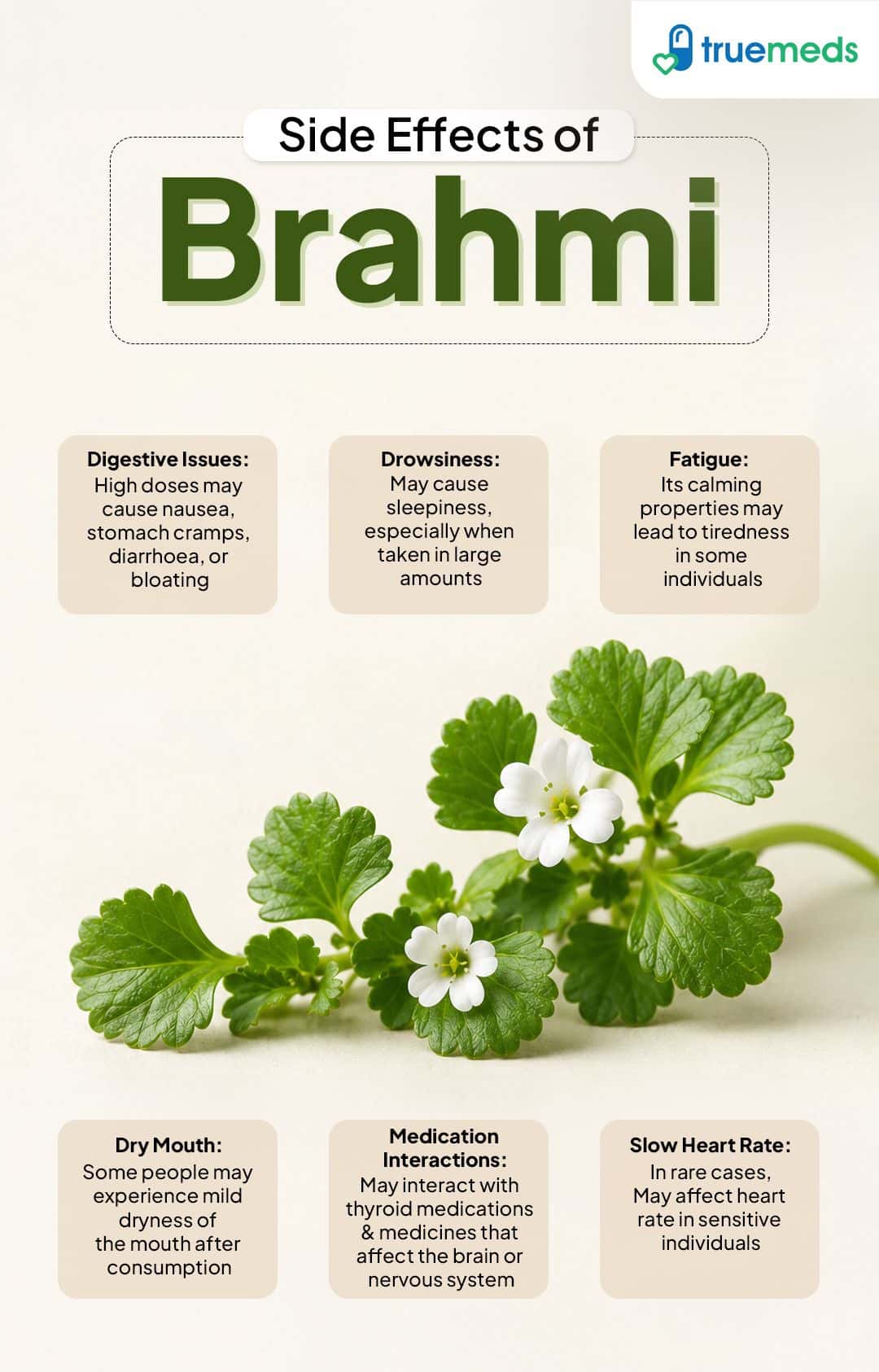
Stomach Upset
Nausea, stomach cramps, diarrhoea or bloating can occur, especially at higher doses. Taking Brahmi with food may help reduce stomach discomfort.
Drowsiness
Due to its calming action, Brahmi can cause tiredness or drowsiness, particularly at higher doses or alongside other sedatives.
Dry Mouth
A mild dry mouth may occur in some people and may improve when the dose is reduced.
Slowed Heart Rate
In rare cases, Brahmi has been linked to bradycardia, a slowed heart rate (Walker & Pellegrini, 2023). Anyone with a heart condition should speak to their doctor before use.
Interaction of Brahmi With Other Drugs
Brahmi may interact with certain medicines. Always tell your doctor about everything you are taking.
Thyroid Medicines
Brahmi may affect thyroid hormone levels, so taking it alongside thyroid medicines may alter their effects. Speak to your doctor before combining them.
Antidepressants and Other Medicines That Affect Brain Chemicals
Brahmi may affect neurotransmitter activity in the brain, so it should be used with caution alongside antidepressants (Siwek et al., 2023) or anticholinergic medicines (Acquarulo et al., 2022). Ask your doctor before combining them.
Sedative Medicines
Brahmi may add to the drowsiness caused by sedative medicines. Speak to your doctor before combining them.
Storage of Brahmi
Store Brahmi powder, capsules or oil in a cool, dry place, away from direct sunlight. Keep the container tightly closed after use, and keep it out of reach of children. Do not use it beyond the expiry date printed on the pack.
Key Takeaways
- Brahmi (Bacopa monnieri) is a classical Ayurvedic herb traditionally used to support memory, learning and mental calmness.
- It is classified as a Medhya Rasayana, a group of herbs traditionally used to support brain function.
- It is traditionally believed to have antioxidant, anti-inflammatory and hair-supporting properties.
- It is not a treatment for epilepsy, Alzheimer's disease, or any other serious diagnosed condition.
- Avoid it in pregnancy and breastfeeding without medical advice, and use it with caution if you have a heart condition, kidney disease, or take thyroid medicines or sedatives. Take it only at the dose advised by your doctor.
FAQs
What forms is Brahmi available in?
Can Brahmi be taken on an empty stomach?
Can Brahmi be taken with milk?
Can Brahmi and Ashwagandha be taken together?
Is Brahmi good for hair?
Can Brahmi affect heart rate?
Is Brahmi safe for people with kidney disease?
Is Brahmi effective for dementia or Alzheimer's disease?
Brahmi safe for long-term use?
References
- Walker, E. A., & Pellegrini, M. V. (2023). Bacopa monnieri. In StatPearls [Internet]. StatPearls Publishing. https://www.ncbi.nlm.nih.gov/books/NBK589635/
- Acquarulo, B., Tandon, P., & Macica, C. M. (2022). Suspected cholinergic toxicity due to cevimeline hydrochloride and Bacopa monnieri interaction: A case report. Journal of Medical Case Reports, 16, 253. https://doi.org/10.1186/s13256-022-03479-4
- Siwek, M., Woroń, J., Wrzosek, A., Gupało, J., & Chrobak, A. A. (2023). Harder, better, faster, stronger? Retrospective chart review of adverse events of interactions between adaptogens and antidepressant drugs. Frontiers in Pharmacology, 14, 1271776.
- Basheer, A., Agarwal, A., Mishra, B., Gupta, A., Padma Srivastava, M. V., Kirubakaran, R., & Vishnu, V. (2022). Use of Bacopa monnieri in the treatment of dementia due to Alzheimer disease: Systematic review of randomized controlled trials. Interactive Journal of Medical Research, 11(2), e38542. https://doi.org/10.2196/38542
- Kongkeaw, C., Dilokthornsakul, P., Thanarangsarit, P., Limpeanchob, N., & Scholfield, C. N. (2014). Meta-analysis of randomized controlled trials on cognitive effects of Bacopa monnieri extract. Journal of Ethnopharmacology, 151(1), 528–535. https://doi.org/10.1016/j.jep.2013.11.008
Other Ayurvedic Ingredients



Explore other categories
Latest health articles





Top Health Essentials










Top-selling ayurvedic products
















Disclaimer
Top-Selling Medicines:
...View more
Top-OTC medicines:
...View more
Top-selling healthcare devices:
...View more
Company
About UsHealth ArticleHealth StoriesHealth LibraryDiseases & Health ConditionsAyurvedaUnderstanding Generic MedicinesAll MedicinesAll BrandsNeed HelpFAQSecuritySavings CalculatorAdvertise with UsSubscribe
Registered Office Address
Grievance Officer
Download Truemeds


Contact Us
Our customer representative team is available 7 days a week from 9 am - 9 pm.
v4.28.19

2026 - Truemeds | All rights reserved. Our content is for informational purposes only. See additional information.

Our Payment Partners