

- Medicines
- Personal Care
- Skin Cream
- Sunscreen
- Face Wash
- Skin and Body Soap
- Acne Care
- Body Lotions
- Moisturising Lotion
- Moisturising Cream
- Mosquito Repellent
- Moisturising Gel
- Body Wash
- Hair Oils
- Hair Shampoo
- Hair Conditioners
- Hair Supplements
- Hair Colour
- Hair Serum
- Hair Mask
- Hair Solutions
- Baby Diapers and Wipes
- Baby Lotion and Moisturising Cream
- Baby Bath Essentials
- Baby Skin Care
- Baby and Infant Food
- Baby Healthcare
- Women Multivitamins
- Ovulation Test Kit and Women Intimate Care
- Sanitary Pads
- Nutritional Drinks
- Condoms
- Lubricants
- Massage Gels
- Personal Body Massagers
- Men Performance Booster
- Sexual Health Supplements
- Massage Oils
- Ayurveda
- Tooth Paste
- Mouth Ulcer Gel
- Mouthwash
- Toothache and Gum Pain
- Tooth Brush
- Gargle Solution
- Orthopaedic Supports
- Adult Diapers
- Footwear
- Mobility and Support Accessories
- Urinary Support and Care
- Health Conditions
- Bone and Joint Care
- Digestive Care
- Eye Care
- Pain Relief
- Smoking Cessation
- Liver Care
- Stomach Care
- Cold and Cough
- Heart Care
- Kidney Care
- Piles, Fissures & Fistula
- Respiratory Care
- Mental Wellness
- Derma Care
- Pre and Probiotics
- Acidity
- Gas
- Constipation
- Loose Motion/Diarrhoea
- Digestive Fibres
- Digestive Enzymes
- Eye Lubricant Drops
- Lens Solution
- Safety Eye Wear
- Eye Cream
- Eye Vitamins and Supplements
- Eye Drops
- Eye Ointment and Gel
- Nicotine Patch
- Nicotine Gum
- Nicotine Lozenges
- Cough Syrups
- Chest Rubs and Balms
- Nasal Spray
- Lozenges
- Inhalant Capsules
- Cold and Cough Tablets
- Vitamins & Supplements
- Diabetes Care
- Healthcare Devices
- Homeopathic Medicine
- Health Guide
Paneer
Paneer is a soft, fresh cheese made by curdling heated cow or buffalo milk with an edible acid such as lemon juice or vinegar. It is a vegetarian source of protein, calcium and phosphorus. In everyday Indian cooking and Ayurvedic dietary practice, it is used as a nourishing, protein-rich food that may support bone health, muscle maintenance and general well-being when eaten in moderate amounts.
 50
Last updated on : 08 Sep, 2026
Read time : 11 mins
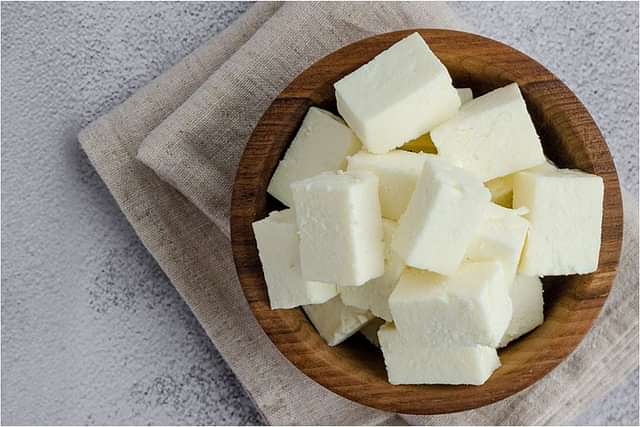
What is Paneer?
The name paneer comes from the Persian and Urdu word for cheese, and the food has long been part of the cuisine of the Indian subcontinent, including India, Pakistan and Bangladesh. It is prepared by adding an edible acid, such as lemon juice, vinegar or citric acid, to hot cow or buffalo milk. The milk proteins separate into soft curds, which are then drained from the whey and pressed into a firm block.
In Ayurvedic dietary practice, fresh milk-based preparations of this kind are generally described as heavy to digest (guru) and unctuous (snigdha), and as nourishing and strengthening (brimhana and balya). They are considered to increase Kapha and help balance Vata, which is why heavy or late-night intake is traditionally discouraged. Paneer is valued mainly as a nutrient-dense vegetarian food rather than as a medicinal preparation.
Key Facts
| Feature | Details |
| Common name | Paneer |
| Also known as | Indian cottage cheese
|
| Origin | Indian subcontinent
|
| Made from | Cow or buffalo milk, curdled with an edible acid (lemon juice, vinegar or citric acid) |
| Ayurvedic classification | Heavy (guru) and unctuous (snigdha); tends to increase Kapha and is traditionally described as helping to balance Vata
|
| Key nutrients | Protein, calcium, phosphorus, fat and vitamin A (full values in the Nutritional Value table)
|
| Common forms | Fresh cubes, grated or crumbled; used raw or cooked
|
| Typical serving | A moderate portion, such as around 50 to 100 g, depending on individual nutritional needs
|
| Best eaten | With meals and preferably earlier in the day; heavy or late-night intake is traditionally discouraged
|
| Key safety note | Paneer can be high in saturated fat and, in some packaged types, added salt. People with high cholesterol, high blood pressure, lactose intolerance or certain kidney conditions may need to limit their intake and should seek individual dietary advice. |
Alternative Names of Paneer
Paneer is a transliterated common name rather than a translated one, so the list below gives its English name and its commonly documented spelling variants across regions.
- English name: Cottage cheese
- Hindi: Paneer
- Common spelling variants: Poneer
Nutritional Value of Paneer
The nutritional value of 100 g of low-fat cottage cheese is as follows (USDA, 2019).
Nutrient (per 100 g) | Amount |
Energy | 82 kcal |
Protein | 11 g |
Total fat | 2.3 g |
Saturated fat | 1.26 g |
Total carbohydrate | 4.31 g |
Calcium | 103 mg |
Cholesterol | 12 mg |
Sodium | 321 mg |
Magnesium | 8.9 mg |
Vitamin A | 69 µg |
Key Health Benefits of Paneer
Paneer is valued mainly for its protein, calcium and phosphorus. Its benefits are described below in terms of how it may support the body, with the amount eaten kept moderate.
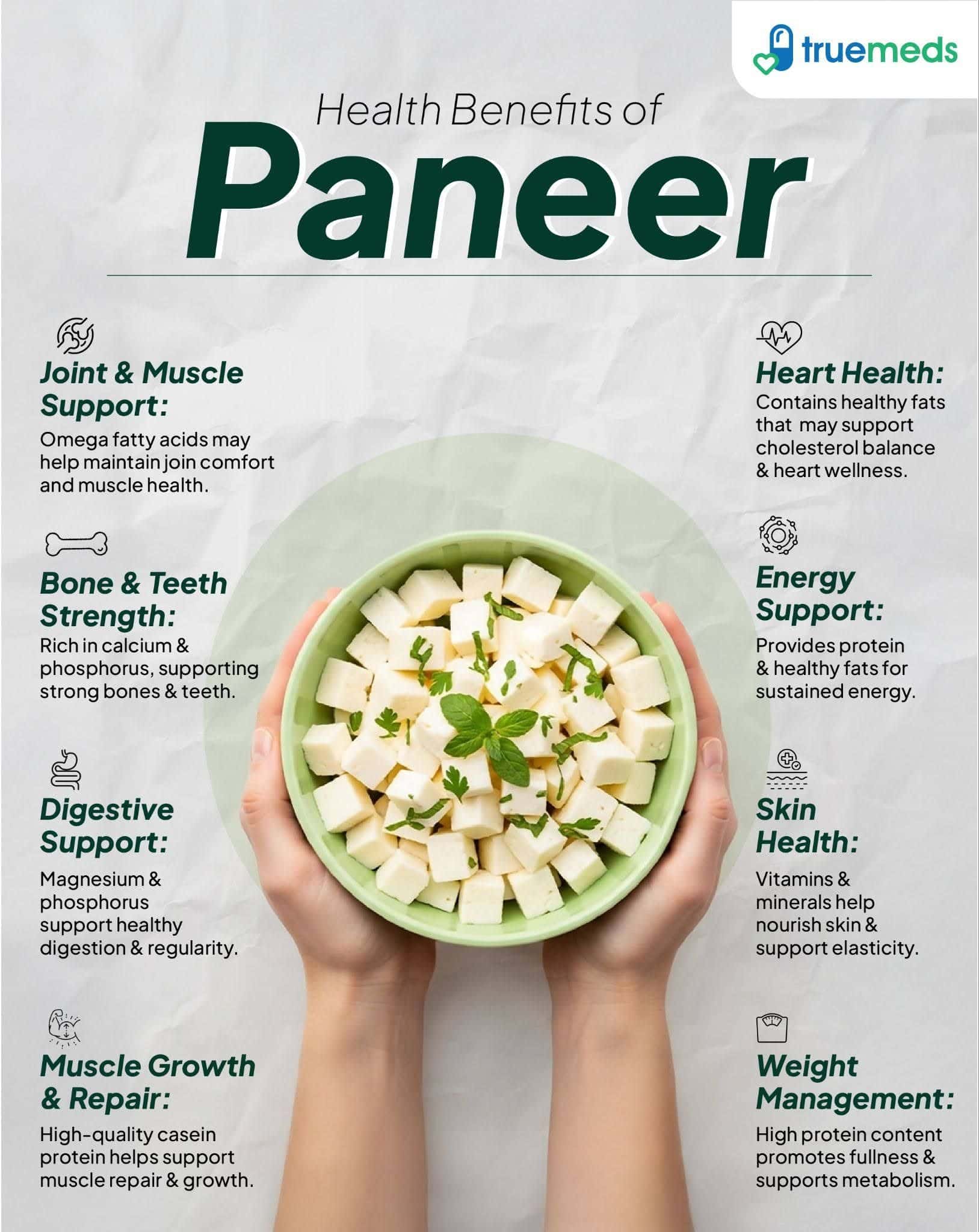
Supports Weight Management
Paneer is high in protein, which helps a person feel full for longer and may reduce snacking between meals. As part of balanced meals, and with lower-fat paneer for those cutting calories, it may support appetite control and portion size. It does not cause weight loss on its own.
Strengthens Bones and Teeth
Paneer provides calcium and phosphorus, two minerals the body uses to build and maintain bone and tooth structure. Regular, moderate intake can contribute to overall calcium intake, which supports bone health across life, and is useful for children and during pregnancy as part of a varied diet that meets increased nutrient needs.
Aids Muscle Repair and Growth
The protein in paneer supplies amino acids that the body uses to repair and build muscle tissue after physical activity. Including a moderate portion after exercise, alongside a balanced diet, may support recovery and the maintenance of lean muscle, particularly for people who train regularly.
Provides Sustained Energy
Paneer is energy-dense and contains protein and fat, which the body digests more slowly than simple carbohydrates. A moderate portion within a meal can therefore contribute to energy intake, though the calories should be counted within daily needs to avoid excess intake.
May Support Joint Comfort in Ayurveda
In Ayurveda, joint discomfort is often linked to aggravated Vata, and nourishing, unctuous foods are traditionally used to help pacify Vata. Paneer is one such food, and its calcium and phosphorus support bone health. This is general dietary support only and does not treat arthritis or any joint disease.
Contributes to Skin Nourishment
The protein and vitamin A in paneer contribute to the nutrients the body needs for normal skin maintenance. A balanced diet that includes paneer may support healthy skin. Paneer has no proven anti-ageing effect, and any claim that it makes skin look younger is not established.
Supports Digestive Regularity
As a protein food eaten in moderate amounts within a balanced, fibre-containing diet, paneer can form part of a healthy diet, but it is not a fermented or probiotic food, so it does not add live cultures to the gut. People who are lactose intolerant may find larger portions harder to digest.
Precautions While Eating Paneer
Paneer is generally safe for most people when eaten as part of a balanced diet, but some groups should take extra care. The points below explain who should limit intake or seek advice.
- Lactose intolerance: Paneer contains some lactose, although usually less than milk. Those who are sensitive should choose portions according to their tolerance.
- Dairy (milk protein) allergy: People with a diagnosed milk allergy should avoid paneer completely (StatPearls/NCBI Bookshelf, 2024).
- High cholesterol or heart disease: Paneer is high in saturated fat, so intake should be modest and lower-fat varieties may be preferred.
- Kidney stones or kidney disease: Paneer is rich in calcium and protein, so those advised to limit either nutrient should follow their doctor or dietitian's advice.
- High blood pressure: Some packaged paneer contains added salt, which can increase sodium intake.
- Pregnancy: choose paneer made from pasteurised milk and eat it fresh, to reduce the risk of foodborne illness.
- Food safety: Eat paneer fresh, keep it refrigerated, and do not eat it if it smells sour or looks slimy.
If you have a long-term health condition or take regular medicines, consult your doctor or a registered dietitian before making paneer a large part of your diet.
How Much Paneer to Eat
Paneer is a food, not a medicine, so it is measured as a serving rather than a drug dose. The general guide below should be adjusted to a person’s age, activity level and health.
- Most healthy adults: about 100 g a day can fit into a balanced diet.
- Active adults and those building muscle: a slightly larger portion may suit, provided it fits within their overall calorie and nutrient needs.
- Children: a smaller portion as one part of a varied diet, not as a main protein source on its own.
- Older adults and anyone with heart, kidney or cholesterol concerns: keep portions modest and follow individual medical advice.
Prefer fresh or lower-fat paneer, and vary your protein sources rather than relying on paneer alone.
Side Effects of Paneer
Paneer is generally well tolerated in moderate amounts, but eating too much can cause problems. The points below explain the main ones.
Weight Gain
Paneer is energy-dense, so large or frequent portions add significant calories. Without matching activity, this can contribute to weight gain over time.
Raised Cholesterol
Paneer can be high in saturated fat, depending on how it is prepared. Eating large amounts regularly can increase saturated fat intake and may raise blood cholesterol in some people, so portions should stay moderate.
Risk of Kidney Stones
Paneer is rich in calcium and protein. People with a history of certain types of kidney stones may need to moderate their intake according to their individual dietary advice. Follow medical advice if you are prone to kidney stones.
High Sodium in Packaged Types
Some shop-bought paneer contains added salt. A high sodium intake can raise blood pressure in some people, so check labels and prefer low-salt or homemade paneer.
Reduced Dietary Variety
Relying too heavily on paneer can crowd out other foods and the different nutrients they provide. A varied diet remains important for overall health.
Mineral Imbalance and Bone Health
There is no good evidence that eating normal amounts of paneer causes a harmful calcium-phosphorus imbalance or weakens bones. Maintaining a varied diet and following recommended portion sizes is generally sufficient.
Note: If you notice ongoing digestive discomfort, or you have a heart, kidney or blood-pressure condition, consult your doctor or dietitian about how much paneer is appropriate for you.
Paneer Interactions With Medicines
- Paneer does not have the herb-drug interactions of a medicinal herb, but because it is high in calcium, one practical point is worth noting.
- Calcium-rich foods, including paneer, may reduce the absorption of certain medicines when taken at the same time, including levothyroxine (thyroid medicine) and some antibiotics such as tetracyclines and fluoroquinolones.
- If you take these medicines, follow the specific timing instructions for your medicine and ask your pharmacist or doctor about the appropriate gap, as the recommended interval varies by medicine.
How to Store Paneer
Fresh paneer spoils quickly, so correct storage matters for both quality and food safety. Follow the points below.
- Refrigerate paneer in an airtight container or wrap it tightly, and use it within about 2 to 3 days, or according to the product's use-by date.
- To keep homemade or loose paneer soft, store it submerged in clean water and change the water daily.
- For longer storage, freeze paneer in airtight packaging; texture may become firmer after thawing.
- Do not eat paneer that smells sour, has an unusual taste or looks slimy, even if it is within date.
Key Takeaways
- Paneer is a nutrient-dense vegetarian food and a useful source of protein, calcium and phosphorus.
- Eaten in moderate amounts, it may support bone and muscle health and help meet daily protein and calcium needs.
- It is high in saturated fat, and some packaged types are high in salt, so portion size matters.
- People with lactose intolerance, high cholesterol, kidney stones or high blood pressure may need to limit intake and should follow individual dietary advice.
- Paneer works best as one part of a varied, balanced diet, not as a food eaten in large amounts.
FAQs
Is paneer good for health?
Can I eat raw paneer?
How much paneer should I eat in a day?
Does paneer cause weight gain?
Can I eat paneer during pregnancy?
When is the best time to eat paneer?
Does paneer contain lactose?
Can paneer cause gas or bloating?
Is paneer good for building muscle?
References
- Kumar, S., Rai, D. C., Niranjan, K., & Bhat, Z. F. (2014). Paneer: An Indian soft cheese variant: A review. Journal of Food Science and Technology, 51(5), 821–831. https://doi.org/10.1007/s13197-011-0567-x
- NutritionValue.org. (n.d.). Cheese, paneer: Nutritional value. https://www.nutritionvalue.org/Cheese%2C_paneer_14110050_nutritional_value.html
- Cow milk allergy. (2024). In StatPearls. StatPearls Publishing. https://www.ncbi.nlm.nih.gov/books/NBK542243/
Explore other categories
Latest health articles




Top Health Essentials


Top-selling ayurvedic products












Disclaimer
Top-Selling Medicines:
...View more
Top-OTC medicines:
...View more
Top-selling healthcare devices:
...View more
Company
About UsHealth ArticleHealth StoriesHealth LibraryDiseases & Health ConditionsAyurvedaUnderstanding Generic MedicinesAll MedicinesAll BrandsNeed HelpFAQSecuritySavings CalculatorAdvertise with UsSubscribe
Registered Office Address
Grievance Officer
Download Truemeds


Contact Us
Our customer representative team is available 7 days a week from 9 am - 9 pm.
v4.28.21

2026 - Truemeds | All rights reserved. Our content is for informational purposes only. See additional information.

Our Payment Partners




