

- Medicines
- Personal Care
- Skin Cream
- Sunscreen
- Face Wash
- Skin and Body Soap
- Acne Care
- Body Lotions
- Moisturising Lotion
- Moisturising Cream
- Mosquito Repellent
- Moisturising Gel
- Body Wash
- Hair Oils
- Hair Shampoo
- Hair Conditioners
- Hair Supplements
- Hair Colour
- Hair Serum
- Hair Mask
- Hair Solutions
- Baby Diapers and Wipes
- Baby Lotion and Moisturising Cream
- Baby Bath Essentials
- Baby Skin Care
- Baby and Infant Food
- Baby Healthcare
- Women Multivitamins
- Ovulation Test Kit and Women Intimate Care
- Sanitary Pads
- Nutritional Drinks
- Condoms
- Lubricants
- Massage Gels
- Personal Body Massagers
- Men Performance Booster
- Sexual Health Supplements
- Massage Oils
- Ayurveda
- Tooth Paste
- Mouth Ulcer Gel
- Mouthwash
- Toothache and Gum Pain
- Tooth Brush
- Gargle Solution
- Orthopaedic Supports
- Adult Diapers
- Footwear
- Mobility and Support Accessories
- Urinary Support and Care
- Health Conditions
- Bone and Joint Care
- Digestive Care
- Eye Care
- Pain Relief
- Smoking Cessation
- Liver Care
- Stomach Care
- Cold and Cough
- Heart Care
- Kidney Care
- Piles, Fissures & Fistula
- Respiratory Care
- Mental Wellness
- Derma Care
- Pre and Probiotics
- Acidity
- Gas
- Constipation
- Loose Motion/Diarrhoea
- Digestive Fibres
- Digestive Enzymes
- Eye Lubricant Drops
- Lens Solution
- Safety Eye Wear
- Eye Cream
- Eye Vitamins and Supplements
- Eye Drops
- Eye Ointment and Gel
- Nicotine Patch
- Nicotine Gum
- Nicotine Lozenges
- Cough Syrups
- Chest Rubs and Balms
- Nasal Spray
- Lozenges
- Inhalant Capsules
- Cold and Cough Tablets
- Vitamins & Supplements
- Diabetes Care
- Healthcare Devices
- Homeopathic Medicine
- Health Guide
Urad Dal
Urad dal, also known as black gram (Vigna mungo), is a protein-rich pulse widely used in Indian cooking and in Ayurvedic dietetics. It is traditionally valued as a nourishing food that may support digestion, physical strength, and skin and hair health when eaten as part of a balanced diet. It is commonly cooked as dal, ground into batter, or used as a paste in traditional skin and hair care.
 50
50Last updated on : 28 Aug, 2026
Read time : 14 mins
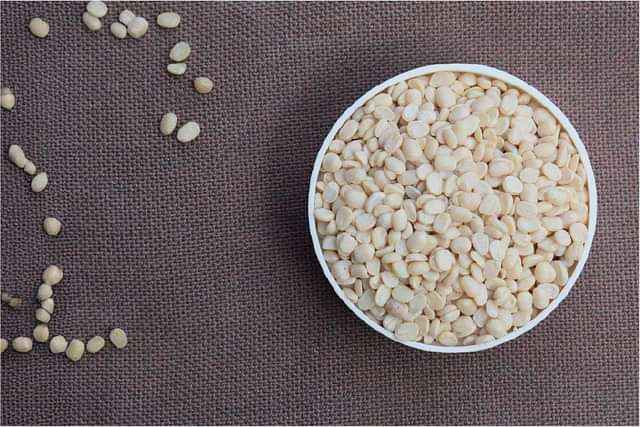
What is Urad Dal?
Urad dal is the Hindi name for the seed of the plant Vigna mungo, known in Sanskrit and classical Ayurvedic dietetics as Masha (Nidavani & Sharma, 2026; Hadi et al., 2025). It is native to the Indian subcontinent and has been grown and eaten there for centuries, valued both as an everyday food and as an ingredient in traditional Ayurvedic preparations. The crop is widely cultivated across South Asia, including India, Nepal, Pakistan and Bangladesh (Hadi et al., 2025).
In Ayurveda, urad dal (Masha) is traditionally described as having a sweet taste (madhura rasa), a heating potency (ushna virya) and a sweet post-digestive effect (madhura vipaka) (Sharma et al., 2026) (Singhai et al., 2017). It is traditionally said to help balance Vata dosha (Singhai et al., 2017), while its heavy, unctuous quality means it is generally advised in moderation for those with a Kapha or Pitta constitution (Sharma et al., 2026).
Key Facts
| Feature | Details |
| Botanical name | Vigna mungo |
| Family | Fabaceae (Leguminosae)
|
| Also known as | Black gram, black lentil, mash, Masha (Sanskrit) |
| Origin | Native to the Indian subcontinent; widely grown in India, Nepal, Pakistan and Bangladesh
|
| Part eaten | Seed, used whole, split (dal) or dehusked (white urad) |
| Ayurvedic classification | Madhura rasa (sweet), ushna virya (heating), madhura vipaka; traditionally said to balance Vata dosha |
| Key nutrients | Protein, dietary fibre, iron, magnesium, potassium, folate and B vitamins |
| Common forms | Whole, split, dehusked (white urad), flour, paste
|
| Typical serving | Around half to one cup of cooked dal as part of a meal |
| Best eaten | Well soaked and thoroughly cooked, as part of a balanced meal
|
| Key safety note | People with kidney disease, gout or uric acid disorders should consult a doctor before regularly consuming large amounts
|
Alternative Names of Urad Dal
Urad dal is known by its botanical name and by different names across Indian languages and regions, as listed below.
- Botanical name: Vigna mungo
- English: Black gram, black lentil, split black gram
- Sanskrit: Masha
- Hindi: Urad dal
- Tamil: Ulundhu
- Telugu: Minapappu
- Kannada: Uddina bele
- Bengali: Biuli dal
- Malayalam: Uzhunnu
- Marathi: Udid dal
Nutritional Value of Urad Dal
The values below are per 100 grams of raw, dry urad dal unless stated otherwise, based on (USDA,2023).
| Nutrient | Quantity (per 100 g, dry/raw) |
| Protein | 24 g |
| Carbohydrates | 59 g |
| Dietary fibre | 29 g |
| Fat | 1.5 g |
| Iron | 7.2 mg |
| Calcium | 200 mg |
| Potassium | 40 mg |
Health Benefits of Urad Dal
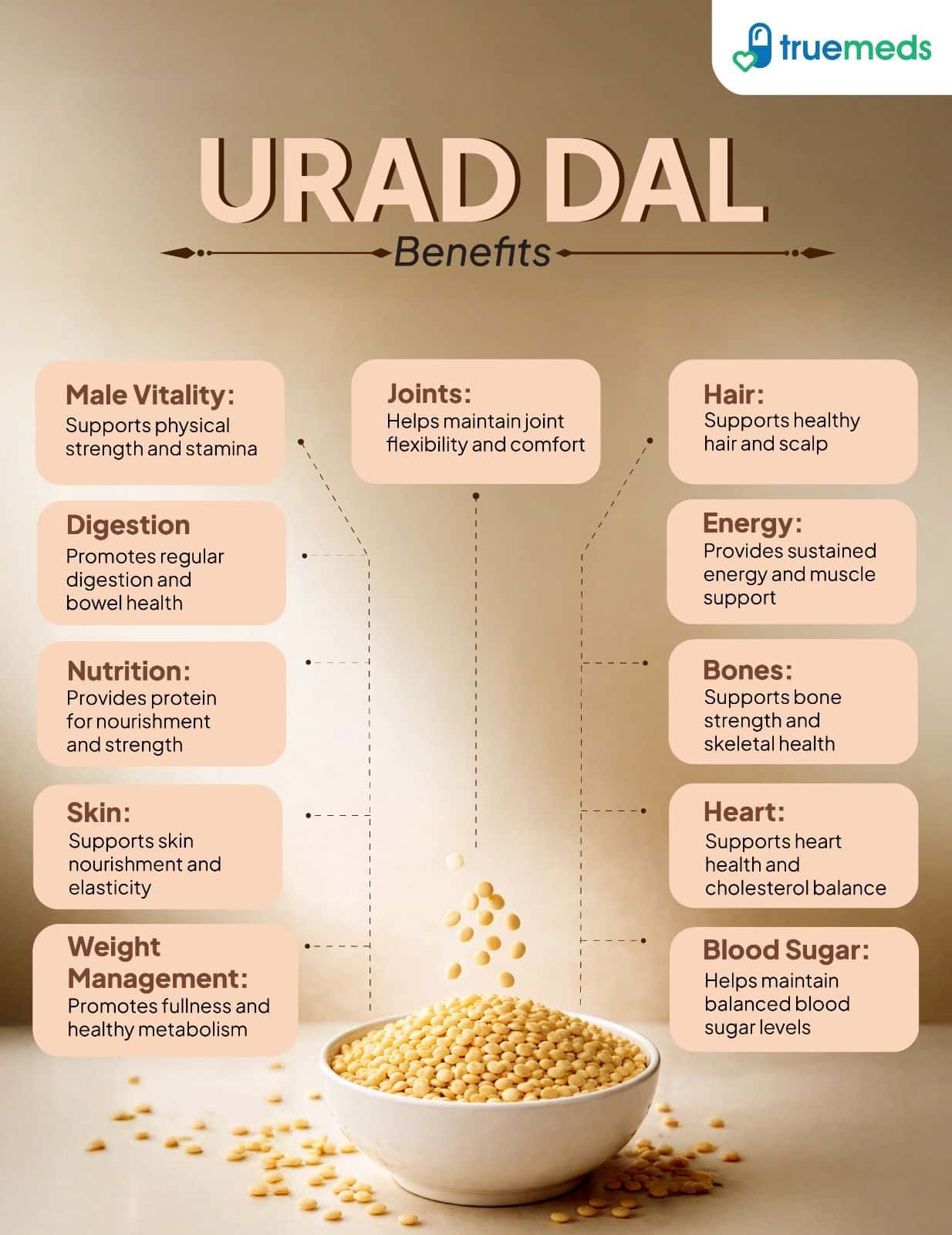
Urad dal is a nutrient-rich pulse that provides protein, fibre, complex carbohydrates and several essential minerals. As part of a balanced diet, it can support digestion, bowel regularity, energy needs, bone health and overall nutritional wellbeing. Its traditional uses also include supporting skin, hair and joint comfort.
1. May Support Digestion And Bowel Regularity
Urad dal is a good source of dietary fibre, which adds bulk to stool and may help support regular bowel movements. Regular, moderate intake as part of a balanced diet is traditionally associated with easier bowel movements, although it may cause bloating or gas in some people.
2. Provides Plant-Based Protein For The Body
As a pulse rich in protein and essential nutrients, urad dal is traditionally regarded as a nourishing food that contributes to overall dietary adequacy. It is often included in vegetarian and vegan diets as a plant-based protein source alongside other nutrient-rich foods.
3. May Support Skin Nourishment
Ground urad dal is traditionally used in homemade skin preparations. Evidence for this use is limited. Avoid applying it to broken or irritated skin, and discontinue use if redness, itching or swelling occurs.
4. May Support Hair Strength
Urad dal supplies protein, which is a building block of hair. A paste applied to the scalp is a traditional home remedy believed to nourish hair roots, but there is insufficient clinical evidence. Regular dietary protein intake also supports hair health generally, alongside a balanced diet.
5. May Support Joint Comfort
Urad dal is traditionally combined with warming oils, such as sesame oil, and used in Ayurvedic body massage for joint and muscle comfort. It is not a medicine and does not replace treatment prescribed for arthritis or other joint conditions; anyone with persistent joint pain should see a doctor.
6. Provides Sustained Energy
Urad dal contains complex carbohydrates alongside protein and fibre, which can provide a steady source of energy. This makes it a useful food for active individuals as part of a balanced pre- or post-activity meal.
7. May Contribute To Bone Strength
Urad dal contains calcium and magnesium, minerals that play a role in maintaining bone health. Including it as part of a varied, balanced diet may support general bone health, alongside other calcium-rich foods, regular physical activity and adequate vitamin D.
8. Supports General Cardiovascular Wellness
Urad dal contains dietary fibre, magnesium and potassium, nutrients that are associated with general cardiovascular wellness as part of a balanced diet. It is not a treatment for heart disease or blood pressure disorders, and anyone with a diagnosed heart or blood pressure condition should follow their doctor's advice.
9. May Support Weight Management
Because it is rich in protein and fibre, urad dal may help a person feel fuller for longer after a meal. This can support portion control as part of an overall weight-management plan that also includes physical activity.
Common Uses of Urad Dal
Urad dal is commonly used as a nutritious food in everyday cooking and traditional Ayurvedic diets. It is also used traditionally in skin care and body massage, including preparations with oils such as sesame oil. These uses are based mainly on nutritional value and traditional practice rather than established medical treatments.
1. In Everyday Cooking
Urad dal is a staple ingredient in Indian cooking, used to prepare idli, dosa, vada and papad, and cooked as a whole or split dal in stews and curries. Whole urad dal is commonly used for dal makhani, split urad dal is used in tempering dishes such as sambar and rasam, and urad flour is used to prepare papad.
2. As A Traditional Skin Exfoliant
Powdered or ground urad dal is traditionally mixed with yoghurt or milk to make a home scrub, said to help remove dead skin cells and refine skin texture. This is a traditional cosmetic use rather than a treatment for any skin condition.
3. Combined With Oil For Massage
Urad dal paste, combined with oils such as sesame oil, is traditionally used in Ayurvedic body massage. It is traditionally associated with muscle and joint comfort rather than as a treatment for any diagnosed condition.
4. In Traditional Ayurvedic Dietetics
In Ayurveda, urad dal (Masha) is traditionally included in nourishing, strength-building diets and in rejuvenation (Rasayana) regimens (Hadi et al., 2025). It is traditionally used to support digestion and physical strength when eaten in appropriate, moderate quantities as part of a balanced diet.
Precautions While Taking Urad Dal
Urad dal is a food that suits most healthy diets, but a few groups should take the precautions below.
- Pregnancy and breastfeeding: Urad dal can be eaten in moderate, food-level amounts as part of meals. Large quantities may cause gastrointestinal discomfort. Anyone with a pregnancy-related health condition should ask their doctor or dietitian for personalised advice.
- People with diabetes: Urad dal has a comparatively low glycaemic index, but portion size still affects blood sugar. People with diabetes should ask their doctor or dietitian how to fit it into their individual meal plan.
- People with kidney disease: Urad dal is high in protein and should only be eaten under medical guidance by people with kidney disease, as their protein intake may need to be adjusted according to kidney function and their individual dietary requirements.
- Gas or bloating: Some people experience gas or bloating after eating urad dal. Soaking it thoroughly before cooking and cooking it well may help reduce these symptoms in some people.
How to Use Urad Dal
1. To prepare traditional recipes
Urad dal is the most generic ingredient used in many recipes. It supplies texture and flavour along with nutritional value for consumption. It can yield a protein-rich meal in dish types such as dals, idlis, dosas, and vadas.
Steps to use:
- Take 1 cup of urad dal and soak it in water for 4-5 hours to soften it.
- Grind the soaked urad dal into a smooth paste for use in the batter, especially when preparing dosa or idli batter.
- Used as a healthy dal, boil whole or split urad dal with spices like turmeric, cumin, and coriander for an extremely delicious and healthy dal.
2. As a Natural Skin Exfoliator
Grind urad dal into a fine paste, using it as a natural exfoliating scrub to scrub off dead skin cells and improve texture. It rejuvenates the skin, promotes good circulation, and gives a natural glow.
Steps to use:
- Grind two tablespoons of urad dal to a fine powder.
- Mix with water, yoghurt, or milk to make a thick paste.
- Apply on the skin and gently rub for 5-10 minutes by circular motions.
- After rinsing with lukewarm water, pat dry to reveal smooth, revitalized skin.
3. Hair Strengthening Mask
Urad dal gives the scalp the right amount of proteins, allowing hair follicle strength to prevent hair loss and promote growth.
Steps to use:
- Three tablespoons of urad dal should be soaked overnight in water.
- Grind to a consistency of a paste and mix with a teaspoon of olive or coconut oil.
- Apply to the scalp and hair and leave on for 30 minutes before rinsing.".
- Rinse with lukewarm water to make hair soft, shiny, and strong.
Herbs Traditionally Used With Urad Dal
Urad dal is a food rather than a compounded classical formulation, so it is not paired with other herbs in fixed medicinal recipes the way a formulation would be. It is, however, traditionally cooked with a small number of digestive spices, listed below, to support digestion.
| Herb/Spice | Traditional Use With Urad Dal |
| Ginger (Adrak) | Ginger is traditionally added while cooking urad dal to support digestion and help balance its heavy quality, particularly for those prone to bloating. |
| Asafoetida (Hing) | A small pinch of Hing is traditionally added during tempering, believed to help reduce gas and improve the digestibility of urad dal-based dishes. |
| Cumin (Jeera) | Cumin is commonly used alongside urad dal in tempering, traditionally regarded as supportive of digestion when pulses are eaten. |
| Black pepper (Maricha) | Black pepper is sometimes paired with urad dal in traditional cooking and is traditionally associated with supporting digestion. |
Recommended Serving of Urad Dal
Urad dal is a food, so the amounts below are general food-portion guidance rather than a medicinal dose, and can vary with a person's overall diet and health status.
- Children: A small portion, roughly 2 to 3 tablespoons of cooked dal, introduced gradually as part of a varied diet.
- Teenagers: Around a quarter to half a cup of cooked dal per serving, as part of a balanced meal.
- Adults: Around half to one cup of cooked dal per serving, depending on overall dietary needs.
- Elderly: Around a quarter to half a cup of cooked dal per serving, well cooked and easy to digest, adjusted for any digestive or kidney health condition.
Side Effects of Urad Dal
Urad dal is generally well tolerated as a food, though a small number of people may notice the effects below.
Gas And Bloating
Urad dal can cause gas or bloating in some people, particularly if it has not been soaked and cooked thoroughly before eating.
Indigestion
Eating a large amount of urad dal in one sitting may lead to indigestion or a feeling of heaviness in some people.
Allergic Reactions
Allergic reactions to urad dal are uncommon but possible, and may include itching, swelling or a skin rash. Anyone who notices these symptoms should stop eating it and seek prompt medical advice.
Interaction of Urad Dal With Other Drugs
As an everyday food, urad dal is not widely reported to interact with common medicines, but the points below are worth knowing.
Medicines For Kidney Disease
Urad dal is high in protein. People with kidney disease who are taking medicines or following a restricted-protein diet should check with their doctor before eating it regularly.
Gout Or Uric-Acid Lowering Medicines
Pulses such as urad dal contain purines. People taking medicines for gout or high uric acid should ask their doctor whether they need to limit pulses, including urad dal, in their diet.
Storage of Urad Dal
- Correct storage helps keep urad dal fresh and free from pests for longer.
- Store dry, uncooked urad dal in an airtight container, away from moisture and direct sunlight.
- Keep it in a cool, dry place; a kitchen cupboard away from the stove is ideal.
- Dry, whole or split urad dal generally keeps well for around 6 to 12 months when stored this way.
- Cooked urad dal should be refrigerated and used within 2 to 3 days.
Key Takeaways
- Urad dal, commonly called black gram, is a protein- and fibre-rich pulse widely used in Indian cooking and Ayurvedic dietetics.
- It is traditionally associated with supporting digestion, energy levels, bone health, and skin and hair nourishment when eaten as part of a balanced diet.
- People with kidney disease, gout, diabetes, or who are pregnant or breastfeeding should ask their doctor or dietitian about the appropriate amount for them.
- Urad dal is a food, not a medicine, and does not replace treatment prescribed by a doctor for any health condition.
FAQs
Is urad dal difficult to digest?
How much protein does urad dal contain?
What is urad dal called in English?
Can urad dal be eaten at night?
How long should urad dal be soaked?
Is urad dal good for osteoarthritis?
Is urad dal suitable for people with diabetes?
Is urad dal good for piles?
Does urad dal help with bloating or gas?
Is urad dal safe during pregnancy?
References
- U.S. Department of Agriculture, Agricultural Research Service. (2024). FoodData Central. USDA FoodData Central, 2023
- Hadi, F., Sardar, H., Alam, W., Aschner, M., Alzahrani, F. M., Halawani, I. F., Xiao, J., & Khan, H. (2025). Vigna mungo (Linn.) Hepper: Ethnobotanical, pharmacological, phytochemical, and nutritious profile. Phytochemistry Reviews, 24(2), 1119–1142. https://doi.org/10.1007/s11101-024-09972-6
- Nidavani, S., & Sharma, O. P. (2026). Masha (Phaseolus mungo Linn.): A comprehensive classical and scientific review. International Journal of Ayurveda and Pharma Research, 14(1), 41–47. https://doi.org/10.47070/ijapr.v14i1.3997
- Singhai, S., Jain, J. K., & Dwivedi, O. P. (2017). Pharmacological and phytochemical evaluation of Mashabaladi Kwath. International Journal of Research in Ayurveda and Pharmacy, 8(Suppl. 3), 108–111. https://www.researchgate.net/publication/318871169_PHARMACOLOGICAL_AND_PHYTOCHEMICAL_EVALUATION_OF_MASHABALADI_KWATH
Explore other categories
Latest health articles




Top Health Essentials

Top-selling ayurvedic products












Disclaimer
Top-Selling Medicines:
...View more
Top-OTC medicines:
...View more
Top-selling healthcare devices:
...View more
Company
About UsHealth ArticleHealth StoriesHealth LibraryDiseases & Health ConditionsAyurvedaUnderstanding Generic MedicinesAll MedicinesAll BrandsNeed HelpFAQSecuritySavings CalculatorAdvertise with UsSubscribe
Registered Office Address
Grievance Officer
Download Truemeds


Contact Us
Our customer representative team is available 7 days a week from 9 am - 9 pm.
v4.28.17

2026 - Truemeds | All rights reserved. Our content is for informational purposes only. See additional information.

Our Payment Partners




