

- Medicines
- Personal Care
- Skin Cream
- Sunscreen
- Face Wash
- Skin and Body Soap
- Acne Care
- Body Lotions
- Moisturising Lotion
- Moisturising Cream
- Mosquito Repellent
- Moisturising Gel
- Body Wash
- Hair Oils
- Hair Shampoo
- Hair Conditioners
- Hair Supplements
- Hair Colour
- Hair Serum
- Hair Mask
- Hair Solutions
- Baby Diapers and Wipes
- Baby Lotion and Moisturising Cream
- Baby Bath Essentials
- Baby Skin Care
- Baby and Infant Food
- Baby Healthcare
- Women Multivitamins
- Ovulation Test Kit and Women Intimate Care
- Sanitary Pads
- Nutritional Drinks
- Condoms
- Lubricants
- Massage Gels
- Personal Body Massagers
- Men Performance Booster
- Sexual Health Supplements
- Massage Oils
- Ayurveda
- Tooth Paste
- Mouth Ulcer Gel
- Mouthwash
- Toothache and Gum Pain
- Tooth Brush
- Gargle Solution
- Orthopaedic Supports
- Adult Diapers
- Footwear
- Mobility and Support Accessories
- Urinary Support and Care
- Health Conditions
- Bone and Joint Care
- Digestive Care
- Eye Care
- Pain Relief
- Smoking Cessation
- Liver Care
- Stomach Care
- Cold and Cough
- Heart Care
- Kidney Care
- Piles, Fissures & Fistula
- Respiratory Care
- Mental Wellness
- Derma Care
- Pre and Probiotics
- Acidity
- Gas
- Constipation
- Loose Motion/Diarrhoea
- Digestive Fibres
- Digestive Enzymes
- Eye Lubricant Drops
- Lens Solution
- Safety Eye Wear
- Eye Cream
- Eye Vitamins and Supplements
- Eye Drops
- Eye Ointment and Gel
- Nicotine Patch
- Nicotine Gum
- Nicotine Lozenges
- Cough Syrups
- Chest Rubs and Balms
- Nasal Spray
- Lozenges
- Inhalant Capsules
- Cold and Cough Tablets
- Vitamins & Supplements
- Diabetes Care
- Healthcare Devices
- Homeopathic Medicine
- Health Guide
Vasavaleha
Vasavaleha is a classical Ayurvedic avaleha (semi-solid herbal jam) made from Vasa, long pepper, ghee, honey and sugar. It is traditionally used to support the respiratory system and is associated with relieving cough and mucus congestion. Vasavaleha is generally taken as part of traditional Ayurvedic care for day-to-day respiratory wellness and is not intended to replace medical treatment for diagnosed respiratory conditions such as asthma, bronchitis or COPD.
 50
50Last updated on : 21 Sep, 2026
Read time : 16 mins
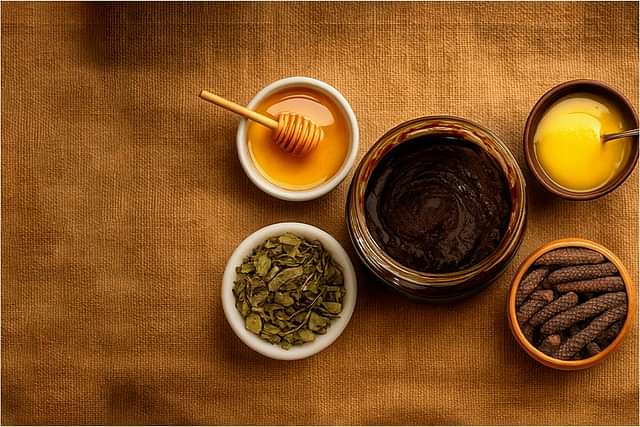
What Is Vasavaleha?
The name Vasavaleha comes from its two defining ingredients: Vasa (Adhatoda vasica), the lead herb, and “avaleha”, the Ayurvedic term for a semi-solid jam-like preparation made by slow-cooking a herbal decoction with sugar, ghee and honey (Shinde et al., 2023). In Ayurveda, Vasavaleha belongs to the Kasahara and Shwasahara group of formulations, meaning preparations traditionally used for Kapha-related cough and breathing discomfort. It is described in classical Ayurvedic compendia, such as the Bhaishajya Ratnavali, in the chapters dealing with cough and respiratory disorders (Shinde et al., 2023).
According to Ayurvedic pharmacology, Vasa carries a bitter and astringent taste (Tikta-Kashaya Rasa), a cooling potency (Sheeta Virya) and a pungent post-digestive effect (Katu Vipaka), and is traditionally described as pacifying Kapha and Pitta dosha. Pippali, or long pepper, carries a pungent taste (Katu Rasa) and a sweet post-digestive effect (Madhura Vipaka), and is traditionally described as pacifying Kapha and Vata dosha. Taken together, Vasavaleha as a formulation is traditionally considered to primarily balance Kapha and Vata doshas.
Key Facts
| Feature | Details |
| Formulation name | Vasavaleha
|
| Formulation type | Avaleha (semi-solid herbal jam/linctus)
|
| Classical reference | Bhaishajya Ratnavali, chapter on cough and respiratory disorders
|
| Composition | Vasa (Adhatoda vasica) leaf extract, Pippali (long pepper), ghee, honey, sugar |
| Classical proportion | Approximately Vasa extract 8 parts : sugar 4 parts : honey 4 parts : ghee 1 part : Pippali 1 part
|
| Also known as | Vasa Avaleha
|
| Key active compounds | Vasicine and vasicinone (from Vasa), piperine (from Pippali) |
| Dosha action | Traditionally balances Kapha and Vata doshas |
| Traditional uses | Cough and Kapha-related respiratory discomfort |
| Common forms | Semi-solid paste/jam (avaleha)
|
| General dosage | Adults: 6–12 g |
| Best taken | After meals, with warm water, milk or honey
|
| Key safety note | Contains sugar and honey; not a substitute for prescribed treatment of asthma, bronchitis or COPD; consult a doctor if diabetic, pregnant or breastfeeding |
Alternative Names of Vasavaleha
Vasavaleha is known by the following names:
- Classical/Sanskrit name: Vasavaleha, also referred to as Vasa Avaleha
- Hindi name: Vasavaleh
- Tamil: Adathodai Lehyam / Adathodai Legiyam
- Malayalam: Adalodakam Lehyam
- Marathi / Gujarati: Adulsa Lehya / Aradusi Avaleha
- Sanskrit (Classical): Vasavaleha, Vasa Avaleha, or its historical predecessor, Vasaghrita Leha
Chemical Constituents of Vasavaleha
The traditional properties of Vasavaleha are linked to the following known constituents of its herbal ingredients:
- Vasicine and vasicinone: Quinazoline alkaloids from Vasa, which have been studied for their bronchodilator activity (Amin & Mehta, 1959).
- Piperine: The main pungent alkaloid in long pepper, which has been studied for its potential antitussive effects in animal models (Bedse et al., 2023).
- Flavonoids and phenolic compounds: Present in Vasa and studied for their antioxidant activity (Minakshi et al., 2026).
- Sugars and fatty acids: Fructose and sucrose from sugar and honey, and short- and medium-chain fatty acids from ghee, which contribute to the formulation's base.
Composition of Vasavaleha
Vasavaleha is prepared from five ingredients, each contributing to its traditional use in respiratory care:
- Vasa (Adhatoda vasica): The lead ingredient of the formulation. Vasa leaf extract is traditionally associated with bronchodilator, antitussive and anti-inflammatory properties, and has been studied for its potential effects on mucus in the airways (Amin & Mehta, 1959).
- Pippali (Piper longum), also called long pepper: Traditionally believed to balance Kapha dosha and support respiratory health, with mild digestive and anti-inflammatory properties.
- Ghee (clarified butter): Used as a Snigdha (unctuous) base, traditionally believed to soothe the respiratory tract and act as a carrier for the herbal extracts.
- Honey: Added for its soothing effect on the throat and as a carrier for the herbal ingredients once the mixture has cooled.
- Sugar: Balances the bitter taste of Vasa and helps preserve the jam-like consistency of the formulation.
Medicinal Properties of Vasavaleha
Based on its ingredients, Vasavaleha is traditionally associated with the following actions:
- Bronchodilator: may help relax the airway muscles, largely attributed to the vasicine and vasicinone content of Vasa (Amin & Mehta, 1959).
- Expectorant: is traditionally believed to help loosen and clear mucus from the respiratory tract.
- Antitussive: is associated with a reduction in cough frequency, an effect studied for long pepper extract in animal models (Bedse et al., 2023).
- Anti-inflammatory: may help modulate inflammation in the airways.
- Antimicrobial: the honey and Vasa content are traditionally associated with antimicrobial properties.
- Carminative and digestive: long pepper is traditionally believed to support digestion.
These properties are drawn from traditional Ayurvedic understanding and preliminary laboratory and animal research. Human clinical trials specific to Vasavaleha as a complete formulation are limited, so these actions should be seen as traditionally described and supported by limited evidence, rather than clinically proven.
How Vasavaleha Is Prepared
Vasavaleha is prepared using a traditional Ayurvedic method that combines herbal extraction with slow cooking:
- Preparing the Vasa extract: Fresh Vasa leaves are boiled in water to prepare an extract that forms the base of the formulation.
- Adding sugar: Sugar is added to the extract and the mixture is heated until it thickens to a semi-solid consistency.
- Adding ghee: Ghee is incorporated during heating to improve the texture and serve as a base for the herbal ingredients.
- Adding long pepper: Powdered long pepper is mixed in to contribute its traditional respiratory use.
- Adding honey: Honey is stirred in once the mixture has cooled to room temperature, since heating honey is traditionally avoided in Ayurvedic preparation.
Health Benefits Of Vasavaleha
Vasavaleha is traditionally used to support respiratory comfort, including occasional cough, throat irritation and mucus clearance. Its ingredients have also been studied for properties related to airway relaxation and digestive support, although much of the evidence is based on traditional use or early research. Vasavaleha should be considered a supportive Ayurvedic formulation and not a treatment for diagnosed respiratory conditions.
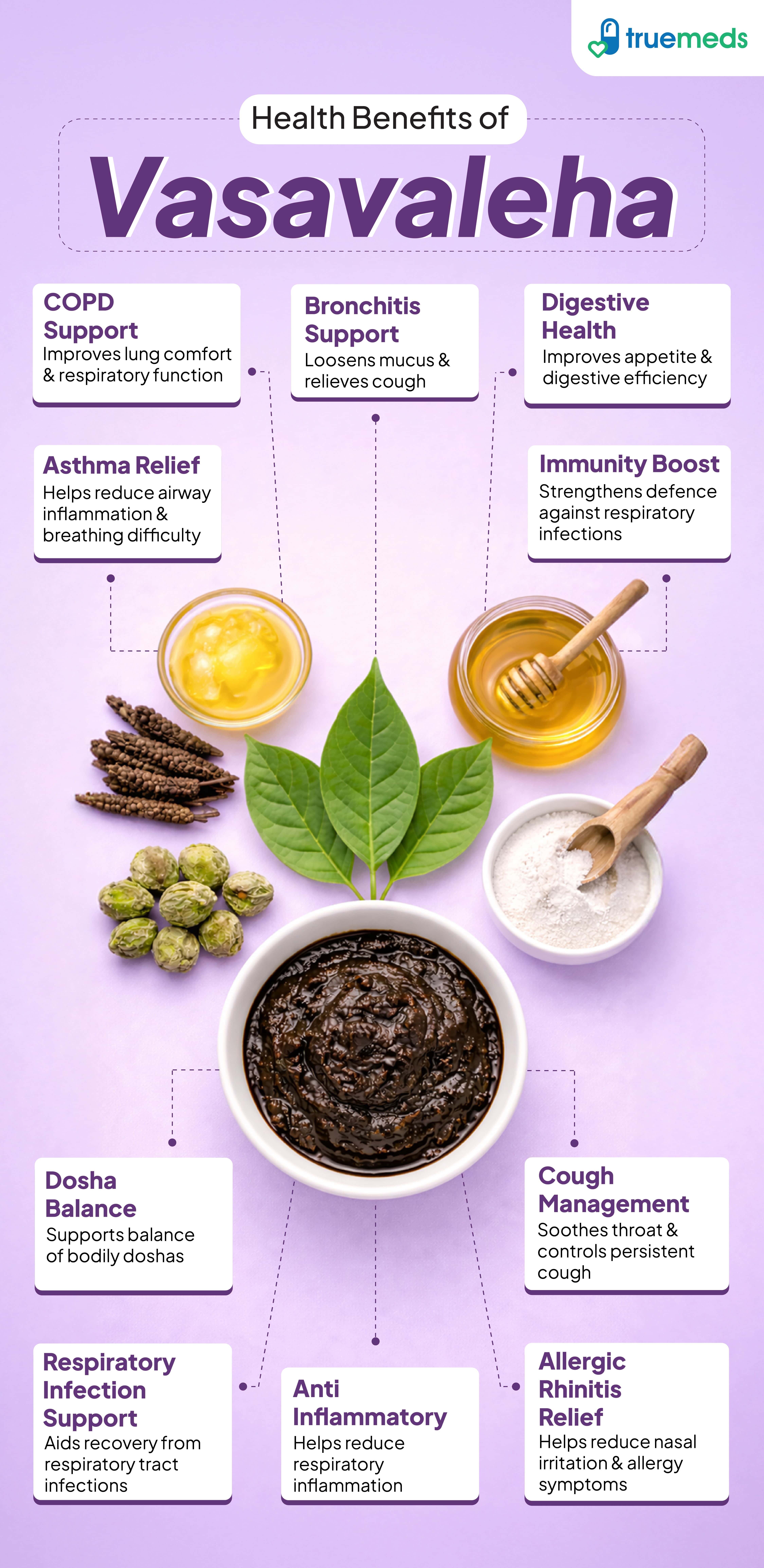
May Support Clearer Breathing
Vasa, the primary herb in Vasavaleha, contains vasicine and vasicinone, compounds that have been studied for their bronchodilator effects, which may help relax airway muscles (Amin & Mehta, 1959).
May Help Loosen Chest Mucus
Long pepper and Vasa are both traditionally described as Kapha-balancing, an Ayurvedic concept linked to the thickness and quantity of mucus in the body. Vasavaleha is traditionally believed to help reduce the thickness of respiratory mucus, making it easier for the body to clear it naturally through coughing.
May Ease Occasional Cough
Vasavaleha is traditionally used for dry and productive cough associated with Kapha imbalance. Its base of honey and ghee is believed to calm throat irritation, while Vasa and long pepper are traditionally associated with soothing cough. It is meant for occasional cough and should not be relied on for a cough lasting more than two weeks.
May Support the Body's Natural Defences
Honey and Vasa both carry traditional antimicrobial associations, and Vasavaleha is described in Ayurveda as supporting the body's own defences during seasonal cold and cough. This traditional use has not been established through human clinical trials, so it should not replace medical treatment for a diagnosed infection.
Traditionally Used to Balance Kapha and Vata
Kapha and Vata imbalance is closely linked, in Ayurveda, to respiratory discomfort such as congestion and irregular breathing. Vasavaleha's herbal combination is traditionally formulated to pacify both these doshas together, which is why it has traditionally been used for respiratory support in Ayurvedic practice.
May Support Digestive Comfort
Long pepper is traditionally recognised as a mild digestive stimulant that may support appetite and digestion. Since Ayurveda views the gut and respiratory system as connected through Vata dosha, better digestion is traditionally believed to support general wellbeing alongside the formulation's respiratory action.
May Help Soothe Airway Irritation
The combination of ghee and honey gives Vasavaleha a Snigdha, or unctuous, quality traditionally believed to soothe a dry or irritated throat and airway lining. This soothing action is separate from, and should not be confused with, treatment for a diagnosed airway disease.
Vasavaleha is a traditional Ayurvedic formulation associated with these respiratory and general wellness actions. It is intended as a supportive addition to a healthy lifestyle and is not a treatment for diagnosed respiratory conditions such as asthma, bronchitis or COPD, which require medical care.
Common Uses of Vasavaleha
Vasavaleha is traditionally used to support respiratory comfort, particularly during seasonal cough and congestion. It may also be included in Ayurvedic routines for people exposed to dust or smoke, or alongside dietary and lifestyle measures. Some traditional preparations use it for occasional digestive discomfort, while longer-term use is generally guided by an Ayurvedic practitioner.
During Seasonal Change
Vasavaleha is commonly taken during the monsoon and winter, when Kapha-related cough and congestion are more common in Ayurvedic understanding. It is used at the first sign of seasonal cough, alongside, not instead of, any treatment already advised by a doctor.
As Part of a Daily Routine in Dusty or Smoky Environments
People regularly exposed to dust, smoke or pollution sometimes use Vasavaleha as part of a daily Ayurvedic routine to support respiratory comfort. This traditional use does not offset the health risks of ongoing exposure to smoke or pollutants, which should be reduced or avoided where possible.
Alongside a Kapha-Pacifying Diet and Lifestyle
An Ayurvedic practitioner may recommend Vasavaleha together with a Kapha-reducing diet, warm fluids and steam inhalation during an active cough or cold. It is used as one part of a broader routine, rather than as a standalone remedy.
After Meals for Occasional Digestive Discomfort
Because Pippali is traditionally used to stimulate digestion, some people take Vasavaleha after a heavy meal for mild digestive discomfort, separate from its respiratory use.
Under Practitioner Guidance for Recurring Respiratory Weakness
For people with a history of recurring cough or respiratory discomfort, an Ayurvedic practitioner may include Vasavaleha as part of a longer-term supportive plan, alongside any medical treatment already prescribed.
Precautions While Taking Vasavaleha
- Consult a doctor or Ayurvedic practitioner before starting Vasavaleha if you have any existing medical condition, especially diabetes, heart disease, or a diagnosed respiratory condition such as asthma, bronchitis or COPD.
- Pregnant and breastfeeding people should not use Vasavaleha without first consulting their doctor, as its safety has not been established for these groups.
- People with heart disease, or those taking blood pressure medication, should check with their doctor before use.
- Take only the dosage advised by your doctor or Ayurvedic practitioner (see Recommended Dosage below); do not exceed it in an attempt to achieve faster results.
- Because Vasavaleha contains honey and sugar, people with diabetes should ask a doctor before use and should monitor their blood sugar as advised.
- Stop using Vasavaleha and speak to a doctor if you notice any discomfort, rash or allergic reaction.
- Vasavaleha is not a substitute for prescribed asthma or COPD treatment. Seek immediate medical help for severe breathlessness, blue-tinged lips or fingertips, chest pain, or a cough that brings up blood.
- Self-medication is not advisable. Use Vasavaleha only under the guidance of a qualified healthcare professional.
How to Use Vasavaleha
Vasavaleha is available as a semi-solid paste (avaleha) and can be taken as follows:
- Paste form: Take the prescribed amount directly using a clean spoon, or mix it into a small quantity of warm water or milk, as advised by your practitioner.
- Timing: It is generally taken after meals, as advised by a healthcare professional.
- For children: Children should use Vasavaleha only when advised by a doctor or qualified Ayurvedic practitioner, who can recommend an appropriate dose and method of administration.
Herbs Traditionally Used With Vasavaleha
In classical Ayurvedic practice, Vasavaleha is sometimes used alongside other Kapha-Vata balancing formulations for respiratory support:
Herb / Formulation | How It Is Traditionally Used Alongside Vasavaleha |
Sitopaladi Churna | A classical powder combining sugar candy, Vamsa Lochana, Pippali, cardamom and cinnamon, traditionally used for cough and throat irritation. It is sometimes combined with Vasavaleha, under practitioner guidance, for respiratory support associated with Kapha. |
Talisadi Churna | A classical powder used for cough and breathing discomfort, traditionally believed to support digestion alongside respiratory comfort. Some practitioners use it together with Vasavaleha as part of a broader Kapha-pacifying routine. |
Yashtimadhu (liquorice) | A demulcent herb traditionally used to soothe throat irritation. It is sometimes taken alongside Vasavaleha for throat comfort, though liquorice needs caution in people with high blood pressure. |
Kantakari Avaleha | Another avaleha-type formulation based on Kantakari, traditionally used for cough and breathing difficulty. It shares a similar Kapha-Vata balancing intent to Vasavaleha and may be used as an alternative rather than together. |
Recommended Dosage of Vasavaleha
Dosage varies by age and should always be confirmed with a doctor or Ayurvedic practitioner. The following are general traditional guidelines:
Children (Under 5 Years)
A dose of 1 to 2 grams, once or twice a day, is traditionally suggested, mixed into warm water, milk or honey. Use only under medical or Ayurvedic practitioner guidance for this age group.
Children (5 to 12 Years)
A dose of around 5 grams, once or twice a day, is traditionally suggested, taken with warm water, milk or a small amount of honey.
Teenagers (13 to 18 Years)
Teenagers are generally given a dose between the children's and adult amounts, but this should be confirmed with a doctor or Ayurvedic practitioner rather than assumed.
Adults
A dose of 6 to 12 grams, once or twice a day, is traditionally suggested, usually taken after meals with warm water, milk or honey.
Elderly
Older adults, especially those with diabetes, heart disease or digestive concerns, should consult a doctor or Ayurvedic practitioner before using Vasavaleha, rather than adjusting the adult dose themselves.
Note: The exact dose and duration should always be decided by a qualified doctor or Ayurvedic practitioner, based on age, health status and any other medicines being taken. Do not continue Vasavaleha beyond the advised duration without medical review.
Side Effects of Vasavaleha
Vasavaleha is not known to be associated with specific side effects when taken at the advised dose, but safety data are limited. The following effects may occur:
Gastrointestinal Discomfort
Taking more than the advised amount, or taking it on an empty stomach, may cause stomach irritation, nausea or mild indigestion in some people.
Effect on Blood Sugar
Because Vasavaleha contains honey and sugar, it may increase blood sugar levels. People with diabetes should monitor their blood sugar and speak to their doctor before use.
Allergic Reactions
In rare cases, some people may develop an allergic reaction, such as skin redness, itching or shortness of breath, to honey or one of the herbal ingredients. Stop using it and seek medical advice if this happens.
Use During Pregnancy and Breastfeeding
There is not enough safety data on Vasavaleha for use during pregnancy or breastfeeding, so it should be avoided during these periods unless a doctor advises otherwise.
Note: If you notice any of these effects, stop using Vasavaleha and consult a doctor. This list may not cover every possible side effect, so always follow your doctor's or Ayurvedic practitioner's advice.
Interaction of Vasavaleha With Other Drugs
There is limited formal research on how Vasavaleha interacts with other medicines. The following points are based on its known ingredients and general precautions:
Diabetes Medication
Since Vasavaleha contains honey and sugar, taking it alongside insulin or other diabetes medication may affect blood sugar control. Blood sugar should be monitored, and any dose adjustment made only under a doctor's advice.
Blood Pressure Medication
People taking medication for high blood pressure or heart disease should use Vasavaleha only after checking with their doctor, as a precaution rather than because of a confirmed interaction.
Other Ayurvedic or Herbal Products
Taking Vasavaleha together with other Kapha-balancing or respiratory herbal formulations may increase the risk of overlapping effects. An Ayurvedic practitioner should be consulted before combining multiple herbal products.
Note: No major drug interactions have been formally established for Vasavaleha in clinical studies. However, anyone taking prescription medication, especially for diabetes, blood pressure or a chronic respiratory condition, should tell their doctor before starting Vasavaleha.
Storage of Vasavaleha
Proper storage helps keep Vasavaleha safe and maintain its quality for its full shelf life:
- Store in a cool, dry place, away from direct sunlight and heat.
- Keep the container tightly closed after each use to prevent moisture from entering, as this can increase the risk of spoilage or fermentation.
- Always use a clean, dry spoon to take out the paste to avoid contamination.
- Keep out of reach of children.
- Check the label for the expiry date and do not use the product after it has expired.
- Refrigeration is not usually necessary but may be suitable in hot, humid climates once opened, if advised on the product label.
Key Takeaways
- Vasavaleha is a classical Ayurvedic avaleha traditionally used to support respiratory comfort during cough and Kapha-related congestion.
- It is made from Vasa, long pepper, ghee, honey and sugar, each contributing to its traditional respiratory and digestive uses.
- It is not known to have specific side effects at the advised dose, but safety data are limited; it may cause stomach discomfort, affect blood sugar, or trigger an allergic reaction in some people.
- It is not a substitute for prescribed treatment for diagnosed conditions such as asthma, bronchitis or COPD.
- Pregnant or breastfeeding people, people with diabetes or heart disease, and anyone on regular medication should consult a doctor before use.
- Always follow the dosage advised by a doctor or Ayurvedic practitioner, and seek medical help promptly for severe breathing difficulty.
FAQs
What Is Vasavaleha Used For?
Vasavaleha is a classical Ayurvedic avaleha traditionally used to support respiratory comfort, particularly for cough and Kapha-related congestion. It is not a substitute for medical treatment of a diagnosed respiratory condition.
How Long Can Vasavaleha Be Used For?
When Is the Best Time to Take Vasavaleha?
Are There Dietary Guidelines to Follow While Using Vasavaleha?
Is Vasavaleha Safe for People With Diabetes?
Can Vasavaleha Help With Asthma, Bronchitis or COPD?
What Should I Do If I Have Severe Breathing Difficulty?
References
- Amin, A. H., & Mehta, D. R. (1959). A bronchodilator alkaloid (vasicinone) from Adhatoda vasica Nees. Nature, 184(4695), 1317. https://doi.org/10.1038/1841317a0
- Bedse, A., Nalawade, A., Kamandar, P., Wagh, A., Mahajan, K., Raut, S., & Dhamane, S. (2023). Antitussive activity of alcoholic extract of Piper longum Linn. International Journal of Pharmaceutical Quality Assurance, 14(3), 771–775. https://www.researchgate.net/publication/374865439_Antitussive_Activity_of_Alcoholic_Extract_of_Piper_longum_Linn?utm_source=chatgpt.com
- Minakshi, Ram, B., & Kumari, N. (2026). Therapeutic potential of Vasa (Adhatoda vasica): A review. International Journal of Drug Delivery Technology, 16(41s), 535–538. https://impactfactor.org/PDF/IJDDT/16/IJDDT,Vol16,Issue41s,Article57.pdf
- Shinde, A. R., Rathi, B. J., & Chunchuwar, M. D. (2023). Pharmaceutical study of Vasa (Adhatoda vasica Linn.) with special reference to its different dosage forms. GSC Biological and Pharmaceutical Sciences, 23(3), 009–018. https://doi.org/10.30574/gscbps.2023.23.3.0197





Explore other categories
Latest health articles




Top Health Essentials


Top-selling ayurvedic products












Disclaimer
Top-Selling Medicines:
...View more
Top-OTC medicines:
...View more
Top-selling healthcare devices:
...View more
Company
About UsHealth ArticleHealth StoriesHealth LibraryDiseases & Health ConditionsAyurvedaUnderstanding Generic MedicinesAll MedicinesAll BrandsNeed HelpFAQSecuritySavings CalculatorAdvertise with UsSubscribe
Registered Office Address
Grievance Officer
Download Truemeds


Contact Us
Our customer representative team is available 7 days a week from 9 am - 9 pm.
v4.28.18

2026 - Truemeds | All rights reserved. Our content is for informational purposes only. See additional information.

Our Payment Partners




