

- Medicines
- Personal Care
- Skin Cream
- Sunscreen
- Face Wash
- Skin and Body Soap
- Acne Care
- Body Lotions
- Moisturising Lotion
- Moisturising Cream
- Mosquito Repellent
- Moisturising Gel
- Body Wash
- Hair Oils
- Hair Shampoo
- Hair Conditioners
- Hair Supplements
- Hair Colour
- Hair Serum
- Hair Mask
- Hair Solutions
- Baby Diapers and Wipes
- Baby Lotion and Moisturising Cream
- Baby Bath Essentials
- Baby Skin Care
- Baby and Infant Food
- Baby Healthcare
- Women Multivitamins
- Ovulation Test Kit and Women Intimate Care
- Sanitary Pads
- Nutritional Drinks
- Condoms
- Lubricants
- Massage Gels
- Personal Body Massagers
- Men Performance Booster
- Sexual Health Supplements
- Massage Oils
- Ayurveda
- Tooth Paste
- Mouth Ulcer Gel
- Mouthwash
- Toothache and Gum Pain
- Tooth Brush
- Gargle Solution
- Orthopaedic Supports
- Adult Diapers
- Footwear
- Mobility and Support Accessories
- Urinary Support and Care
- Health Conditions
- Bone and Joint Care
- Digestive Care
- Eye Care
- Pain Relief
- Smoking Cessation
- Liver Care
- Stomach Care
- Cold and Cough
- Heart Care
- Kidney Care
- Piles, Fissures & Fistula
- Respiratory Care
- Mental Wellness
- Derma Care
- Pre and Probiotics
- Acidity
- Gas
- Constipation
- Loose Motion/Diarrhoea
- Digestive Fibres
- Digestive Enzymes
- Eye Lubricant Drops
- Lens Solution
- Safety Eye Wear
- Eye Cream
- Eye Vitamins and Supplements
- Eye Drops
- Eye Ointment and Gel
- Nicotine Patch
- Nicotine Gum
- Nicotine Lozenges
- Cough Syrups
- Chest Rubs and Balms
- Nasal Spray
- Lozenges
- Inhalant Capsules
- Cold and Cough Tablets
- Vitamins & Supplements
- Diabetes Care
- Healthcare Devices
- Homeopathic Medicine
- Health Guide
Chyawanprash
Chyawanprash is a classical Ayurvedic Rasayana, a polyherbal jam prepared from Amla (Indian gooseberry) and more than 40 supporting herbs, cooked with ghee, sesame oil and honey. It is traditionally taken as a daily rejuvenative tonic to support immunity, digestion, respiratory comfort and general vitality, and is traditionally used across different age groups, from children to the elderly, when taken as directed by a qualified practitioner.
 50
50Last updated on : 07 Sep, 2026
Read time : 15 mins
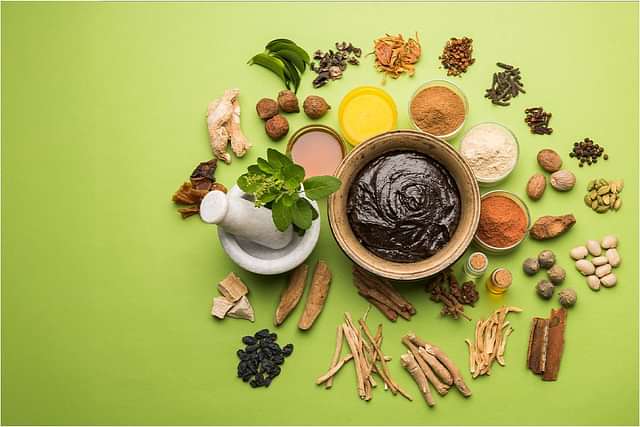
What is Chyawanprash?
Chyawanprash takes its name from the sage Chyawan, who, according to Ayurvedic tradition, is said to have regained his youth and vitality after taking this preparation. The formulation is described in the classical text Charaka Samhita, Chikitsa Sthana, where it is classified as a Rasayana: a category of Ayurvedic preparations traditionally used to nourish body tissues and support overall vitality.
In Ayurvedic classification, Chyawanprash is predominantly Amla (sour) and Madhura (sweet) in rasa (taste), owing to its Amla-based composition, and is traditionally considered Tridoshahara, meaning it is used to help balance all three doshas, with particular traditional relevance to Vata and Pitta.
Its principal ingredient is Amla (Indian gooseberry, Emblica officinalis), combined with ghee, sesame oil, honey and dozens of supporting herbs. It is traditionally taken to support immunity, digestion and general vitality across different age groups, from children to the elderly.
Key Facts
| Feature | Details |
| Formulation name | Chyawanprash
|
| Formulation type | Avaleha (herbal jam), classified as a Rasayana
|
| Classical reference | Charaka Samhita, Chikitsa Sthana
|
| Composition | Amla (Emblica officinalis) as the primary ingredient, with Ashwagandha, Shatavari, Guduchi, Pippali and other classical herbs, in a base of ghee, sesame oil and honey |
| Also known as | Chyawanaprasha, Chyavanaprasha, Chyavanaprasam
|
| Key active compounds | Vitamin C and tannins (from Amla), piperine (from Pippali), withanolides (from Ashwagandha)
|
| Dosha action | Traditionally considered Tridoshahara (balancing for all three doshas), with particular relevance to Vata and Pitta
|
| Traditional uses | Traditionally used to support immunity, digestion and general vitality |
| Common forms | Paste, tablet, capsule
|
| General dosage | 1–2 teaspoons daily for adults |
| Best taken | Traditionally taken in the morning, on an empty stomach, with warm milk or water
|
| Key safety note | Contains sugar or honey; people with diabetes should check the sugar content and consult a doctor before use. Consult a doctor before use if pregnant, breastfeeding, or on regular medication.
|
Alternative Names of Chyawanprash
As a classical formulation, Chyawanprash's name has several accepted spelling variants from Sanskrit transliteration rather than separate translated names. The recognised spelling variants include:
- Chyawanaprasha
- Chyavanaprasha
- Chyavanaprasam
- Cyavanaprasa
Nutritional Value of Chyawanprash
Chyawanprash is not only a medicinal tonic but also a nutrient-dense food. Here’s the nutritional profile per 100 grams (Sheth, 2020). This high nutritional content, particularly its rich supply of vitamin C and antioxidants, contributes to Chyawanprash’s health-boosting properties.
| Nutrient | Amount per 100g |
| Vitamin A | 22.7 µg |
| Vitamin C | 7.25 mg |
| Vitamin E | 1.79 mg |
| Calcium | 72.22 mg |
| Phosphorous | 76.81 mg |
| Iron | 8.14 mg |
| Potassium | 30 mg |
| Magnesium | 36.79 mg |
Medicinal Properties of Chyawanprash
Ayurveda and preliminary scientific studies attribute several pharmacological actions to Chyawanprash's herbal ingredients. Reported properties include:
- Immunomodulatory: traditionally believed to help support the body's natural immune response (Sharma et al., 2019)
- Antioxidant: rich in antioxidant compounds from Amla and other herbs, which may help protect cells from oxidative stress (Sharma et al., 2019)
- Adaptogenic: traditionally believed to help the body adapt to physical and mental stress
- Anti-inflammatory: some ingredients are traditionally associated with anti-inflammatory activity
- Digestive (Deepana-Pachana): traditionally used to stimulate digestive fire and support digestion
- Rejuvenative (Rasayana): classified in Ayurveda as a Rasayana preparation traditionally used to support tissue nourishment and general vitality
Chyawanprash is traditionally considered balancing for the Vata and Pitta doshas. Most of these properties rest on traditional use and preliminary studies; evidence in humans remains limited for several of these effects (Narayana et al., 2017).
Key Health Benefits of Chyawanprash
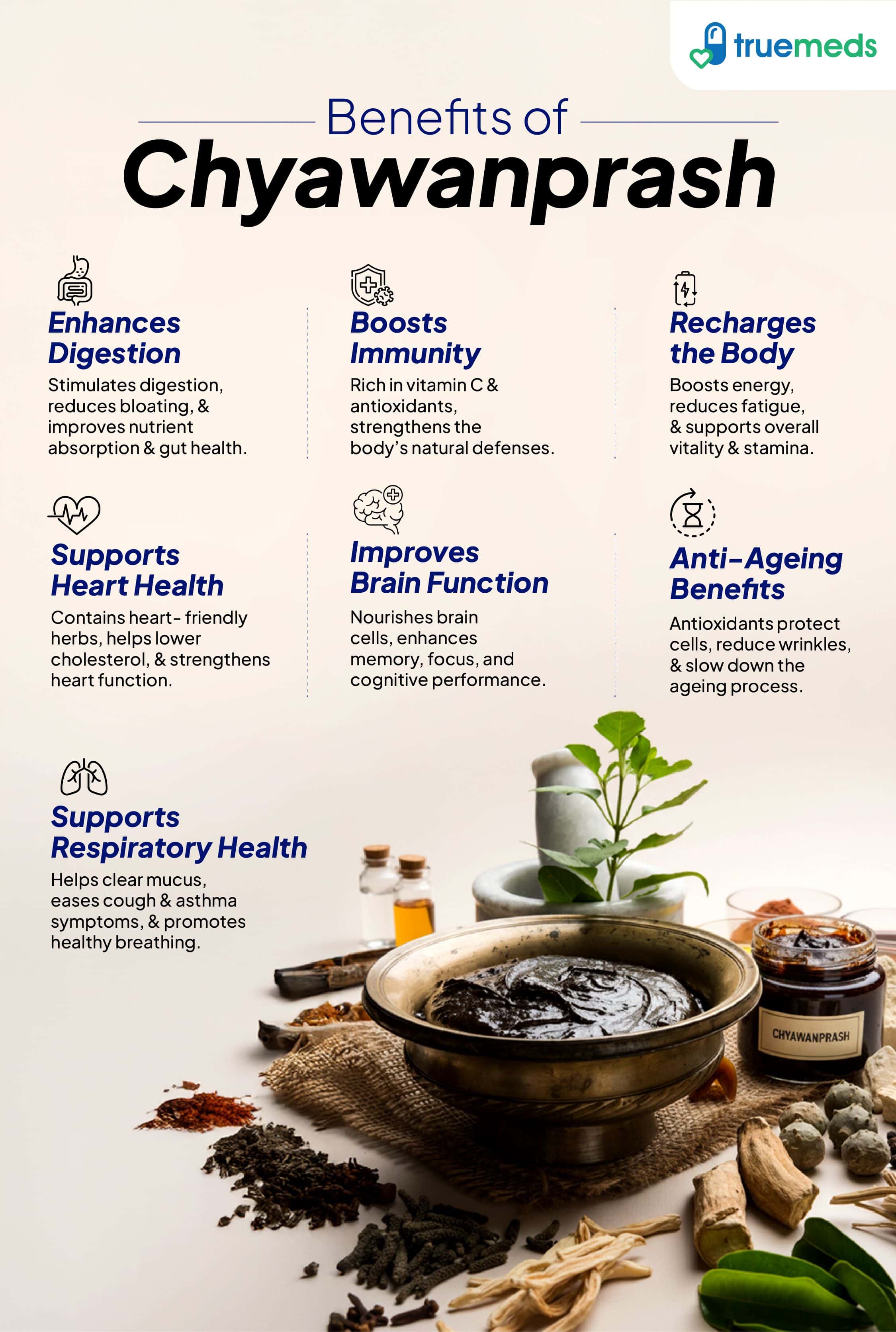
Chyawanprash is traditionally used as a rejuvenative tonic to support immunity, digestion, respiratory comfort, energy and overall wellbeing. Its antioxidant-rich ingredients are also associated with traditional support for heart, brain and skin health. Evidence for specific benefits of the complete formulation remains limited, so it should not replace medical treatment.
Supports Immunity
Chyawanprash's main ingredient, Amla, is a rich natural source of vitamin C and antioxidant compounds. Combined with other herbs traditionally used for immune support, it is traditionally used and has been studied in preliminary research as a general wellness tonic that may support normal immune function (Sharma et al., 2019).
Supports Respiratory Comfort
In Ayurveda, Chyawanprash is traditionally associated with easing 'Kasa' (cough) and general breathing discomfort. Herbs such as Vasaka and Pippali are traditionally believed to have expectorant properties that may help with mucus clearance. It offers general respiratory support only and is not a treatment for asthma or other diagnosed respiratory conditions.
Supports Digestion
Chyawanprash contains digestive herbs such as Chitraka, Pippali and Haritaki, traditionally used to stimulate digestive fire (Agni) and support digestion. It may help ease occasional indigestion, bloating and mild constipation by supporting normal gut function. Persistent or severe digestive symptoms should be assessed by a doctor rather than self-treated.
Supports Energy and Vitality
As a Rasayana (rejuvenative tonic), Chyawanprash is traditionally used to help support stamina and general vitality. Adaptogenic herbs such as Ashwagandha and Shatavari are traditionally believed to help the body cope with everyday physical and mental strain. Regular use, alongside a balanced diet, may support general energy levels and wellbeing.
Supports Heart Health
Chyawanprash contains antioxidant-rich ingredients, including Amla, traditionally believed to help protect cells from oxidative stress as part of general cardiovascular wellbeing. This is a general wellness benefit only; Chyawanprash is not a treatment for heart disease, high cholesterol or blood pressure, which require medical diagnosis and management.
Supports Brain Health and Memory
Herbs such as Brahmi and Ashwagandha are traditionally used in Ayurveda to support mental clarity, memory and concentration. Preliminary studies suggest these herbs may have cognitive-supporting effects, though evidence specific to Chyawanprash is limited. It offers general wellness support only, not treatment for any diagnosed brain disorder.
Supports Skin and Healthy Ageing
Chyawanprash is rich in antioxidants traditionally believed to help protect cells from oxidative stress, a process linked to visible signs of ageing. It is traditionally associated with supporting skin health and general vitality over time. Evidence for specific anti-ageing effects is limited, and it should not replace dermatological advice for skin concerns.
Common Uses for Chyawanprash
Chyawanprash is commonly used as a daily Ayurvedic wellness tonic, particularly during seasonal changes, recovery from illness and periods of fatigue. It is also traditionally given to children and used by active individuals to support general nourishment and vitality.
As a Daily Preventive Tonic
Chyawanprash is commonly taken every morning, throughout the year, as part of a daily Ayurvedic wellness routine intended to support general health rather than treat a specific illness.
During Seasonal Transitions
It is traditionally used at the change of seasons, when seasonal respiratory discomfort may occur, as a general wellness addition to the diet.
During Convalescence and Everyday Fatigue
Chyawanprash is traditionally given to people during recovery from illness or periods of fatigue, as a nourishing tonic alongside, not instead of, any medical treatment being followed.
For Growing Children
In traditional practice, a smaller dose is given to children as part of the daily diet to support general wellbeing, appetite and nutrition, usually under a caregiver's supervision.
For Active Individuals
Some people take Chyawanprash before or after physical activity as a traditional vitality-supporting tonic; it is not a substitute for a balanced diet or personalised sports nutrition advice.
Precautions While Taking Chyawanprash
While Chyawanprash is generally well tolerated when taken as directed, certain groups should take extra care. Discuss the following precautions with a doctor or Ayurvedic practitioner before starting:
- Contains sugar or honey, which may not suit people with diabetes; a sugar-free variant is available, but a doctor should still be consulted first.
- Not all classical ingredients are considered suitable during pregnancy or breastfeeding; pregnant and breastfeeding women should consult a doctor before use.
- It is traditionally taken in the morning; there is limited evidence to confirm that taking it late at night is unsafe.
- Taking more than the recommended dose may cause digestive upset, including diarrhoea, vomiting or bloating; do not exceed the stated dose.
- Tell your doctor about any other herbal or prescription medicines you take, to check for possible interactions.
How to Use Chyawanprash
Chyawanprash is available in more than one form, and the way it is taken varies slightly by age group and by form. The guidance below covers each of these separately.
Taking the Paste Form as an Adult
Take one to two teaspoons of Chyawanprash in the morning, traditionally before breakfast. It may be taken directly or mixed with warm water or warm milk. The choice of how to take it does not have established evidence of improving absorption.
Giving the Paste Form to Children
Introduce Chyawanprash gradually into a child's diet, starting with the smaller amount advised for their age group. Mixing it with warm milk can make the taste more acceptable. A doctor should be consulted before giving it to very young children.
Taking Tablet or Capsule Forms
Tablet and capsule forms of Chyawanprash should be taken with water, following the quantity and timing stated on the product label or advised by a healthcare professional. These forms are often preferred by people who find the traditional paste inconvenient to carry or measure.
General Tips for Best Results
Take Chyawanprash at a consistent time each day, generally in the morning, if this suits your routine. Combining it with a balanced diet and regular exercise may support general health and wellbeing. Always follow the dose stated on the label or advised by a healthcare professional, and avoid exceeding it.
Herbs Traditionally Used With Chyawanprash
Chyawanprash is a formulation in its own right, so this is a short list of herbs sometimes taken alongside it in everyday Ayurvedic practice, rather than a list of its own ingredients (which are covered under Composition above). The table below sets these out:
| Herb | Traditional pairing note |
| Tulsi (Ocimum sanctum) | Tulsi is traditionally taken alongside Chyawanprash during the cold and monsoon seasons, when respiratory comfort may be sought. The two are sometimes combined in home Ayurvedic routines rather than in the Chyawanprash formula itself. |
| Sitopaladi Churna | Sitopaladi Churna, a classical cough formulation, is sometimes taken together with Chyawanprash during seasonal changes for traditional respiratory support. This reflects common Ayurvedic practice rather than a documented classical prescription. |
Recommended Dosage of Chyawanprash
different age groups is set out below; always follow the dose stated on the product label or advised by a healthcare professional.
- Children (up to 12 years): ½ to 1 teaspoon daily, mixed with warm milk. Give only under a parent's or doctor's guidance, particularly for children under 5.
- Teenagers (13–18 years): 1 teaspoon daily, generally taken in the morning or before a meal.
- Adults: 1 to 2 teaspoons daily, generally in the morning, taken as directed on the product label or by a healthcare professional.
- Elderly, or those with existing health concerns: 1 teaspoon daily with warm milk, and only after consulting a doctor if any long-term health condition or medication is involved.
- Athletes and highly active individuals: The appropriate amount should be determined based on the product label and individual dietary needs rather than routinely increasing the dose.
Disclaimer: The dosages above are general guidance only and may vary with individual health status, age and other factors. Always consult a qualified healthcare professional or Ayurvedic practitioner before starting, and do not exceed the recommended amount without medical supervision.
Side Effects of Chyawanprash
Chyawanprash is generally well tolerated at the recommended dose. As with any supplement, taking more than advised can lead to the following: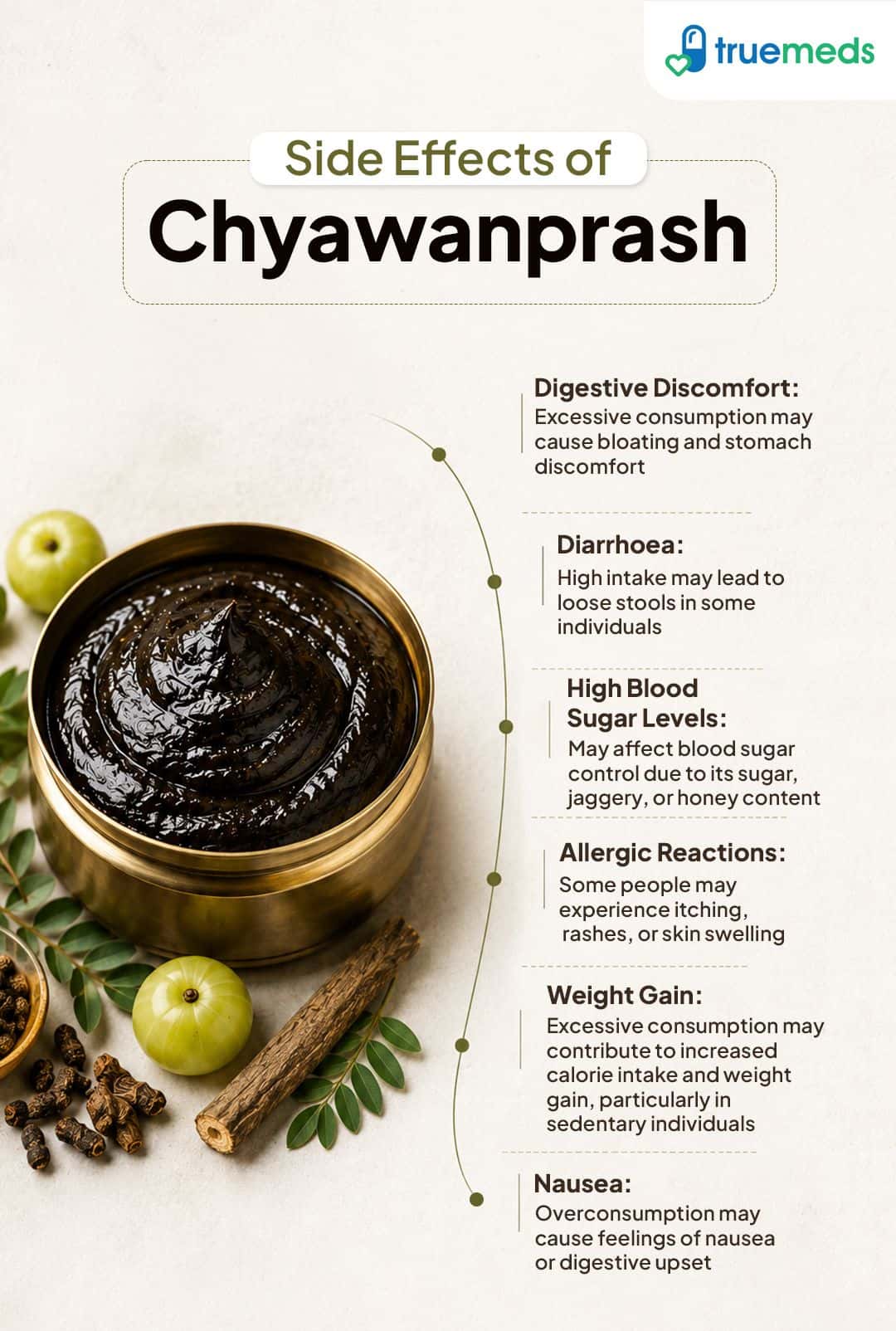
Digestive Discomfort
Its rich, dense composition may cause bloating, diarrhoea or nausea if taken in excess of the recommended dose.
Allergic Reactions
People allergic to honey or any of the herbal ingredients may develop symptoms such as rash, itching or skin swelling.
Weight Gain with Overuse
Regularly taking more than the recommended amount may increase calorie intake and contribute to weight gain, particularly when combined with a sedentary lifestyle.
Raised Blood Sugar (Hyperglycaemia)
As Chyawanprash contains sugar or honey, people with diabetes or blood sugar concerns should use it with caution and medical guidance.
Note: Take only the recommended dose to help minimise these risks, and use Chyawanprash under a healthcare provider's guidance if you have an existing health condition.
Interaction of Chyawanprash With Other Drugs
Even though Chyawanprash is herbal, it can still interact with prescription medicines. Anyone on long-term medication should speak to their doctor before starting Chyawanprash. Known or possible interactions include:
Diabetes Medicines
Chyawanprash contains sugar or honey, which may raise blood sugar levels and may affect blood glucose control in people taking medicines for diabetes.
Blood-Thinning Medicines (Anticoagulants)
Some herbs used in Chyawanprash, such as long pepper (Pippali), may affect blood clotting and could potentially interact with anticoagulant or antiplatelet medicines such as warfarin. Evidence specific to Chyawanprash is limited.
Blood Pressure Medicines
Some ingredients in Chyawanprash may affect blood pressure, but evidence of a clinically significant interaction with blood pressure medicines is limited. Consult a doctor before use if you take medicines to control blood pressure.
Note: Always consult a doctor or pharmacist before taking Chyawanprash if you are on long-term medication.
Storage of Chyawanprash
Proper storage helps maintain the quality and shelf life of Chyawanprash. Store it:
- In a cool, dry place, away from direct sunlight and heat.
- With the lid tightly closed after each use to prevent moisture and contamination.
- Out of the reach of children.
- Using a clean, dry spoon each time to avoid introducing moisture or contaminants.
- Before use, check the expiry date and discard it if the colour, smell or texture has changed noticeably.
Key Takeaways
- Chyawanprash is a traditional Ayurvedic Rasayana tonic, traditionally used to support immunity, digestion and general vitality.
- Most of its traditional uses are supported by preliminary research rather than large-scale human clinical trials, so it should be seen as a general wellness supplement, not a treatment for any diagnosed condition.
- People with diabetes, pregnant or breastfeeding women, and anyone on regular medication should consult a doctor before use.
- Take only the recommended dose, generally in the morning, to help reduce the risk of digestive side effects.
FAQs
What does Chyawanprash help with?
What happens if I take Chyawanprash every day?
Is Chyawanprash good for gastritis?
Can Chyawanprash help with fungal infections?
Who should avoid Chyawanprash, and what are its contraindications?
Does Chyawanprash affect blood pressure?
When should I take Chyawanprash?
Can I take Chyawanprash in summer?
Is it mandatory to drink warm milk after taking Chyawanprash?
Can Chyawanprash support brain health and memory?
Can Chyawanprash help with acidity?
Is Chyawanprash suitable for asthma?
Can Chyawanprash help with constipation?
Can Chyawanprash help manage cholesterol?
Can people with diabetes take Chyawanprash?
Does Chyawanprash support digestion?
Can Chyawanprash support eye health?
Does Chyawanprash cause weight gain?
References
- Sharma, R., Martins, N., Kuca, K., Chaudhary, A., Kabra, A., Rao, P. M., & Prajapati, P. K. (2019). Chyawanprash: A traditional Indian bioactive health supplement. Biomolecules, 9(5), 161. https://doi.org/10.3390/biom9050161
- Sheth, S. M. S. (2020). Nutritional analysis of Chyawanprash. Ayurline: International Journal of Research in Indian Medicine, 4(6). https://doi.org/10.52482/ayurline.v4i06.461
- Narayana, D. B. A., Durg, S., Manohar, P. R., Mahapatra, A., & Aramya, A. R. (2017). Chyawanprash: A review of therapeutic benefits as in authoritative texts and documented clinical literature. Journal of Ethnopharmacology, 197, 52–60. https://doi.org/10.1016/j.jep.2016.07.078





Explore other categories
Latest health articles





Top Health Essentials








Top-selling ayurvedic products

















Disclaimer
Top-Selling Medicines:
...View more
Top-OTC medicines:
...View more
Top-selling healthcare devices:
...View more
Company
About UsHealth ArticleHealth StoriesHealth LibraryDiseases & Health ConditionsAyurvedaUnderstanding Generic MedicinesAll MedicinesAll BrandsNeed HelpFAQSecuritySavings CalculatorAdvertise with UsSubscribe
Registered Office Address
Grievance Officer
Download Truemeds


Contact Us
Our customer representative team is available 7 days a week from 9 am - 9 pm.
v4.28.18

2026 - Truemeds | All rights reserved. Our content is for informational purposes only. See additional information.

Our Payment Partners




