

- Medicines
- Personal Care
- Skin Cream
- Sunscreen
- Face Wash
- Skin and Body Soap
- Acne Care
- Body Lotions
- Moisturising Lotion
- Moisturising Cream
- Mosquito Repellent
- Moisturising Gel
- Body Wash
- Hair Oils
- Hair Shampoo
- Hair Conditioners
- Hair Supplements
- Hair Colour
- Hair Serum
- Hair Mask
- Hair Solutions
- Baby Diapers and Wipes
- Baby Lotion and Moisturising Cream
- Baby Bath Essentials
- Baby Skin Care
- Baby and Infant Food
- Baby Healthcare
- Women Multivitamins
- Ovulation Test Kit and Women Intimate Care
- Sanitary Pads
- Nutritional Drinks
- Condoms
- Lubricants
- Massage Gels
- Personal Body Massagers
- Men Performance Booster
- Sexual Health Supplements
- Massage Oils
- Ayurveda
- Tooth Paste
- Mouth Ulcer Gel
- Mouthwash
- Toothache and Gum Pain
- Tooth Brush
- Gargle Solution
- Orthopaedic Supports
- Adult Diapers
- Footwear
- Mobility and Support Accessories
- Urinary Support and Care
- Health Conditions
- Bone and Joint Care
- Digestive Care
- Eye Care
- Pain Relief
- Smoking Cessation
- Liver Care
- Stomach Care
- Cold and Cough
- Heart Care
- Kidney Care
- Piles, Fissures & Fistula
- Respiratory Care
- Mental Wellness
- Derma Care
- Pre and Probiotics
- Acidity
- Gas
- Constipation
- Loose Motion/Diarrhoea
- Digestive Fibres
- Digestive Enzymes
- Eye Lubricant Drops
- Lens Solution
- Safety Eye Wear
- Eye Cream
- Eye Vitamins and Supplements
- Eye Drops
- Eye Ointment and Gel
- Nicotine Patch
- Nicotine Gum
- Nicotine Lozenges
- Cough Syrups
- Chest Rubs and Balms
- Nasal Spray
- Lozenges
- Inhalant Capsules
- Cold and Cough Tablets
- Vitamins & Supplements
- Diabetes Care
- Healthcare Devices
- Homeopathic Medicine
- Health Guide
Parijat
Parijat (Nyctanthes arbor-tristis), also called Harsingar or night-flowering jasmine, is a small flowering tree used in Ayurveda. Its leaves, flowers, bark and seeds are traditionally taken as a powder, juice, decoction or oil. In traditional practice, it is valued as a supportive herb for fever, mild joint and digestive discomfort, and for hair and scalp care. It is used alongside, and not as a substitute for, medical care.
 50
50Last updated on : 12 Aug, 2026
Read time : 14 mins
What is Parijat?
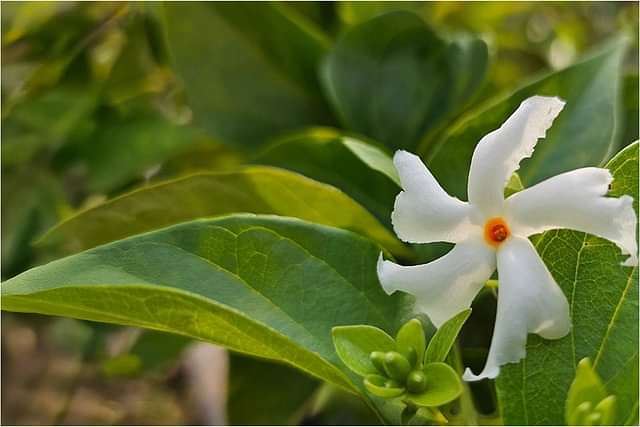
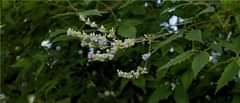
The name Parijat comes from Sanskrit and is closely tied to Hindu tradition, where the flower is linked with purity and devotion. In Ayurvedic and folk practice, the plant is better known as Harsingar or Shefali. It grows as a shrub or small tree up to about 10 metres tall, with flaky bark and fragrant white and orange flowers that open at night. It is common across the northern plains of India, including Uttar Pradesh, Assam, Bihar, West Bengal and Odisha.
Classical and later Ayurvedic texts describe Parijat mainly for jwara (fever) and inflammatory joint conditions (Agrawal & Pal, 2013). In Ayurveda, it is classified by its taste, potency and post-digestive effect, and by its action on the doshas. It is generally regarded as pacifying Kapha and Vata.
Key Facts
| Feature | Details |
| Botanical name | Nyctanthes arbor-tristis L. |
| Family | Oleaceae |
| Part used | Leaves, flowers, bark and seeds |
| Ayurvedic category | Traditionally grouped with jwaraghna (antipyretic) and shothahara (anti-inflammatory) herbs; Pushpa varga in later nighantus |
| Ayurvedic properties | Rasa: Tikta, Kashaya; Virya: Ushna; Vipaka: Katu; pacifies Kapha and Vata |
| Key active compounds | Iridoid glycosides (arbortristosides), nyctanthic acid, beta-sitosterol, beta-amyrin, flavonoid glycosides (astragalin, nicotiflorin), oleanolic acid |
| Traditional uses | Fever, mild joint discomfort, digestive complaints, scalp and hair care, and traditional wound care |
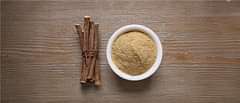
| Common forms | Powder, fresh leaf juice, decoction (kadha), paste and essential oil |
| General dosage | Powder 1 to 3 g; fresh leaf juice 10 to 20 ml, on the advice of a qualified practitioner
|
| Best taken | Commonly after food, with warm water
|
| Key safety note | Avoid in pregnancy and breastfeeding. Use caution if you take medicines for diabetes, blood pressure or blood thinning. Not a substitute for medical care; seek urgent medical help for high or persistent fever |
Alternative Names of Parijat
Parijat is known by different names across India. The botanical name is Nyctanthes arbor-tristis.
- Botanical name: Nyctanthes arbor-tristis
- English: Night-flowering jasmine, Coral jasmine
- Hindi: Harsingar, Raat ki Rani
- Sanskrit: Parijata, Shephalika, Shuklangi, Rajanihasa
- Bengali: Shefali, Shiuli
- Telugu: Parijatamu
- Gujarati: Harshanagar
- Kannada: Parijatha
Chemical Constituents of Parijat
Different parts of the Parijat plant contain different natural compounds. The main constituents reported in the literature are listed below.
- Leaves: Iridoid glycosides (including arbortristosides), nyctanthic acid, beta-amyrin, beta-sitosterol, hentriacontane, astragalin, nicotiflorin, oleanolic acid, mannitol, ascorbic acid, benzoic acid, and simple sugars.
- Flowers: Essential oil and carotenoid pigments, along with flavonoids.
- Bark: Alkaloids and glycosides.
- Seeds: Arbortristosides and related iridoid glycosides, and fatty oils.
Medicinal Properties of Parijat
The following labelled properties summarise how Parijat is understood in traditional practice and in early research. Where research exists, it is mostly laboratory and animal work, so these are supportive properties rather than proven treatments.
- Traditional status: A long-used Ayurvedic and folk herb, valued mainly in jwara (fever) and inflammatory joint conditions.
- Therapeutic properties: Reported anti-inflammatory, antipyretic, analgesic and antimicrobial actions in preclinical studies (Agrawal & Pal, 2013).
- Antioxidant activity: Leaf and flower extracts show antioxidant activity in laboratory assays, attributed to their flavonoid and iridoid content.
- Condition support: Traditionally used to support recovery from fever and to ease mild joint and digestive discomfort. Effects on blood sugar and blood pressure have only been seen in animal and laboratory models and are not established in people.
- Ayurvedic principles: Its bitter and astringent taste and heating potency are said to reduce Kapha and Vata, which underlies its traditional use in fever and joint stiffness.
Key Health Benefits of Parijat
There are various health benefits of Parijat for the body. Some of them are discussed below:
Aids Digestion and Eases Mild Gut Discomfort
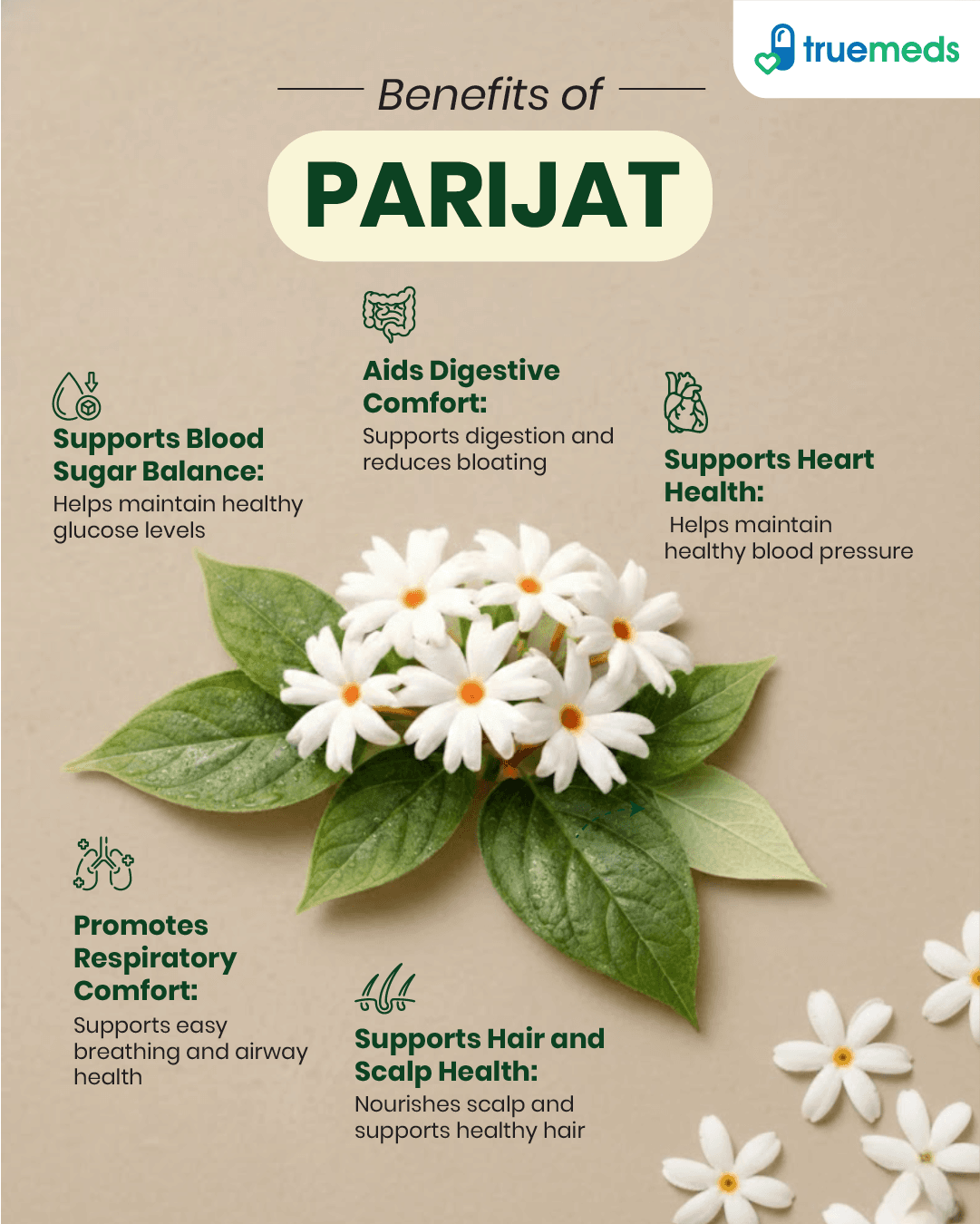
In Ayurveda, the bitter and heating nature of Parijat leaf is said to support Agni (digestive fire). Leaf juice or a mild decoction is traditionally used to ease occasional gas, bloating and sluggish digestion. It is meant for short-term, mild complaints, not for ongoing digestive disease.
Traditionally Used to Ease Fever and Body Aches
Parijat is best known in classical texts for jwara (fever). Its anti-inflammatory and antipyretic actions, seen mainly in animal studies, are thought to underlie the traditional use of leaf decoction to ease the body aches and discomfort that come with a common fever.
Supports Joint Comfort
The leaves and bark are a long-standing folk remedy for stiff, aching joints. Preclinical studies report anti-inflammatory and analgesic activity, which may explain why leaf preparations are traditionally applied or taken to ease mild joint discomfort. Persistent joint pain needs a doctor.
Offers Antioxidant Support
Parijat leaves and flowers are rich in flavonoids and other antioxidant compounds. In laboratory tests these help neutralise free radicals. This antioxidant activity is the basis for its general "wellness" reputation, though the effect in the body has not been measured in people.
Supports Scalp and Hair Care
Applied externally, Parijat leaf or seed paste and oil are traditionally used to support a clean, healthy scalp. Its antimicrobial properties may help with dandruff and general scalp hygiene, which may contribute to healthier-looking hair. Results vary from person to person.
Supports Healthy Blood Sugar Management
The traditional use of Parijat leaf extracts suggests it may have an anti-glycemic effect, which plays a supportive role in maintaining the body's blood sugar levels. In Ayurveda, its bitter and astringent properties are believed to help improve Agni (metabolic and digestive fire) and reduce Kapha and Pitta imbalances, which are linked to metabolic health. It is essential to note that this herb should be used as a supportive measure and not as a replacement for prescribed diabetes medication.
Disclaimer: The uses above come from traditional practice and early research. Parijat is not a treatment for any disease and should not replace prescribed medicines. Speak to a doctor before use, especially if you are pregnant, breastfeeding or on regular medication.
Common uses of Parijat
Parijat is a versatile plant with many uses, from rejuvenating the body to various rituals and worship. In Ayurveda, it helps in digestive issues, arthritis, fever, liver health, menstrual cramps, and reducing inflammation.
Some of the common uses of Parijat are as follows:
Traditional Use in Fever
Parijat leaf decoction has a long history of use during fevers, including the intermittent fevers historically linked with malaria. This is a traditional supportive use only. Malaria is a medical emergency: anyone with high or cyclical fever should see a doctor and get tested straight away.
Traditional Use in Joint and Rheumatic Complaints
The leaves and bark are traditionally used to ease stiff, painful joints and rheumatic aches. In folk practice a decoction is taken over short periods. Ongoing or worsening joint pain should be assessed by a clinician rather than self-managed.
Applied to Minor Wounds and Skin Complaints
Because of its antimicrobial properties, Parijat leaf paste has been traditionally applied to minor cuts, boils and fungal skin problems. It is for minor, everyday skin care only. Deep, spreading or non-healing wounds need medical attention.
Used in Hair and Scalp Care
Parijat seed paste and leaf oil are traditionally massaged into the scalp to keep it clean and to support hair condition. It is a cosmetic, supportive use and works best as part of a regular hair-care routine.
Used in Perfumes and Aromatherapy
The sweet-scented flowers are distilled into essential oil and attar and used in perfumes, incense and aromatherapy blends. This is a fragrance use rather than a medicinal one.
Used in Worship and Ceremonies
Parijat flowers are offered to deities during festivals such as Durga Puja and are woven into garlands, symbolising purity and devotion. This cultural and spiritual use is one of the reasons the plant is so widely grown.
Precautions While Taking Parijat
Parijat is generally used in small amounts in traditional practice, but it is not right for everyone. Take advice from a doctor or qualified practitioner before use if any of the following apply.
Pregnancy
Its safety in pregnancy has not been established. Pregnant women should avoid Parijat unless a qualified practitioner advises otherwise, as some traditional sources caution against it during pregnancy.
Breastfeeding
There is little safety data during breastfeeding. Because compounds can pass into breast milk, breastfeeding mothers should check with a doctor before taking Parijat in any form.
Allergy-Prone Individuals
People prone to plant or pollen allergies may react to Parijat. Start with a small amount, watch for rash, itching or swelling, and stop and seek advice if any reaction appears.
Children
Safe doses for children are not well established. Give Parijat to a child only under a doctor or qualified practitioner, as too much can cause nausea, dizziness and stomach upset.
People on Regular Medication
If you take medicines for blood sugar, blood pressure, blood thinning or an autoimmune condition, consult with your doctor first. Parijat may alter the effects of these medicines or increase the risk of interactions, so it should not be used without medical supervision.
How to Use Parijat
Parijat is prepared differently depending on the form. The methods below are for general, short-term traditional use. Always start with a small amount and check with a practitioner if you are unsure.
As a Herbal Kadha (Decoction)
- Rinse a few fresh Parijat leaves and simmer them in 2 to 3 cups of water for about 15 to 20 minutes.
- Add ginger or a little black pepper if you wish.
- Strain and sip while warm. This is traditionally taken during a common cold or mild fever.
Parijat as a Powder
- Stir 1 to 3 g of Parijat leaf powder into warm water until evenly mixed.
- Take once daily, or as advised by a practitioner.
- It is traditionally used to support digestion and ease mild joint discomfort.
Parijat as a Paste (for the skin)
- Crush clean fresh leaves and add a little water to make a thick paste.
- Apply a thin layer to the affected area of skin.
- Rinse off after it dries. Use on minor skin complaints only.
As an Essential Oil (external)
- Mix a few drops of Parijat essential oil into a carrier oil such as coconut oil.
- Massage gently into the scalp or over aching muscles.
- For external use only. Do not swallow essential oil.
Herbs Traditionally Used With Parijat
In traditional home preparations, Parijat is rarely used alone. It is often combined with the everyday herbs below, mainly in decoctions for fever, cold and mild joint discomfort. These are traditional pairings, not fixed classical formulations.
| Herb | How it is traditionally combined with Parijat |
| Ginger (Adrak / Shunthi) | Added to Parijat kadha for fever, cold and cough. Ginger is warming and carminative, and is traditionally paired with Parijat to settle the stomach and support the fever remedy. |
| Black pepper (Kali Mirch / Maricha) | A pinch is added to Parijat decoction to aid absorption and add warmth. It is a common adjunct in traditional respiratory and fever preparations alongside Parijat. |
| Honey (Shahad / Madhu) | Used as an anupana (carrier) to mask the strong bitterness of Parijat leaf juice and to make it easier to take, particularly in cough and throat complaints. Do not give honey to infants under one year. |
| Tulsi (Holy Basil) | Regularly combined with Parijat in immunity and seasonal-fever kadhas. Tulsi is traditionally valued for its antimicrobial properties and its supportive role in respiratory health. |
Recommended Dosage of Parijat
Dosage depends on age and the condition for which it is being used. The general adult ranges below are a guide only and should be confirmed by a doctor or qualified Ayurvedic practitioner. Parijat is a supportive herb, not a prescribed medicine.
Children
Safe doses for children are not established. Parijat should be given to a child only on the direct advice of a doctor or qualified practitioner, never as a home remedy, because overuse can cause nausea, dizziness and stomach upset.
Teenagers
No standard dose is established for teenagers. If prescribed by a qualified practitioner, the dose should be individualised. It should not be given routinely without professional advice.
Adults
- Leaf powder: 1 to 3 g once daily.
- Fresh leaf juice: 10 to 20 ml once daily.
- Decoction (kadha): 10 to 20 ml once or twice daily, for short periods only.
Older Adults
Older adults, especially those on medicines for blood pressure, blood sugar or blood thinning, should start at the lower end of the adult range and only after checking with their doctor, as they may be more sensitive to side effects and interactions.
Side Effects of Parijat
Parijat is generally well tolerated in small, short-term amounts, but overuse can cause problems. Stop and seek advice if any of the following are troublesome.
Nausea from the Bitter Taste
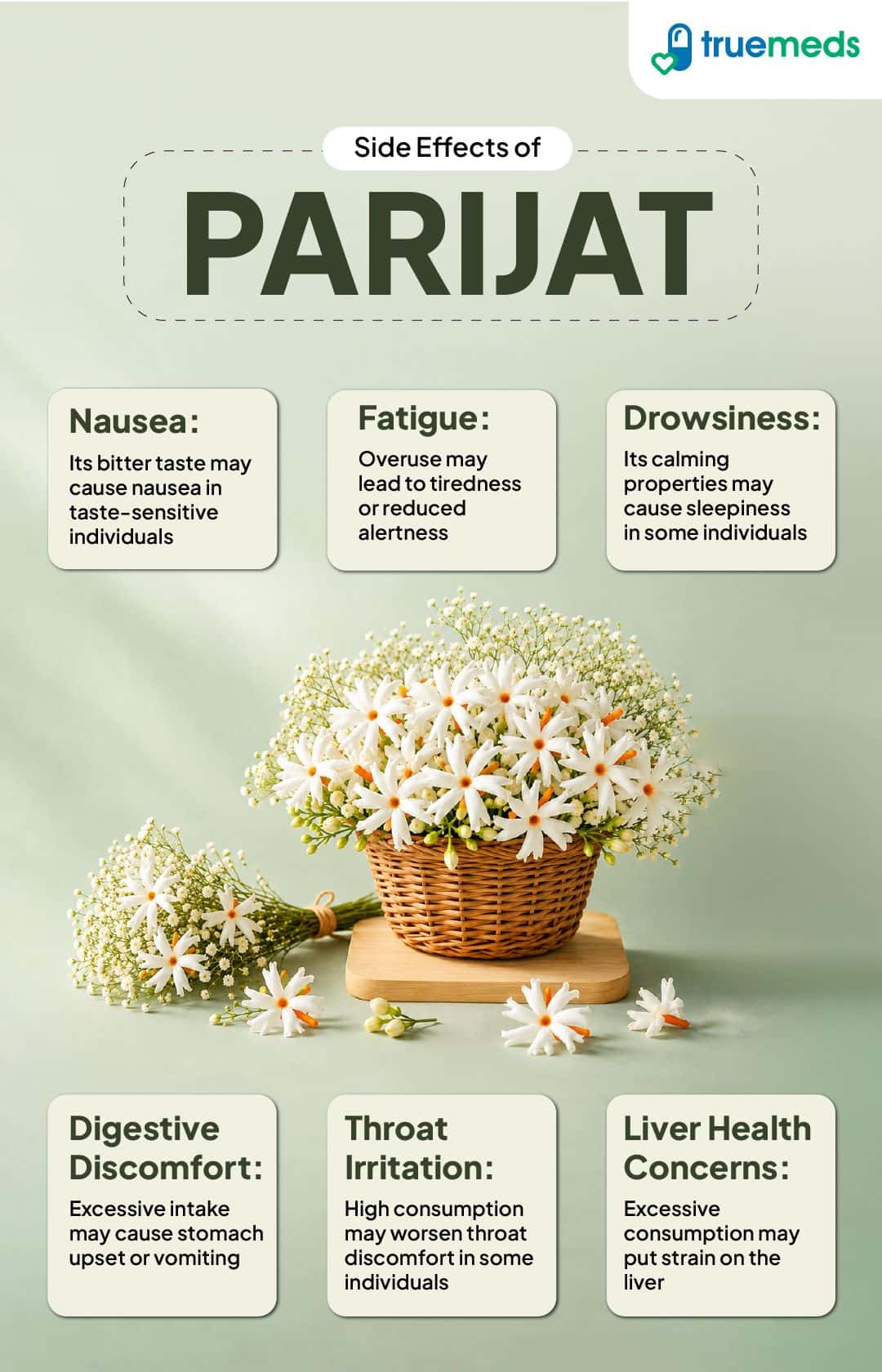
Parijat is strongly bitter. People who are sensitive to bitter tastes may feel nauseated soon after taking it, especially on an empty stomach. Taking it after food can help.
Digestive Upset
Larger amounts can cause stomach discomfort, cramping, vomiting or loose stools. If this happens, reduce the amount or stop, and drink plenty of fluids.
Drowsiness and Fatigue
Some people feel tired or drowsy after taking Parijat. Avoid driving or operating machinery until you know how it affects you.
Possible Strain on the Liver
Very high or prolonged use may increase the risk of liver-related adverse effects. Keep to modest amounts and short courses, and avoid it if you have a liver condition unless a doctor approves.
Interaction of Parijat with Other Drugs
Parijat can interact with several types of medicine. If you take any of the following, talk to your doctor before using it.
Anti-inflammatory Painkillers (NSAIDs)
Parijat has its own anti-inflammatory action, so taking it with NSAIDs such as ibuprofen may add to stomach irritation and nausea. Use the combination only with medical advice.
Blood-Thinning Medicines
Parijat may affect bleeding and clotting. Combining it with blood thinners such as warfarin could change how well those medicines work, so it should not be taken alongside them without a doctor monitoring you.
Diabetes and Blood-Pressure Medicines
Parijat has shown blood sugar-lowering and blood pressure-lowering effects in animal studies, taking it with medicines for diabetes or blood pressure could add to their effect. Your doctor may need to monitor your readings.
Medicines for Autoimmune Conditions
Parijat can influence the immune response, so it may interfere with immunosuppressant or other autoimmune medicines. Avoid it unless your specialist agrees it is safe with your treatment.
Storage of Parijat
Store Parijat powder, dried leaves and other preparations in an airtight container in a cool, dry place, away from direct sunlight and moisture. Kept this way, dried forms generally hold their quality for several months. Fresh leaf juice and homemade decoctions should be made fresh and used the same day. Always follow the use-by date on any packaged product.
Key Takeaways
- Parijat (Harsingar) is a traditional Ayurvedic herb from the Nyctanthes arbor-tristis tree, used for centuries mainly in fever and joint complaints.
- It is traditionally used to ease fever and body aches, support digestion, aid minor skin and scalp care, and provide antioxidant support.
- Parijat is taken as a powder, fresh leaf juice, decoction, paste or essential oil.
- It can cause nausea, digestive upset, drowsiness and, in excess, liver strain. Avoid in pregnancy and breastfeeding, and consult a doctor before use if you are taking any medication.
- Most evidence for Parijat comes from laboratory and animal studies, with limited human research available. It is not a treatment for any disease and does not replace prescribed medicines or urgent care.
FAQs
What is Parijat called in English?
Are Harsingar and Parijat the same plant?
What are Parijat leaves used for?
Can Parijat be used for intestinal worms?
How is Parijat used for skin problems?
How is Parijat used for hair fall?
How is Parijat used for joint discomfort?
References
- Agrawal, J., & Pal, A. (2013). Nyctanthes arbor-tristis Linn: A critical ethnopharmacological review. Journal of Ethnopharmacology, 146(3), 645–658. https://doi.org/10.1016/j.jep.2013.01.024
- Das, L., [all other authors]. (2021). Evaluation of in vivo antimalarial property of Nyctanthes arbor-tristis leaves. Journal of Pharmacy and Bioallied Sciences, volume(issue), page range/article number. https://doi.org/10.13005/bpj/1043
- Dewi, N. K. S. M., [all other authors]. (2022). A comprehensive review on the phytoconstituents and biological activities of Nyctanthes arbor-tristis L. Journal of Applied Pharmaceutical Science, volume(issue), page range/article number. https://japsonline.com/abstract.php?article_id=3712
- Godse, C. S., Tathed, P. S., Talwalkar, S. S., Vaidya, R. A., Amonkar, A. J., Vaidya, A. B., & Vaidya, A. D. B. (2016). Antiparasitic and disease-modifying activity of Nyctanthes arbor-tristis Linn. in malaria: An exploratory clinical study. Journal of Ayurveda and Integrative Medicine, 7(4), 238–248. https://doi.org/10.1016/j.jaim.2016.08.003
- Hiremath, V. V., [all other authors]. (2016). Literary review of Parijata. Biomedical and Pharmacology Journal, 9(3), 1019–1025. https://pmc.ncbi.nlm.nih.gov/articles/PMC5192257/
Explore other categories
Latest health articles





Top Health Essentials









Top-selling ayurvedic products















Disclaimer
Top-Selling Medicines:
...View more
Top-OTC medicines:
...View more
Top-selling healthcare devices:
...View more
Company
About UsHealth ArticleHealth StoriesHealth LibraryDiseases & Health ConditionsAyurvedaUnderstanding Generic MedicinesAll MedicinesAll BrandsNeed HelpFAQSecuritySavings CalculatorAdvertise with UsSubscribe
Registered Office Address
Grievance Officer
Download Truemeds


Contact Us
Our customer representative team is available 7 days a week from 9 am - 9 pm.
v4.28.13

2026 - Truemeds | All rights reserved. Our content is for informational purposes only. See additional information.

Our Payment Partners