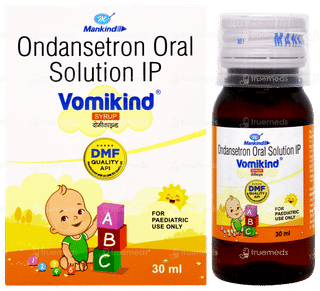
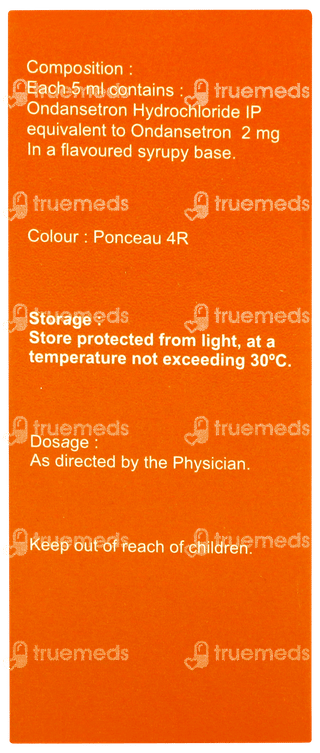

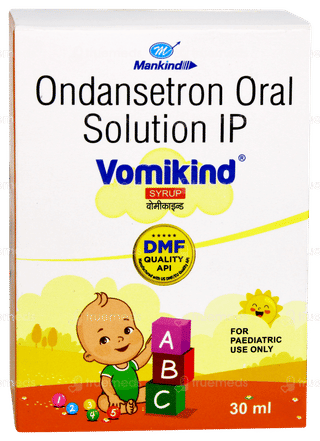
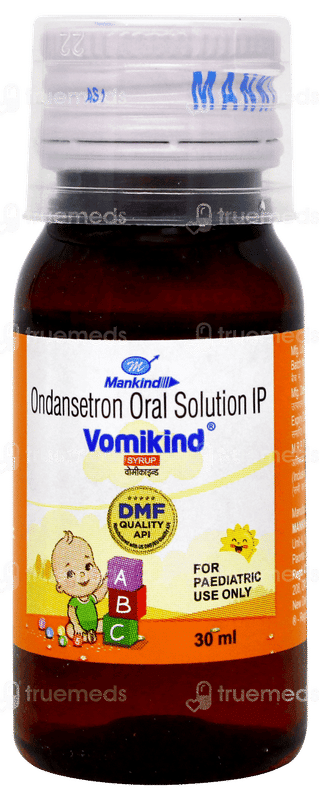
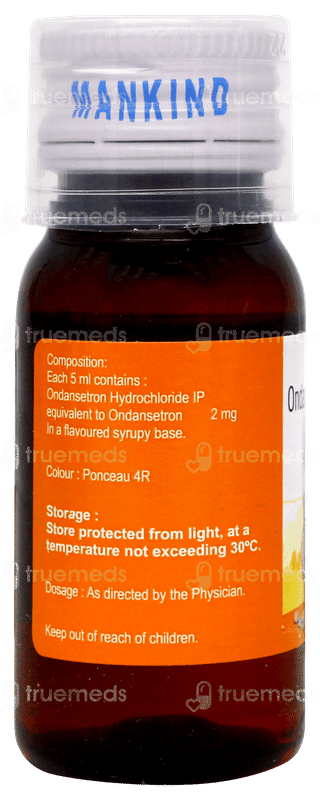
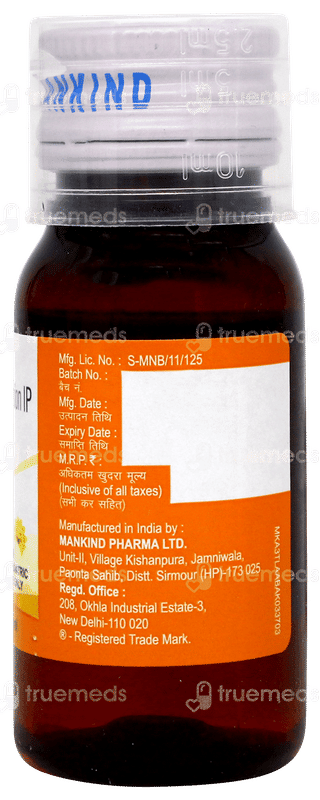
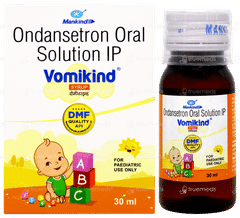
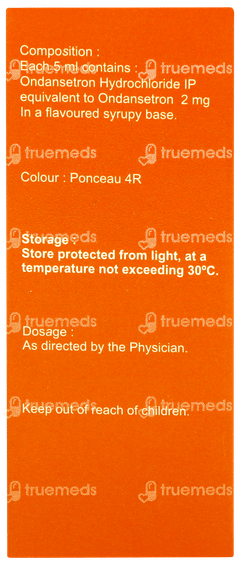

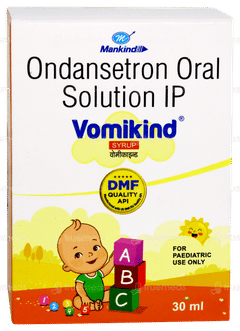
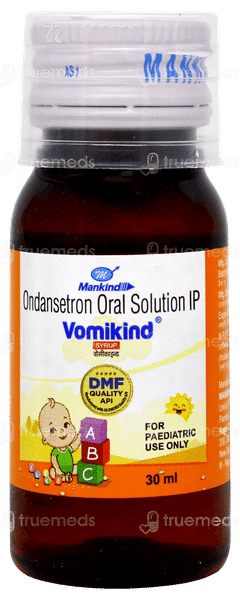
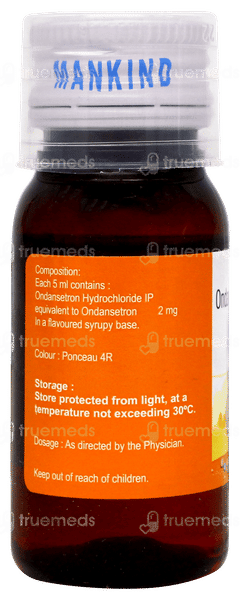
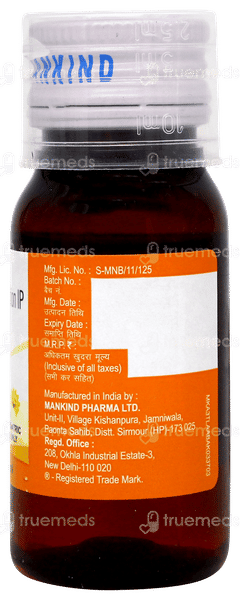

 Composition
Vomikind Syrup is a prescription antiemetic medicine used for selected causes of nausea and vomiting. It may be prescribed for vomiting associated with cancer treatment or surgery. In some children with acute gastroenteritis, ondansetron can reduce vomiting and support oral rehydration. However, it does not treat the underlying infection or replace fluid and electrolyte replacement. Persistent vomiting, severe abdominal pain or signs of dehydration require medical assessment.
Give Vomikind Syrup exactly as prescribed by the doctor. Measure the required amount using a calibrated oral syringe or measuring cup rather than a household spoon. Follow the prescribed timing and treatment duration. Do not repeat a dose after vomiting unless the doctor advises you to do so. For gastroenteritis, continue oral rehydration as directed. Seek medical advice if the child cannot retain fluids or develops reduced urination.
Common side effects of Vomikind Syrup include headache, constipation, diarrhoea, dizziness and tiredness. Some patients may experience flushing or abdominal discomfort. Inform the doctor if symptoms persist or worsen. Rarely, ondansetron can cause serious heart rhythm disturbances or serotonin syndrome. Seek urgent medical attention for fainting, irregular heartbeat, severe agitation or muscle rigidity. Persistent vomiting, unusual sleepiness or signs of dehydration require prompt assessment.
Before using Vomikind Syrup, tell the doctor about congenital long QT syndrome, heart disease, liver disease or low potassium or magnesium levels. Mention other medicines, particularly those affecting heart rhythm or serotonin activity. Ondansetron must not be combined with apomorphine. Discuss pregnancy and breastfeeding when relevant. The appropriate amount depends on the indication, age and clinical circumstances. Seek medical advice if vomiting is severe, recurrent or unexplained.