


 Composition
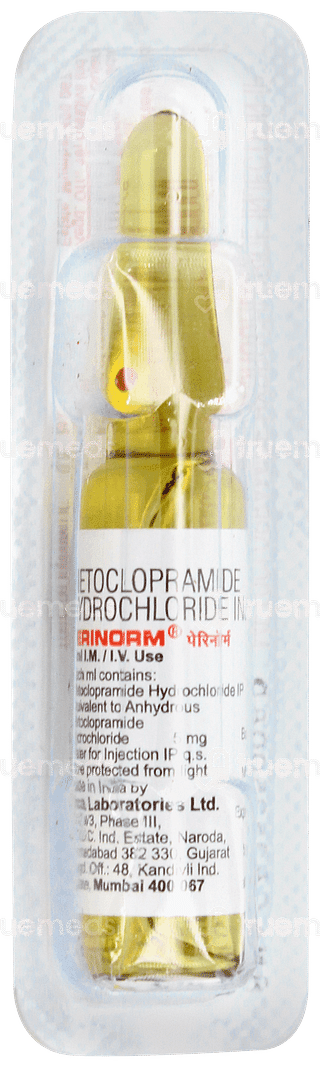
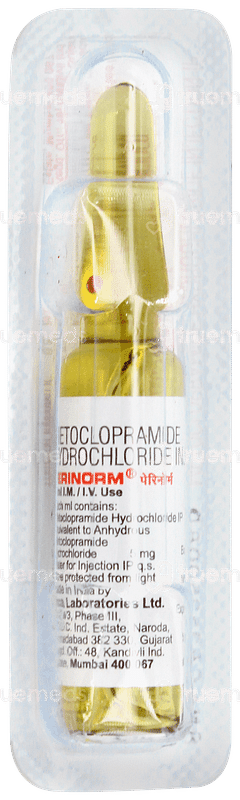
Perinorm Injection is used to treat severe nausea and vomiting when tablets or syrups cannot be taken or do not work. It is also used for delayed emptying of the stomach in people with diabetes, and for stomach problems linked to migraine. It helps prevent vomiting caused by cancer treatment and after surgery. It works by helping the stomach and upper gut move food along. See a doctor if vomiting continues.
Perinorm Injection is given by a doctor or nurse, into a muscle or a vein. Do not give yourself this injection. Follow your doctor's prescribed dose and duration. It is usually given for a short time only, as longer use raises the chance of movement problems. Drink fluids if you are able to, and tell the nurse if you feel unwell or restless during or after the injection.
Common side effects of Perinorm Injection include restlessness, drowsiness, dizziness, headache, tiredness, loose motions (diarrhoea) and low mood. Mild effects may settle after treatment. Inform your doctor if symptoms persist or worsen. Tell your doctor right away if you notice muscle spasms, shaking, stiffness or unusual movements of the face, tongue or neck. Get emergency help for swelling of the face or trouble breathing.
Before using Perinorm Injection, tell your doctor about any bleeding or blockage in the stomach or gut, Parkinson's disease, epilepsy, kidney or liver disease, depression or high blood pressure. Mention all medicines you take, especially medicines for mood, fits or pain. Consult your doctor if pregnant or breastfeeding. Do not drive or use machines if you feel drowsy or dizzy after the injection.