

- Medicines
- Personal Care
- Skin Cream
- Sunscreen
- Face Wash
- Skin and Body Soap
- Acne Care
- Body Lotions
- Moisturising Lotion
- Moisturising Cream
- Mosquito Repellent
- Moisturising Gel
- Body Wash
- Hair Oils
- Hair Shampoo
- Hair Conditioners
- Hair Supplements
- Hair Colour
- Hair Serum
- Hair Mask
- Hair Solutions
- Baby Diapers and Wipes
- Baby Lotion and Moisturising Cream
- Baby Bath Essentials
- Baby Skin Care
- Baby and Infant Food
- Baby Healthcare
- Women Multivitamins
- Ovulation Test Kit and Women Intimate Care
- Sanitary Pads
- Nutritional Drinks
- Condoms
- Lubricants
- Massage Gels
- Personal Body Massagers
- Men Performance Booster
- Sexual Health Supplements
- Massage Oils
- Ayurveda
- Tooth Paste
- Mouth Ulcer Gel
- Mouthwash
- Toothache and Gum Pain
- Tooth Brush
- Gargle Solution
- Orthopaedic Supports
- Adult Diapers
- Footwear
- Mobility and Support Accessories
- Urinary Support and Care
- Health Conditions
- Bone and Joint Care
- Digestive Care
- Eye Care
- Pain Relief
- Smoking Cessation
- Liver Care
- Stomach Care
- Cold and Cough
- Heart Care
- Kidney Care
- Piles, Fissures & Fistula
- Respiratory Care
- Mental Wellness
- Derma Care
- Pre and Probiotics
- Acidity
- Gas
- Constipation
- Loose Motion/Diarrhoea
- Digestive Fibres
- Digestive Enzymes
- Eye Lubricant Drops
- Lens Solution
- Safety Eye Wear
- Eye Cream
- Eye Vitamins and Supplements
- Eye Drops
- Eye Ointment and Gel
- Nicotine Patch
- Nicotine Gum
- Nicotine Lozenges
- Cough Syrups
- Chest Rubs and Balms
- Nasal Spray
- Lozenges
- Inhalant Capsules
- Cold and Cough Tablets
- Vitamins & Supplements
- Diabetes Care
- Healthcare Devices
- Homeopathic Medicine
- Health Guide
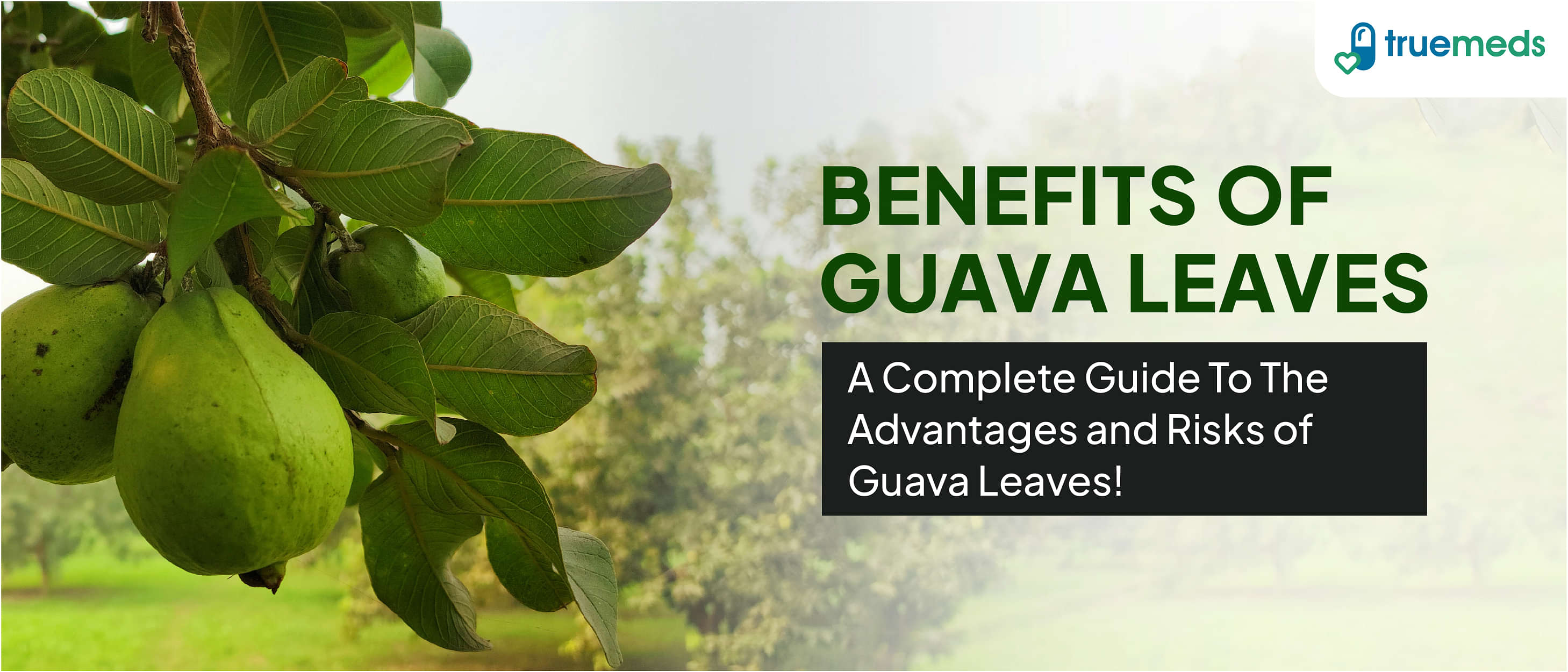
Guava Leaves: Uses, Benefits, and Side Effects
Last updated on :25 Feb, 2026
Read time :7 min
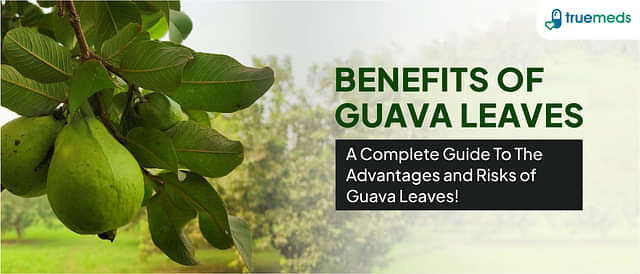
Leaves from the guava tree have a long history in herbal traditions and are valued for their many natural [1]. Packed with nutrients, these leaves are traditionally used to aid gut comfort and help keep your body feeling balanced [2],[3]. Research has explored their antimicrobial properties and potential effects on internal metabolic balance [3].
While guava leaves can provide several health benefits, it is important to use them appropriately, as excessive consumption or improper use may lead to mild side effects.
In this article, we will explore the uses, evidence-based benefits, and possible side effects of guava leaves, helping you make informed decisions about incorporating them into your health routine.
Guava Leaves Benefits for Health
Guava leaves are rich in nutrients and bioactive compounds that may support overall health [2].
Here are some of the key health benefits of guava leaves:
1. May Help Regulate Blood Sugar Levels
Guava leaf tea contains natural elements that help your body manage energy from food by slowing carbohydrate absorption through inhibition of digestive enzymes [3]. Research indicates that this tea supports balanced sugar absorption after eating, making it a helpful traditional addition for maintaining a healthy metabolic rate when combined with a balanced diet [4]. However, it should never replace prescribed diabetes medications.
2. May Help Maintain Healthy Cholesterol Levels
Clinical studies have shown that consuming guava fruit/leaf products may lower total cholesterol and triglycerides, as well as low-density lipoprotein (LDL or “bad”) cholesterol [4]. Regular use may support heart wellness by supporting healthier lipid profiles that keep your circulatory system functioning at its best.
3. Supports Menstrual Health (Relieves Cramps)
Guava leaf extract has been clinically studied for its potential to relieve pain. A clinical trial showed that guava leaf extract helped reduce the intensity of painful menstrual cramps (dysmenorrhea) more effectively than a placebo, providing natural relief during periods [5].
4. Promotes Digestive Health
Guava leaves are traditionally used to manage diarrhoea and stomach problems [5]. Research suggests that these extracts help keep your gut environment clean by limiting the growth of certain bacteria associated with gastrointestinal discomfort and discomfort [2]. Guava leaves are traditionally used for mild nausea and digestive discomfort [3].
5. May Support Healthy Weight Management
The mechanism that aids blood sugar control may also help with weight management. By helping to slow the way your body turns starches into sugar, these leaves may indirectly support weight management when combined with dietary and lifestyle measures [2].
6. Aids in Immune Boosting and Anti-Inflammatory Effects
Guava leaves are rich in antioxidants, including polyphenols and flavonoids [2]. These compounds support a healthy immune system and possess anti-inflammatory properties, helping to moderate molecules that cause inflammation [3]. Certain natural elements found in leaf oils are being studied for their protective qualities, though these laboratory findings still require much more human research and clinical investigation [2].
7. Help in Reducing Acne and Skin Inflammation
Guava leaves have shown antimicrobial and anti-inflammatory activity in laboratory studies [3]. Using a gentle leaf rinse can help refresh the face and keep the skin looking clear by reducing surface bacteria and reducing inflammation.
8. Potential for Enhanced Cognitive Functioning
The high levels of antioxidants in these leaves help protect your brain from daily wear and tear while supporting your overall mental clarity [3]. This protective effect may support overall brain health and may support overall brain health through antioxidant effects, though specific claims regarding Alzheimer’s disease require much more direct clinical evidence.
9. Helps Relieve Sore Throat and Cough
In traditional herbal practices, people often turn to guava leaf extract to soothe throat discomfort. Its high content of antioxidants, Vitamin C, and iron may help soothe irritation. Sipping this warm tea can help refresh your chest and soothe throat irritation.
How to Use Guava Leaves
Guava leaves are versatile and can be incorporated into your daily routine in several beneficial ways:
- Guava Leaf Tea (For Internal Benefits): Enjoying a cup of this herbal infusion is a simple way to support your daily energy and gut health. Boil a handful of fresh or dried guava leaves in water for 10–15 minutes, strain, and drink.
- Hair Rinse (For Scalp Health): After washing your hair, use the cooled infusion as a final rinse to refresh your scalp and add natural shine. This may help support scalp health and hair appearance.
- Skin Paste (For Spot Treatment): Dabbing a small amount of the crushed leaf onto specific spots can help calm the skin and reduce surface redness.
Side Effects & Precautions of Guava Leaves
While guava leaves are generally considered safe for moderate consumption, there are important precautions to note:
- Skin Irritation: If your skin is sensitive, using the leaf extract directly might cause redness or discomfort. It is best to try a small amount on your wrist before using it more widely.
- Constipation: In rare cases, high consumption of concentrated guava leaf tea or extract, due to the high tannin content, might lead to temporary constipation.
- Interactions with Diabetes Medication: Since these leaves help balance sugar, individuals taking antidiabetic medications should speak with a professional first. This ensures your levels stay within a healthy range and do not drop lower than intended.
- Pregnancy and Breastfeeding: Limited reliable research exists on how guava leaves and their products affect pregnant or breastfeeding women. It is best to avoid consuming large amounts or highly concentrated extracts during this time.
Expert Quote:
“Guava leaves are rich in antioxidants and flavonoids that support immunity, aid digestion, and may offer metabolic benefits. While they are largely safe to use, individuals with diabetes or those who are pregnant should always consult their doctor before using guava leaf products consistently.”
– Dr. Kavya Rejikumar
Disclaimer: The information provided in this article is for informational and educational purposes only and is not intended to be a substitute for professional medical advice, diagnosis, or treatment. Always seek the advice of a qualified healthcare provider, physician, or a Registered Dietitian with any questions you may have regarding a medical condition, dietary changes, or before starting any new health regimen.
References
[1] Birdi, T., Daswani, P., & Gholkar, M. (2017). Psidium guajava: A single plant for multiple health problems of rural Indian population. Pharmacognosy Reviews/Bioinformatics Trends/Pharmacognosy Review, 11(22), 167. https://doi.org/10.4103/phrev.phrev_17_17
[2] Kumar, M., Tomar, M., Amarowicz, R., Saurabh, V., Nair, M. S., Maheshwari, C., Sasi, M., Prajapati, U., Hasan, M., Singh, S., Changan, S., Prajapat, R. K., Berwal, M. K., & Satankar, V. (2021). Guava (Psidium guajava L.) Leaves: Nutritional Composition, Phytochemical Profile, and Health-Promoting Bioactivities. Foods, 10(4). https://doi.org/10.3390/foods10040752
[3] Díaz-de-Cerio, E., Verardo, V., Gómez-Caravaca, A. M., Fernández-Gutiérrez, A., & Segura-Carretero, A. (2017). Health Effects of Psidium guajava L. Leaves: An Overview of the Last Decade. International Journal of Molecular Sciences, 18(4). https://doi.org/10.3390/ijms18040897
[4] Kumari, S., et al. (2016). Effect of Guava in Blood Glucose and Lipid Profile in Healthy Human Subjects: A Randomized Controlled Study. Journal of Clinical and Diagnostic Research. https://doi.org/10.7860/jcdr/2016/21291.8425
[5] Ozgoli, G., Goli, M., & Simbar, M. (2006). Effect of a Psidii guajavae folium extract in the treatment of primary dysmenorrhea: A randomized clinical trial. Journal of Midwifery & Women’s Health, 51(2), 85–90. https://doi.org/10.1016/j.jmwh.2005.11.006















Disclaimer
Our healthcare experts have carefully reviewed and compiled the information presented here to ensure accuracy and trustworthiness. It is important to note that this information serves as a general overview of the topic and is for informational purposes only. It is not intended to diagnose, prevent, or cure any health problem. This page does not establish a doctor-patient relationship, nor does it replace the advice or consultation of a registered medical practitioner. We recommend seeking guidance from your registered medical practitioner for any questions or concerns regarding your medical condition.
Recent Articles







Company
About UsHealth ArticleHealth StoriesHealth LibraryDiseases & Health ConditionsAyurvedaUnderstanding Generic MedicinesAll MedicinesAll BrandsNeed HelpFAQSecuritySavings CalculatorSubscribe
Registered Office Address
Grievance Officer
Download Truemeds


Contact Us
Our customer representative team is available 7 days a week from 9 am - 9 pm.
v4.22.3

2026 - Truemeds | All rights reserved. Our content is for informational purposes only. See additional information.

Our Payment Partners




