

- Medicines
- Personal Care
- Skin Cream
- Sunscreen
- Face Wash
- Skin and Body Soap
- Acne Care
- Body Lotions
- Moisturising Lotion
- Moisturising Cream
- Mosquito Repellent
- Moisturising Gel
- Body Wash
- Hair Oils
- Hair Shampoo
- Hair Conditioners
- Hair Supplements
- Hair Colour
- Hair Serum
- Hair Mask
- Hair Solutions
- Baby Diapers and Wipes
- Baby Lotion and Moisturising Cream
- Baby Bath Essentials
- Baby Skin Care
- Baby and Infant Food
- Baby Healthcare
- Women Multivitamins
- Ovulation Test Kit and Women Intimate Care
- Sanitary Pads
- Nutritional Drinks
- Condoms
- Lubricants
- Massage Gels
- Personal Body Massagers
- Men Performance Booster
- Sexual Health Supplements
- Massage Oils
- Ayurveda
- Tooth Paste
- Mouth Ulcer Gel
- Mouthwash
- Toothache and Gum Pain
- Tooth Brush
- Gargle Solution
- Orthopaedic Supports
- Adult Diapers
- Footwear
- Mobility and Support Accessories
- Urinary Support and Care
- Health Conditions
- Bone and Joint Care
- Digestive Care
- Eye Care
- Pain Relief
- Smoking Cessation
- Liver Care
- Stomach Care
- Cold and Cough
- Heart Care
- Kidney Care
- Piles, Fissures & Fistula
- Respiratory Care
- Mental Wellness
- Derma Care
- Pre and Probiotics
- Acidity
- Gas
- Constipation
- Loose Motion/Diarrhoea
- Digestive Fibres
- Digestive Enzymes
- Eye Lubricant Drops
- Lens Solution
- Safety Eye Wear
- Eye Cream
- Eye Vitamins and Supplements
- Eye Drops
- Eye Ointment and Gel
- Nicotine Patch
- Nicotine Gum
- Nicotine Lozenges
- Cough Syrups
- Chest Rubs and Balms
- Nasal Spray
- Lozenges
- Inhalant Capsules
- Cold and Cough Tablets
- Vitamins & Supplements
- Diabetes Care
- Healthcare Devices
- Homeopathic Medicine
- Health Guide
Sweet Potato
Sweet potato (Ipomoea batatas), called shakarkand in India, is a naturally sweet-tasting, starchy root vegetable that is commonly eaten boiled, steamed, baked, roasted or mashed. It is valued as a dietary source of energy, fibre, and potassium. Orange-fleshed varieties also provide beta-carotene, which the body converts into vitamin A, a nutrient needed for normal vision and immune function.
 50
Last updated on : 26 Oct, 2026
Read time : 17 mins
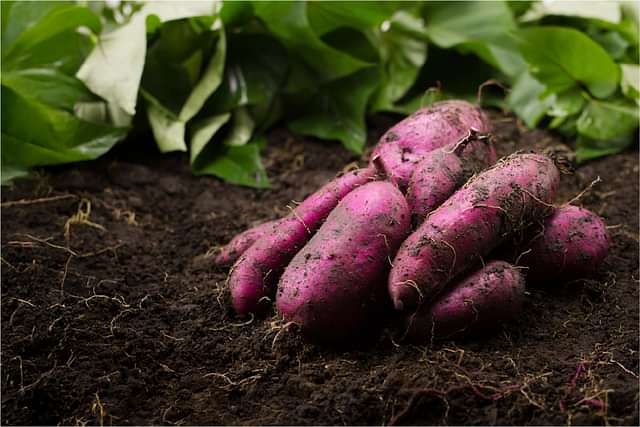
What is Sweet Potato?
The English name refers to the natural sweetness of the root, and the Hindi name shakarkand combines shakar (sugar) and kand (underground root). Sweet potato is native to Central and South America and was brought to India by European traders in the 1500s. Today, China produces more than half of the world**'s** supply, followed by countries in Africa such as Malawi and Tanzania (Food and Agriculture Organization [FAO], n.d.).
The older classical Ayurvedic texts, the Charaka, Sushruta and Vagbhata Samhitas, were compiled long before this crop reached India, so they do not describe it. In contemporary Ayurvedic dietetics, sweet potato is generally described as having madhura (sweet) rasa and guru (heavy) and snigdha (unctuous) qualities.
Key Facts
| Feature | Details |
| Botanical Name | Ipomoea batatas (L.) Lam. |
| Family | Convolvulaceae (morning glory family) |
| Also Known As | Shakarkand (Hindi) |
| Origin | Central and South America. Now grown in warm regions worldwide, with China the largest producer. |
| Part Eaten | Storage root (the thick underground part) |
| Ayurvedic Classification | Madhura (sweet) rasa; guru (heavy) and snigdha (unctuous) guna |
| Common Forms | Orange, purple and white-fleshed roots, eaten boiled, steamed, baked, roasted or mashed |
| Typical Serving | About 100 to 150 g cooked, roughly half to one medium root |
| Best Eaten | Cooked, as part of a mixed meal |
| Key Safety Note | People with kidney disease, kidney stones or diabetes, and those taking medicines that affect potassium, should ask a doctor before making sweet potato a regular part of their diet. |
Alternative Name
Sweet potato is known by different names across regions and languages. Its botanical name is Ipomoea batatas. It is commonly called shakarkand in India and kumara in New Zealand. Although sweet potato is sometimes called yam, true yams belong to a different plant family (Dioscoreaceae).
- Botanical name: Ipomoea batatas
- Hindi: Shakarkand, Shakarkandi
- Marathi: Ratale
- Bengali: Misti Alu
- Tamil: Sarkarai Valli Kizhangu
- Telugu: Chilagada Dumpa, Genusu
- Kannada: Sihigensu, Genasu
- Gujarati: Rataru, Sakkareo
- Malayalam: Madhurakkilannu
- Manipuri: Mangra
Chemical Constituents of Sweet Potato
Sweet potato contains the following main groups of natural compounds (Laveriano-Santos et al., 2022):
- Carbohydrates: Starch, which makes up most of the root’s dry matter, along with sugars such as sucrose, glucose and fructose. Maltose can form during cooking.
- Carotenoids: Beta-carotene, found mainly in orange-fleshed varieties.
- Anthocyanins: Purple pigments found in purple-fleshed varieties.
- Phenolic acids: Chlorogenic acid and related caffeic acid compounds.
- Dietary fibre: Cellulose, hemicellulose and pectin.
- Vitamins and minerals: Vitamin C, vitamin B6, potassium and manganese.
- Storage proteins: Sporamins, the main storage proteins in the root.
Nutritional Value of Sweet Potato
The table below shows the nutrients in 100 g of raw, orange-fleshed sweet potato (USDA ARS, n.d.-a). Cooking changes some nutrient values, and purple and white varieties generally contain much less beta-carotene.
Nutrient | Amount per 100 g (Raw) |
Energy | 86 kcal |
Protein | 1.6 g |
Fat | 0.1 g |
Carbohydrate | 20.1 g |
of which Starch | 12.7 g |
of which Sugars | 4.2 g |
Dietary Fibre | 3.0 g |
Potassium | 337 mg |
Vitamin C | 2.4 mg |
Vitamin A (as retinol activity equivalents) | 709 µg |
Vitamin B6 | 0.2 mg |
Medicinal Properties of Sweet Potato
Sweet potato is a food, so its effects come from its nutrients and plant compounds rather than a drug action.
- Vitamin A Support: Beta-carotene in orange-fleshed sweet potatoes is converted by the body into vitamin A, which is needed for normal vision.
- Antioxidant Activity: Anthocyanins in purple varieties and phenolic acids such as chlorogenic acid show antioxidant activity in laboratory studies, but their effects in humans are not yet established (Laveriano-Santos et al., 2022).
- Bowel Regularity: Dietary fibre adds bulk to stools. A meta-analysis of trials in people with constipation found that fibre increased stool frequency.
- Gut Health: Some starch becomes resistant when cooked sweet potato is cooled. Gut bacteria ferment this starch in the large intestine.
- Muscle Function and Fluid Balance: Potassium supports normal muscle function and fluid balance.
- Other Potential Effects: Most other reported actions are based on cell or animal studies and should not be interpreted as proof of benefits in humans.
Key Health Benefits of Sweet Potato
A mixed diet can gain useful nutrients from this root. The points below are the benefits that current evidence supports.
Source of Provitamin A for Normal Vision
Orange-fleshed sweet potato is a good source of beta-carotene, which the body converts into vitamin A. Vitamin A is needed for normal vision and for maintaining the skin and the lining of the airways and gut (Office of Dietary Supplements, n.d.). Purple and white varieties contain much less beta-carotene.
Fibre That May Ease Occasional Constipation
Sweet potato provides about 3 g of dietary fibre per 100 g. Fibre adds bulk to stools, and a meta-analysis found that higher fibre intake increased stool frequency in people with constipation. Increase portions gradually and drink enough water to help reduce gas and bloating.
Antioxidant Compounds in Coloured Varieties
Orange sweet potatoes contain carotenoids, while purple varieties contain anthocyanins. These plant pigments show antioxidant activity in laboratory tests. Antioxidants help limit damage caused by unstable molecules called free radicals. Whether eating sweet potato produces the same effects in the body is not yet established (Laveriano-Santos et al., 2022).
Potassium for Normal Muscle Function
A 100 g portion of raw sweet potato provides about 337 mg of potassium (USDA ARS, n.d.-a). Potassium is a mineral the body needs for normal muscle function and fluid balance. People with kidney disease or those taking medicines that can raise potassium levels should consult a doctor about their intake.
Starchy Staple That Provides Energy
Sweet potato contains about 20 g of carbohydrate per 100 g, mainly in the form of starch (USDA ARS, n.d.-a). It provides energy, like other starchy root vegetables. People who monitor their blood glucose should consider portion size and how sweet potato fits into the overall meal.
May Support Weight Management
The fibre in sweet potatoes may help promote feelings of fullness after meals, which can support appetite regulation. Their carbohydrate content also provides energy for daily activities. However, their effect on body weight depends on portion size, preparation methods and the overall balance of the diet. There is insufficient evidence that sweet potatoes alone cause weight loss.
Supports Normal Brain Function
Sweet potatoes contain vitamin B6, which contributes to normal nervous system function and the production of neurotransmitters involved in communication between nerve cells. These processes are important for normal brain function. However, there is insufficient evidence that eating sweet potatoes directly improves memory or prevents age-related cognitive decline.
Contains Compounds Studied for Anti-inflammatory Activity
Sweet potatoes contain beta-carotene, anthocyanins and other plant compounds that have shown antioxidant and anti-inflammatory activity in experimental studies. These compounds may influence biological pathways involved in oxidative stress and inflammation. However, the available evidence does not establish that eating sweet potatoes treats arthritis, relieves chronic inflammatory conditions or controls their symptoms.
Nutritional Benefits for Men and Women
Sweet potatoes provide carbohydrates for energy, fibre for digestive health and vitamins that support normal body functions. Vitamin A, produced by the body from beta-carotene, contributes to normal immune function and reproduction. However, there is insufficient evidence that sweet potatoes specifically balance hormones, improve fertility or accelerate muscle recovery in men or women. Their nutritional value depends on the overall diet rather than sex-specific effects.
Sweet Potato and Blood Glucose Management
Sweet potatoes contain carbohydrates that provide energy, along with fibre that can influence digestion. Their effect on blood glucose varies according to the variety, portion size, cooking method and the rest of the meal. Research into sweet potato preparations and blood glucose control has produced some promising findings, but the clinical evidence remains limited and does not establish sweet potatoes as a treatment for diabetes. People with diabetes can include sweet potatoes in a balanced eating plan while considering portion sizes and their individual blood glucose response. They should not replace prescribed diabetes medicines with dietary changes alone.
Disclaimer: This information is for general understanding only. Sweet potato is a food, not a treatment, cure or preventive measure for any disease. Consult a doctor or dietitian before making dietary changes, particularly if you have a medical condition.
Common Uses of Sweet Potato
Sweet potato is eaten in many cuisines. The most common ways of preparing it are listed below.
Boiled or Steamed Roots
Boiling or steaming softens the root without adding fat. It is a common choice for chaat, salads and snacks in Indian homes.
Baked and Roasted Dishes
Baking or roasting gives the root a sweeter, softer texture as some starch breaks down into sugars. Wedges can be roasted with a small amount of oil and spices.
Soups and Stews
Diced or puréed sweet potato adds body and mild sweetness to soups, stews and curries.
Fried Snacks
Chips and fries are made by frying or air-frying thin pieces. Frying can add fat and energy, so these are best eaten occasionally.
Desserts and Sweet Dishes
The natural sweetness of sweet potato makes it suitable for puddings, cakes and halwa. It can reduce the need for added sugar in some recipes.
Fasting-Day Meals
Boiled or roasted shakarkand is commonly eaten in India during religious fasting days.
Precautions While Eating Sweet Potato
Sweet potato is safe for most people in normal food amounts. The groups below should take extra care.
- Kidney stones: Sweet potato is listed among higher-oxalate foods, and oxalate can contribute to the most common type of kidney stone. People with a history of kidney stones should ask their doctor or dietitian about suitable portions.
- Kidney disease: Sweet potato is rich in potassium, which can build up in the blood when the kidneys cannot clear it effectively. People with kidney disease should follow the dietary limits recommended by their doctor.
- Diabetes: Sweet potato contains carbohydrates, and its effect on blood sugar depends on the variety, cooking method and portion size. Boiling generally produces a lower glycaemic index than baking or roasting (Bahado-Singh et al., 2011). People with diabetes should monitor their blood glucose response and follow their doctor's advice. Sweet potato must not replace prescribed medicines.
- Irritable bowel syndrome: Larger portions contain a sugar alcohol called mannitol, which may cause bloating or loose stools in some people.
- Allergy: Allergy to sweet potato is uncommon. Stop eating it if itching or swelling of the lips or face develops. Seek emergency medical help for breathing difficulty or swelling of the throat.
- Infants: Sweet potato can be introduced from around six months when well cooked and mashed to a suitable texture, without added salt or sugar.
- Skin colour change: Very large intakes of orange-fleshed sweet potato can turn the palms and soles yellow-orange. This usually fades when intake is reduced. Seek medical advice if the whites of the eyes also turn yellow, as this may indicate a different cause (Office of Dietary Supplements, n.d.).
- Spoiled roots: Do not eat sweet potatoes that are mouldy, have dark, sunken patches or taste bitter.
How to Use Sweet Potato
Wash the roots well before cooking. The skin can be eaten once scrubbed clean. The steps below describe common home preparation methods.
Boiled With the Skin
Place whole or halved roots in water and simmer for about 15 to 25 minutes, until a knife slides in easily. Boiling generally produces a lower glycaemic index than baking or roasting (Bahado-Singh et al., 2011).
Baked in an Oven
Prick the skin and bake whole roots at about 200 °C for 45 to 60 minutes, until soft. Baked sweet potatoes may raise blood sugar more quickly than boiled ones, so people with diabetes should be mindful of portion sizes.
Roasted as Wedges
Cut the roots into wedges, toss with a little oil and spices, and roast at about 200 °C for 25 to 30 minutes, turning once.
Mashed for Soft Meals
Mash boiled or baked roots until smooth. This form may suit young children, older adults with chewing difficulties and infants starting solid foods. For infants, do not add salt or sugar.
Foods and Spices Commonly Paired With Sweet Potato
The pairings below are common in Indian kitchens. Ayurvedic statements are presented as traditional beliefs, not proven effects.
Pairing | Why It Is Commonly Combined |
Ghee or Plant Oil | A small amount of fat helps the body absorb beta-carotene, which is fat-soluble. Ghee is also a traditional cooking fat in many Indian sweet potato dishes and adds a mild flavour. |
Cumin (Jeera) | Cumin is commonly used in Indian cooking and is traditionally believed to support digestion. It is often added to boiled or roasted shakarkand for a warm, savoury flavour that balances the sweetness. |
Lemon Juice | A squeeze of lemon with chaat masala is a common way to serve boiled shakarkand. The sourness balances the root's sweetness, making it a popular street-food and fasting-day snack. |
Pulses Such as Moong Dal | Sweet potato is relatively low in protein, so it can be paired with pulses to make a more balanced meal. Pulses provide additional protein and fibre. |
Recommended Dosage of Sweet Potato
There is no official daily limit for sweet potato. The portions below are general serving sizes for a healthy person who eats it as one vegetable among many.
Age Group | Suggested Portion of Cooked Sweet Potato | Points to Note |
Infants (from around 6 months) | A few teaspoons to start, well cooked and mashed smooth | Offer as one of several first foods. No added salt or sugar. |
Children (1 to 12 years) | About 50 to 100 g | Serve soft and cut into small pieces to reduce the risk of choking. |
Teenagers (13 to 18 years) | About 100 to 150 g | Active teenagers may eat more as part of a balanced meal. |
Adults | About 100 to 150 g | Eat as part of a mixed meal with vegetables and a protein source. |
Older adults | About 75 to 100 g | Mash or soften if chewing is difficult. Follow any dietary limits advised for kidney disease or diabetes. |
Sweet potato does not need to be eaten every day. Eating a variety of vegetables and starchy foods provides a wider range of nutrients.
Disclaimer: These portions are for general information only and are not a prescription. People with diabetes, kidney disease, kidney stones or irritable bowel syndrome, and those taking regular medicines, should ask a doctor or dietitian about a suitable portion. Consult a registered medical practitioner or Ayurvedic physician before making major dietary changes.
Side Effects of Sweet Potato
Side effects are uncommon when sweet potato is eaten in normal amounts. The following are possible effects to be aware of.
Digestive Discomfort
Large portions may cause gas, bloating or loose stools, particularly in people who are not used to eating fibre or who have irritable bowel syndrome.
Yellow-Orange Skin Colour
Very high intakes of orange-fleshed sweet potato can turn the palms and soles yellow-orange. This change is generally harmless and fades when intake is reduced (Office of Dietary Supplements, n.d.).
Allergic Reaction
Allergy is rare. Itching, hives or swelling after eating sweet potato requires medical advice. Difficulty breathing requires emergency medical care.
Raised Blood Potassium
In people with kidney disease, sweet potato's high potassium content may contribute to raised blood potassium levels, which can affect heart rhythm..
Kidney Stone Risk
Sweet potato contains oxalate, and frequent large portions may increase oxalate intake in people prone to calcium oxalate kidney stones.
Interaction With Other Drugs
Sweet potato eaten in normal food amounts has few documented drug interactions. The following situations warrant extra care.
Diabetes Medicines
Sweet potato adds carbohydrates to a meal. People taking insulin or tablets for diabetes should keep portions consistent and monitor their blood glucose, as significant changes in carbohydrate intake can affect glucose readings and medication requirements.
Potassium-Affecting Medicines
Some medicines can raise blood potassium levels, including ACE inhibitors, angiotensin receptor blockers and potassium-sparing diuretics. People taking these medicines, particularly those with kidney disease, should ask their doctor about eating large amounts of potassium-rich foods.
Vitamin A Supplements
Beta-carotene from food is not known to cause vitamin A toxicity. However, people taking high-dose vitamin A supplements should tell their doctor about their diet and supplement use (Office of Dietary Supplements, n.d.).
Disclaimer: This list is not exhaustive. Tell your doctor or pharmacist about all medicines, supplements and significant dietary changes. Do not stop or change any prescribed medicine based on this information.
Storage of Sweet Potato
Keep unwashed, uncut roots in a cool, dry, dark and well-ventilated place, ideally at about 13 to 15 °C. Avoid storing raw sweet potatoes in the refrigerator, as chilling can harden the centre and alter the taste. Refrigerate cooked sweet potato in a covered container within two hours of cooking and eat it within three to four days. Discard any root that is mouldy, wet, sunken or bitter, and wash your hands after handling it.
Key Takeaways
- Orange-fleshed sweet potato is a good source of beta-carotene, which the body converts into vitamin A for normal vision.
- Dietary fibre may help ease occasional constipation when eaten with adequate water intake.
- People with kidney disease or diabetes may need to adjust portions because of the potassium and carbohydrate content.
- Boiling generally gives sweet potato a lower glycaemic index than baking or roasting.
- People prone to kidney stones should ask a doctor or dietitian about suitable portions because sweet potato contains oxalate.
- Large portions may cause gas or bloating, while very high intakes of orange-fleshed varieties may turn the skin yellow-orange.
- Sweet potato is a food, not a treatment or preventive measure for disease, and it does not replace prescribed medicines.
FAQs
What are the benefits of sweet potato for skin?
What are the benefits of sweet potato for women?
What are the benefits of sweet potato for men?
Does sweet potato help in weight gain?
What are the sweet potato benefits for babies?
What are the benefits of sweet potato for hair?
How many sweet potatoes can one have per day?
Do sweet potatoes cause gas?
Is sweet potato safe for people with diabetes?
Is sweet potato safe for people with kidney problems?
References
- Bahado-Singh, P. S., Riley, C. K., Wheatley, A. O., & Lowe, H. I. C. (2011). Relationship between processing method and the glycemic indices of ten sweet potato (Ipomoea batatas) cultivars commonly consumed in Jamaica. Journal of Nutrition and Metabolism, 2011, Article 584832. https://doi.org/10.1155/2011/584832
- Food and Agriculture Organization of the United Nations. (n.d.). FAOSTAT: Crops and livestock products. https://www.fao.org/faostat/en/#data/QCL
- Laveriano-Santos, E. P., López-Yerena, A., Jaime-Rodríguez, C., González-Coria, J., Lamuela-Raventós, R. M., Vallverdú-Queralt, A., Romanyà, J., & Pérez, M. (2022). Sweet potato is not simply an abundant food crop: A comprehensive review of its phytochemical constituents, biological activities, and the effects of processing. Antioxidants, 11(9), Article 1648. https://doi.org/10.3390/antiox11091648
- Office of Dietary Supplements, National Institutes of Health. (n.d.). Vitamin A and carotenoids: Fact sheet for consumers. https://ods.od.nih.gov/factsheets/VitaminA-Consumer/
- U.S. Department of Agriculture, Agricultural Research Service. (n.d.). FoodData Central: Sweet potatoes. https://fdc.nal.usda.gov/food-details/168482/nutrients




Explore other categories
Latest health articles




Top Health Essentials


Top-selling ayurvedic products












Disclaimer
Top-Selling Medicines:
...View more
Top-OTC medicines:
...View more
Top-selling healthcare devices:
...View more
Company
About UsHealth ArticleHealth StoriesHealth LibraryDiseases & Health ConditionsAyurvedaUnderstanding Generic MedicinesAll MedicinesAll BrandsNeed HelpFAQSecuritySavings CalculatorAdvertise with UsSubscribe
Registered Office Address
Grievance Officer
Download Truemeds


Contact Us
Our customer representative team is available 7 days a week from 9 am - 9 pm.
v4.28.21

2026 - Truemeds | All rights reserved. Our content is for informational purposes only. See additional information.

Our Payment Partners




