

- Medicines
- Personal Care
- Skin Cream
- Sunscreen
- Face Wash
- Skin and Body Soap
- Acne Care
- Body Lotions
- Moisturising Lotion
- Moisturising Cream
- Mosquito Repellent
- Moisturising Gel
- Body Wash
- Hair Oils
- Hair Shampoo
- Hair Conditioners
- Hair Supplements
- Hair Colour
- Hair Serum
- Hair Mask
- Hair Solutions
- Baby Diapers and Wipes
- Baby Lotion and Moisturising Cream
- Baby Bath Essentials
- Baby Skin Care
- Baby and Infant Food
- Baby Healthcare
- Women Multivitamins
- Ovulation Test Kit and Women Intimate Care
- Sanitary Pads
- Nutritional Drinks
- Condoms
- Lubricants
- Massage Gels
- Personal Body Massagers
- Men Performance Booster
- Sexual Health Supplements
- Massage Oils
- Ayurveda
- Tooth Paste
- Mouth Ulcer Gel
- Mouthwash
- Toothache and Gum Pain
- Tooth Brush
- Gargle Solution
- Orthopaedic Supports
- Adult Diapers
- Footwear
- Mobility and Support Accessories
- Urinary Support and Care
- Health Conditions
- Bone and Joint Care
- Digestive Care
- Eye Care
- Pain Relief
- Smoking Cessation
- Liver Care
- Stomach Care
- Cold and Cough
- Heart Care
- Kidney Care
- Piles, Fissures & Fistula
- Respiratory Care
- Mental Wellness
- Derma Care
- Pre and Probiotics
- Acidity
- Gas
- Constipation
- Loose Motion/Diarrhoea
- Digestive Fibres
- Digestive Enzymes
- Eye Lubricant Drops
- Lens Solution
- Safety Eye Wear
- Eye Cream
- Eye Vitamins and Supplements
- Eye Drops
- Eye Ointment and Gel
- Nicotine Patch
- Nicotine Gum
- Nicotine Lozenges
- Cough Syrups
- Chest Rubs and Balms
- Nasal Spray
- Lozenges
- Inhalant Capsules
- Cold and Cough Tablets
- Vitamins & Supplements
- Diabetes Care
- Healthcare Devices
- Homeopathic Medicine
- Health Guide
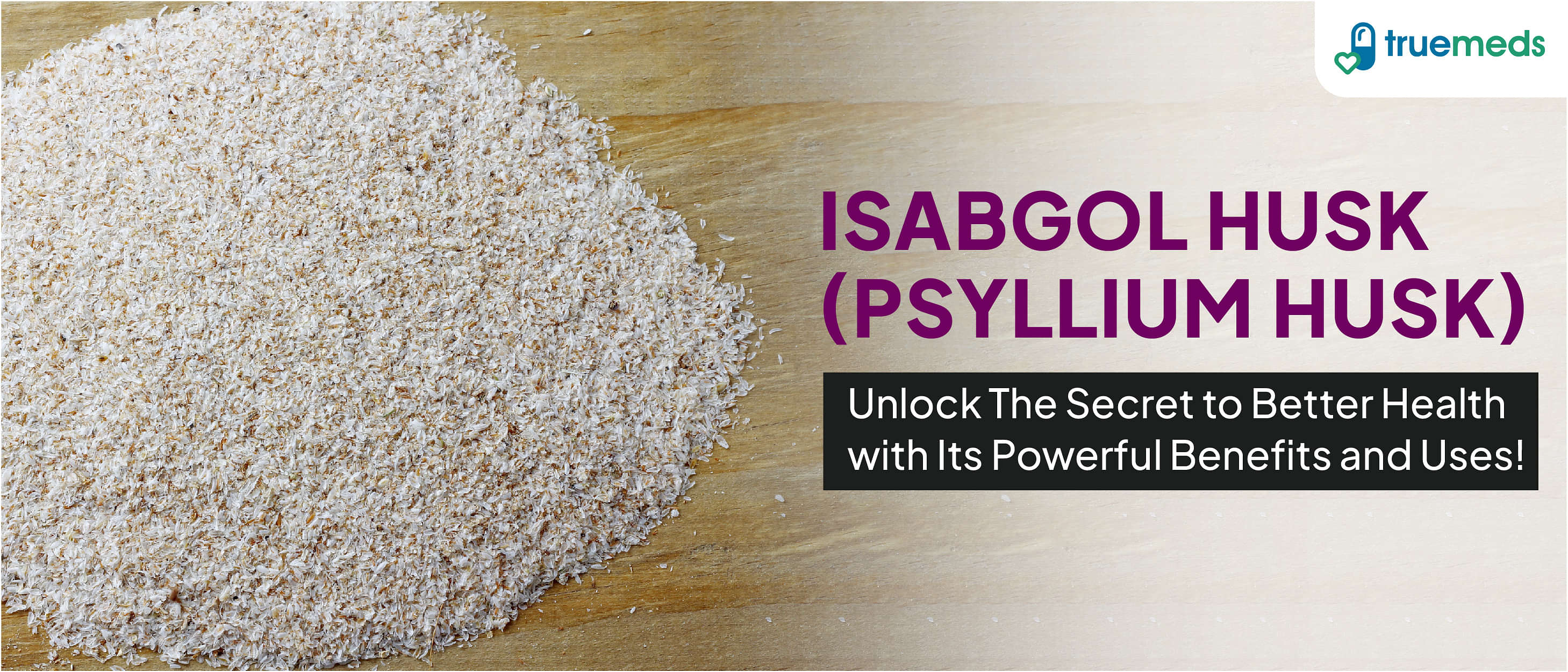
7 Amazing Health Benefits of Isabgol (Psyllium Husk)
Last updated on : 10 Nov, 2025
Read time : 7 min
Isabgol, also known as psyllium husk (Plantago ovata), is a natural source of soluble fibre that has been used in Indian households for centuries. While most people know it as a simple remedy for constipation, its health benefits go far beyond digestion [5]. From supporting heart health and managing cholesterol to aiding in weight control and blood sugar regulation, isabgol offers a range of benefits backed by science [1], [2], [3].
Important Safety Note: Always consume Isabgol with plenty of water to prevent choking or intestinal blockage.
Before exploring its health benefits, let’s understand its nutritional value.
Nutritional Value of Isabgol (per 100 g):
Isabgol is valued primarily for its exceptionally high dietary fibre content.
|
Nutrient |
Nutritional Value (per 100 g) |
| Calories | 218 kcal |
| Carbohydrates | 62.5 g |
| Proteins | 15.6 g |
| Total Fat | 4.2 g |
| Cholesterol | 0 mg |
| Sodium | 1.9 mg |
| Potassium | 1181 mg |
| Sugar | 0.4 g |
7 Amazing Health Benefits of Isabgol
Isabgol is more than just a home remedy for constipation. Here are 7 key health benefits of adding it to your daily routine:
1. Helps Manage Blood Sugar Levels
Psyllium husk is highly effective in lowering blood glucose levels in people with diabetes [1]. The soluble fibre forms a thick, viscous gel in the gut, which significantly slows down the digestion of complex carbohydrates. This effect decelerates the rate at which glucose is absorbed into the bloodstream, effectively lowering the Glycemic Index of ingested food [1]. This benefit is particularly valuable for managing Type 2 diabetes and those at risk.
2. Supports Heart Health and Lowers Cholesterol
Isabgol is clinically proven to lower both total and LDL (“bad”) cholesterol levels [2]. The soluble fibre binds to bile acids in the gut, forcing the liver to pull cholesterol from the bloodstream to produce more bile. Furthermore, studies suggest that supplementation with isabgol can also help reduce hypertension and lower body mass index (BMI), thereby reducing the overall risk of cardiovascular diseases [2].
3. Aids in Healthy Weight Loss
By slowing down the digestion process, isabgol’s viscous fibre significantly increases satiety (the feeling of fullness), helping to control appetite for longer periods [3]. A comprehensive review and meta-analysis confirmed that psyllium is effective for weight loss by helping to reduce overall calorie intake [3].
4. Improves Digestion and Relieves Constipation
Isabgol’s primary use is as a bulk-forming laxative [5]. Unlike rougher fibres (like some wheat bran), psyllium husk is a non-fermented, gel-forming fibre that assists in retaining water throughout the large bowel. This action produces a soft, bulky stool that promotes easier and more regular bowel movements, preventing dehydration of the stool [5].
5. Effective for Managing Loose Motion (Diarrhoea)
Psyllium’s unique water-binding ability makes it a versatile tool for both constipation and diarrhoea [5]. In cases of loose stool, it helps bulk up the stool by absorbing excess fluid in the intestines. It helps normalize the intestinal environment and may also help bind certain toxins contributing to acute diarrhoea.
6. Normalises Stool Form in Irritable Bowel Syndrome (IBS)
IBS is characterized by chronic cramping, pain, and alternating diarrhoea/constipation. Clinical evidence strongly supports psyllium husk powder as the fibre of choice to normalize stool form and significantly reduce overall symptoms in patients with IBS [5]. It is considered superior to coarse wheat bran for treating these symptoms.
7. Safe for Celiac Disease (Gluten-Free Alternative)
For individuals with Celiac disease or gluten intolerance, psyllium acts as a valuable ingredient in baking. One study demonstrated that bread made with added psyllium showed over 90% acceptance among individuals with Celiac disease, offering a viable, highly tolerable gluten-free alternative [4].
How to Use Isabgol
Always mix Isabgol powder thoroughly in a glass of liquid and drink immediately. Follow up with an additional glass of plain water.
|
Condition |
Recommended Use |
| Constipation | Mix 1-2 tsp in a glass of warm water or milk before bedtime. |
| Diarrhoea/Loose Motion | Combine 1-2 tsp with a cup of yoghurt (curd) and consume twice a day. |
| Diabetes/Weight Loss | Take 1-2 tsp with water or buttermilk 30 minutes before a meal. |
| Heart Health/IBS | Mix 1-2 tsp in a glass of water and drink daily. |
Isabgol Side Effects and Precautions
While generally safe and beneficial, Isabgol requires careful consumption to avoid adverse effects.
Critical Precautions
- Hydration is Essential: Always consume Isabgol with an adequate amount of fluid. Insufficient water intake can lead to the husk swelling in the throat or esophagus, potentially causing choking or intestinal blockage.
- Swallowing Difficulties: Avoid isabgol completely if you have a history of swallowing difficulties, throat issues, or esophageal narrowing.
- Medication Interference: Psyllium can interfere with the absorption of certain medications (including some heart, diabetes, and seizure drugs). It’s best to take psyllium at least 1–2 hours before or after any other prescribed medicines.
- Blood Sugar Monitoring: While it helps regulate blood sugar, taking it alongside diabetes medication may, in rare cases, cause a drop in blood sugar. Monitor your blood sugar closely if you are diabetic and taking Isabgol regularly.
Common Side Effects
Common side effects of excessive intake or initial use include abdominal pain or cramps, gas, bloating, nausea, or loose stools. Discontinue use and consult a doctor immediately if you experience any sign of an allergic reaction (e.g., difficulty breathing, severe dizziness, skin swelling).
Disclaimer:
The information provided in this article is for informational and educational purposes only and is not intended to be a substitute for professional medical advice, diagnosis, or treatment. Always seek the advice of a qualified healthcare provider, physician, or a Registered Dietitian with any questions you may have regarding a medical condition, dietary changes, supplement use, or before starting any new health regimen.
References
[1] Gholami, Z., Clark, C. C., & Zamzam Paknahad, M. (2024). The effect of psyllium on fasting blood sugar, HbA1c, HOMA IR, and insulin control: a GRADE-assessed systematic review and meta-analysis of randomized controlled trials. BMC Endocrine Disorders, 24(1). https://doi.org/10.1186/s12902-024-01608-2
[2] Petchetti, L., Frishman, W. H., Petrillo, R., & Raju, K. (2007). Nutriceuticals in Cardiovascular Disease. Cardiology in Review, 15(3), 116–122. https://doi.org/10.1097/01.crd.0000242964.74467.27
[3] Gibb, R. D., Sloan, K. J., & McRorie, J. W. J. (2023). Psyllium is a natural nonfermented gel-forming fiber that is effective for weight loss: A comprehensive review and meta-analysis. Journal of the American Association of Nurse Practitioners, 35(8). https://doi.org/10.1097/JXX.0000000000000882
[4] Zandonadi, R. P., Botelho, R. B. A., & Araújo, W. M. C. (2009). Psyllium as a Substitute for Gluten in Bread. Journal of the American Dietetic Association, 109(10), 1781–1784. https://doi.org/10.1016/j.jada.2009.07.032
[5] Przybyszewska, J., Kuźmiński, A., Przybyszewski, M., & Popławski, C. (2024). The role and therapeutic effectiveness of Plantago ovata seed husk (psyllium husk) in the prevention and non-pharmacological treatment of gastrointestinal diseases. Part 1. Clinical use of psyllium husk in the treatment of irritable bowel syndrome, ulcerative colitis, and colorectal cancer. Przegląd Gastroenterologiczny. https://doi.org/10.5114/pg.2024.139209














Disclaimer
Our healthcare experts have carefully reviewed and compiled the information presented here to ensure accuracy and trustworthiness. It is important to note that this information serves as a general overview of the topic and is for informational purposes only. It is not intended to diagnose, prevent, or cure any health problem. This page does not establish a doctor-patient relationship, nor does it replace the advice or consultation of a registered medical practitioner. We recommend seeking guidance from your registered medical practitioner for any questions or concerns regarding your medical condition.
Popular Articles

Recommended Articles




Recent Articles








Company
About UsHealth ArticleHealth StoriesDiseases & Health ConditionsAyurvedaAll MedicinesAll BrandsNeed HelpFAQSecuritySubscribe
Registered Office Address
Grievance Officer
Download Truemeds


Contact Us
Our customer representative team is available 7 days a week from 9 am - 9 pm.
v4.8.1

2025 - Truemeds | All rights reserved. Our content is for informational purposes only. See additional information.
Our Payment Partners