

- Medicines
- Personal Care
- Skin Cream
- Sunscreen
- Face Wash
- Skin and Body Soap
- Acne Care
- Body Lotions
- Moisturising Lotion
- Moisturising Cream
- Mosquito Repellent
- Moisturising Gel
- Body Wash
- Hair Oils
- Hair Shampoo
- Hair Conditioners
- Hair Supplements
- Hair Colour
- Hair Serum
- Hair Mask
- Hair Solutions
- Baby Diapers and Wipes
- Baby Lotion and Moisturising Cream
- Baby Bath Essentials
- Baby Skin Care
- Baby and Infant Food
- Baby Healthcare
- Women Multivitamins
- Ovulation Test Kit and Women Intimate Care
- Sanitary Pads
- Nutritional Drinks
- Condoms
- Lubricants
- Massage Gels
- Personal Body Massagers
- Men Performance Booster
- Sexual Health Supplements
- Massage Oils
- Ayurveda
- Tooth Paste
- Mouth Ulcer Gel
- Mouthwash
- Toothache and Gum Pain
- Tooth Brush
- Gargle Solution
- Orthopaedic Supports
- Adult Diapers
- Footwear
- Mobility and Support Accessories
- Urinary Support and Care
- Health Conditions
- Bone and Joint Care
- Digestive Care
- Eye Care
- Pain Relief
- Smoking Cessation
- Liver Care
- Stomach Care
- Cold and Cough
- Heart Care
- Kidney Care
- Piles, Fissures & Fistula
- Respiratory Care
- Mental Wellness
- Derma Care
- Pre and Probiotics
- Acidity
- Gas
- Constipation
- Loose Motion/Diarrhoea
- Digestive Fibres
- Digestive Enzymes
- Eye Lubricant Drops
- Lens Solution
- Safety Eye Wear
- Eye Cream
- Eye Vitamins and Supplements
- Eye Drops
- Eye Ointment and Gel
- Nicotine Patch
- Nicotine Gum
- Nicotine Lozenges
- Cough Syrups
- Chest Rubs and Balms
- Nasal Spray
- Lozenges
- Inhalant Capsules
- Cold and Cough Tablets
- Vitamins & Supplements
- Diabetes Care
- Healthcare Devices
- Homeopathic Medicine
- Health Guide
Muskmelon
Muskmelon (Cucumis melo), known in India as kharbuja, is a sweet, juicy summer fruit from the gourd family. It is made up of roughly 90 percent water and supplies vitamin C, vitamin A and potassium. In Ayurveda it is regarded as a cooling, hydrating fruit. It is eaten fresh, juiced or added to salads, and is valued mainly for hydration and everyday nourishment during hot weather.
 50
50Last updated on : 30 Jul, 2026
Read time : 13 mins
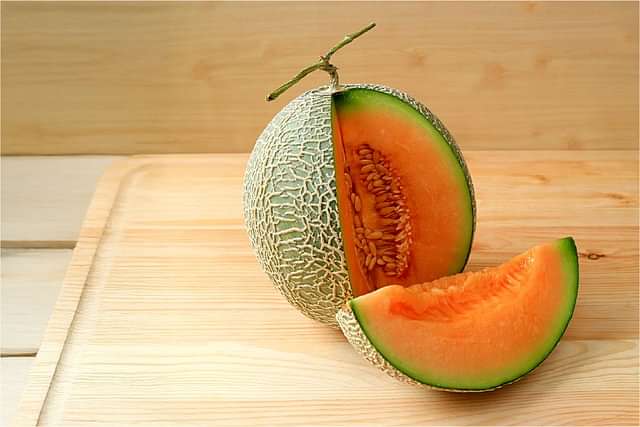
What is Muskmelon?
Muskmelon (Cucumis melo), called kharbuja in Hindi, is a sweet, juicy fruit of the gourd family (Cucurbitaceae). The name muskmelon comes from its faint musky aroma and its sweet, perfumed flesh, which is usually orange or pale yellow. It is a warm-season fruit that is roughly 90 percent water, which is why it is eaten so widely in Indian summers as a cooling, thirst-quenching food.
Muskmelon is believed to have originated in the region spanning Persia (modern Iran) and South Asia, and is now cultivated across Asia and the Middle East. It supplies vitamin C, vitamin A (as beta-carotene) and potassium, along with a small amount of dietary fibre.
In Ayurveda, muskmelon is traditionally described as sweet in taste (madhura rasa), cooling in potency (sheeta virya) and sweet after digestion (madhura vipaka). It is considered heavy (guru) and moistening (snigdha), and is traditionally said to pacify vata and pitta, while it may increase kapha if eaten in excess. It is paired with the fruits (phala varga).
Key Facts
| Feature | Details |
| Botanical name | Cucumis melo |
| Family | Cucurbitaceae (gourd family) |
| Also known as | Kharbuja (Hindi); cantaloupe, rockmelon, sweet melon (English) |
| Origin | Believed native to Persia (Iran) and South Asia; now grown across Asia and the Middle East |
| Part eaten | Ripe fruit pulp; the seeds are also eaten |
| Ayurvedic classification | Rasa: madhura (sweet). Guna: guru, snigdha. Virya: sheeta (cooling). Vipaka: madhura. Dosha: traditionally pacifies vata and pitta, may increase kapha in excess. Varga: phala (fruit)
|
| Key nutrients | Water (about 90 percent), vitamin C, vitamin A (beta-carotene), potassium, dietary fibre |
| Common forms | Fresh fruit, juice, seeds |
| Typical serving | About 1 cup (roughly 120 to 150 g) of diced fruit
|
| Best eaten | Fresh and during the day, in warm weather, in moderation |
| Key safety note | High in potassium and water. People with kidney disease or on potassium-affecting medicines should seek medical advice, and those with diabetes should watch portion size |
Alternative Names of Muskmelon
Muskmelon is known by several names across languages and regions. The common ones are listed below.
- Botanical name: Cucumis melo
- English: cantaloupe, rockmelon, sweet melon
- Hindi: kharbuja
- Sanskrit: Madhupaka, Madhuphala, and Dashangula
- Tamil: Kirani
- Regional Indian names: kharbooj, kharabuja and similar spelling variants
Nutritional Value of Muskmelon (per 100 gm)
The values below are for raw muskmelon (cantaloupe) per 100 g, based on USDA data (USDA, 2022).
Nutrient | Amount per 100 g |
Energy | 34 kcal |
Protein | 0.8 g |
Total fat | 0.2 g |
of which saturated | 0.1 g |
Cholesterol | 0 mg |
Total carbohydrate | 8.2 g |
of which sugars | 7.9 g |
Dietary fibre | 0.9 g |
Sodium | 16 mg |
Potassium | 267 mg |
Vitamin C | 36.7 mg |
Vitamin A (RAE) | 169 mcg |
Medicinal Properties of Muskmelon
- Dietary Inclusion: Due to its highly medicinal nature, muskmelon is recommended to be utilised as part of a daily diet.
- Skin Health: Rich in vitamins A and C, the fruit provides antioxidant properties that assist in fighting free radicals responsible for causing skin breakouts.
- Hydration and Detoxification: It contains a high volume of water, which actively helps with hydration, supports the kidneys, and aids in detoxification.
- Digestive Support: It exerts beneficial medicinal properties on the digestive system due to its fibre content, which offers the added advantage of treating constipation.
- Cardiovascular Health: Muskmelon has the potential to lower blood pressure, thereby demonstrating a clear benefit for heart health.
- Weight Management: Providing a low-calorie serving, this fruit can successfully assist in a structured weight loss plan.
- Chronic Disease Risk: It is rich in antioxidants and supplies anti-inflammatory substances that may decrease the risk of chronic diseases.
Types of Muskmelon
Muskmelon (Cucumis melo) has several varieties that differ in skin, colour and sweetness. The common ones are described below.
- Cantaloupe: Orange flesh with a rough, net-patterned rind.
- Honeydew: Smooth, pale green to cream skin with sweet, pale green flesh.
- Galia: Yellow-green rind with sweet, aromatic flesh.
- Sarda: A common Indian variety with green to yellow skin and mild sweetness.
- Persian melon: Larger, with a noticeably fragrant flesh.
Key Health Benefits of Muskmelon
Let us see the health benefits that muskmelon provides to incorporate into your everyday lifestyle:
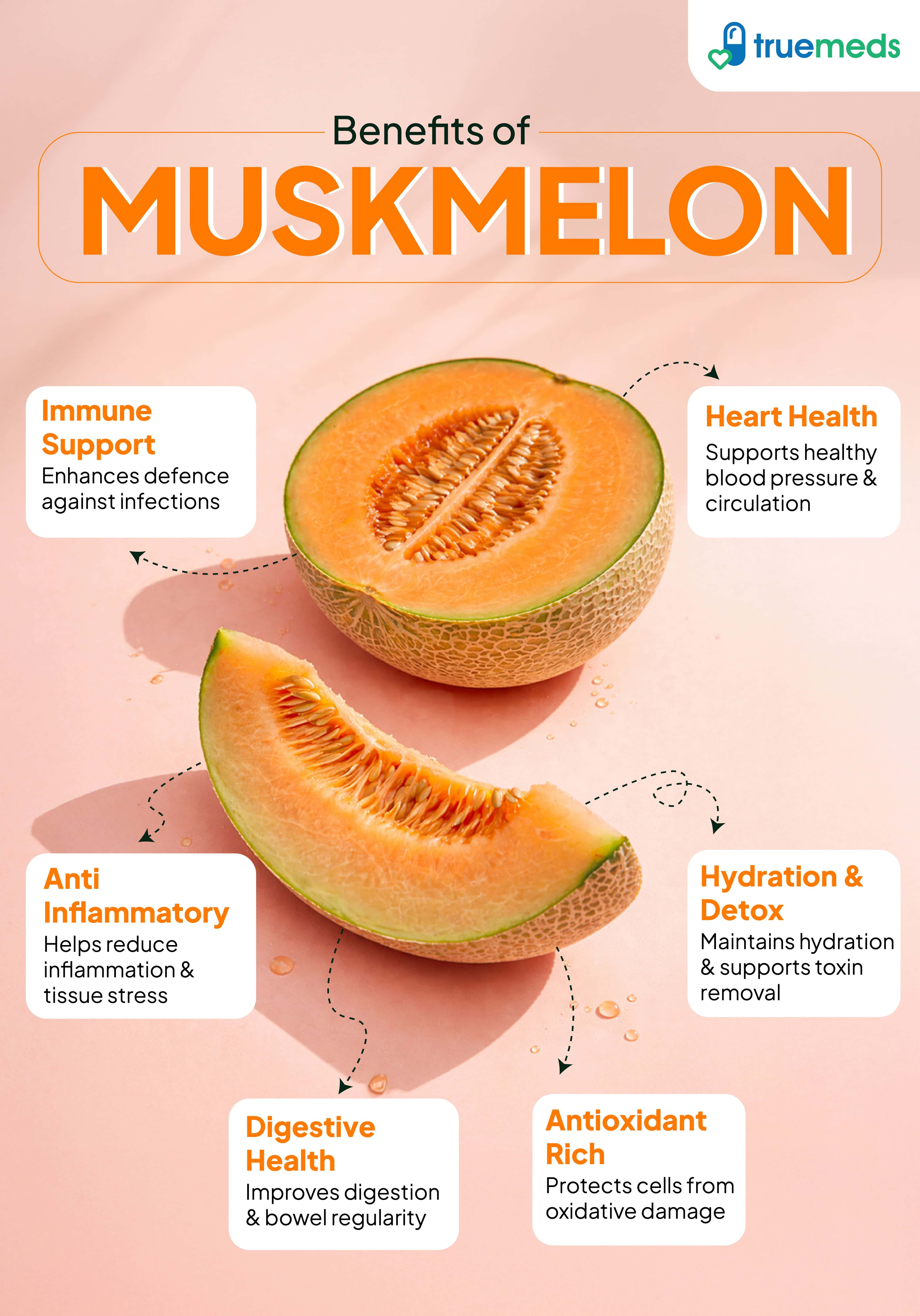
Supports Hydration
Muskmelon is about 90 percent water, so it helps top up fluids in hot weather and after activity. Eating water-rich fruit alongside plain water is an easy way to stay hydrated (CDC, n.d.), which in turn supports normal energy levels, skin comfort and kidney function during summer.
Provides Antioxidants
The fruit supplies vitamin C and vitamin A (as beta-carotene), which act as antioxidants. Antioxidants help the body neutralise free radicals, the reactive molecules linked to cell wear over time, and vitamin C also supports the normal formation of collagen for skin and connective tissue (NIH Office of Dietary Supplements, n.d.-a).
Aids Digestion
Muskmelon contains a small amount of dietary fibre and a large amount of water, a combination that supports smooth, regular bowel movements. Choosing fibre and water-rich fruit can help you feel comfortably full, which may make it easier to manage overall portion sizes.
Supports Immunity
A single serving of muskmelon provides a useful share of the daily vitamin C requirement. Vitamin C supports the normal working of the immune system, so including vitamin-C-rich fruit regularly is one simple part of an overall healthy, varied diet.
Contributes Potassium
Muskmelon is a source of potassium, a mineral the body needs for normal muscle contraction, nerve signalling and fluid balance. It is a helpful nutrient to obtain from everyday foods, and muskmelon is one pleasant, low-calorie way to include some in the diet.
Naturally Low in Calories
At around 34 kcal per 100 g, muskmelon is a naturally low-calorie, sweet food. It can satisfy a craving for something sweet without a heavy calorie load, which makes it a sensible choice within a calorie-aware, balanced eating pattern (USDA FoodData Central, n.d.).
Common Uses for Muskmelon
Muskmelon is used mostly as a food and drink, and to a lesser extent in traditional preparations. The main everyday uses are described below.
As a Fresh Summer Fruit
It is most often eaten fresh, chilled and cut into cubes or wedges, as a cooling snack during hot months.
In Drinks and Salads
The pulp is blended into juices and smoothies or added to fruit salads and desserts for its natural sweetness and juice.
As a Seasonal Cooling Food in Ayurveda
In Ayurveda, it is used as a sheeta (cooling) food to balance the heat of summer, eaten on its own rather than combined with milk.
Muskmelon Seeds
The dried seeds are roasted and eaten as a snack or ground for use in traditional preparations.
Precautions While Taking Muskmelon
Muskmelon is safe for most people, but a few sensible precautions help you enjoy it safely. These are the side effects and dosage sections below.
- Wash the whole fruit: Rinse the outer rind under running water before cutting, as soil-borne bacteria on the skin can transfer to the flesh when sliced.
- Avoid cross-contamination: Wash your hands, knife, chopping board and worktop after preparing it, and keep cut fruit away from raw meat, poultry and seafood.
- Refrigerate cut fruit: Cover and chill cut pieces and eat within a day or two, as cut melon spoils quickly at room temperature.
- If you have kidney disease, diabetes, or a known melon allergy: Discuss with your doctor how much is right for you before eating it regularly.
Disclaimer: This information is for general awareness only and is not a substitute for advice from a registered medical practitioner.
How to Use Muskmelon?
Muskmelon can be enjoyed in a few simple ways. Each method is described below.
Eat It Fresh
Peel the fruit, scoop out the seeds and cut the flesh into bite-sized pieces. Eat it on its own as a snack or add it to a fruit salad. This is the simplest way to get its water and nutrients.
Blend It Into Juice or a Smoothie
Blend the pulp with a little water to make a refreshing juice, or with other fruits for a smoothie. Add mint for flavour if you like. It is best not to blend muskmelon with milk, as this combination is traditionally discouraged and can be hard to digest.
Roast the Seeds
Rinse and dry the seeds, then roast them lightly to eat as a crunchy snack, or grind them to add to other dishes.
Recommended Dosage of Muskmelon
Muskmelon is a food, so there is no fixed medicinal dose. The general servings below are a practical guide for healthy people and should be adjusted on a doctor or dietitian’s advice for anyone with a health condition.
- Children: A small portion, around half a cup (about 60 to 75 g) of cut fruit, introduced gradually.
- Teenagers: Around 1 cup (about 120 to 150 g) as part of a balanced diet.
- Adults: About 1 to 2 cups (roughly 150 to 300 g) a day is enough for most people.
- Older adults: Around 1 cup a day; those on medicines that affect potassium should check with their doctor.
- People with diabetes: Keep to about 1 cup (roughly 120 to 150 g), pair it with a protein or healthy fat, and monitor your blood sugar response. See the note in Side Effects on glycaemic index.
- During pregnancy: Muskmelon can be eaten in normal food amounts if it is washed well and freshly cut; discuss any specific concerns with your doctor.
Disclaimer: These are general food servings, not medical advice. Please consult a registered medical practitioner or dietitian for guidance suited to you.
Side Effects of Muskmelon
Muskmelon is safe in normal amounts. The points below describe what can happen if it is eaten in excess or by people with specific conditions. Anyone affected should stop and seek medical advice.
Digestive Discomfort
Eating large quantities can cause bloating, gas or loose stools in some people because of the natural sugars and fibre. Sticking to normal serving sizes usually avoids this.
Effect on Blood Sugar
Muskmelon has a medium-to-high glycaemic index (about 65) but a low glycaemic load per serving (about 4), so a normal portion raises blood sugar gently. Large portions can still push blood sugar up, so people with diabetes should keep to about 1 cup and monitor their response.
Potassium and Fluid Balance
Because muskmelon is high in potassium and water, very large amounts may not suit people with kidney disease, those on dialysis, or those taking potassium-sparing diuretics, who could be at risk of high blood potassium. These groups should check portion sizes with their doctor.
Allergy
Melon allergy is uncommon but does occur, sometimes in people sensitive to ragweed or other pollens. Anyone who reacts with itching, swelling or breathing difficulty should stop eating it and seek medical help.
Disclaimer: If you notice any persistent or severe reaction, stop eating muskmelon and consult a registered medical practitioner.
Interaction of Muskmelon With Other Drugs
As a potassium-rich food, muskmelon may matter for people on certain medicines. The main ones are below. This is general information, not a reason to stop any prescribed medicine.
Medicines That Raise Potassium
Beta-blockers, ACE inhibitors, ARBs and potassium-sparing diuretics can raise blood potassium. Eating very large amounts of high-potassium foods such as muskmelon alongside these medicines could add to that effect, so keep to normal portions and follow your doctor’s advice.
Diabetes Medicines
If you take insulin or blood-sugar-lowering tablets, large portions of any sweet fruit can affect your blood sugar and may need to be accounted for. Keep portions steady and monitor your blood sugar rather than avoiding the fruit altogether.
Disclaimer: Do not change any prescribed medicine because of this information. Speak to your doctor or pharmacist about your diet if you are on regular medication.
Storage of Muskmelon
Storing muskmelon well keeps it fresh and safe to eat. Follow the simple steps below.
- Keep a whole, uncut muskmelon at room temperature until ripe, then refrigerate it.
- Once cut, cover the pieces, refrigerate them and eat within one to two days.
- Keep cut melon away from raw meat, poultry and seafood to avoid cross-contamination.
- Discard any fruit that smells sour, looks slimy or has been left out for several hours.
Key Takeaways
- Muskmelon is a low-calorie, hydrating summer fruit that supplies vitamin C, vitamin A and potassium, and in Ayurveda is considered a cooling food.
- Eaten in normal amounts as part of a balanced diet, it supports hydration, digestion and everyday nourishment.
- It has a medium glycaemic index but a low glycaemic load, so people with diabetes can eat modest portions with monitoring.
- People with kidney disease, or those on potassium-affecting or diabetes medicines, should check portion sizes with their doctor.
- This information is general and does not replace advice from a registered medical practitioner.
FAQs
Are muskmelon seeds edible?
Why is muskmelon good to eat in summer?
Does muskmelon cause gas?
Can people with diabetes eat muskmelon?
What is muskmelon juice good for?
Is muskmelon safe during pregnancy?
What are the skin benefits of muskmelon?
Is muskmelon sugar-free?
Who should be cautious with muskmelon?
What is the difference between muskmelon and cantaloupe?
References
- Melons, cantaloupe, raw - Nutrients - SR Legacy. (2019). Usda.Gov. Retrieved from https://fdc.nal.usda.gov/food-details/169092/nutrients
- Office of Dietary Supplements. (n.d.-a). Vitamin C: Fact sheet for consumers. National Institutes of Health, U.S. Department of Health and Human Services. https://ods.od.nih.gov/factsheets/VitaminC-Consumer/
- Centers for Disease Control and Prevention. (n.d.). About water and healthier drinks. U.S. Department of Health and Human Services. https://www.cdc.gov/healthy-weight-growth/water-healthy-drinks/index.html
- Cucumis melo - an overview | ScienceDirect Topics. (n.d.). Www.sciencedirect.com. https://www.sciencedirect.com/topics/agricultural-and-biological-sciences/cucumis-melo
- Hla, D., Soe, H., Zin, D., & Myint, M. (2019). Investigation and Chemical Constituents of Muskmelons. International Journal of Science and Engineering Applications, 8, 449–454. https://ijsea.com/archive/volume8/issue10/IJSEA08101003.pdf



Explore other categories
Latest health articles





Top Health Essentials






Top-selling ayurvedic products













Disclaimer
Top-Selling Medicines:
...View more
Top-OTC medicines:
...View more
Top-selling healthcare devices:
...View more
Company
About UsHealth ArticleHealth StoriesHealth LibraryDiseases & Health ConditionsAyurvedaUnderstanding Generic MedicinesAll MedicinesAll BrandsNeed HelpFAQSecuritySavings CalculatorAdvertise with UsSubscribe
Registered Office Address
Grievance Officer
Download Truemeds


Contact Us
Our customer representative team is available 7 days a week from 9 am - 9 pm.
v4.28.17

2026 - Truemeds | All rights reserved. Our content is for informational purposes only. See additional information.

Our Payment Partners




