

- Medicines
- Personal Care
- Skin Cream
- Sunscreen
- Face Wash
- Skin and Body Soap
- Acne Care
- Body Lotions
- Moisturising Lotion
- Moisturising Cream
- Mosquito Repellent
- Moisturising Gel
- Body Wash
- Hair Oils
- Hair Shampoo
- Hair Conditioners
- Hair Supplements
- Hair Colour
- Hair Serum
- Hair Mask
- Hair Solutions
- Baby Diapers and Wipes
- Baby Lotion and Moisturising Cream
- Baby Bath Essentials
- Baby Skin Care
- Baby and Infant Food
- Baby Healthcare
- Women Multivitamins
- Ovulation Test Kit and Women Intimate Care
- Sanitary Pads
- Nutritional Drinks
- Condoms
- Lubricants
- Massage Gels
- Personal Body Massagers
- Men Performance Booster
- Sexual Health Supplements
- Massage Oils
- Ayurveda
- Tooth Paste
- Mouth Ulcer Gel
- Mouthwash
- Toothache and Gum Pain
- Tooth Brush
- Gargle Solution
- Orthopaedic Supports
- Adult Diapers
- Footwear
- Mobility and Support Accessories
- Urinary Support and Care
- Health Conditions
- Bone and Joint Care
- Digestive Care
- Eye Care
- Pain Relief
- Smoking Cessation
- Liver Care
- Stomach Care
- Cold and Cough
- Heart Care
- Kidney Care
- Piles, Fissures & Fistula
- Respiratory Care
- Mental Wellness
- Derma Care
- Pre and Probiotics
- Acidity
- Gas
- Constipation
- Loose Motion/Diarrhoea
- Digestive Fibres
- Digestive Enzymes
- Eye Lubricant Drops
- Lens Solution
- Safety Eye Wear
- Eye Cream
- Eye Vitamins and Supplements
- Eye Drops
- Eye Ointment and Gel
- Nicotine Patch
- Nicotine Gum
- Nicotine Lozenges
- Cough Syrups
- Chest Rubs and Balms
- Nasal Spray
- Lozenges
- Inhalant Capsules
- Cold and Cough Tablets
- Vitamins & Supplements
- Diabetes Care
- Healthcare Devices
- Homeopathic Medicine
- Health Guide
Grapes
Grapes are small, juicy fruits of the vine Vitis vinifera, eaten fresh, dried as raisins, or pressed into juice. Known in Ayurveda as Draksha, they are valued as a sweet, cooling fruit and are a source of natural sugars, water, fibre, vitamin K, potassium and antioxidant polyphenols such as resveratrol. This article covers their nutrition, uses, benefits, sensible servings, side effects and precautions.
 50
50Last updated on : 18 Aug, 2026
Read time : 14 mins
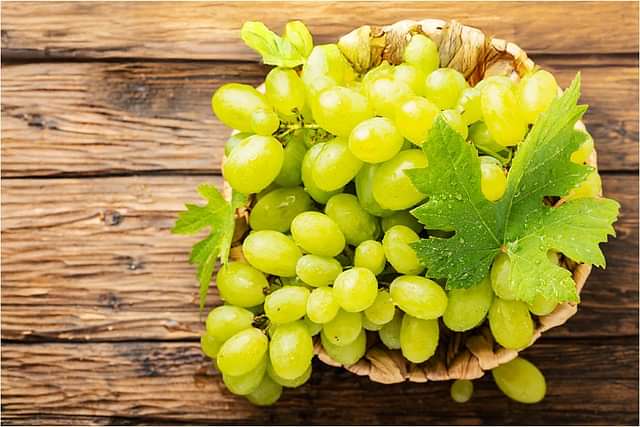
What are Grapes?
Grapes are the fruit of the woody vine Vitis vinifera, in the Vitaceae family. They grow in clusters, ripen in shades of green, red, purple and black, and are eaten fresh, dried as raisins, or made into juice and wine. Cultivated for thousands of years around the Mediterranean and across Asia, grapes are now grown worldwide, including major grape-growing regions of India such as Nashik and parts of Karnataka and Andhra Pradesh.
In Ayurveda the grape is known as Draksha and is held in high regard among fruits. Classical Ayurvedic texts describe Draksha based on its rasa (taste), virya (potency), vipaka (post-digestive effect) and its influence on the doshas.
Key Facts
| Feature | Details |
| Botanical name | Vitis vinifera (Vitaceae family)
|
| Also known as | Draksha (Sanskrit), Angoor (Hindi/Urdu); raisins are the dried form |
| Origin | Native to the Mediterranean and western Asia; widely grown in India (for example Nashik, Karnataka, Andhra Pradesh)
|
| Part eaten | The whole fruit (skin, flesh and seeds where present); dried as raisins
|
| Ayurvedic classification | Ayurveda classifies grapes (Draksha) based on their rasa (taste), virya (potency), vipaka (post-digestive effect) and dosha action |
| Key nutrients | Natural sugars, water, dietary fibre, vitamin K, potassium, small amounts of vitamin C, and polyphenol antioxidants (resveratrol, anthocyanins) |
| Common forms | Fresh grapes, raisins (dried), grape juice, wine, grape seed oil |
| Typical serving | About 1 to 2 cups of fresh grapes (150 to 300 g), or a small handful of raisins (40 to 50 g), a day |
| Best eaten | Fresh as a snack, in fruit salads, or as a small portion of juice; wash well before eating
|
| Key safety note | High in natural sugar, so portion-control matters for people with diabetes. Whole grapes are a choking hazard for young children and should be cut lengthwise
|
Alternative Names of Grapes
Grapes are known by different names across languages and regions:
- Botanical name: Vitis vinifera
- Sanskrit: Mridvika, Draksha
- Hindi / Urdu: Angoor
- English: Grape; raisin (dried grape)
- Tamil: Drakshai, Panneer Drakshi
- Punjabi: Angoor
Nutritional Value of Grapes
Grapes are mostly water and natural sugar, with useful amounts of potassium and vitamin K. The values below are per 100 g of raw grapes 2 teaspoons (U.S. Department of Agriculture, Agricultural Research Service, n.d.).
| Nutrient | Amount (per 100g) |
| Calories | 80 kcal |
| Water | 79.9 g |
| Carbohydrates | 18.6 g |
| Sugars | 16.1 g |
| Dietary fibre | 0.9 g |
| Protein | 0.9 g |
| Potassium | 218 mg |
| Vitamin K | 14.6 µg |
| Vitamin C | 3 mg |
| Calcium | 10 mg |
| Iron | 0.2 mg |
Medicinal Properties of Grapes
Grapes, known as Draksha in Ayurveda, are regarded as one of the most valued fruits in classical Ayurvedic texts. They are traditionally believed to help balance Vata and Pitta doshas and are used in fresh and dried forms (raisins), as well as in Ayurvedic formulations such as Drakshasava. They are commonly included in traditional digestive and respiratory wellness practices.
- Antioxidant: Grapes contain polyphenols and resveratrol, which may help protect body cells from damage caused by free radicals.
- Anti-inflammatory: Compounds in grapes are associated with helping to calm inflammation in the body.
- Antimicrobial: Grape extracts are traditionally believed to have a mild action against certain microbes, though further research is needed to confirm this in humans.
- Analgesic: Grapes may help offer gentle relief from minor bodily discomfort.
- Antipyretic: Grapes are traditionally believed to support the body in maintaining a normal temperature during mild fever.
Note: Consult a qualified Ayurvedic practitioner before using grapes or grape based formulations for any health condition, especially alongside other medicines.
Types of Grapes
There are many types of grapes, and each has a different flavour, colour, and health benefits. Among the most common types, these include:
1. Green Grapes
Green grapes are crunchy and softly tart. Green grapes are mainly consumed fresh and are also used in white wine. The benefits of green grapes are wide-ranging, with such a high concentration of antioxidants that they help prevent many diseases.
2. Red Grapes
Red grapes are sweeter by taste and have an abundance of antioxidants, the highest levels of resveratrol, an antioxidant known to promote heart health. Red grapes are mostly eaten fresh or processed into red wine.
3. Black Grapes
These are black grapes, celebrated for their rich flavour. They are also accommodating because they have high anthocyanin, a flavonoid type that can function as a strong antioxidant. Black grapes are used more frequently in juices and jams. Some black grape juice benefits include enhancing immunity, heart health, and healthy skin.
4. Concord Grapes
These dark purple grapes have a rich flavour and are mainly used to produce grape juices and jellies. Concord grapes have polyphenols, known compounds with several health benefits, one of which is reducing inflammation.
5. Thompson Seedless Grapes
This one is one of the most popular seedless grape varieties. Usually greenish, it is commonly made into raisins.
Key Health Benefits of Grapes
As part of a balanced diet, grapes can add nutrients and antioxidants that support everyday wellbeing. Their main benefits are:
Support Heart Health
Grapes supply potassium and polyphenol antioxidants such as resveratrol. As part of a balanced diet these nutrients support normal blood pressure and healthy circulation. Grapes are a helpful swap for sugary snacks, though they are not a treatment for any heart condition.
Immune System Support
Grapes provide vitamin C and other antioxidants that support the immune system’s normal working. Eaten regularly as part of a varied diet rich in fruit and vegetables, they contribute to overall resilience, rather than preventing infection on their own.
Support Digestive Health
Grapes and raisins provide fibre and water, which support regular bowel movements and can ease occasional constipation. Their gentle bulk helps digestion, though anyone with ongoing gut symptoms should see a doctor rather than rely on fruit alone.
May Support Skin Health
The antioxidants and water in grapes help protect skin cells from everyday oxidative stress and support hydration from within. A diet rich in colourful fruit is linked with healthier-looking skin, though grapes will not, on their own, remove wrinkles or lighten skin.
Weight Management Support
Grapes are mostly water and relatively low in calories for their volume, so a measured portion makes a satisfying, naturally sweet snack in place of richer treats. Because they are high in natural sugar, portion size still matters.
Support Eye Health
Grapes contain small amounts of the antioxidants lutein and zeaxanthin, which are found in the eye and help filter light. As part of a varied diet they contribute to eye health, alongside other fruit and vegetables.
Common Uses for Grapes
Grapes are used in various ranges of products and for different reasons. Below are some of the most common uses of grapes:
1. Fresh Consumption
Fresh grapes are commonly consumed as a snack or an addition to salads and fruit platters. Fresh fruit is available to everyone due to its sweet taste and juiciness.
2. Juices and Smoothies
Grape juice not only quenches but also ensures nutrient intake. The various benefits of grape juice include building immunity, gaining energy, and contributing to healthy skin care.
3. Dry Grapes- Raisins
Dry grapes or raisins are widely used in sweets and savoury dishes. The benefits of black dry grapes include better digestion. There's improvement in iron absorption, and it helps reduce constipation.
4. Cosmetics
Grapes are rich in anti-aging properties, and thus, they are used abundantly in skincare. Grape extracts and oils are also famous for their elasticity properties on the skin and for reducing wrinkles.
5. Grape Seed Oil
Grape seed oil, obtained from the seeds of wine grapes, is commonly used in cooking in western countries due to its high smoke point and neutral flavour, making it ideal for sautéing and baking. Further, it is used in skincare products for its moisturising properties as it is high in vitamin E and essential fatty acids. It also has potential benefits in reducing the appearance of fine lines and improving skin elasticity.
Precautions While Eating Grapes
Most people can enjoy grapes safely, but there are a few situations where caution is advised:
- Choking risk in young children: Whole grapes are a common choking hazard for children under about four. Cut them lengthwise into quarters and supervise young children while they eat.
- Diabetes: Grapes are high in natural sugar. People with diabetes should keep to a small portion and count it within their daily carbohydrate allowance.
- Pregnancy and breastfeeding: Grapes are generally considered safe in normal food amounts. As with any food, anyone with concerns during pregnancy should ask their doctor or midwife.
- Allergies: Grape allergy is uncommon but possible. Stop eating them and seek medical help if you notice itching, swelling or difficulty breathing.
- Overeating: Eating a lot of grapes can cause loose stools, wind or stomach upset because of their fibre and sugar. Keep to a normal serving.
- Grape seed extract: Grape seed extract is a concentrated supplement, not the fruit. If you are pregnant, on medication or have a health condition, ask a doctor before taking it.
How to Use Grapes
Soaked raisins for regularity
Soak a small handful of raisins in water overnight and eat them in the morning. The fibre and water can help support a comfortable, regular bowel habit.
Grapes in a balanced diet for skin
Eating grapes as part of a colourful, fruit-rich diet supports skin health from within. There is no need to apply grape juice to the face; fruit acids can irritate skin and are best enjoyed as food.
Grapes and its juice for everyday nutrients
A portion of fresh grapes or a small glass of juice adds vitamin C, potassium and antioxidants. Whole grapes are the better choice, as juice is higher in sugar and lower in fibre.
A light snack before bed
A small bowl of grapes an hour or so before bed makes a light, naturally sweet snack. Grapes are not a treatment for insomnia, but a modest fruit snack is a sensible alternative to heavier late-night food.
Recommended Serving Size of Grapes
Serving size depends on age, activity and any health conditions. As a general guide:
- Fresh grapes: about 1 to 2 cups (150 to 300 g) a day as part of your fruit intake.
- Raisins: a small handful (40 to 50 g) a day; higher in sugar, so keep the portion small.
- Grape juice: up to a small glass (about 200 ml) occasionally; whole fruit is better day to day.
- Young children: a small portion of grapes cut lengthwise into quarters; never whole, because of the choking risk.
Side Effects of Grapes
Eaten in normal amounts, grapes rarely cause problems. Possible side effects include:
- Digestive upset: Eating a lot of grapes can cause loose stools, wind or bloating because of their fibre and sugar.
- Allergic reactions: Uncommon, but some people react to grapes, including those sensitive to salicylates. Stop and seek help if you notice itching, swelling or trouble breathing.
- Blood sugar: Grapes are high in natural sugar, so large amounts can raise blood sugar, which matters for people with diabetes.
Interaction of Grapes With Other Drugs
Eating grapes as part of a balanced diet is unlikely to cause significant medicine interactions, but there are a few considerations:
- Blood thinners: Grapes contain vitamin K, which plays a role in clotting. Large, sudden changes in vitamin-K intake can affect warfarin, so keep your fruit intake steady and follow your clinic’s advice.
- Blood-pressure and potassium: Grapes are a source of potassium. If you take blood-pressure or kidney medicines that affect potassium, ask your doctor about how much fruit is right for you.
Storage of Grapes
Keep fresh grapes unwashed in a breathable bag or container in the refrigerator, and wash them just before eating; washing early makes them spoil faster. Used this way they keep for up to a week or two. Store raisins in a sealed, airtight container in a cool, dry cupboard away from moisture.
Key Takeaways
- Grapes (Draksha) are a sweet, water-rich fruit that provides fibre, potassium, vitamin K and antioxidant polyphenols.
- As part of a balanced diet they support heart health, digestion and healthy skin; they are not a treatment for any disease.
- They are high in natural sugar, so people with diabetes should watch portions.
- Whole grapes are a choking hazard for young children; cut them lengthwise.
- Keep grape seed extract (a supplement) separate from the fruit, and ask a doctor before taking it.
FAQs
What are the benefits of grapes for constipation and piles?
What are the benefits of grapes for heart disease?
What are the benefits of grapes for premenstrual syndrome?
Do grapes have nutritional value?
Can grapes cause a yeast infection?
Do grapes cause gout?
What are the health benefits of eating grapes at night?
What are the benefits of grapes for a baby?
What are the health benefits of black dried grapes?
Are grapes beneficial for skin ageing and melasma?
How many grapes should I eat in a day?
Are grapes safe for people with diabetes?
Are grapes safe for babies and toddlers?
Can grapes help me sleep?
Do grapes interact with blood thinners?
References
- U.S. Department of Agriculture, Agricultural Research Service. (n.d.). Grapes, raw. FoodData Central. https://fdc.nal.usda.gov/
- Berry, A. C., Nakshabendi, R., Abidali, H., Atchaneeyasakul, K., Dholaria, K., Johnson, C., Kishore, V. A., & Baltz, A. C. (2016). Adverse effects of grape seed extract supplement: A clinical case and long-term follow-up. Journal of Dietary Supplements, 13(2), 232–235. https://doi.org/10.3109/19390211.2015.1008617
- National Horticulture Board. (n.d.). Grape. Ministry of Agriculture and Farmers Welfare, Government of India. https://www.nhb.gov.in/Horticulture%20Crops/Grape/Grape1.html




Explore other categories
Latest health articles





Top Health Essentials


















Top-selling ayurvedic products




















Disclaimer
Top-Selling Medicines:
...View more
Top-OTC medicines:
...View more
Top-selling healthcare devices:
...View more
Company
About UsHealth ArticleHealth StoriesHealth LibraryDiseases & Health ConditionsAyurvedaUnderstanding Generic MedicinesAll MedicinesAll BrandsNeed HelpFAQSecuritySavings CalculatorAdvertise with UsSubscribe
Registered Office Address
Grievance Officer
Download Truemeds


Contact Us
Our customer representative team is available 7 days a week from 9 am - 9 pm.
v4.28.13

2026 - Truemeds | All rights reserved. Our content is for informational purposes only. See additional information.

Our Payment Partners