

- Medicines
- Personal Care
- Skin Cream
- Sunscreen
- Face Wash
- Skin and Body Soap
- Acne Care
- Body Lotions
- Moisturising Lotion
- Moisturising Cream
- Mosquito Repellent
- Moisturising Gel
- Body Wash
- Hair Oils
- Hair Shampoo
- Hair Conditioners
- Hair Supplements
- Hair Colour
- Hair Serum
- Hair Mask
- Hair Solutions
- Baby Diapers and Wipes
- Baby Lotion and Moisturising Cream
- Baby Bath Essentials
- Baby Skin Care
- Baby and Infant Food
- Baby Healthcare
- Women Multivitamins
- Ovulation Test Kit and Women Intimate Care
- Sanitary Pads
- Nutritional Drinks
- Condoms
- Lubricants
- Massage Gels
- Personal Body Massagers
- Men Performance Booster
- Sexual Health Supplements
- Massage Oils
- Ayurveda
- Tooth Paste
- Mouth Ulcer Gel
- Mouthwash
- Toothache and Gum Pain
- Tooth Brush
- Gargle Solution
- Orthopaedic Supports
- Adult Diapers
- Footwear
- Mobility and Support Accessories
- Urinary Support and Care
- Health Conditions
- Bone and Joint Care
- Digestive Care
- Eye Care
- Pain Relief
- Smoking Cessation
- Liver Care
- Stomach Care
- Cold and Cough
- Heart Care
- Kidney Care
- Piles, Fissures & Fistula
- Respiratory Care
- Mental Wellness
- Derma Care
- Pre and Probiotics
- Acidity
- Gas
- Constipation
- Loose Motion/Diarrhoea
- Digestive Fibres
- Digestive Enzymes
- Eye Lubricant Drops
- Lens Solution
- Safety Eye Wear
- Eye Cream
- Eye Vitamins and Supplements
- Eye Drops
- Eye Ointment and Gel
- Nicotine Patch
- Nicotine Gum
- Nicotine Lozenges
- Cough Syrups
- Chest Rubs and Balms
- Nasal Spray
- Lozenges
- Inhalant Capsules
- Cold and Cough Tablets
- Vitamins & Supplements
- Diabetes Care
- Healthcare Devices
- Homeopathic Medicine
- Health Guide
Ashwagandharishta
Ashwagandharishta is a classical Ayurvedic fermented liquid formulation primarily prepared from the root of Ashwagandha (Withania somnifera), along with several supportive herbs such as Manjishta, Musali, Haritaki, Nisha, Daruharidra, Rakta Chandana, Sweta Chandana, Chitraka, Yashti, and Rasna. As a traditional Asavarishta preparation, it naturally possesses Deepana (appetising) and Pachana (digestive) properties that help strengthen Jatharagni (digestive fire) and improve nutrient absorption. Ashwagandha, the key ingredient, is well known for its anti-stress and adaptogenic qualities, which may support the body in managing stress and anxiety. This formulation is traditionally used as a restorative tonic to promote nervous system health, improve strength, and address general debility.
 50
50Last updated on : 05 Jul, 2026
Read time : 9 mins

What is Ashwagandharishta?
Ashwagandharishta is a classical Ayurvedic tonic made from the herb Withania somnifera (Ashwagandha) and other drugs. It falls under the category of "Arishtas" in Ayurveda, which are medicinal herbal preparations obtained by fermenting herbs to enhance their properties.
Ashwagandharishta is a rejuvenating Ayurvedic tonic known for its adaptogenic effects that help reduce stress, anxiety, and fatigue while improving stamina and energy. Traditionally used to support mental and physical well-being, it may enhance memory, strengthen immune function, and promote overall vitality. In addition, due to the digestive-supportive nature of Ashwagandha, it is also used to help manage common gastrointestinal discomforts such as indigestion, flatulence, gastritis, constipation, and stomach pain, supporting balanced digestive function.
Source of Ashwagandharishta
Ashwagandharishta is an Ayurvedic formulation based on the plant Ashwagandha as its primary ingredient, fermented with herbs and jaggery, which acts as a fermenting agent. The other ingredients of Aswagandharishta are: Manjistha (Rubia cordifolia), Haritaki (Terminalia chebula), Bibhitaki (Terminalia bellirica), Amalaki (Emblica officinalis), Musta (Cyperus rotundus), Yashtimadhu (Glycyrrhiza glabra), Trivrit (Operculina turpethum), Rasna (Pluchea lanceolata), Vidanga (Embelia ribes), Arjuna (Terminalia arjuna), Shati (Hedychium spicatum), Ela (Elettaria cardamomum), Priyangu (Callicarpa macrophylla), Lodhra (Symplocos racemosa), Gokshura (Tribulus terrestris), and Dhataki (Woodfordia fruticosa). Ashwagandharishta benefits are abundant, making it suitable for its adaptogen or Rasayana activity.
Quick Facts
| Feature | Details |
| What is Ashwagandharishta | Ashwagandharishta is a traditional Ayurvedic herbal formulation primarily made from Withania somnifera (Ashwagandha) and other herbs. It is known for its adaptogenic and tonic properties. |
| Common Use | Traditionally used as a supportive nervine tonic for general nervous system wellness. It should not be considered a replacement for medical treatment of diagnosed neurological, degenerative, or mental health conditions. |
| Chemical Composition | The ingredients of Aswagandharishta are: Ashwagandha (Withania somnifera), Manjistha (Rubia cordifolia), Haritaki (Terminalia chebula), Bibhitaki (Terminalia bellirica), Amalaki (Emblica officinalis), Musta (Cyperus rotundus), Yashtimadhu (Glycyrrhiza glabra), Trivrit (Operculina turpethum), Rasna (Pluchea lanceolata), Vidanga (Embelia ribes), Arjuna (Terminalia arjuna), Shati (Hedychium spicatum), Ela (Elettaria cardamomum), Priyangu (Callicarpa macrophylla), Lodhra (Symplocos racemosa), Gokshura (Tribulus terrestris), and Dhataki (Woodfordia fruticosa). |
| Health Benefits |
|
| Forms Available | Available in syrup form, typically packaged in bottles for easy consumption. |
| Recommended Dosage | 15-20 ml of Ashwagandharishta, diluted with water, taken twice daily, preferably after meals or as directed by a physician. |
| Safety Measures | It should be used under medical supervision, especially by pregnant or nursing women and individuals with underlying health conditions. |
| Storage | Store in a cool, dark place, tightly sealed, away from direct sunlight to maintain potency. |
Health Benefits of Ashwagandharishta
In the Ayurvedic tradition, Ashwagandharishta is recognised for its Rasayana (rejuvenative), Balya (strength-promoting), and adaptogenic properties. Modern clinical perspectives suggest these benefits are linked to withanolides found in the primary ingredient.
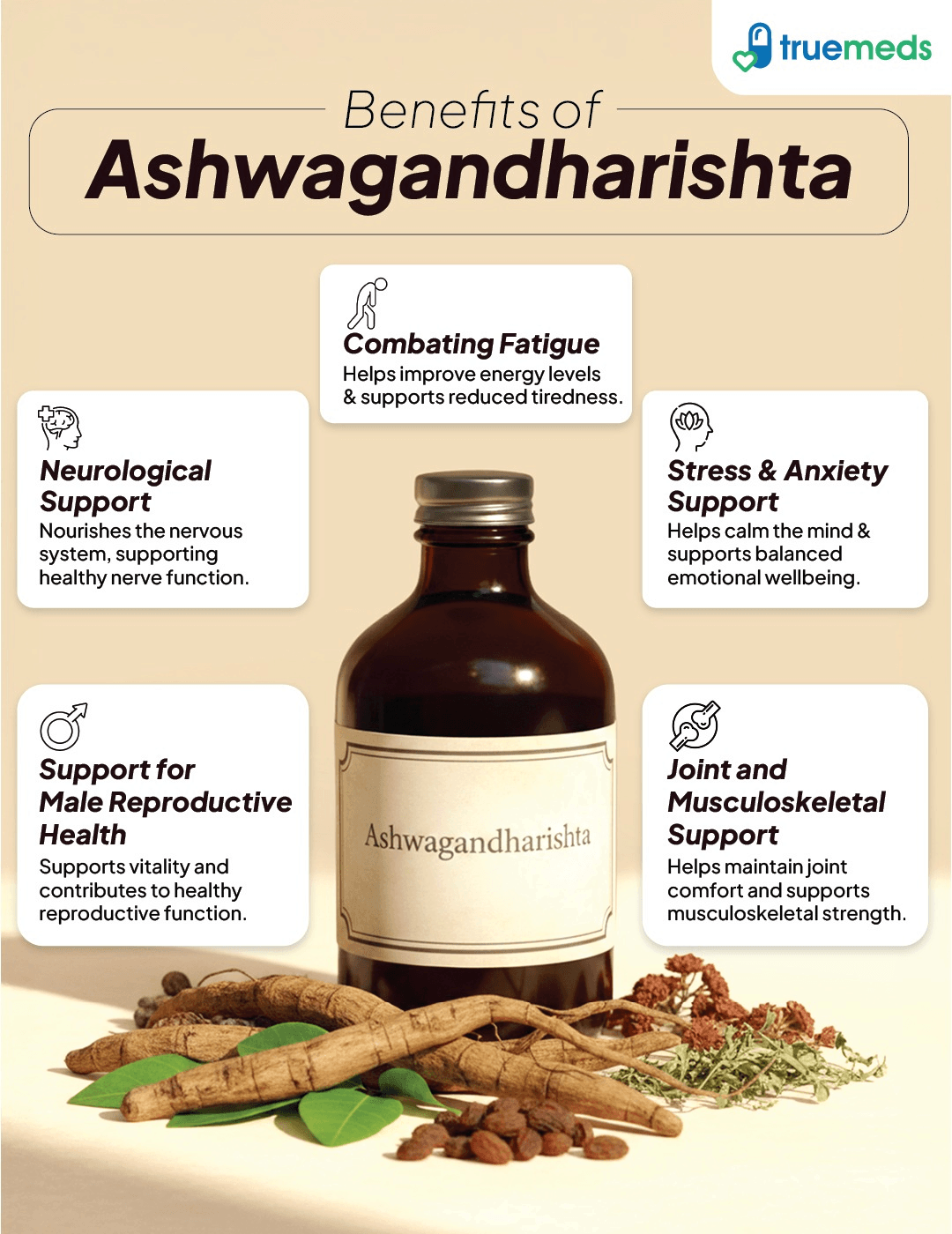
1. Stress and Anxiety Support
Ashwagandharishta is traditionally recommended for managing Vata imbalances associated with stress. Clinical studies on Ashwagandha suggest it may support the reduction of serum cortisol levels. This supportive action may help maintain mental focus and improve sleep quality in individuals with mild occasional anxiety.
2. Neurological Support
As a nervine tonic, it is traditionally classified as a Medhya Rasayana. It may support nerve cell health and is often used as a supportive therapy for general neurological wellness under physician guidance.
3. Combating Fatigue (Klama)
Ashwagandharishta is traditionally used in Ayurveda to help manage fatigue (Klama) experienced in daily life. Klama is associated with debility and doshic imbalance, primarily involving Vata and Kapha, which can lead to tiredness, weakness, and low energy. This formulation helps restore doshic balance, thereby reducing fatigue and promoting vitality. Its Balya (strength-giving) and Rasayana (rejuvenating) properties support physical endurance and mental clarity, making it a natural restorative tonic for combating general weakness and improving overall energy.
4. Support for Male Reproductive Health
Ashwagandharishta is traditionally considered an aphrodisiac and a tonic for the male reproductive system (Vajikarana). It is used to improve general vigor, support healthy sperm production, and maintain sexual stamina. It is one of the remedies traditionally employed for supporting sexual health and vitality in males.
5. Joint and Musculoskeletal Support
Ashwagandharishta exhibits traditional anti-inflammatory actions and has been used to support the management of musculoskeletal discomfort, including joint pains. In traditional practice, it is thought to assist in lowering inflammation, decreasing pain, and enhancing flexibility in the joints. It also helps strengthen bone and muscular health and supports overall joint mobility.
Safety Measures for Ashwagandharishta
When using Ashwagandharishta, consider the following safety measures:
- Consult a Physician: Consult your physician before taking Ashwagandharishta if you are pregnant, breastfeeding, or have chronic conditions such as diabetes or hypertension. People with diabetes should exercise additional caution, as the formulation is prepared using jaggery-based fermentation and may contain residual
- Avoid Overconsumption: Do not take higher doses than prescribed by your doctor. Frequent or excessive use may lead to gastrointestinal disturbances or other side effects.
- Monitor Interactions: Ashwagandharishta might interact with medicines related to anxiety, hypertension, or diabetes. You should be very careful when taking such medications, so it is advisable to be checked frequently if you are taking any of them.
How to Use Ashwagandharishta
Here are three common ways to go for Ashwagandharishta uses:
1. Take the Right Dosage
- Step 1: Take 15-20 ml of Ashwagandharishta and take it using a measuring spoon or cup.
- Step 2: Consult a doctor for a more personalised intake.
2. Mix with Water
- Step 1: Take a glass and pour the measured Ashwagandharishta into it.
- Step 2: Pour an equal quantity of water into the glass so as to make it easy to swallow.
3. Dosage Timing
- Step 1: This mixture is supposed to be taken two times per day for the best effects.
- Step 2: Drink the mixture, ideally in the morning or before bedtime, to experience its best soothing effects on the brain and whole body.
Recommended Dosage of Ashwagandharishta
Ashwagandharishta syrup is recommended at 15-20 ml twice daily. It can be taken at any time of the day, but it is best taken after meals to allow easy absorption into the body. Nevertheless, it is also vital that they rely heavily on the correct dosage standard because the information varies depending on the condition of a person’s health and age; therefore, the advice and recommendations of an Ayurvedic Doctor should always be followed.
Key Takeaways
- Ashwagandharishta is a well-formulated herbal preparation fermented from Ashwagandha roots.
- It possesses potent adaptogenic and nervine tonic properties. Some of the advantages attributed to this herbal syrup include reduced stress and/or anxiety, treatment of fatigue, and enhancement of male sexual prowess.
- It should be given at 15-20ml per day and should be halved and taken with water, ideally two times a day after meals.
- In a nutshell, ashwagandharishta is almost safe, but to be on the safe side and to avoid any unforeseen health complications, you are advised to avoid it if you are a pregnant or nursing mother or if your health is not sound.
Conclusion
In conclusion, Ashwagandharishta supports both mental and physical health. With Ashwagandha as its primary ingredient, along with a blend of other healing herbs, it is especially beneficial in managing neurological and degenerative disorders. Its deepan (appetiser) and pachan (digestive) properties help stimulate digestion and improve nutrient absorption, contributing to overall vitality. When taken under proper guidance, Ashwagandharishta can be a valuable addition to holistic wellness, promoting strength, calmness, and resilience in daily life.
FAQs
How is Ashwagandharishta made?
How to store Ashwagandharishta?
Is Ashwagandharishta advised only for men?
Is there any diet rule to be followed while taking Ashwagandharishta?
What is the function of Ashwagandharishta?
Can I take Ashwagandharishta daily?
Can a diabetic person take Ashwagandharishta?
What are the side effects of Ashwagandharishta?
Is Ashwagandharishta good for digestion?
Can Ashwagandharishta affect the liver, as it has alcohol in it?
Can Ashwagandharishta be taken for long periods of time?
Is Ashwagandharishta beneficial in osteoarthritis?
Can Ashwagandharishta be taken with multivitamins?
Is Ashwagandharishta bad for kidneys?
When should I take Ashwagandharishta?
Are ashwagandharishta and ashwagandha the same?
Does Ashwagandharishta affect blood creatinine levels?
References
- View of Clinical indications of Ashwagandharishta an experiential and scientific view | Journal of Ayurveda and Integrated Medical Sciences. (2025). Jaims.in. https://jaims.in/jaims/article/view/1692/1720
- Lopresti, A. L., & Smith, S. J. (2021). Ashwagandha (Withania somnifera) for the treatment and enhancement of mental and physical conditions: A systematic review of human trials. Journal of Herbal Medicine, 28(100434), 100434. https://doi.org/10.1016/j.hermed.2021.100434
- Mikulska, P., Malinowska, M., Ignacyk, M., Szustowski, P., Nowak, J., Pesta, K., Szeląg, M., Szklanny, D., Judasz, E., Kaczmarek, G., Ejiohuo, O. P., Paczkowska-Walendowska, M., Gościniak, A., & Cielecka-Piontek, J. (2023). Ashwagandha (Withania somnifera)—Current Research on the Health-Promoting Activities: A Narrative Review. Pharmaceutics, 15(4), 1057. https://doi.org/10.3390/pharmaceutics15041057




Explore other categories
Latest health articles





Top Health Essentials









Top-selling ayurvedic products


















Disclaimer
Top-Selling Medicines:
...View more
Top-OTC medicines:
...View more
Top-selling healthcare devices:
...View more
Company
About UsHealth ArticleHealth StoriesHealth LibraryDiseases & Health ConditionsAyurvedaUnderstanding Generic MedicinesAll MedicinesAll BrandsNeed HelpFAQSecuritySavings CalculatorAdvertise with UsSubscribe
Registered Office Address
Grievance Officer
Download Truemeds


Contact Us
Our customer representative team is available 7 days a week from 9 am - 9 pm.
v4.28.13

2026 - Truemeds | All rights reserved. Our content is for informational purposes only. See additional information.

Our Payment Partners