

- Medicines
- Personal Care
- Skin Cream
- Sunscreen
- Face Wash
- Skin and Body Soap
- Acne Care
- Body Lotions
- Moisturising Lotion
- Moisturising Cream
- Mosquito Repellent
- Moisturising Gel
- Body Wash
- Hair Oils
- Hair Shampoo
- Hair Conditioners
- Hair Supplements
- Hair Colour
- Hair Serum
- Hair Mask
- Hair Solutions
- Baby Diapers and Wipes
- Baby Lotion and Moisturising Cream
- Baby Bath Essentials
- Baby Skin Care
- Baby and Infant Food
- Baby Healthcare
- Women Multivitamins
- Ovulation Test Kit and Women Intimate Care
- Sanitary Pads
- Nutritional Drinks
- Condoms
- Lubricants
- Massage Gels
- Personal Body Massagers
- Men Performance Booster
- Sexual Health Supplements
- Massage Oils
- Ayurveda
- Tooth Paste
- Mouth Ulcer Gel
- Mouthwash
- Toothache and Gum Pain
- Tooth Brush
- Gargle Solution
- Orthopaedic Supports
- Adult Diapers
- Footwear
- Mobility and Support Accessories
- Urinary Support and Care
- Health Conditions
- Bone and Joint Care
- Digestive Care
- Eye Care
- Pain Relief
- Smoking Cessation
- Liver Care
- Stomach Care
- Cold and Cough
- Heart Care
- Kidney Care
- Piles, Fissures & Fistula
- Respiratory Care
- Mental Wellness
- Derma Care
- Pre and Probiotics
- Acidity
- Gas
- Constipation
- Loose Motion/Diarrhoea
- Digestive Fibres
- Digestive Enzymes
- Eye Lubricant Drops
- Lens Solution
- Safety Eye Wear
- Eye Cream
- Eye Vitamins and Supplements
- Eye Drops
- Eye Ointment and Gel
- Nicotine Patch
- Nicotine Gum
- Nicotine Lozenges
- Cough Syrups
- Chest Rubs and Balms
- Nasal Spray
- Lozenges
- Inhalant Capsules
- Cold and Cough Tablets
- Vitamins & Supplements
- Diabetes Care
- Healthcare Devices
- Homeopathic Medicine
- Health Guide
Saraswatarishta
Saraswatarishta is a classical Ayurvedic Arishta (fermented herbal tonic) formulated with Brahmi, Ashwagandha, Shatavari and other rejuvenating herbs. It is traditionally used to support memory, concentration and mental clarity, and to help the body cope with everyday stress and occasional sleeplessness. It is also traditionally associated with supporting speech and general vitality during recovery from fatigue. Saraswatarishta is generally taken as a liquid tonic, diluted with water, after meals.
 50
50Last updated on : 15 Sep, 2026
Read time : 13 mins
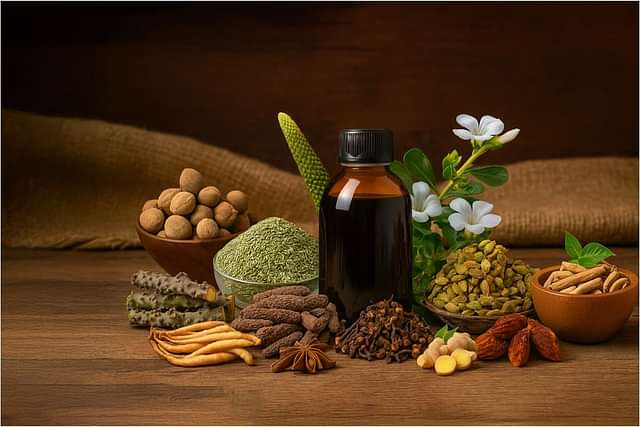
What is Saraswatarishta?
Saraswatarishta takes its name from Saraswati, the Hindu goddess of knowledge, wisdom and learning, reflecting its traditional use for supporting memory and mental clarity. It is a classical Ayurvedic Arishta, a fermented liquid tonic traditionally used in rasayana (rejuvenation) therapy.
In Ayurveda, Saraswatarishta is classified as a medhya rasayana, a category of preparations traditionally used to nourish and support the brain and nervous system, and is generally considered to help balance Vata and Pitta dosha. It is prepared through natural fermentation, which generates a small amount of self-generated alcohol (usually 5 to 10 percent). This is traditionally believed to help the water- and alcohol-soluble constituents of its herbs extract into the preparation and become more readily available for absorption.
Key Facts
| Feature | Details |
| Formulation name | Saraswatarishta |
| Formulation type | Arishta (fermented liquid tonic) |
| Classical reference | Traditionally referenced in classical Ayurvedic texts on rasayana (rejuvenation) therapy. |
| Composition | Brahmi, Shatavari, Ashwagandha, Haritaki, Vidari, jaggery, and other herbs (over 18 in total); a gold-containing variant (Swarna yukta) |
| Also known as | Sarasvatarishta, Sarasvatarishtam |
| Key active compounds | Bacosides (Brahmi), withanolides (Ashwagandha), steroidal saponins (Shatavari), tannins (Haritaki) |
| Dosha action | Traditionally considered to help balance Vata and Pitta dosha |
| Traditional uses | Memory support, mental clarity, stress management, sleep support, general vitality |
| Common forms | Liquid (fermented tonic); powder, where available |
| General dosage | Adults: 15–30 ml twice daily, diluted with water, after meals
|
| Best taken | After meals, diluted with an equal amount of water |
| Key safety note | Contains jaggery and a small amount of natural alcohol; consult a doctor before use if you have diabetes, are pregnant or breastfeeding, or take sedative, antidiabetic or blood-pressure medicines |
Alternative Names of Saraswatarishta
As a classical formulation, Saraswatarishta is known by a small number of genuine spelling variants across Ayurvedic texts and regions:
- Saraswatarishta (most commonly used spelling)
- Sarasvatarishta / Sarasvatarishtam (Sanskrit-based transliterations)
Chemical Constituents of Saraswatarishta
Saraswatarishta's traditional actions are linked to several plant compounds present in its key herbs, including:
- Brahmi: bacosides, alkaloids
- Ashwagandha: withanolides, saponins
- Shatavari: steroidal saponins, quercetin, isoflavones
- Haritaki: tannins, polyphenols
Composition of Saraswatarishta
Saraswatarishta is a blend of more than 18 herbs and other ingredients used in Ayurveda. Its key components include:
- Brahmi (Bacopa monnieri): traditionally used to support cognitive function and memory.
- Shatavari (Asparagus racemosus): valued in Ayurveda for its rejuvenating properties and traditionally used to support vitality (Alok et al., 2013).
- Ashwagandha (Withania somnifera): traditionally used to help the body manage stress and support vitality.
- Haritaki (Terminalia chebula): traditionally used to support digestion.
- Vidari (Pueraria tuberosa): traditionally associated with antioxidant activity and cognitive support (Bharti et al., 2021).
- Jaggery (Gur): used as a natural sweetener and to support the fermentation process.
- Gold leaf (optional, gold-containing variant only): traditionally believed to support rejuvenation (Rani et al., 2024).
Together, these herbs are traditionally understood to give Saraswatarishta its rejuvenating and cognitive-supporting properties.
Medicinal Properties of Saraswatarishta
Saraswatarishta's traditional actions in the body are understood in Ayurveda to include the following properties:
- Nervine tonic (medhya): traditionally used to support the nervous system (Bacopa monnieri, 2023).
- Adaptogenic: traditionally used to help the body adapt to physical and mental stress.
- Antioxidant: associated with antioxidant activity, based mainly on research on its herbal ingredients.
- Carminative: traditionally used to support digestion and ease bloating.
- Mild sedative: traditionally used to support relaxation and restful sleep.
- Immunomodulatory: associated with effects on immune function, based mainly on preclinical research (Rani et al., 2024).
These properties are drawn from traditional Ayurvedic understanding of Saraswatarishta's herbal ingredients, with some support from preliminary preclinical research. They should not be interpreted as proven clinical effects in humans. Saraswatarishta is not a treatment for any diagnosed neurological, psychiatric or metabolic condition, and it should be used alongside, not instead of, medical care prescribed by a qualified healthcare professional for any such condition.
Key Health Benefits of Saraswatarishta
Saraswatarishta is a polyherbal formulation from Ayurveda, traditionally used to support brain health, memory and general wellbeing. The traditional and researched benefits below are described using their supporting evidence.
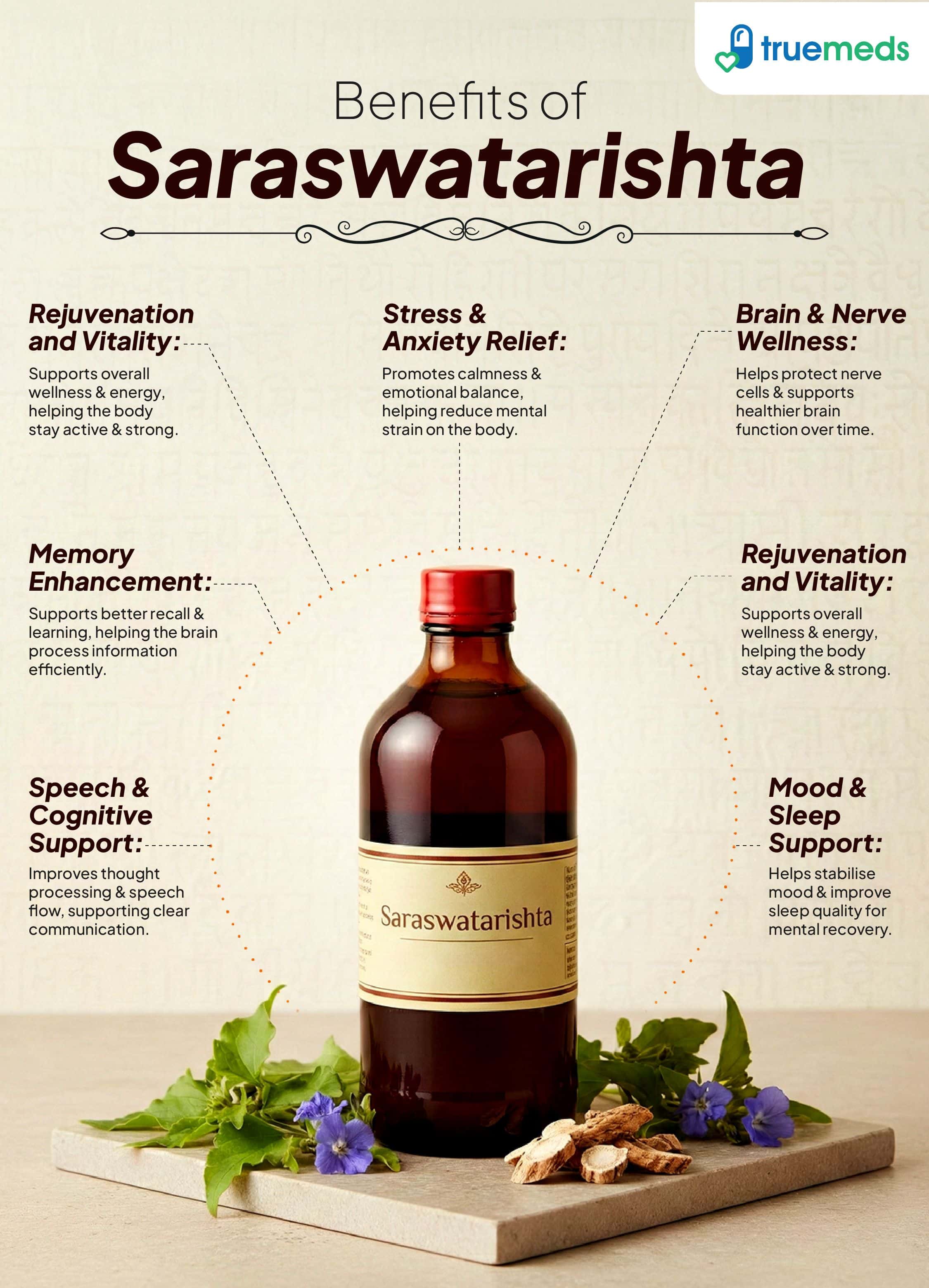
1. Memory Enhancement
Saraswatarishta is traditionally used to support memory, focus and learning ability. Its key herb, Brahmi (Bacopa monnieri), is well recognised in Ayurveda for its traditional use in supporting cognitive function. An animal study by Rajopadhye and Sahasrabudhe (2020) suggested memory-supporting effects, though human clinical evidence remains limited.
2. Neurological Support
Saraswatarishta is traditionally associated with supporting cognitive function and may have antioxidant effects, which have been studied in relation to age-related neurological changes. Animal research by Rajopadhye and Sahasrabudhe (2020) has explored its memory-related effects. It has not been clinically proven to treat neurodegenerative conditions such as Alzheimer's disease, and a neurologist should always be consulted for diagnosis and management.
3. Stress and Anxiety Management
As an Ayurvedic formulation containing Brahmi and Ashwagandha, Saraswatarishta is traditionally believed to support the body's response to everyday stress and promote a calming effect on the nervous system. Clinical evidence in humans remains limited, and it should not replace treatment for a diagnosed anxiety disorder.
4. Speech and Cognitive Clarity
In Ayurvedic paediatric care, Saraswatarishta is traditionally used to support speech clarity and coordination in children, alongside herbs such as Vacha. It is traditionally believed to support nervous system function, with regular, supervised use.
5. Support for Sleep Quality
Saraswatarishta is traditionally used to help promote restful sleep. Herbs such as Ashwagandha and Vacha are valued in Ayurveda for their calming, nerve-supporting properties, and the formulation is traditionally believed to have a mild calming action. Diagnosed sleep or mental health conditions require assessment by a qualified doctor.
6. Rejuvenation and Vitality
As a medhya rasayana, Saraswatarishta is traditionally used to support general vitality and stamina, particularly during recovery from fatigue or illness. Ashwagandha and Shatavari are valued in Ayurveda for their traditional use in supporting strength and vitality and supporting ojas, or vital energy.
7. Digestive Comfort
Saraswatarishta is traditionally believed to support healthy digestion and help ease occasional bloating associated with digestive discomfort. Its herbal composition is traditionally associated with supporting Agni, or digestive fire. Persistent digestive symptoms should be assessed by a healthcare professional.
Common Uses of Saraswatarishta
Saraswatarishta is traditionally used in a few different contexts, depending on the person's needs and a practitioner's guidance:
1. As a Daily Rasayana Tonic
Saraswatarishta is traditionally taken as a daily rasayana tonic to support mental wellbeing and vitality, particularly by students, working adults and older people seeking to maintain mental clarity over time (Koyande & Gadgil, 2020). See the Dosage section for age-specific amounts.
2. Alongside Other Ayurvedic Formulations
Saraswatarishta is sometimes used together with other Ayurvedic preparations, such as Chyawanprash, as part of a broader Ayurvedic wellness regimen. Combined use and dosing should always follow a qualified Ayurvedic practitioner's guidance.
Precautions While Taking Saraswatarishta
Saraswatarishta is traditionally considered safe when used as directed, but the following precautions should be reviewed carefully, especially by people in the groups below:
1. Pregnancy and Lactation
Do not use unless specifically advised, as adequate safety information for the complete formulation is unavailable and it contains self-generated alcohol.
2. People with Diabetes
Saraswatarishta contains jaggery, which can raise blood sugar levels. People with diabetes should use it only under medical supervision and monitor their blood glucose as advised by their healthcare professional.
3. People with High Blood Pressure or Heart Conditions
Ashwagandha, one of its key herbs, may affect blood pressure or heart rate. People with cardiovascular conditions should use Saraswatarishta only under a healthcare provider's supervision.
4. People with Kidney Disease
People with kidney disease should consult a doctor before using Saraswatarishta, particularly because the safety of herbal formulations may vary with the individual's condition and the formulation used.
5. People Sensitive to Alcohol
As a fermented preparation, Saraswatarishta naturally contains a small amount of alcohol. People who avoid alcohol for medical, religious or personal reasons should be aware of this before use.
How to Use Saraswatarishta
Saraswatarishta is available in a few forms, and how it is taken can vary slightly depending on the form:
1. Liquid Form (Traditional Method)
- Shake the bottle well before use to ensure the contents are evenly mixed.
- Measure out the prescribed amount of Saraswatarishta using the cap provided.
- Dilute it with an equal amount of water.
- Take the mixture after meals, as directed by your healthcare provider.
2. With Milk (Optional Method)
- Measure the prescribed amount of Saraswatarishta and dilute it with water as usual.
- Take this mixture followed by a glass of milk after dinner or before bedtime, if advised by your healthcare provider.
3. Powder Form (Where Available)
- Take the prescribed amount of Saraswatarishta powder, if this form has been supplied.
- Mix it with warm water, milk or honey to make a drinkable preparation.
- Take it after meals as directed by your healthcare provider.
Herbs Traditionally Used With Saraswatarishta
Saraswatarishta is sometimes used alongside other classical Ayurvedic herbs and formulations that share a similar traditional focus on brain and nervous system health:
| Herb | Traditional Pairing |
| Vacha (Acorus calamus) | Vacha is traditionally combined with Saraswatarishta for its traditional use in supporting calmness and speech, complementing Saraswatarishta's traditional use for cognitive and speech support. |
| Shankhpushpi (Convolvulus pluricaulis) | Shankhpushpi is another classical medhya rasayana herb often used alongside Saraswatarishta, traditionally valued for memory, calmness and mental focus as part of a broader brain-health regimen. |
| Ashwagandha (Withania somnifera) | Ashwagandha is already an ingredient of Saraswatarishta; additional Ashwagandha-based preparations, such as Ashwagandha Churna, may be used alongside it under the guidance of a qualified Ayurvedic practitioner. |
Recommended Dosage of Saraswatarishta
Dosage should always be confirmed with a healthcare provider, as it can vary with age, health condition and the severity of symptoms. General guidance is below:
1. Children (above 5 years)
5 to 10 ml, diluted in an equal amount of water, taken twice daily after meals, or as directed by a paediatrician or Ayurvedic practitioner. Saraswatarishta is generally not recommended for children under 5 years unless specifically advised by a healthcare professional.
2. Teenagers
10 to 15 ml, diluted in an equal amount of water, taken twice daily after meals, or as advised by a healthcare provider.
3. Adults
15 to 30 ml, diluted in an equal amount of water, taken twice daily after meals. The dose may be adjusted by a healthcare provider based on individual health needs.
4. Elderly
Elderly patients should generally start at the lower end of the adult dose, around 15 ml twice daily, and should use Saraswatarishta only under medical supervision, particularly if they take other medicines.
Side Effects of Saraswatarishta
Saraswatarishta is generally well tolerated when taken as directed, but some people may experience side effects, including:
1. Diarrhoea and Bloating
Saraswatarishta may occasionally cause mild digestive discomfort, including bloating or loose stools, although evidence on these effects is limited.
2. Raised Blood Sugar
Because Saraswatarishta contains jaggery, it may raise blood sugar levels in some people. Those with diabetes or prediabetes should monitor their blood sugar and consult a doctor before use.
3. Allergic Reactions
A small number of people may be sensitive to one or more of the herbal ingredients, resulting in rash, itching, hives or swelling. Anyone who develops these symptoms should stop use and seek medical advice.
Interaction of Saraswatarishta With Other Drugs
Saraswatarishta may interact with certain medicines, so it is important to be aware of the following before combining them:
1. Sedatives or Antidepressants
Saraswatarishta may have sedative effects, and taking it with sedative or antidepressant medicines could increase drowsiness. Speak to your doctor before combining them.
2. Blood Sugar Medicines
Saraswatarishta contains jaggery, which may raise blood sugar and could affect blood glucose control in people taking antidiabetic medicines. People with diabetes should monitor their blood sugar closely and seek medical advice before use.
3. Blood Pressure Medicines
Ashwagandha in Saraswatarishta may lower blood pressure, so taking it alongside antihypertensive medicines could increase this effect. Use them together only under medical supervision.
Storage of Saraswatarishta
Store Saraswatarishta in a cool, dry place, away from direct sunlight and out of reach of children. Keep the bottle tightly closed after use, and check the expiry date before each use. Do not use the product if the liquid appears cloudy or discoloured, or has an unusual smell that differs from its normal fermented aroma.
Key Takeaways
- Saraswatarishta (also known as Sarasvatarishtam) is a classical Ayurvedic Arishta traditionally used to support memory and overall brain health.
- It is traditionally used to help support memory, concentration and stress management, though robust clinical evidence in humans remains limited.
- Saraswatarishta may interact with sedatives, antidepressants, antidiabetic and antihypertensive medicines, so medical supervision is advised if you take any of these.
- It contains jaggery and may raise blood sugar, so it should be used with caution by people with diabetes.
- It is generally best avoided during pregnancy and breastfeeding unless advised by a qualified healthcare professional.
- Always consult a qualified healthcare professional before starting Saraswatarishta, particularly if you have a chronic condition or take other medicines.
FAQs
Does Saraswatarishta contain alcohol?
Is Saraswatarishta available in tablet form?
Can Saraswatarishta be taken with milk?
Can Saraswatarishta be given to children?
Is Saraswatarishta beneficial in dementia?
Can a diabetic person take Saraswatarishta?
Can we take saraswatarishta before meal?
How long saraswatarishta take to work?
References
- Rajopadhye, B. D., & Sahasrabudhe, R. (2020). Memory-enhancing activity of Saraswatarishta in mice. Biomedical & Pharmacology Journal, 13(4), 2033–2039. https://doi.org/10.13005/BPJ/2082
- Alok, S., Jain, S. K., Verma, A., Kumar, M., Mahor, A., & Sabharwal, M. (2013). Plant profile, phytochemistry and pharmacology of Asparagus racemosus (Shatavari): A review. Asian Pacific Journal of Tropical Disease, 3(3), 242–251. https://doi.org/10.1016/S2222-1808(13)60049-3
- Rani, S., Magluria, A., Sharma, U., Mitra, S., & Sharma, K. C. (2024). Origin, occurrence, pharmaceutical, analytical, and various pharmacological studies on Swarna bhasma (~incinerated gold ash): A synoptic review. International Journal of Ayurveda Research, 5(2), 76–84. https://doi.org/10.4103/ijar.ijar_170_23
- Bharti, R., Chopra, B. S., Raut, S., & Khatri, N. (2021). Pueraria tuberosa: A review on traditional uses, pharmacology, and phytochemistry. Frontiers in Pharmacology, 11, 582506. https://doi.org/10.3389/fphar.2020.582506
- Bacopa monnieri. (2023). In StatPearls. StatPearls Publishing. https://www.ncbi.nlm.nih.gov/books/NBK589635/
- Koyande, A. K., & Gadgil, S. S. (2020). Pharmaceutical preparation and determination of quality standards of Saraswatarishta: A herbo-mineral alcoholic formulation. International Journal of Research in Ayurveda and Pharmacy, 11(5), 88–93. https://www.researchgate.net/publication/346617923_PHARMACEUTICAL_PREPARATION_AND_DETERMINATION_OF_QUALITY_STANDARDS_OF_SARASWATARISHTA_A_HERBO-MINERAL_ALCOHOLIC_FORMULATION


Explore other categories
Latest health articles





Top Health Essentials












Top-selling ayurvedic products




















Disclaimer
Top-Selling Medicines:
...View more
Top-OTC medicines:
...View more
Top-selling healthcare devices:
...View more
Company
About UsHealth ArticleHealth StoriesHealth LibraryDiseases & Health ConditionsAyurvedaUnderstanding Generic MedicinesAll MedicinesAll BrandsNeed HelpFAQSecuritySavings CalculatorAdvertise with UsSubscribe
Registered Office Address
Grievance Officer
Download Truemeds


Contact Us
Our customer representative team is available 7 days a week from 9 am - 9 pm.
v4.28.13

2026 - Truemeds | All rights reserved. Our content is for informational purposes only. See additional information.

Our Payment Partners




