

- Medicines
- Personal Care
- Skin Cream
- Sunscreen
- Face Wash
- Skin and Body Soap
- Acne Care
- Body Lotions
- Moisturising Lotion
- Moisturising Cream
- Mosquito Repellent
- Moisturising Gel
- Body Wash
- Hair Oils
- Hair Shampoo
- Hair Conditioners
- Hair Supplements
- Hair Colour
- Hair Serum
- Hair Mask
- Hair Solutions
- Baby Diapers and Wipes
- Baby Lotion and Moisturising Cream
- Baby Bath Essentials
- Baby Skin Care
- Baby and Infant Food
- Baby Healthcare
- Women Multivitamins
- Ovulation Test Kit and Women Intimate Care
- Sanitary Pads
- Nutritional Drinks
- Condoms
- Lubricants
- Massage Gels
- Personal Body Massagers
- Men Performance Booster
- Sexual Health Supplements
- Massage Oils
- Ayurveda
- Tooth Paste
- Mouth Ulcer Gel
- Mouthwash
- Toothache and Gum Pain
- Tooth Brush
- Gargle Solution
- Orthopaedic Supports
- Adult Diapers
- Footwear
- Mobility and Support Accessories
- Urinary Support and Care
- Health Conditions
- Bone and Joint Care
- Digestive Care
- Eye Care
- Pain Relief
- Smoking Cessation
- Liver Care
- Stomach Care
- Cold and Cough
- Heart Care
- Kidney Care
- Piles, Fissures & Fistula
- Respiratory Care
- Mental Wellness
- Derma Care
- Pre and Probiotics
- Acidity
- Gas
- Constipation
- Loose Motion/Diarrhoea
- Digestive Fibres
- Digestive Enzymes
- Eye Lubricant Drops
- Lens Solution
- Safety Eye Wear
- Eye Cream
- Eye Vitamins and Supplements
- Eye Drops
- Eye Ointment and Gel
- Nicotine Patch
- Nicotine Gum
- Nicotine Lozenges
- Cough Syrups
- Chest Rubs and Balms
- Nasal Spray
- Lozenges
- Inhalant Capsules
- Cold and Cough Tablets
- Vitamins & Supplements
- Diabetes Care
- Healthcare Devices
- Homeopathic Medicine
- Health Guide
Munakka
Munakka, or black raisins, is a large dried grape (Vitis vinifera) used in Ayurveda, where it is known as Draksha. It is traditionally taken to support digestion, ease constipation and soothe a dry throat. It is a dried fruit and is roughly two thirds sugar by weight, so it is best eaten in small amounts. Most people eat 5 to 7 pieces a day, often soaked overnight.
 50
50Last updated on : 30 Jul, 2026
Read time : 15 mins
What is Munakka?
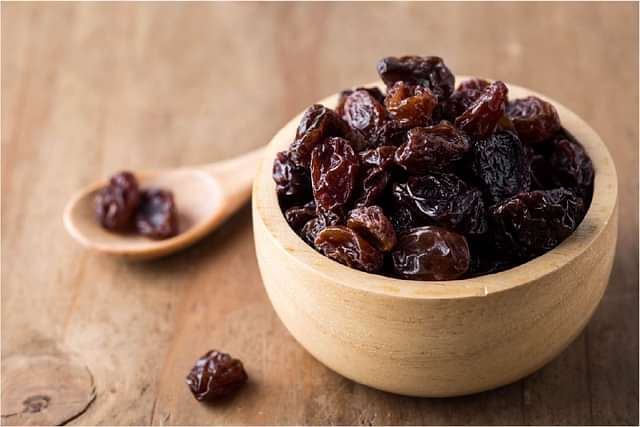
Munakka is a large, dark dried grape, made from Vitis vinifera. It is bigger and darker than ordinary raisins (kishmish) and usually still contains its seeds. It is sun-dried, which concentrates its natural sugars and gives it a soft, chewy texture.
In Ayurveda, munakka is known as Draksha or Mridvika, and it is one of the classical dried fruits described in the traditional texts. It is valued as a gentle, nourishing food rather than a strong medicine.
Its Ayurvedic properties are described as sweet in taste (Madhura rasa), cooling in potency (Sheeta virya) and sweet in post-digestive effect (Madhura vipaka). It is understood to pacify Vata and Pitta, and it is traditionally used as a mild laxative, to soothe a dry throat, and as a nourishing food for people experiencing weakness and fatigue.
Key Facts
| Feature | Details |
| Botanical name | Vitis vinifera (dried fruit) |
| Family | Vitaceae (grape family) |
| Also known as | Black raisins, Draksha, Mridvika, Manukka |
| Origin | Dried from black grapes, grown in India, Afghanistan and the Middle East |
| Part eaten | The whole dried fruit, usually with its seeds
|
| Ayurvedic classification | Draksha. Madhura rasa (sweet), Sheeta virya (cooling), Madhura vipaka. Pacifies Vata and Pitta |
| Key nutrients | Natural sugars, dietary fibre, potassium, iron, calcium and antioxidant polyphenols |
| Common forms | Whole dried fruit; also sold as powder or extract |
| Typical serving | 5 to 7 pieces a day, or 8 to 10 soaked overnight for constipation |
| Best eaten | Soaked overnight in water and eaten in the morning, or added to milk |
| Key safety note | Munakka is roughly two-thirds sugar by weight. People with diabetes should watch portion size. It is high in potassium, so people with kidney or heart conditions should ask a doctor. Whole pieces are a choking risk for young children. |
Alternative Names of Munakka
Munakka is known by different names across India.
- Botanical name: Vitis vinifera (the dried fruit)
- English: Black raisins, large dried grapes
- Hindi: Munakka, Manukka
- Sanskrit: Draksha, Mridvika, Gostani
- Marathi: Manuka
- Gujarati: Kali Draksh
- Bengali: Kismis
- Tamil: Ularndha Dhratchai
- Telugu: Endu Draksha
- Kannada: Ona Drakshi
Chemical Constituents of Munakka
Beyond its sugars and minerals, munakka contains a number of naturally occurring plant compounds (Olmo-Cunillera et al., 2020).
- Polyphenols and flavonoids: It includes quercetin and catechins, which show antioxidant activity in laboratory tests.
- Resveratrol: A polyphenol found in grape skin, and one of the most studied compounds in grapes and raisins.
- Phenolic acids: Present in the skin and flesh of the dried fruit.
- Oleanolic acid: A compound studied for its effect on bacteria in the mouth.
- Natural sugars: Mainly glucose and fructose, which make up the bulk of the fruit by weight.
- Dietary fibre: Both soluble and insoluble, which supports the fruit's traditional use for constipation.
Nutritional Value of Munakka
Munakka is a dried fruit, so its sugars are concentrated. The figures below are per 100 g (U.S. Department of Agriculture, Agricultural Research Service, n.d.).
Per 100 g | Amount |
Energy | 299 kcal |
Total sugars | 59.2 g |
Carbohydrates | 79.2 g |
Dietary fibre | 3.7 g |
Protein | 3.1 g |
Fat | 0.5 g |
Potassium | 749 mg |
Iron | 1.9 mg |
Calcium | 50 mg |
Magnesium | 32 mg |
Key Health Benefits of Munakka
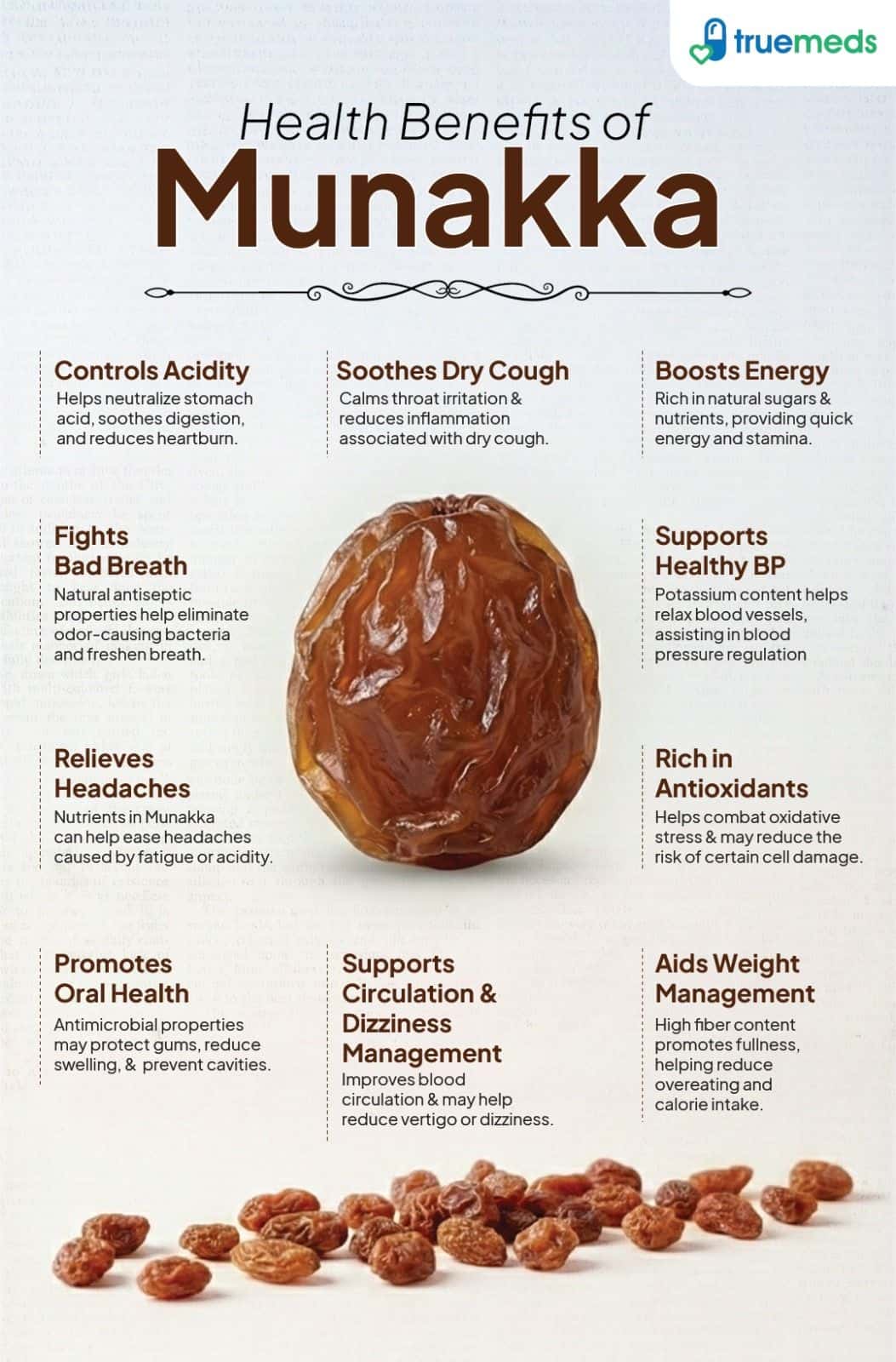
Munakka is a nutritious dried fruit that fits well into a balanced diet. Its main benefits are described below. It is a food, not a treatment, so consult with your doctor about any ongoing health problem.
Eases Constipation
This is the best supported traditional use. Munakka contains dietary fibre and natural sugars that draw water into the bowel, softening stools and helping them pass. Soaking 8 to 10 pieces overnight and eating them in the morning is the traditional method (Olmo-Cunillera et al., 2020).
Soothes a Dry Throat and Cough
Munakka is soft and slightly sticky, and in Ayurveda it is traditionally taken to soothe a dry, irritated throat. Simmering a few pieces in warm milk at bedtime is a common household remedy. It is not a treatment for any infection.
Provides Quick Energy
The natural sugars in munakka, mainly glucose and fructose, are absorbed quickly and provide readily available energy. This makes it a useful snack before or after physical activity.
Better for Eye Health
Munakka is a rich source of antioxidants, which help protect the body from oxidative stress and may contribute to overall eye health. However, further research is needed to confirm its role in preventing age-related macular degeneration and cataracts.
Supplies Antioxidant Polyphenols
Munakka contains polyphenols including quercetin, catechins and resveratrol, which show antioxidant activity in laboratory studies (Olmo-Cunillera et al., 2020). It is not yet clear how these findings apply to everyday dietary habits.
Contributes Potassium and Iron
Munakka is a good source of potassium, which contributes to normal blood pressure as part of a balanced diet, and it supplies some iron. Note that the iron in plant foods is less easily absorbed than the iron in meat.
Eases Headache
The natural sugars and nutrients in Munakka can provide instant energy and may help relieve migraines and other headaches caused by acidity, low blood pressure, etc.
May Support Oral Health
Munakka contains oleanolic acid, which has been studied for its effect on the bacteria linked with tooth decay. However, munakka is also sticky and sugary and clings to the teeth, so rinse your mouth with water after eating it.
Note: Munakka is a food and not a substitute for medical treatment. Consult a doctor if you have a health condition.
Common Uses for Munakka
Munakka is a versatile dry fruit and can thus be used in different ways. Some of the most common uses of this dry fruit are as follows:
Soaked Overnight for Constipation
The most common household use. 8-10 pieces are soaked in water overnight and eaten first thing in the morning, on an empty stomach.
With Warm Milk at Bedtime
A few pieces simmered in warm milk are traditionally taken at night, particularly during a dry cough or in the colder months.
As a Daily Snack
5-7 pieces are eaten as a snack for quick energy, often alongside nuts.
In Cooking and Sweets
Munakka is added to Indian sweets, kheer, pulao and desserts for natural sweetness, and used in baking.
As a Natural Sweetener
Because it is naturally sweet, munakka is sometimes used in place of refined sugar in smoothies, porridge and puddings.
Precautions While Taking Munakka
Munakka can be included as part of a balanced diet for most people. However, certain individuals may need to consume it with caution or seek advice from a healthcare professional before including it regularly in their diet.
- Diabetes: Munakka is roughly two-thirds sugar by weight and will raise blood glucose. Keep to a small portion, count it in your daily carbohydrate intake, and talk to your doctor or dietitian.
- Kidney disease: Munakka is high in potassium. If you have chronic kidney disease or are on dialysis, avoid it unless your doctor or dietitian advises otherwise.
- Heart conditions and blood pressure medicines: Munakka is high in potassium. If you have a heart condition, or take a potassium-sparing diuretic or an ACE inhibitor, talk to your doctor before eating it regularly.
- Young children: Whole pieces of munakka are a choking hazard for children under four. Chop them small or soak them to soften them first.
- Allergies: Some people react to dried fruit. Stop eating it and seek medical help if you develop itching, swelling or difficulty breathing.
- Sulphite sensitivity: Some commercially dried fruit is treated with sulphites as a preservative, which can trigger symptoms in people who are sensitive, particularly those with asthma.
- Pregnancy: Munakka is generally fine in normal amounts during pregnancy. Eat it in moderation, as too much may cause bloating, and talk to your doctor about your overall diet.
Note: This is general information and not medical advice. Consult with a doctor if you have a health condition or take regular medicine.
How to Use Munakka
Munakka can be taken in multiple ways, depending on your preference and dietary needs.
Soaking It Overnight
Put 8 to 10 pieces in a small bowl of water and leave them overnight. Eat them first thing in the morning, and drink the water if you wish. This is the traditional method for easing constipation, and soaking also softens the fruit and makes it easier to digest.
Simmering It in Warm Milk
Simmer 5 to 7 pieces in a cup of milk for a few minutes. Drink it warm at bedtime. This is a traditional household remedy for a dry, irritated throat.
Eating It as a Snack
Eat 5 to 7 pieces on their own, or with a few nuts, as a quick energy snack between meals.
Using It as a Natural Sweetener
Chop or crush munakka and stir it into porridge, yoghurt or smoothies to add natural sweetness.
Foods Traditionally Eaten With Munakka
Munakka is often eaten alongside other foods in Indian households. The traditional pairings below are common.
Food | How it is traditionally eaten with munakka |
Milk (Doodh) | Munakka simmered in warm milk is the classic preparation, taken at night, particularly during a dry cough or in winter. |
Warm water | Soaking munakka in warm water overnight and eating it in the morning is the simplest and most common method, used traditionally for constipation. |
Almonds (Badam) | Munakka and almonds are commonly soaked together overnight and eaten as a morning snack. The almonds add protein and healthy fats, making the snack more nutritionally balanced. |
Saffron (Kesar) | Munakka is sometimes soaked in milk with a few strands of saffron, a traditional winter preparation. |
Ghee | In some traditional preparations, munakka is lightly fried in ghee before being added to sweets or kheer. |
Black pepper (Kali Mirch) | Munakka is sometimes taken with a pinch of black pepper for a dry cough, a common household remedy. |
Recommended Dosage of Munakka
Munakka is a food, so there is no fixed dose. The amounts below are sensible daily servings.
- Children (2 to 12 years): 2 to 3 pieces a day, chopped small or soaked to soften them. Whole pieces are a choking risk for young children (Foundation Years, UK, referencing NHS Start4Life).
- Teenagers (13 to 18 years): 5 to 7 pieces a day.
- Adults: 5 to 7 pieces a day as a general amount. For constipation, 8 to 10 pieces soaked overnight and eaten on an empty stomach in the morning.
- Older adults: 5 to 7 pieces a day. Soak them first if you find them hard to chew.
- If you have diabetes: keep to 3 or 4 pieces and count them within your daily carbohydrate allowance.
In practice, 5-7 pieces weigh roughly 10 to 15 g, giving about 30 to 45 kcal. Eating a lot more than this may cause bloating or loose stools.
Disclaimer: Dosage recommendations mentioned are for general informational purposes only and may vary for each individual. Always consult a qualified healthcare professional before starting or modifying the dietary intake of Munakka, especially for children and diabetes patients.
Side Effects of Munakka
Munakka is safe for most people in normal amounts. The effects below can occur, usually from eating too many.
Digestive Upset
Eating too many may cause bloating, wind or loose stools, because of the fibre and the natural sugars. Increase the amount gradually.
Raised Blood Sugar
Munakka is roughly two-thirds sugar by weight and will raise blood glucose. This matters most for people with diabetes or prediabetes.
Extra Calories
Munakka is energy dense. Eating it in large amounts adds significant calories, so keep to a portion rather than eating it by the handful.
Tooth Decay
Munakka is sticky and sugary and clings to the teeth. Rinse your mouth with water after eating it, particularly for children.
Allergic Reaction
Rarely, someone may react to dried fruit or to the sulphites used to preserve some commercial dried fruit. Stop eating it and seek medical help if you develop a rash, swelling or difficulty breathing.
Interaction of Munakka With Other Drugs
Munakka is a food, so it does not interact with medicines the way a drug does. Even so, tell your doctor if you eat a lot of munakka and take any of the medicines below.
Blood Pressure Medicines
Munakka is high in potassium. Some blood pressure medicines, such as ACE inhibitors and potassium-sparing diuretics, also raise potassium. Together, a very high potassium intake could push levels too high. Speak to your doctor.
Diabetes Medicines
Munakka is high in sugar and will raise blood glucose. If you take insulin or diabetes tablets, count it within your carbohydrate intake and monitor your blood sugar.
Iron Supplements
Munakka contains some iron. If you already take an iron supplement, there is no need to eat munakka specifically for its iron. Follow your doctor's advice on your total intake.
Blood Thinning Medicines
Munakka contains a small amount of vitamin K, which is involved in blood clotting. If you take warfarin, the important thing is to keep your intake steady rather than suddenly eating a large amount.
Note: This is not a complete list. Always discuss with your doctor about major changes to your diet if you take regular medicine.
Storage of Munakka
Storing munakka properly keeps it soft and stops it from spoiling.
- Keep it in a tightly closed, airtight container.
- Store it in a cool, dry place away from direct sunlight.
- Keep it away from moisture, and always use a dry spoon. Damp munakka will clump and may spoil.
- Refrigerating it in an airtight container extends its life and keeps it soft.
- Keep it out of the reach of young children, as whole pieces are a choking risk.
- Discard any pieces that smell musty or show mould.
Key Takeaways
The main points to remember about munakka are below.
- Munakka is a large dried black grape, known in Ayurveda as Draksha. It is bigger and darker than ordinary raisins (kishmish) and usually contains seeds.
- Its best supported use is easing constipation. Soaking 8 to 10 pieces overnight and eating them in the morning is the traditional method.
- It is roughly two-thirds sugar by weight, so portion size matters. A sensible serving is 5 to 7 pieces a day.
- People with diabetes should keep to a small portion and count it in their carbohydrate intake.
- Munakka is high in potassium. If you have kidney disease or a heart condition, talk to your doctor before eating it regularly.
- It is sticky and sugary, so rinse your mouth after eating it. Whole pieces are a choking risk for young children.
- Munakka is a food and not a treatment for any condition. It does not treat high blood pressure, cancer, migraine or vertigo.
Disclaimer: This information is general and is not medical advice. Munakka is a food and does not treat any condition. Speak to a doctor or dietitian if you have diabetes, kidney disease or another health condition.
FAQs
Are munakka and kishmish the same?
How many munakka should I eat in a day?
How do I eat munakka?
Is munakka good for constipation?
Can people with diabetes eat munakka?
Can we eat munakka seeds?
Is munakka good for a dry cough?
Is munakka good during pregnancy?
Is munakka hot or cold in Ayurveda?
Who should avoid munakka?
References
- Olmo-Cunillera, A., Escobar-Avello, D., Pérez, A. J., Marhuenda-Muñoz, M., Lamuela-Raventós, R. M., & Vallverdú-Queralt, A. (2020). Is Eating Raisins Healthy? Nutrients, 12(1), 54. https://doi.org/10.3390/nu12010054
- Early years food choking hazards. (n.d.). Org.Uk. Retrieved from https://www.foundationyears.org.uk/files/2021/09/Early-Years-Choking-Hazards-Table_FINAL_21-Sept-2021.pdf
- Raisins, dark, seedless (Includes foods for USDA’s Food Distribution Program) - Nutrients - SR Legacy. (n.d.). Usda.Gov. Retrieved from https://fdc.nal.usda.gov/food-details/168165/nutrients

Explore other categories
Latest health articles





Top Health Essentials




Top-selling ayurvedic products












Disclaimer
Top-Selling Medicines:
...View more
Top-OTC medicines:
...View more
Top-selling healthcare devices:
...View more
Company
About UsHealth ArticleHealth StoriesHealth LibraryDiseases & Health ConditionsAyurvedaUnderstanding Generic MedicinesAll MedicinesAll BrandsNeed HelpFAQSecuritySavings CalculatorAdvertise with UsSubscribe
Registered Office Address
Grievance Officer
Download Truemeds


Contact Us
Our customer representative team is available 7 days a week from 9 am - 9 pm.
v4.28.13

2026 - Truemeds | All rights reserved. Our content is for informational purposes only. See additional information.

Our Payment Partners




