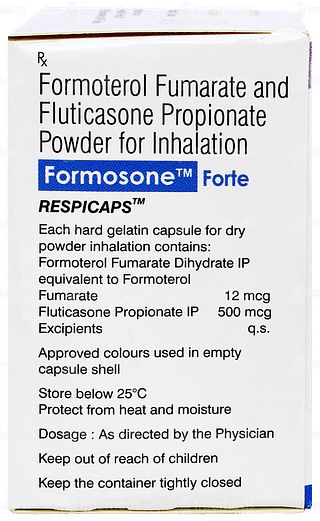
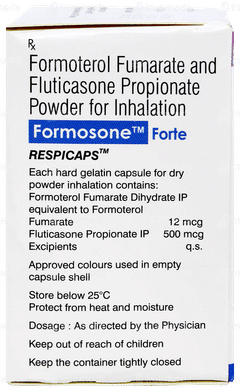
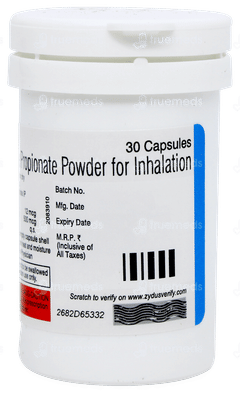

 Composition
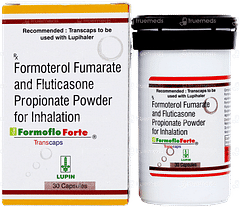
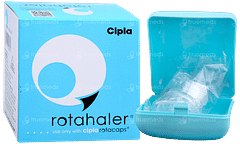
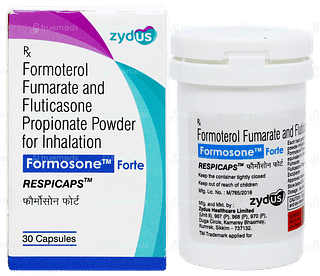
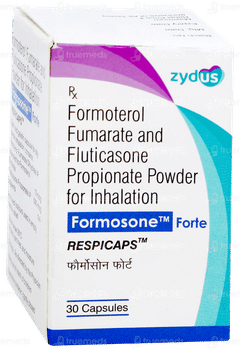
Asthma (wheezing and shortness of breath) and chronic obstructive pulmonary disease (COPD) are treated with Formosone Forte Respicap (a lung disorder in which the flow of air to the lungs is blocked). It helps you breathe easier by relaxing the muscles in your airways. Your doctor will advise you on how frequently you should use your inhaler. It is critical that you take the smallest dose necessary to keep your asthma under control. The effects of this medicine may be felt after a few days, but they will increase after a few weeks. This prescription must be taken on a regular basis to be successful, therefore even if you do not have any symptoms, keep taking it. It is doing its function, so that is good. Your asthma and COPD may worsen if you stop taking it. It should not be used to treat asthma attacks that occur suddenly. Use your quick-relief inhaler if you have an asthma attack (reliever). To get the most out of this treatment, make sure your inhaler technique is correct; otherwise, it will not perform as effectively. Nausea, vomiting, respiratory tract infection, mouth fungal infections, headache, hoarseness of voice, sore throat, cough, musculoskeletal (bone, muscle, or joint) pain, and elevated heart rate are the most prevalent side effects. If you come to that point, do not stop taking it; instead, consult your doctor. After taking your inhaler, rinse your mouth and throat with water or brush your teeth to help prevent some of these symptoms. Other, less common, but potentially dangerous adverse effects exist. If you are concerned about them, talk to your doctor. In general, you should strive to avoid situations that aggravate your asthma (triggers) and avoid smoking. If you are pregnant or breastfeeding, talk to your doctor about whether or not it is safe to use this medicine. If you have kidney or liver illness, you should tell your doctor before taking it so that your doctor can prescribe an appropriate amount for you.
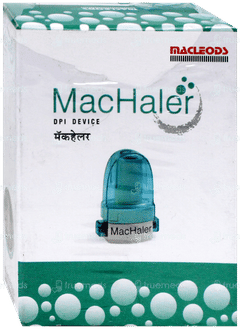




26.7% CHEAPER