

- Medicines
- Personal Care
- Skin Cream
- Sunscreen
- Face Wash
- Skin and Body Soap
- Acne Care
- Body Lotions
- Moisturising Lotion
- Moisturising Cream
- Mosquito Repellent
- Moisturising Gel
- Body Wash
- Hair Oils
- Hair Shampoo
- Hair Conditioners
- Hair Supplements
- Hair Colour
- Hair Serum
- Hair Mask
- Hair Solutions
- Baby Diapers and Wipes
- Baby Lotion and Moisturising Cream
- Baby Bath Essentials
- Baby Skin Care
- Baby and Infant Food
- Baby Healthcare
- Women Multivitamins
- Ovulation Test Kit and Women Intimate Care
- Sanitary Pads
- Nutritional Drinks
- Condoms
- Lubricants
- Massage Gels
- Personal Body Massagers
- Men Performance Booster
- Sexual Health Supplements
- Massage Oils
- Ayurveda
- Tooth Paste
- Mouth Ulcer Gel
- Mouthwash
- Toothache and Gum Pain
- Tooth Brush
- Gargle Solution
- Orthopaedic Supports
- Adult Diapers
- Footwear
- Mobility and Support Accessories
- Urinary Support and Care
- Health Conditions
- Bone and Joint Care
- Digestive Care
- Eye Care
- Pain Relief
- Smoking Cessation
- Liver Care
- Stomach Care
- Cold and Cough
- Heart Care
- Kidney Care
- Piles, Fissures & Fistula
- Respiratory Care
- Mental Wellness
- Derma Care
- Pre and Probiotics
- Acidity
- Gas
- Constipation
- Loose Motion/Diarrhoea
- Digestive Fibres
- Digestive Enzymes
- Eye Lubricant Drops
- Lens Solution
- Safety Eye Wear
- Eye Cream
- Eye Vitamins and Supplements
- Eye Drops
- Eye Ointment and Gel
- Nicotine Patch
- Nicotine Gum
- Nicotine Lozenges
- Cough Syrups
- Chest Rubs and Balms
- Nasal Spray
- Lozenges
- Inhalant Capsules
- Cold and Cough Tablets
- Vitamins & Supplements
- Diabetes Care
- Healthcare Devices
- Homeopathic Medicine
- Health Guide
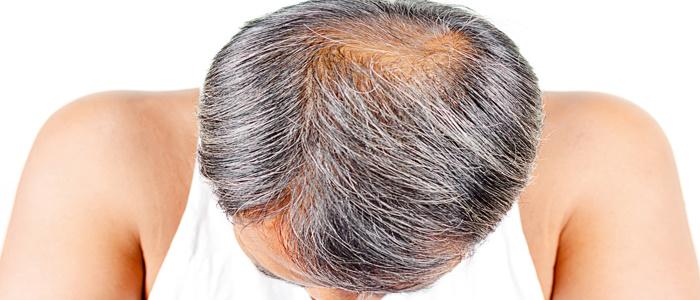
Premature Greying of Hair: Causes, Characteristics, and Management
Last updated on : 12 Jan, 2026
Read time : 6 min
What is Premature Greying of Hair?
Premature greying of hair (PHG), medically known as Canities or Achromotrichia, is the loss of natural hair pigment (melanin) at an unusually early age. This process occurs because pigment cells (melanocytes) in the hair follicles produce melanin, which gives hair its colour. When these melanocytes quit producing melanin, the hair shaft becomes transparent, which appears grey or white due to the reflection of light.
While most individuals begin to notice some hair greying by age 50, the definition of PHG is generally based on ethnicity and age of onset [1]:
|
Ethnicity |
Average Onset of Greying |
Premature Greying Defined As Onset Before Age: |
|
Caucasian/White |
Mid-30s | 20 years |
|
Asian |
Late 30s |
25 years |
| African-American/Black | Mid-40s |
30 years |
Causes of Premature Hair Greying
PHG is a complex issue with multiple contributing factors (multifactorial). Research points to several key internal processes and external triggers:
1. Cellular Dysfunction and Oxidative Stress (Pathophysiology)
The primary mechanism involves the death or exhaustion of melanocytes and their stem cell reservoir in the hair bulb. This is often accelerated by:
- Oxidative Stress: Excessive levels of hydrogen peroxide (H₂O₂) and other reactive oxygen species (free radicals) damage the melanocytes, leading to their premature apoptosis (cell death) [2].
- Melanin Incontinence: A process where the degeneration of melanocytes prevents the proper transfer of pigment to the keratinocytes that form the hair shaft.
- Melanocyte Stem Cell Exhaustion: The melanocyte stem cell pool, which replenishes pigment cells over time, is prematurely depleted.
2. Nutritional and Vitamin Deficiencies
PHG is frequently associated with insufficient levels of key nutrients essential for melanin production and cell health:
- Vitamin B12 Deficiency: Strongly linked to PHG and is sometimes associated with a condition called Pernicious Anaemia (an autoimmune disorder that impairs B12 absorption). Repigmentation has been reported in case studies in some individuals following B12 treatment [3].
- Minerals: Deficiencies in Copper (directly involved in the enzyme tyrosinase needed for melanogenesis) and Iron (important for oxygen delivery) have been implicated [4].
- Vitamin D and Folate (B9): Lower serum levels of these vitamins are also observed in individuals with PHG [4].
3. Systemic Conditions and Lifestyle Factors
- Autoimmune Diseases: Conditions where the immune system attacks the body’s own cells, such as Alopecia Areata and Vitiligo (which destroy skin and hair melanocytes), or Thyroid Disorders (Hypothyroidism/Hyperthyroidism) are often associated with PHG [1].
- Genetics: Inherited factors are the most common cause of PHG. If close family members experienced early greying, an individual is more likely to as well.
- Chronic Stress: Severe or sustained psychological stress is hypothesized to accelerate greying by triggering the release of hormones that may disrupt melanocyte stem cells (e.g., through a ‘fight-or-flight’ response mechanism) [5].
- Smoking: Chemical toxins in cigarettes are known to constrict blood vessels, reduce blood flow to hair follicles, and significantly increase oxidative damage, firmly linking smoking to earlier greying [4].
- Protein-Related Disorders: Conditions such as Kwashiorkor disease or Phenylketonuria (PKU), which involve protein deficiency or amino acid metabolism disorders, can result in changes in hair pigmentation due to reduced melanocytes or altered sulphur-containing proteins [6]. (Repetitive information about disease linkage has been consolidated here.)
Characteristics of Grey Hair
Grey or white hair is structurally different from pigmented hair:
- Texture and Manageability: Grey hair often feels drier, coarser, stiffer, and less manageable than pigmented hair due to changes in the hair cuticle and reduced natural oil (sebum) production [1].
- Growth Rate and Thickness: White beard hair, in particular, has been noted to grow up to four times faster and have a thicker hair shaft than pigmented beard hair.
- UV Damage: Due to the absence of protective melanin, grey hair is more susceptible to damage from ultraviolet (UV) light than pigmented hair [2].
- Dye Resistance: Grey hair is often more resistant to incorporating artificial colour, which may be related to cuticle changes and reduced porosity.
Management and Treatment for Premature Greying of the Hair
Premature hair greying (Canities) remains a challenging condition to treat, as there are currently no universally effective, U.S. FDA-approved medical treatments to permanently restore hair colour.
Treatment focuses on camouflage and addressing any underlying deficiencies.
- Addressing Deficiencies: If a blood test confirms a Vitamin B12, Copper, or Iron deficiency, supplementation is critical. Treating the underlying medical condition (e.g., thyroid disorder) can sometimes lead to repigmentation, although this outcome is not common or guaranteed [3].
- Supplements (PABA and Calcium Pantothenate): Early studies suggested that supplements like PABA (para-amino benzoic acid) and Calcium Pantothenate (Vitamin B5) may lead to hair darkening in some individuals. However, current evidence is low-quality and inconsistent, and these supplements are not considered standard or primary medical treatments for PHG [7].
- Experimental/Incidental Treatments (Latanoprost):
- Latanoprost (a prostaglandin analogue used for glaucoma) and similar medications have been reported in individual case studies to cause repigmentation of hair as an incidental side effect after long-term use.
- This effect is not a confirmed or standard therapeutic option for PHG but provides a potential avenue for future research into new drug targets [7].
- Camouflage: The most common and reliable management involves hair dyes and colourants, which are effective for covering grey hair.
Premature greying of the hair can manifest as a dominant, autosomal trait, an organ-specific auto-immune disorder, or as part of various syndromes. While greying hair prematurely can be a source of cosmetic concern for many individuals, it is important to address it from a health perspective by identifying and treating any underlying medical or nutritional causes.
Disclaimer
The information provided in this blog post is for educational and informational purposes only and is not intended as a substitute for professional medical advice, diagnosis, or treatment. Always seek the advice of a qualified healthcare provider, such as a Dermatologist or Primary Care Physician, with any questions you may have regarding a medical condition or before making changes to your health regimen, including starting supplements.
References
[1] Gaur, R., & Singh, M. (2023). Graying of Hair. In StatPearls. StatPearls Publishing. https://www.ncbi.nlm.nih.gov/books/NBK560682/
[2] Trüeb, R. M. (2007). Oxidative stress and human hair graying. International Journal of Cosmetic Science, 29(5), 331–357. https://onlinelibrary.wiley.com/doi/abs/10.1111/j.1468-2494.2007.00390.x
[3] Joshi, H., & Agrawal, A. (2019). Premature Canities and Nutritional Deficiencies: A Case–Control Study. International Journal of Trichology, 11(4), 163–166. https://www.ncbi.nlm.nih.gov/pmc/articles/PMC6829707/
[4] Bhat, R. M., Sharma, R., & Katwa, U. (2020). Premature graying of hair: An updated review. International Journal of Trichology, 12(4), 161–168. https://www.ncbi.nlm.nih.gov/pmc/articles/PMC7746594/
[5] Choi, S. M., Zhang, B., Makino, S., Vidhana, T. K., Manandhar, S., & Boles, N. C. (2020). Transient stress-induced signaling via catecholamines causes melanocyte stem cell loss and hair graying. Nature, 580(7803), 47–52. https://doi.org/10.1038/s41586-020-2216-1
[6] Kaur, R., & Sarin, R. (2013). Premature graying of hair. Indian Journal of Dermatology, Venereology, and Leprology, 79(5), 629–638. https://www.ijdvl.com/article.asp?issn=0378-6323;year=2013;volume=79;issue=5;spage=629;epage=638;aulast=Kaur
[7] Yale, K., Juhasz, M., & Mesinkovska, N. A. (2019). Medication-Induced Repigmentation of Gray Hair: A Systematic review. Skin Appendage Disorders, 6(1), 1–10. https://doi.org/10.1159/000504414












Disclaimer
Our healthcare experts have carefully reviewed and compiled the information presented here to ensure accuracy and trustworthiness. It is important to note that this information serves as a general overview of the topic and is for informational purposes only. It is not intended to diagnose, prevent, or cure any health problem. This page does not establish a doctor-patient relationship, nor does it replace the advice or consultation of a registered medical practitioner. We recommend seeking guidance from your registered medical practitioner for any questions or concerns regarding your medical condition.
Recent Articles











Company
About UsHealth ArticleHealth StoriesHealth LibraryDiseases & Health ConditionsAyurvedaUnderstanding Generic MedicinesAll MedicinesAll BrandsNeed HelpFAQSecuritySavings CalculatorSubscribe
Registered Office Address
Grievance Officer
Download Truemeds


Contact Us
Our customer representative team is available 7 days a week from 9 am - 9 pm.
v4.16.0

2026 - Truemeds | All rights reserved. Our content is for informational purposes only. See additional information.

Our Payment Partners




