

- Medicines
- Personal Care
- Skin Cream
- Sunscreen
- Face Wash
- Skin and Body Soap
- Acne Care
- Body Lotions
- Moisturising Lotion
- Moisturising Cream
- Mosquito Repellent
- Moisturising Gel
- Body Wash
- Hair Oils
- Hair Shampoo
- Hair Conditioners
- Hair Supplements
- Hair Colour
- Hair Serum
- Hair Mask
- Hair Solutions
- Baby Diapers and Wipes
- Baby Lotion and Moisturising Cream
- Baby Bath Essentials
- Baby Skin Care
- Baby and Infant Food
- Baby Healthcare
- Women Multivitamins
- Ovulation Test Kit and Women Intimate Care
- Sanitary Pads
- Nutritional Drinks
- Condoms
- Lubricants
- Massage Gels
- Personal Body Massagers
- Men Performance Booster
- Sexual Health Supplements
- Massage Oils
- Ayurveda
- Tooth Paste
- Mouth Ulcer Gel
- Mouthwash
- Toothache and Gum Pain
- Tooth Brush
- Gargle Solution
- Orthopaedic Supports
- Adult Diapers
- Footwear
- Mobility and Support Accessories
- Urinary Support and Care
- Health Conditions
- Bone and Joint Care
- Digestive Care
- Eye Care
- Pain Relief
- Smoking Cessation
- Liver Care
- Stomach Care
- Cold and Cough
- Heart Care
- Kidney Care
- Piles, Fissures & Fistula
- Respiratory Care
- Mental Wellness
- Derma Care
- Pre and Probiotics
- Acidity
- Gas
- Constipation
- Loose Motion/Diarrhoea
- Digestive Fibres
- Digestive Enzymes
- Eye Lubricant Drops
- Lens Solution
- Safety Eye Wear
- Eye Cream
- Eye Vitamins and Supplements
- Eye Drops
- Eye Ointment and Gel
- Nicotine Patch
- Nicotine Gum
- Nicotine Lozenges
- Cough Syrups
- Chest Rubs and Balms
- Nasal Spray
- Lozenges
- Inhalant Capsules
- Cold and Cough Tablets
- Vitamins & Supplements
- Diabetes Care
- Healthcare Devices
- Homeopathic Medicine
- Health Guide
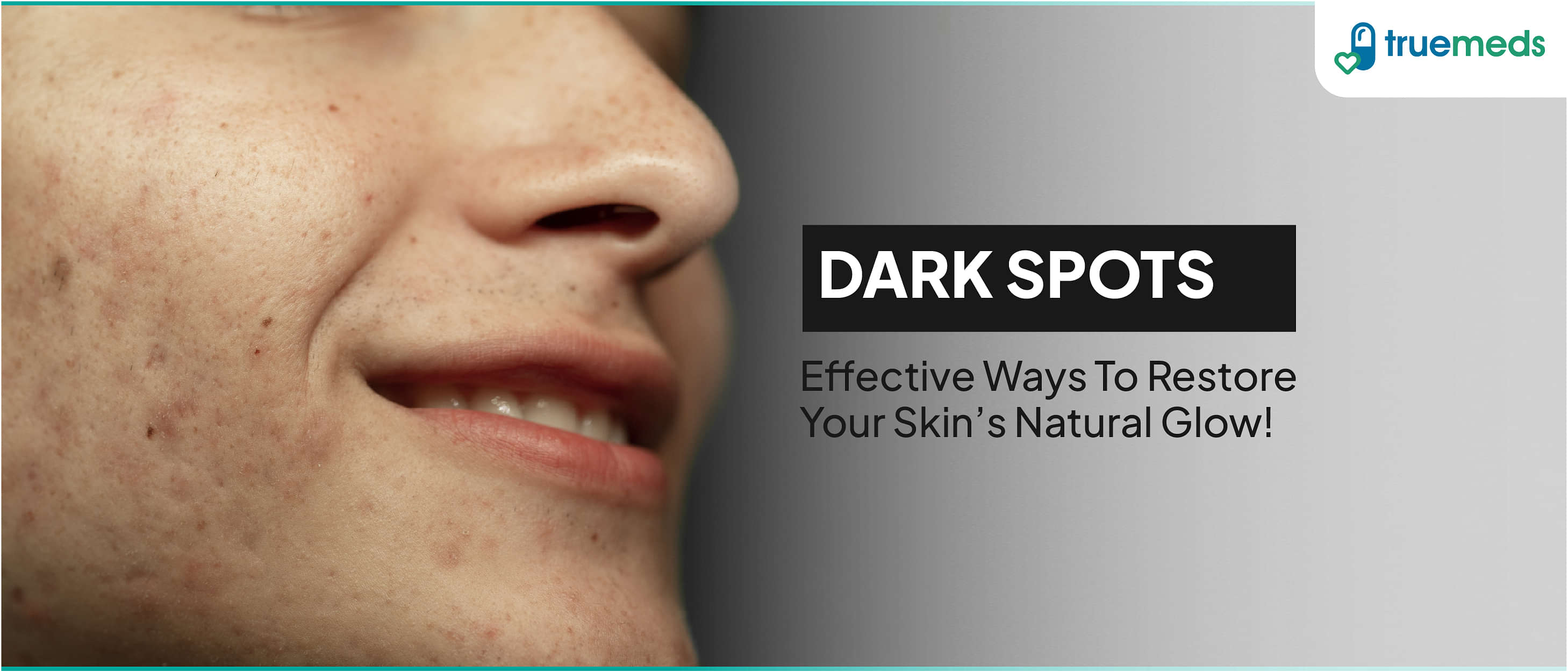
Effective Ways to Reduce Dark Spots on The Face
Last updated on :25 Feb, 2026
Read time :16 min
Dark spots on the face, often called hyperpigmentation, show up as small patches of skin that look darker than the surrounding area. They commonly develop after sun exposure, skin inflammation (such as acne), or hormonal influences such as melasma. These spots occur when the skin produces excess melanin, the pigment responsible for skin colour [1].
While dark spots are harmless, they can affect your confidence and make your skin look uneven. The good news is that there are evidence-based ways to reduce their appearance, including topical treatments, professional procedures, and natural remedies that support healthy skin.
In this blog, we’ll explain why dark spots form, who’s most at risk, and the most effective methods (both natural and medical) to help fade them safely.
Home Remedies to Support Even Skin Tone
Natural home remedies can be a supportive approach to skin health and may mildly improve the appearance of dark spots. Natural remedies take time. While they won’t work as fast as a professional serum, they are a great, gentle way to support your skin’s health without the risk of irritation [2].
Here are some remedies you can incorporate into your daily routine.
1. Yoghurt
Yoghurt is a gentle way to brighten skin. It has natural enzymes that lightly dissolve the very top layer of dead skin, which may help improve the appearance of dull or uneven-looking skin over time. Fermented dairy products, including yoghurt, have been studied for their positive effects on skin health, potentially supporting a more even tone. To use yoghurt, simply apply a thin layer of plain yoghurt directly onto the affected areas of the face using clean fingertips or a cotton ball. Leave it on for about 15-20 minutes to allow the lactic acid to work [3]. Then, rinse off with lukewarm water and gently pat the skin dry.
2. Aloe Vera
Aloe vera is soothing for skin that has been stressed by the sun. It helps cool the skin and provides deep hydration, which is essential for helping the skin repair itself and support overall skin repair and comfort [4]. To use, extract fresh gel from an aloe vera leaf and apply it to the affected areas of the face. Gently massage the gel and leave it on for 20–30 minutes before rinsing off with lukewarm water. For best results, use daily or several times a week.
3. Cucumber
Cucumber helps soothe and hydrate the skin, which may improve the appearance of dark spots. Apply fresh cucumber juice to the affected areas and leave it on for 15–20 minutes before rinsing. Alternatively, chilled cucumber slices can be placed directly on the affected areas for the same duration. Always perform a patch test first to check for skin sensitivity [5].
4. Turmeric
Turmeric is a well-known natural ingredient with anti-inflammatory and antioxidant properties. It may help support a more even-looking skin tone [6]. Mix turmeric powder with water, honey, or yoghurt to form a smooth paste. Avoid lemon juice, especially if you have sensitive skin. Apply the paste directly onto dark spots using clean fingertips or a cotton swab, leave it on for 10–15 minutes, and rinse off with lukewarm water. This process can be repeated 2–3 times a week, and a patch test is recommended before applying it to larger areas.
Note: Turmeric can temporarily stain the skin yellow and may irritate some skin types. Always do a patch test before full application and consult a dermatologist for persistent pigmentation.
5. Papaya
Papaya is a tropical fruit rich in enzymes such as papain and alpha-hydroxy acids, which may help gently exfoliate the skin and support a smoother-looking skin surface over time. To use papaya as a supportive skincare option, mash ripe papaya into a smooth paste and apply it gently to the skin. Leave it on for 15–20 minutes before rinsing with water and gently patting the skin dry. Individuals with latex allergies should exercise caution, as papaya contains chitinases, which can cross-react with latex [7].
6. Red Lentils (Masoor Dal)
Red lentils, also known as masoor dal, are a versatile ingredient that may help gently exfoliate the skin when ground into a paste, supporting a smoother-looking skin texture. Rich in antioxidants, vitamins, and minerals, they can support overall skin health [8]. To use red lentils as a home remedy, soak a handful in water overnight and grind them into a fine paste the next day. Apply the paste to the skin and gently massage in circular motions for a few minutes, then leave it on for 15–20 minutes before rinsing with water and patting the skin dry.
7. Buttermilk
If you find yoghurt too thick, buttermilk is a lighter alternative. It contains the same skin-brightening enzymes but is much gentler, making it ideal for those with sensitive skin who want to even out their tone without irritation [3]. To use buttermilk, soak a cotton ball or pad in it and apply it directly onto the affected areas, gently massaging in circular motions for a few minutes. Leave it on for 10–15 minutes before rinsing with lukewarm water.
8. Honey
Honey is a natural humectant that may help brighten the skin and reduce the look of dark spots thanks to its antibacterial, antioxidant, and moisturising properties [9]. Raw honey’s enzymatic action may help gently exfoliate dead skin cells and support smoother-looking skin over time. To use honey as part of a skincare routine, apply a thin layer of raw honey to the skin using clean fingertips.. Allow it to sit for about 15-20 minutes, allowing the honey to penetrate the skin, and then rinse.
Note: These methods are supportive skincare practices and not medical treatments. Results can vary depending on skin type and sensitivity.
Home Remedies to Use with Caution
The following ingredients can be overly harsh, acidic, or irritating for facial skin, and must be used with extreme care or avoided entirely, especially for sensitive or hyperpigmentation-prone skin.
9. Lemon Juice
Lemon juice contains citric acid, which may help exfoliate the skin and may create a temporary brightening illusion. However, lemon juice is highly acidic (pH 2-3) [10], and applying undiluted lemon juice directly on the skin, especially before sun exposure, can make your skin sensitive to sunlight. Applying lemon and then going outside can cause severe redness, blistering, or even make your dark spots much darker than they were before.
10. Apple Cider Vinegar (ACV)
Apple cider vinegar (ACV) has acetic acid, which may help exfoliate dead skin cells and support skin renewal. However, ACV is very acidic and can damage the skin barrier or cause irritation and burns if applied undiluted or too frequently [12]. If you choose to use ACV, it must be significantly watered down; use at least four parts water to one part vinegar. Even then, it is often too harsh for the face and is better suited for less sensitive areas of the body. Individuals with sensitive or dry skin should avoid it altogether.
11. Red Onion
While some proprietary skincare products may contain onion extract for its potential skin benefits, direct application of raw onion can cause irritation, especially on sensitive or broken skin. The concentration of natural acids in raw onion can be variable and may be too harsh for safe facial application [1]. Most dermatologists recommend using formulated skincare products that contain onion extract instead of applying it directly.
12. Tomatoes
Tomatoes are rich in Vitamin C and lycopene, both of which have antioxidant properties that help support overall skin health [13]. Tomatoes are a refreshing treat for the skin, but they won’t do much for deep-set pigmentation. They are best used for a quick, temporary brightening glow rather than as a long-term solution for dark spots.
13. Green Tea Extract
Green tea extract is rich in antioxidants and has anti-inflammatory properties that may support skin health and help prevent further darkening caused by sun damage or ageing [14]. For the best result, use a cooled tea bag as a cold compress; the caffeine and cold temperature help settle the skin and reduce the ‘heated’ look of fresh marks. To use it as a home remedy, apply cooled green tea brewed from a tea bag or leaf to the affected areas using a cotton pad, or choose skincare products infused with green tea. It is a supportive remedy for skin health, not a primary spot remover.
Important Note on Hydration (No Direct Effect)
Drinking plenty of water is essential for overall skin health and hydration, but it does not directly treat or remove dark spots. Hydrated skin may appear more radiant and better able to heal, but fading pigmentation requires targeted ingredients or treatments.
Disclaimer:
Home remedies may provide mild, supportive, or cosmetic benefits for some individuals, but they are not a substitute for dermatologist-recommended treatments or a guaranteed cure for established hyperpigmentation like melasma or sunspots [2]. Every skin type reacts differently, and certain ingredients (such as undiluted lemon juice, vinegar, or raw onion) can irritate the skin or even worsen pigmentation by causing Post-Inflammatory Hyperpigmentation (PIH), especially in sensitive or darker skin types [11].
Before trying any DIY treatment, always perform a patch test and consult a dermatologist, particularly if you have persistent, spreading, or unexplained dark spots. For faster, safer, and more reliable results, clinically proven skincare products and professional medical procedures remain the gold standard for pigmentation treatment.
Medical Procedures for Removing Dark Spots
Professional treatments are often necessary for deep-set pigmentation that home remedies can’t reach. These methods work by removing pigmented skin layers or breaking down excess melaninto help achieve a more even complexion. Consulting a dermatologist is essential to determine the best approach based on your skin type, pigmentation type, and severity.
1. Laser Therapy
Laser therapy uses concentrated beams of light to break down pigmentation, making it effective for stubborn dark spots. Multiple sessions may be needed for optimal results, and mild redness or irritation can occur temporarily after treatment.
2. Cryotherapy
Cryotherapy involves freezing dark spots with liquid nitrogen, causing the pigmented cells to break down and fade over time. This quick procedure works well for small, isolated spots, such as sunspots or age-related pigmentation. Temporary redness and irritation may occur.
3. Prescription Skin-Lightening Cream
Dermatologists may recommend combination creams containing hydroquinone, retinoids, or corticosteroids. These formulations help reduce pigmentation by inhibiting melanin production and promoting skin renewal. Formulations containing ingredients like hydroquinone or retinoids are powerful because they slow down the production of new pigment. These are highly effective but can be drying; they must be used exactly as directed by a skin expert to ensure your skin barrier stays healthy [15].
4. Microdermabrasion
Microdermabrasion is a non-invasive exfoliation procedure that removes dead skin cells and encourages the growth of new skin. It can gradually fade dark spots while improving overall skin texture and tone. Multiple sessions may be necessary for significant results.
5. Chemical Exfoliants
Chemical exfoliants, including alpha-hydroxy acids (e.g., glycolic acid, lactic acid) and beta-hydroxy acids (e.g., salicylic acid), work by removing the outer layer of dead skin cells. Regular use in the form of serums or peels can help lighten dark spots over time and enhance skin smoothness and clarity. Chemical peels are a common treatment option for melasma in darker skin types, provided they are chosen and administered carefully by a professional [16].
Expert Opinion
Home remedies can support skin health, but persistent dark spots (especially melasma or post-acne pigmentation) often require medical-grade solutions. Don’t delay seeing a dermatologist if spots are spreading or not responding to treatment.
– Dr. Lakshmi Vaswani
Frequently Asked Questions (FAQs)
Can dark spots be removed?
Yes, dark spots can be reduced or lightened using a combination of dermatological treatments and supportive home care. However, results take time, and consistent care, especially sun protection, is essential for noticeable improvement [1].
Does vitamin C help with dark spots?
Vitamin C is excellent for brightening. It acts as an antioxidant that helps reduce oxidative stress that makes spots look darker. With regular use, it helps your complexion look more even and glowing. Just make sure to store your serum in a cool, dark place, as light can make it less effective.
Does aloe vera remove dark spots?
Aloe vera may help improve the appearance of dark spots thanks to its anti-inflammatory and skin-healing properties, and the compounds aloin and aloesin [4]. Regular application of aloe vera gel to affected areas can gradually support a more even skin tone and promote healthier-looking skin, but it is typically a supportive, rather than primary, treatment.
Does a potato remove dark spots?
Potatoes are sometimes used in home remedies because they contain mild enzymes and vitamin C, which may have a gentle brightening effect. However, there is no strong scientific evidence that applying raw potato directly to the skin can effectively reduce established dark spots. While generally harmless for many people, it should be considered an anecdotal remedy and not a substitute for clinically proven ingredients like niacinamide, alpha arbutin, or hydroquinone.
What is the leading cause of dark spots on the face?
Sunlight is the number one cause. When your skin is exposed to the sun without protection, it produces extra pigment to try to defend itself. Other common causes include post-inflammatory hyperpigmentation from previous acne or internal factors that make certain areas of your face more sensitive to light.
Can dark spots go away completely?
Some dark spots fade with time, especially post-acne marks (PIH). But melasma and sunspots may need targeted treatments to fully disappear, and they are prone to recurrence if sun protection is not maintained [1].
Which vitamin is best for dark spots?
Vitamin C is the gold standard for daily brightening. However, if you are looking for something to use at night, Vitamin A (often called Retinol) is very effective. It helps speed up the way your skin sheds old cells, which helps the darkened spots move to the surface and fade away faster.
References
[1] Desai, S. R. (2014, August 1). Hyperpigmentation Therapy: A Review. Indian Dermatology Online Journal, 5(4), 416-425. Retrieved from https://pmc.ncbi.nlm.nih.gov/articles/PMC4142815/
[2] Hollinger, J. C., Angra, K., & Halder, R. M. (2018, February 1). Are natural ingredients effective in the management of hyperpigmentation? A Systematic review. Journal of Clinical and Aesthetic Dermatology, 11(2), 28-37. Retrieved from https://pmc.ncbi.nlm.nih.gov/articles/PMC5843359/
[3] Vaughn, A. R., & Sivamani, R. K. (2015). Effects of Fermented Dairy Products on Skin: A Systematic Review. The Journal of Alternative and Complementary Medicine, 21(7), 380–385. https://doi.org/10.1089/acm.2014.0261
[4] Moolla, S., & Miller-Monthrope, Y. (2022). Dermatology: how to manage facial hyperpigmentation in skin of colour. Drugs in Context, 11, 1–14. Retrieved from https://doi.org/10.7573/dic.2021-11-2
[5] Sun, K., Mears, A., & Hailemeskel, B. (2024). Dark Circles and Puffy Eyes – The Use of Cucumber Slices, Chamomile Tea Bags, Witch Hazel, Arnica, and Students Survey. Pharmacophore, 15(1-2024), 41–47. https://doi.org/10.51847/kt9W8sPoi3
[6] Nie, Y., & Li, Y. (2025). Curcumin: a potential anti-photoaging agent. Frontiers in Pharmacology, 16. https://doi.org/10.3389/fphar.2025.1559032
[7] Kong, Y. R., Jong, Y. X., Balakrishnan, M., Bok, Z. K., Weng, J. K. K., Tay, K. C., Goh, B. H., Ong, Y. S., Chan, K. G., Lee, L. H., & Khaw, K. Y. (2021). Beneficial Role of Carica papaya Extracts and Phytochemicals on Oxidative Stress and Related Diseases: A Mini Review. Biology, 10(4), 287. https://doi.org/10.3390/biology10040287
[8] Alexander, R., Khaja, A., Debiec, N., Fazioli, A., Torrance, M., & Razzaque, M. S. (2024). Health-promoting benefits of lentils: Anti-inflammatory and anti-microbial effects. Current Research in Physiology, 7, 100124. https://doi.org/10.1016/j.crphys.2024.100124
[9] O’Gorman, E., Varanasi, S., Bukoski, S., Mitschke, S., & Conger, S. (2025). Investigating the Effects of a Manuka Honey, Royal Jelly, and Bee Venom-Derived Face Serum on Skin Health and Signs of Aging. Cureus. https://doi.org/10.7759/cureus.81244
[10] Yang, J., Lee, S.-Y., Jang, S.-K., Kim, K.-J., & Park, M.-J. (2023). Inhibition of Melanogenesis by Essential Oils from the Citrus Cultivars Peels. International Journal of Molecular Sciences, 24(4), 4207–4207. https://doi.org/10.3390/ijms24044207
[11] Leonard, J. (2024, January 18). How to get rid of dark spots on the face. Medical News Today. Retrieved from https://www.medicalnewstoday.com/articles/how-to-get-rid-of-dark-spots-on-the-face
[12] Elhage, K. G., St. Claire, K., & Daveluy, S. (2021). Acetic acid and the skin: a review of vinegar in dermatology. International Journal of Dermatology, 61(7), 808-812. https://doi.org/10.1111/ijd.15804
[13] Tarshish, E., Hermoni, K., Sharoni, Y., Wertz, P. W., & Dayan, N. (2021). Effects of golden tomato extract on skin appearance—outlook into gene expression in cultured dermal fibroblasts and on trans‐epidermal water loss and skin barrier in human subjects. Journal of Cosmetic Dermatology, 20(12), 3922-3929. https://doi.org/10.1111/jocd.14527
[14] Kim, Y. C., Choi, S. Y., & Park, E. Y. (2015). Anti-melanogenic effects of black, green, and white tea extracts on immortalized melanocytes. Journal of Veterinary Science, 16(2), 135–143. https://doi.org/10.4142/jvs.2015.16.2.135
[15] Nayak, C., Nouveau, S., Agrawal, D., Kohli, M., Bernerd, F., & Misra, N. (2016). Skin hyperpigmentation in Indian population: Insights and best practice. Indian Journal of Dermatology, 61(5), 487-494. https://doi.org/10.4103/0019-5154.190103
[16] Sarkar, R., Bansal, S., & Garg, V. K. (2012). Chemical Peels for Melasma in Dark-Skinned Patients. Journal of Cutaneous and Aesthetic Surgery, 5(4), 247–253. https://doi.org/10.4103/0974-2077.104912
[17] Al-Niaimi, F., & Chiang, N. Y. Z. (2017). Topical Vitamin C and the Skin: Mechanisms of Action and Clinical Applications. The Journal of Clinical and Aesthetic Dermatology, 10(7), E13-E16. Retrieved from https://pmc.ncbi.nlm.nih.gov/articles/PMC5579659/













Disclaimer
Our healthcare experts have carefully reviewed and compiled the information presented here to ensure accuracy and trustworthiness. It is important to note that this information serves as a general overview of the topic and is for informational purposes only. It is not intended to diagnose, prevent, or cure any health problem. This page does not establish a doctor-patient relationship, nor does it replace the advice or consultation of a registered medical practitioner. We recommend seeking guidance from your registered medical practitioner for any questions or concerns regarding your medical condition.
Recent Articles





Company
About UsHealth ArticleHealth StoriesHealth LibraryDiseases & Health ConditionsAyurvedaUnderstanding Generic MedicinesAll MedicinesAll BrandsNeed HelpFAQSecuritySavings CalculatorSubscribe
Registered Office Address
Grievance Officer
Download Truemeds


Contact Us
Our customer representative team is available 7 days a week from 9 am - 9 pm.
v4.22.3

2026 - Truemeds | All rights reserved. Our content is for informational purposes only. See additional information.

Our Payment Partners




