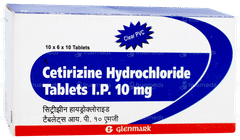
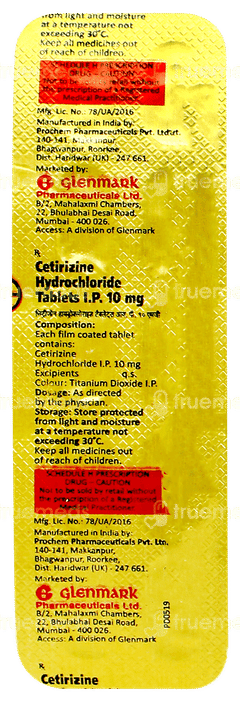

 Composition
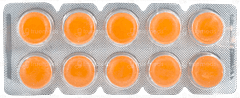
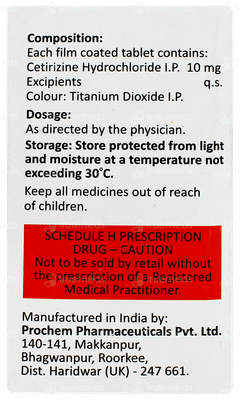
Cetirizine 10mg Tablet contains cetirizine 10 mg (a second-generation H1 antihistamine). It is used to relieve allergic rhinitis symptoms and itching associated with urticaria (hives). Cetirizine blocks histamine H1 receptors, reducing sneezing, nasal discharge, itching and watery eyes. Take the tablet with or without food, following your doctor's instructions. Common side effects include drowsiness, tiredness, dry mouth and headache. Tell your doctor about kidney or liver disease before treatment. Avoid this medicine if you have previously experienced an allergic reaction to cetirizine or hydroxyzine. Alcohol and sedative medicines can increase drowsiness. This tablet does not treat severe allergic emergencies.
Cetirizine 10mg Tablet is used to relieve symptoms of seasonal and perennial allergic rhinitis. These include sneezing, a runny nose, nasal itching and itchy or watery eyes. It also helps relieve itching and raised skin rashes caused by urticaria. Allergic rhinitis may be triggered by pollen, dust mites or animal allergens. Cetirizine controls symptoms but does not eliminate the underlying allergy or prevent future exposure.
Take Cetirizine 10mg Tablet as directed by your doctor. Swallow it whole with water, without crushing or chewing. It can be taken with or without food. Follow the prescribed dose and duration, depending on your symptoms. If you miss a dose, take it when remembered unless the next dose is nearly due. Never double doses or exceed the recommended daily amount.
Common side effects of Cetirizine 10mg Tablet include drowsiness, tiredness, dry mouth, headache, dizziness, nausea, abdominal discomfort and sore throat. Most mild effects settle as the body adjusts. Inform your doctor if symptoms persist or worsen. Rarely, severe itching may develop after stopping prolonged daily use. Seek medical advice if this occurs. Get emergency help for breathing difficulty, facial swelling or severe allergic reactions.
Before using Cetirizine 10mg Tablet, tell your doctor about kidney disease, liver disease or difficulty passing urine. Mention other medicines, especially sedatives, sleeping tablets and tranquillisers. Discuss pregnancy or breastfeeding with your doctor before treatment. Avoid alcohol because it may increase drowsiness. Do not drive or operate machinery if you feel sleepy or dizzy. Older adults may require individual dose assessment, particularly with reduced kidney function.