

- Medicines
- Personal Care
- Skin Cream
- Sunscreen
- Face Wash
- Skin and Body Soap
- Acne Care
- Body Lotions
- Moisturising Lotion
- Moisturising Cream
- Mosquito Repellent
- Moisturising Gel
- Body Wash
- Hair Oils
- Hair Shampoo
- Hair Conditioners
- Hair Supplements
- Hair Colour
- Hair Serum
- Hair Mask
- Hair Solutions
- Baby Diapers and Wipes
- Baby Lotion and Moisturising Cream
- Baby Bath Essentials
- Baby Skin Care
- Baby and Infant Food
- Baby Healthcare
- Women Multivitamins
- Ovulation Test Kit and Women Intimate Care
- Sanitary Pads
- Nutritional Drinks
- Condoms
- Lubricants
- Massage Gels
- Personal Body Massagers
- Men Performance Booster
- Sexual Health Supplements
- Massage Oils
- Ayurveda
- Tooth Paste
- Mouth Ulcer Gel
- Mouthwash
- Toothache and Gum Pain
- Tooth Brush
- Gargle Solution
- Orthopaedic Supports
- Adult Diapers
- Footwear
- Mobility and Support Accessories
- Urinary Support and Care
- Health Conditions
- Bone and Joint Care
- Digestive Care
- Eye Care
- Pain Relief
- Smoking Cessation
- Liver Care
- Stomach Care
- Cold and Cough
- Heart Care
- Kidney Care
- Piles, Fissures & Fistula
- Respiratory Care
- Mental Wellness
- Derma Care
- Pre and Probiotics
- Acidity
- Gas
- Constipation
- Loose Motion/Diarrhoea
- Digestive Fibres
- Digestive Enzymes
- Eye Lubricant Drops
- Lens Solution
- Safety Eye Wear
- Eye Cream
- Eye Vitamins and Supplements
- Eye Drops
- Eye Ointment and Gel
- Nicotine Patch
- Nicotine Gum
- Nicotine Lozenges
- Cough Syrups
- Chest Rubs and Balms
- Nasal Spray
- Lozenges
- Inhalant Capsules
- Cold and Cough Tablets
- Vitamins & Supplements
- Diabetes Care
- Healthcare Devices
- Homeopathic Medicine
- Health Guide
Vasant Kusumakar Ras
Vasant Kusumakar Ras is a classical Ayurvedic Rasayana and Vajikarana formulation containing purified gold, silver, pearl and other minerals alongside herbal ingredients. It is traditionally used to support vitality, healthy ageing and mental clarity. As a herbo-mineral preparation, it must only be taken under the supervision of a qualified Ayurvedic physician, at the prescribed dose and for the recommended duration.
 50
50Last updated on : 15 Sep, 2026
Read time : 13 mins
What is Vasant Kusumakar Ras?
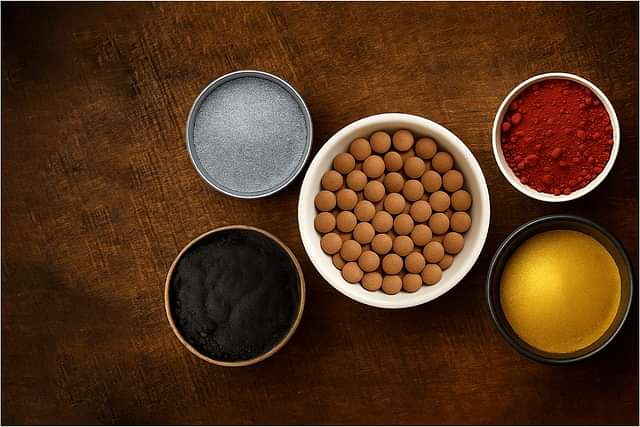
Vasant Kusumakar Ras is a classical Ayurvedic herbo-mineral formulation, combining purified gold, silver, pearl and other minerals with herbal ingredients. It is traditionally described in Ayurvedic Rasashastra literature, including the Rasendra Sara Sangraha, as a Rasayana (rejuvenative) and Vajikarana (vitality-supporting) preparation.
In Ayurveda, Vasant Kusumakar Ras is traditionally considered a general tonic used within a supervised Ayurvedic treatment plan to support energy, vitality and healthy ageing.
Key Facts
| Feature | Details |
| Formulation name | Vasant Kusumakar Ras
|
| Formulation type | Rasayana and Vajikarana herbo-mineral tablet (Rasashastra preparation) |
| Classical reference | Referenced in classical Rasashastra texts, including the Rasendra Sara Sangraha
|
| Composition | Purified gold, silver, pearl, tin, lead, iron, mica and coral (bhasmas), combined with herbal ingredients such as Vasa, Musk and others |
| Also known as | Vasantha Kusumakaram, Kusumakar Ras, Vasant Kusumakar (Gold and Pearl) Tablet
|
| Key active compounds | Bhasma (calcined mineral) forms of gold, silver, pearl, tin, lead, iron, mica and coral
|
| Traditional uses | General vitality, healthy ageing, mental clarity, recovery support, as part of a supervised Ayurvedic treatment plan
|
| Common forms | Tablet
|
| General dosage | 125 mg to 250 mg once or twice daily with honey or ghee, only as prescribed by a qualified practitioner
|
| Best taken | As directed by the prescribing practitioner, typically with honey or ghee |
| Key safety note | Contains potentially toxic metals, including lead; it should only be used under qualified Ayurvedic medical supervision, at the prescribed dose and for a limited, monitored duration. |
Alternative Names of Vasant Kusumakar Ras
As a classical formulation, Vasant Kusumakar Ras is known by a small number of genuine spelling and naming variants:
- Vasantha Kusumakaram
- Kusumakar Ras
- Vasant Kusumakar Ras (Gold and Pearl) Tablet - the commercial name used for the gold- and pearl-containing variant
How Vasant Kusumakar Ras is Made
Vasant Kusumakar Ras is prepared using the classical Rasashastra (Ayurvedic pharmaceutics) process, in which minerals are purified and processed before being combined with herbal ingredients:
- Purification (Shodhana) of raw minerals, including gold, silver and other metals, to remove impurities and prepare them for further processing.
- Combination of the purified minerals with herbal decoctions and juices.
- Repeated grinding and calcination (incineration) until the mixture forms a fine, stable bhasma (ash) intended for use in the formulation.
- Storage of the finished preparation in a sealed container to help maintain its quality and stability.
Composition of Vasant Kusumakar Ras
Vasant Kusumakar Ras is a herbo-mineral formulation. Its main constituents include:
- Purified Gold (Swarna Bhasma)
- Purified Silver (Rajata Bhasma)
- Purified Pearl (Mukta Bhasma)
- Purified Tin (Vanga Bhasma)
- Purified Lead (Naga Bhasma)
- Purified Iron (Loha Bhasma)
- Purified Mica (Abhrak Bhasma)
- Purified Coral (Pravala Bhasma)
- Herbal ingredients including Vasa, sugarcane juice (Ikshu), banana (Kadali) and musk (Kasturi), among others
Medicinal Properties of Vasant Kusumakar Ras
Vasant Kusumakar Ras's traditional actions in the body are understood in Ayurveda to include:
- Rasayana (rejuvenating): traditionally supports tissue health and healthy ageing
- Balya (strengthening): traditionally supports physical strength and stamina
- Vrishya: traditionally used to support reproductive vitality
- Medhya (cognitive support): traditionally supports memory and mental clarity
- Deepana (appetiser): traditionally supports healthy digestion
- Shothahara (anti-inflammatory): traditionally used to support relief from minor inflammation
These properties describe traditional Ayurvedic understanding of the formulation's actions, rather than clinically confirmed effects, and Vasant Kusumakar Ras should always be used under the supervision of a qualified Ayurvedic physician given its mineral and metal content.
Key Health Benefits of Vasant Kusumakar Ras
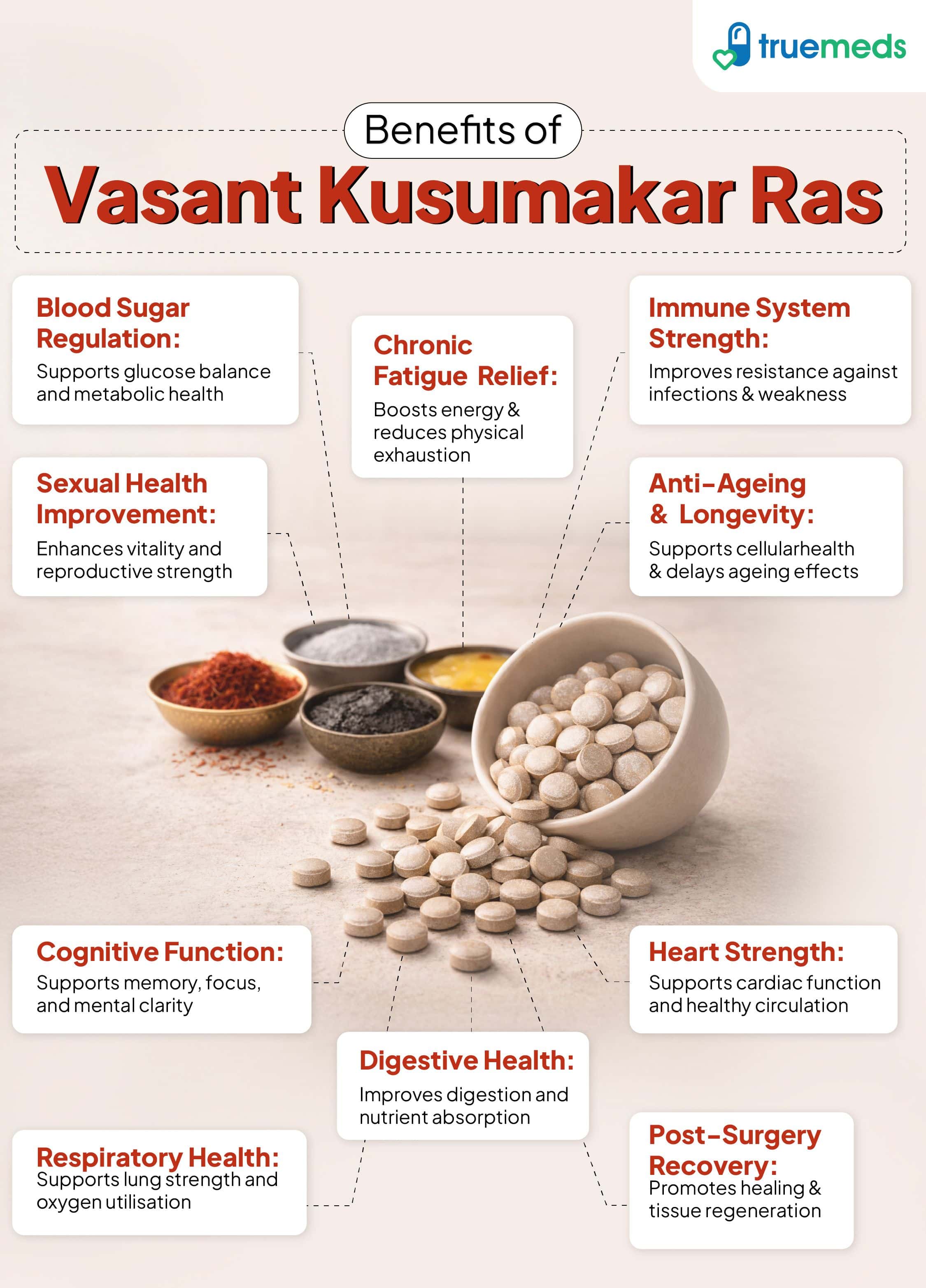
Vasant Kusumakar Ras is traditionally used to support blood sugar balance, vitality, cognitive wellbeing, recovery, digestion and general healthy ageing. It is also traditionally associated with reproductive, respiratory and cardiovascular support, but human clinical evidence for these benefits remains limited.
1. Metabolic and Blood Sugar Support
Vasant Kusumakar Ras is traditionally associated with supporting healthy blood sugar levels. Preliminary animal research by (Tamoli et al. 2020) explored a possible protective role in diabetes-related eye changes, though human clinical evidence is limited. It is not a treatment for diabetes and must never replace prescribed medication.
2. Vitality and Reproductive Wellbeing
As a classical Vajikarana formulation, Vasant Kusumakar Ras is traditionally used to support stamina and reproductive vitality in men and women. It is not a treatment for erectile dysfunction, infertility or other diagnosed sexual health conditions, which need assessment by a qualified doctor.
3. Cognitive Support
Vasant Kusumakar Ras is traditionally valued for supporting memory, concentration and mental clarity, drawing on ingredients such as Swarna (gold) and Mukta (pearl) bhasma. This reflects traditional use rather than confirmed clinical evidence.
4. Immune and Recovery Support
Vasant Kusumakar Ras is traditionally used to support the body's general resilience, particularly during recovery from illness. This reflects traditional Rasayana use rather than a proven immune-modulating effect.
5. Healthy Ageing
As a classical Rasayana, Vasant Kusumakar Ras is traditionally used to support tissue strength and healthy ageing. This traditional rejuvenative use has not been established in human clinical trials.
6. Energy and Post-Illness Recovery
Vasant Kusumakar Ras is traditionally used to help ease general weakness and fatigue, including during recovery from illness or surgery, always as part of a supervised Ayurvedic care plan.
7. Digestive Support
Vasant Kusumakar Ras is traditionally believed to support appetite and digestion (Agni). This traditional use should not replace medical assessment of ongoing digestive symptoms.
8. Respiratory Comfort
Vasant Kusumakar Ras is traditionally believed to support general respiratory comfort as part of its broader Rasayana action. It is not a treatment for asthma, bronchitis or any other diagnosed respiratory condition, which require assessment and treatment by a doctor.
9. Heart Support
Some traditional sources associate Vasant Kusumakar Ras with supporting healthy circulation. It is not a treatment for heart disease, high blood pressure or high cholesterol, which require diagnosis and management by a doctor.
Common Uses of Vasant Kusumakar Ras
Vasant Kusumakar Ras is traditionally used under Ayurvedic supervision as part of treatment plans for chronic health concerns, recovery from illness and reproductive wellbeing. It is generally prescribed for a limited period based on individual needs and should not be used as a standalone treatment for diagnosed medical conditions.
1. As Part of a Supervised Ayurvedic Treatment Plan
Vasant Kusumakar Ras is typically prescribed by a qualified Ayurvedic physician as part of a broader, supervised treatment plan for chronic conditions such as diabetes or general debility, alongside diet, lifestyle measures and, where needed, conventional medical care. It is not used as a standalone treatment.
2. As a Time-Limited Recovery Tonic
It is traditionally used for a limited period, which should be determined by the prescribing practitioner based on the individual's health needs, to support recovery after illness, surgery, or prolonged physical or mental exhaustion, always under a practitioner's guidance and periodic review.
3. Within Vajikarana (Reproductive Health) Therapy
In classical Ayurveda, Vasant Kusumakar Ras is used within Vajikarana therapy, a branch of Ayurveda focused on vitality and reproductive health, always as part of a wider, practitioner-guided approach rather than a standalone remedy for a diagnosed sexual health condition.
Precaution While Taking Vasant Kusumakar Ras
Vasant Kusumakar Ras requires medical supervision because it is a herbo-mineral formulation that may contain heavy metals. It should generally be avoided during pregnancy and breastfeeding, and people with diabetes or chronic heart, liver or kidney conditions should consult a doctor before use. It should also be avoided in people with known ingredient allergies and combined with alcohol only if advised by a healthcare professional.
1. Pregnancy and Breastfeeding
This formulation should be avoided during pregnancy and breastfeeding because its mineral content has not been established as safe during these periods.
2. Chronic Heart, Liver or Kidney Conditions
People with liver or kidney disease should not use this formulation without medical advice because it contains processed mineral ingredients and product-specific safety data are limited.
3. People with Diabetes
People with diabetes, particularly those on insulin or other blood sugar medication, should use Vasant Kusumakar Ras only under medical supervision, as its effects on blood glucose are not well established and it may interact with diabetes treatment (Singh et al., 2024).
4. Known Allergies
Anyone with a known allergy or sensitivity to any of the formulation's mineral or herbal ingredients should avoid it.
5. Alcohol
Vasant Kusumakar Ras should be avoided with alcohol unless a healthcare professional advises otherwise, as the safety of combining them has not been adequately established.
Herbs Traditionally Used With Vasant Kusumakar Ras
Vasant Kusumakar Ras is sometimes used alongside other classical Rasayana formulations as part of a wider Ayurvedic treatment plan:
| Herb / Formulation | Traditional Pairing |
| Shilajit | Shilajit is traditionally combined with Vasant Kusumakar Ras in some Rasayana regimens for its complementary traditional role in supporting vitality and stamina. |
| Ashwagandha (Withania somnifera) | Ashwagandha is traditionally used alongside herbo-mineral Rasayana formulations to support general strength and resilience to stress. |
| Chandraprabha Vati | Chandraprabha Vati is another classical formulation sometimes used together with Vasant Kusumakar Ras as part of a broader, practitioner-guided approach to metabolic health. |
Recommended Dosage of Vasant Kusumakar Ras
Vasant Kusumakar Ras must only be taken at a dose and for a duration prescribed by a qualified Ayurvedic physician, who will take into account age, health conditions and any other medicines being taken. General guidance by age group:
1. Children
Vasant Kusumakar Ras should only be given to children under the direct supervision of a paediatrician or experienced Ayurvedic practitioner, who will determine an appropriate dose. It should never be given to a child without professional guidance.
2. Teenagers
Dosage for teenagers should be determined individually by a qualified Ayurvedic practitioner and is not typically the same as the adult dose.
3. Adults
125 mg to 250 mg, taken with honey or ghee, once or twice daily, only as prescribed by a physician. Treatment duration should be determined by the prescribing physician, with medical review before continuing or starting another course.
4. Elderly
Elderly users should generally start at the lower end of the adult dose and be monitored closely, particularly if they have kidney, liver or heart conditions, or take other medication.
Side Effects of Vasant Kusumakar Ras
As a heavy-metal-containing preparation, Vasant Kusumakar Ras carries specific risks that make medical supervision essential (Hardin & Seltzer, 2023):
1. Heavy Metal Toxicity
Prolonged or excessive use of preparations containing heavy metals may lead to toxic metal exposure, which can affect organs such as the kidneys, liver and nervous system. This is why treatment should be medically supervised and the dose and duration carefully monitored.
2. Digestive Issues
Vasant Kusumakar Ras may cause gastric irritation, nausea or vomiting in some people, particularly if taken in excess of the prescribed dose.
3. Neurological Effects
Heavy metal toxicity can affect the nervous system and may cause symptoms such as headache, dizziness or other neurological changes. Anyone developing unusual or persistent symptoms should seek medical advice.
4. Overdose Risk
Taking more than the prescribed dose can lead to serious poisoning. Anyone who has taken more than directed should seek urgent medical attention rather than waiting to see if symptoms appear.
Interaction of Vasant Kusumakar Ras With Other Drugs
Vasant Kusumakar Ras may interact with certain medicines, and the following should be discussed with a doctor before combining them:
1. Antidiabetic Medication
Combining Vasant Kusumakar Ras with insulin or other blood sugar-lowering medicines could affect blood glucose levels. Blood sugar should be monitored closely if these are used together.
2. Other Heavy-Metal-Containing Supplements
Taking Vasant Kusumakar Ras alongside other Ayurvedic or supplement products that also contain heavy metals may increase the overall risk of excessive heavy metal exposure. A doctor or Ayurvedic practitioner should review all products being taken together.
3. Antihypertensive or Cardiac Medication
Anyone on medication for blood pressure or heart conditions should tell their doctor before starting Vasant Kusumakar Ras, as clinically relevant interactions have not been well established and its safety with these medicines is uncertain.
Storage of Vasant Kusumakar Ras
Store Vasant Kusumakar Ras tablets in a cool, dry place away from direct sunlight and moisture, in their original sealed container, and well out of reach of children. Check the expiry date before each use, and do not use the product after its stated shelf life.
Key Takeaways
- Vasant Kusumakar Ras is a classical Ayurvedic herbo-mineral Rasayana, traditionally used to support vitality, healthy ageing and general wellbeing under professional supervision.
- It is traditionally used to support energy, mental clarity and healthy ageing, though robust human clinical evidence for these traditional uses is limited.
- It is not a treatment or cure for diabetes, sexual health conditions, heart disease or respiratory conditions, and must never replace medically prescribed treatment for these.
- Because it contains mineral ingredients, including lead, in bhasma form, prolonged or excessive use may carry a risk of heavy metal exposure and toxicity, which can affect organs such as the kidneys, liver and nervous system.
- It should only be used at the dose and for the duration prescribed by a qualified Ayurvedic physician, with regular medical review.
- It is not recommended during pregnancy or breastfeeding, and anyone with diabetes, or a chronic heart, liver or kidney condition, should use it only under close medical supervision.
FAQs
Can Vasant Kusumakar Ras help with diabetes?
Is Vasant Kusumakar Ras effective for erectile dysfunction?
What is Vasant Kusumakar Ras used for?
How should Vasant Kusumakar Ras be taken?
Can Vasant Kusumakar Ras be taken with other medicines?
Can Vasant Kusumakar Ras be used for general weakness?
Why should Vasant Kusumakar Ras be taken under medical supervision?
References
- Tamoli, S. M., Kohli, K. R., Kaikini, A. A., Muke, S. A., Shaikh, A. A., & Sathaye, S. (2020). Vasant Kusmakar Ras, an Ayurvedic herbo-mineral formulation prevents the development of diabetic retinopathy in rats. Journal of Ayurveda and Integrative Medicine, 11(3), 270–276. https://doi.org/10.1016/j.jaim.2020.02.002
- Hardin, J., & Seltzer, J. (2023). Severe arsenic poisoning due to Ayurvedic supplements. Clinical Case Reports, 11(8), e7733. https://doi.org/10.1002/ccr3.7733
- Vaidya, P. (2019). Use of purified mercury in Ayurveda and its safety evaluation. [Conference/journal proceedings]. https://www.researchgate.net/publication/338208757_USE_OF_PURIFIED_MERCURY_IN_AYURVEDA_AND_ITS_SAFETY_EVALUATION
- Singh, A. D., Chawda, M., & Kulkarni, Y. A. (2024). Vasant Kusumakar Rasa ameliorates diabetic encephalopathy by reducing oxidative stress and neuroinflammation and improving neurotransmitter levels in experimental animals. Cureus, 16(12), e75905. https://doi.org/10.7759/cureus.75905
Other Ayurvedic Ingredients


Explore other categories
Latest health articles




Top Health Essentials

Top-selling ayurvedic products












Disclaimer
Top-Selling Medicines:
...View more
Top-OTC medicines:
...View more
Top-selling healthcare devices:
...View more
Company
About UsHealth ArticleHealth StoriesHealth LibraryDiseases & Health ConditionsAyurvedaUnderstanding Generic MedicinesAll MedicinesAll BrandsNeed HelpFAQSecuritySavings CalculatorAdvertise with UsSubscribe
Registered Office Address
Grievance Officer
Download Truemeds


Contact Us
Our customer representative team is available 7 days a week from 9 am - 9 pm.
v4.28.13

2026 - Truemeds | All rights reserved. Our content is for informational purposes only. See additional information.

Our Payment Partners




