

- Medicines
- Personal Care
- Skin Cream
- Sunscreen
- Face Wash
- Skin and Body Soap
- Acne Care
- Body Lotions
- Moisturising Lotion
- Moisturising Cream
- Mosquito Repellent
- Moisturising Gel
- Body Wash
- Hair Oils
- Hair Shampoo
- Hair Conditioners
- Hair Supplements
- Hair Colour
- Hair Serum
- Hair Mask
- Hair Solutions
- Baby Diapers and Wipes
- Baby Lotion and Moisturising Cream
- Baby Bath Essentials
- Baby Skin Care
- Baby and Infant Food
- Baby Healthcare
- Women Multivitamins
- Ovulation Test Kit and Women Intimate Care
- Sanitary Pads
- Nutritional Drinks
- Condoms
- Lubricants
- Massage Gels
- Personal Body Massagers
- Men Performance Booster
- Sexual Health Supplements
- Massage Oils
- Ayurveda
- Tooth Paste
- Mouth Ulcer Gel
- Mouthwash
- Toothache and Gum Pain
- Tooth Brush
- Gargle Solution
- Orthopaedic Supports
- Adult Diapers
- Footwear
- Mobility and Support Accessories
- Urinary Support and Care
- Health Conditions
- Bone and Joint Care
- Digestive Care
- Eye Care
- Pain Relief
- Smoking Cessation
- Liver Care
- Stomach Care
- Cold and Cough
- Heart Care
- Kidney Care
- Piles, Fissures & Fistula
- Respiratory Care
- Mental Wellness
- Derma Care
- Pre and Probiotics
- Acidity
- Gas
- Constipation
- Loose Motion/Diarrhoea
- Digestive Fibres
- Digestive Enzymes
- Eye Lubricant Drops
- Lens Solution
- Safety Eye Wear
- Eye Cream
- Eye Vitamins and Supplements
- Eye Drops
- Eye Ointment and Gel
- Nicotine Patch
- Nicotine Gum
- Nicotine Lozenges
- Cough Syrups
- Chest Rubs and Balms
- Nasal Spray
- Lozenges
- Inhalant Capsules
- Cold and Cough Tablets
- Vitamins & Supplements
- Diabetes Care
- Healthcare Devices
- Homeopathic Medicine
- Health Guide
Loha Bhasma
Loha Bhasma, also known as Lauha Bhasma, is a classical Ayurvedic preparation made from purified, calcined iron. It is traditionally used to support the management of iron-deficiency anaemia and associated weakness and fatigue. It should be taken only under the guidance of a qualified Ayurvedic practitioner, with the underlying cause of anaemia assessed and confirmed by a doctor first.Loha Bhasma (also known as Lauha Bhasma) is a classical Ayurvedic preparation made from purified and calcined iron, traditionally used to manage iron deficiency–related anemia, reduce weakness, and enhance vitality. Described in ancient Ayurvedic texts, it is valued for its bioavailable form of iron and its ability to balance Pitta, supporting healthy blood formation and energy levels. In addition to aiding digestion and skin health, Loha Bhasma is associated with Balya (strength-promoting) and Vrishya (vitality-supporting) properties that may help improve stamina and male reproductive health. This formulation reflects Ayurveda’s holistic approach to strengthening the body and promoting overall well-being, while requiring mindful use due to its potency.
 50
50Last updated on : 31 Aug, 2026
Read time : 12 mins
What is Loha Bhasma?
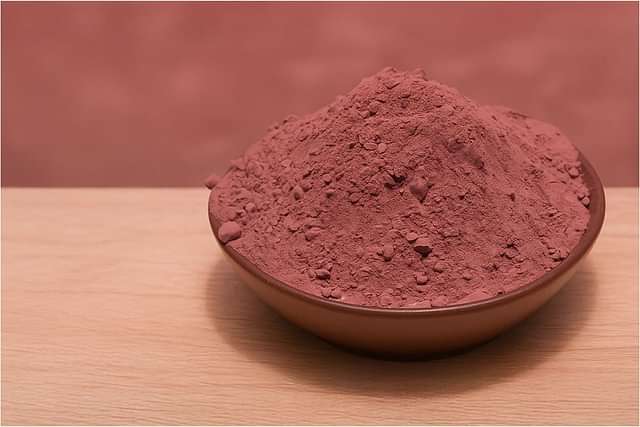
Loha Bhasma, or calcined iron, is prepared from purified iron, most traditionally from Kanta Loha (magnetite) or, where unavailable, Teekshna Loha (wrought iron). In Ayurveda, it is traditionally used as a supportive therapy for iron-deficiency anaemia (Pandu) and related weakness, following purification and calcination processes intended to make the preparation suitable for therapeutic use (Joshi et al., 2016).
Classically, Loha Bhasma is understood to act on Rakta dhatu (the blood tissue) and to support Balya, or strength-promoting, action (Joshi et al., 2016). Its dosha action is described inconsistently within Ayurvedic sources, with some associating it with Pitta and others with balancing aggravated Kapha associated with weakness (Klama).
Key Facts
| Feature | Details |
| Formulation name | Loha Bhasma
|
| Formulation type | Classical calcined mineral preparation (bhasma)
|
| Composition | Purified iron (Kanta Loha or Teekshna Loha), processed with Triphala kwatha and other substances used during purification
|
| Classical prepration | Prepared through repeated purification (Shodhana), processing (Bhanupaka and Sthalipaka), and calcination (Marana) |
| Also known as | Lauha Bhasma, calcined iron, iron calx, Teekshan Lauh Bhasma, Kanta Loha Bhasma
|
| Key active compounds | Iron-containing compounds, including iron oxides, formed during calcination. |
| Traditional uses | Iron-deficiency anaemia and associated weakness |
| Common forms | Powder, tablet
|
| General dosage | Follow the dose advised by a qualified Ayurvedic practitioner, based on a confirmed diagnosis; do not self-prescribe
|
| Best taken | With honey, ghee or warm water, as directed by a practitione |
| Key safety note | Not intended for treating anaemia unless iron deficiency has been confirmed. Use during pregnancy, breastfeeding or childhood only under appropriate medical supervision. |
Alternative Name of Loha Bhasma
Loha Bhasma is a mineral preparation whose name is transliterated from Sanskrit, so the names below are spelling variants and English equivalents rather than separate regional names.
- Lauha Bhasma
- Calcined iron
- Iron calx
- Teekshan Lauh Bhasma
- Kanta Loha Bhasma
Composition of Loha Bhasma
Loha Bhasma is prepared from purified iron using specific processing agents. Its composition is set out below.
- Iron (Kanta Loha or Teekshna Loha)
- Triphala churna (Haritaki, Bibhitaki and Amalaki)
- Cow's urine, used during traditional purification (Shodhana)
How is Loha Bhasma Made?
The preparation of Loha Bhasma involves the following processes to obtain therapeutically bioavailable purified iron calx. It can be prepared through various methods; one such method is this:
- Samanya Shodhana (Normal Purification): Raw iron is heated until red hot and then immersed in various herbal media like sesame oil, buttermilk, cow's urine, rice gruel, and horse gram decoction, repeated for seven times in each medium.
- Vishesha Shodhana (Special Purification): This purified loha is subjected to further purified by immersing in Triphala kwatha (a decoction prepared with Haritaki, Bibhitaki, and Amalaki). This process is again repeated seven times.
- Bhanupaka (Sun Exposure): This specially purified loha is mixed with Triphala kwatha, and dried under the sun for up to 3 days. This step is repeated seven times.
- Sthalipaka (Heating in Iron Pan): In this step again a triphala kwatha was taken 3 times that of loha and then the loha is placed in an iron pan with triphala kwatha for intense heating, allowing the water to evaporate. This process is repeated seven times.
- Putapaka (Calcination): The final stage involves triturating the lauha with freshly prepared Triphala kwatha and forming pellets or “chukrikas”. These pellets are heated in an earthen pot (Sarava samputikarana) inside a furnace at temperatures up to 650°C, a process repeated 20 times to achieve the desired Loha Bhasma quality. If this process is repeated for 100 times it is called Loha Bhasma Shataputi, which is therapeutically higher in quality.
Medicinal Properties of Loha Bhasma
Loha Bhasma is traditionally understood to have the following properties, based on its composition and classical use.
- Haematinic: provides iron, which is required for normal haemoglobin formation (National Institutes of Health, Office of Dietary Supplements, 2023).
- Antianaemic: traditionally used to support the management of iron-deficiency anaemia (Joshi et al., 2016).
- Rasayana (rejuvenative): traditionally associated with supporting strength and vitality in states of iron-deficiency weakness (Joshi et al., 2016).
Key Health Benefits of Loha Bhasma
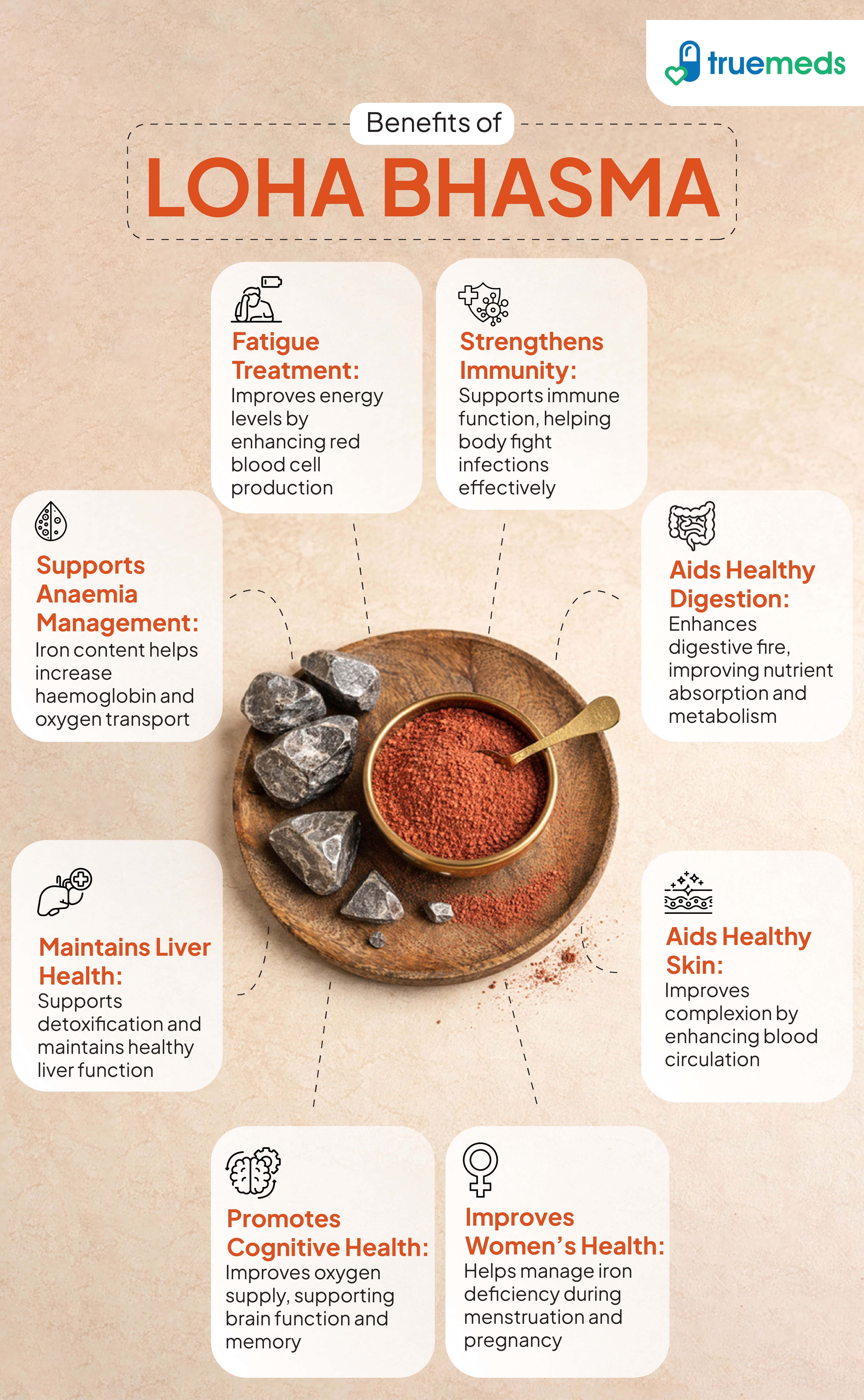
Loha Bhasma is traditionally used mainly to support iron status and haemoglobin formation, particularly in iron-deficiency anaemia. It is also traditionally associated with supporting energy, digestion and general wellbeing, while evidence for benefits beyond iron deficiency remains limited.
Supports Haemoglobin Formation
The calcined iron in Loha Bhasma is traditionally believed to support haemoglobin production, which may help ease fatigue and pallor linked to iron-deficiency anaemia. This benefit applies specifically to anaemia caused by iron deficiency, not to anaemia from other causes.
Helps Ease Iron-Deficiency Fatigue
Adequate iron supports oxygen transport around the body. In people with confirmed iron-deficiency, Loha Bhasma is traditionally used, under supervision, to help support energy levels and reduce fatigue linked to low iron.
Supports Digestion
In Ayurveda, Loha Bhasma is traditionally understood to support digestive fire (Agni), which may help ease occasional slow gut motility linked to weakness.
Traditionally Associated with Liver Support
Loha Bhasma has been studied for a possible supportive role in liver function in early research. This is not established human clinical evidence, and it is not a treatment for diagnosed liver conditions such as jaundice or fatty liver, which need proper medical assessment.
Supports Immunity
Loha Bhasma enables the production of immune cells, known as lymphocytes, which help fight off diseases. This helps attack invading viruses and bacteria known as pathogens. They work by providing antibodies and activating immune cells, leading to the eventual destruction of the pathogens. By doing so, Loha Bhasma helps prevent diseases and remedy prevalent ones.
Common Uses of Loha Bhasma
Loha Bhasma is traditionally used mainly to support iron needs and manage iron deficiency, including during recovery from illness or surgery and in people with iron loss related to menstruation. Its use should be guided by a qualified healthcare professional, particularly for confirmed anaemia or ongoing blood loss.
As Part of Managing Iron-Deficiency Anaemia
Practitioners traditionally include Loha Bhasma as part of a wider plan to manage confirmed iron-deficiency anaemia, alongside dietary advice and monitoring of haemoglobin and iron levels.
During Recovery from Illness or Surgery
It is sometimes used, under supervision, to support recovery of strength in people who are run down after illness or surgery and have confirmed iron deficiency.
To Support Iron Needs During Menstruation
It may be used, under medical guidance, to help replace iron lost through heavy or regular menstrual bleeding, once a doctor has confirmed iron deficiency as the cause of anaemia.
Precautions While Taking Loha Bhasma
Loha Bhasma contains iron in a concentrated form, so the following precautions apply.
Confirm the Cause of Anaemia First
Loha Bhasma is intended for anaemia caused by iron deficiency. It is not suitable for anaemia caused by other conditions, such as thalassaemia or chronic disease, where extra iron can be harmful. A doctor should confirm the cause of anaemia with a blood test before use.
Pregnancy and Breastfeeding
Adequate safety information for Loha Bhasma during pregnancy and breastfeeding is unavailable. Do not use it unless specifically prescribed after medical assessment of iron status and product suitability.
Children
Keep Loha Bhasma out of reach of children. Iron products can be seriously harmful, even in small amounts, if taken accidentally by a child. Use in children should only be considered under the direct supervision of a qualified healthcare professional with appropriate paediatric experience.
Kidney or Liver Conditions
People with kidney or liver disorders, or a history of either, should consult a doctor before taking Loha Bhasma.
Avoid Combining with Other Iron Products
Do not take Loha Bhasma alongside other iron supplements or iron-containing products unless a healthcare professional has advised it, to avoid excessive iron intake.
When to Stop and Seek Help
Stop use and seek medical advice if you notice severe or persistent nausea, vomiting, abdominal pain or other concerning symptoms. Dark stools can occur with iron-containing products and are not always a sign of a serious problem, but black, tarry stools, particularly with weakness, dizziness or abdominal pain, require prompt medical assessment.
How to Use Loha Bhasma
Loha Bhasma is available as a powder and as a tablet. How you take it depends on the form.
Powder
Take the prescribed amount of powder mixed with honey, ghee or warm water, as advised by your practitioner. Do not measure the dose yourself using an approximate spoon amount; ask your pharmacist or practitioner for an accurate measure.
Tablet
Swallow the tablet with warm water, honey or ghee, as advised by your practitioner, generally after a meal.
Recommended Dosage of Loha Bhasma
Dosage must always be set by a qualified Ayurvedic practitioner or doctor, after confirming iron-deficiency anaemia with a blood test. The general guidance below must be confirmed with a practitioner and never used to self-dose.
Children
Loha Bhasma should not be given to children except under the direct supervision of a qualified healthcare professional with appropriate paediatric experience, with the dose calculated individually. Keep it stored well out of reach of children at all times, as accidental iron ingestion can be dangerous.
Teenagers
There is limited published dosage information for teenagers. Use should only take place under a qualified practitioner's supervision, following a confirmed diagnosis.
Adults
Adults are typically guided towards 125 mg to 250 mg, once or twice a day, taken with honey, ghee or warm water, though the exact dose and duration should be set by a practitioner based on individual iron levels.
Elderly
Older adults should be assessed individually, particularly if they have kidney or liver conditions, and a practitioner may recommend a different dose or closer monitoring.
Disclaimer: This information is for general education only and is not a substitute for professional medical advice. Dosage varies by individual health condition. Consult a qualified Ayurvedic practitioner or doctor before starting Loha Bhasma, and do not use it as a replacement for prescribed treatment.
Side Effects of Loha Bhasma
Digestive side effects can occur with iron-containing preparations, particularly at higher doses (Tolkien et al., 2015). The side effects below may occur and should be monitored.
Digestive Upset
Nausea, wind, burping, constipation or vomiting can occur, particularly at higher doses. Taking it with food may help.
Dark Stools
Dark stools are an expected and generally harmless effect of iron (Tolkien et al., 2015). However, if stools become tarry, black and foul-smelling, this can occasionally signal a different problem, and you should seek medical advice.
Skin Reactions
Rarely, a skin rash can occur. Stop use and seek medical advice if this happens.
Interaction of Loha Bhasma With Other Drugs
Iron preparations can interact with several common medicines. Tell your doctor about everything you take before starting Loha Bhasma.
Thyroid Medicines
Iron can reduce the absorption of thyroid hormone replacement (National Institutes of Health, Office of Dietary Supplements, 2023). Leave a gap of several hours between the two, as advised by your doctor.
Certain Antibiotics
Iron can reduce the absorption of some antibiotics, including tetracyclines and quinolones (Lehto et al., 1994). These should generally be taken at a different time of day, as advised by your doctor or pharmacist.
Antacids and Acid-Reducing Medicines
Antacids and acid-reducing medicines can reduce iron absorption (National Institutes of Health, Office of Dietary Supplements, 2023). Space these apart from Loha Bhasma as your doctor or pharmacist advises.
Other Iron-Containing Products
Taking Loha Bhasma alongside other iron supplements or iron-fortified products can increase total iron intake and may lead to excessive iron levels (National Institutes of Health, Office of Dietary Supplements, 2023). Do not combine them without medical advice.
Storage of Loha Bhasma
Store Loha Bhasma in an airtight container, in a cool, dry place away from direct sunlight and moisture. Keep it well out of reach and sight of children at all times, given the risk of serious harm from accidental iron ingestion. Do not use beyond the expiry date printed on the pack.
Key Takeaways
- Loha Bhasma is a classical Ayurvedic preparation made from purified, calcined iron, traditionally used to support iron-deficiency anaemia and associated weakness.
- It is prepared from Kanta Loha or Teekshna Loha, using Triphala and other substances during traditional purification and processing.
- It is only appropriate for anaemia caused by iron deficiency; a doctor should confirm this with a blood test before use.
- It is not recommended for children without direct practitioner supervision, and should be kept well out of children's reach.
- Possible side effects include constipation, nausea and dark stools; these should be monitored, and use should always be under medical supervision.
- The typical adult dose is 125 to 250 mg, once or twice a day, though dosage must be confirmed by a practitioner and varies by individual.
FAQs
Can Loha Bhasma Increase Haemoglobin?
Can Loha Bhasma Be Taken During Menstruation?
What Should I Do if I See No Results with Loha Bhasma?
Is Loha Bhasma Safe to Take?
Can Loha Bhasma Help with Fever?
Can Loha Bhasma Be Taken for Anaemia?
References
- Joshi, N., Dash, M. K., Dwivedi, L., & Khilnani, G. D. (2016). Toxicity study of Lauha Bhasma (calcined iron) in albino rats. Ancient Science of Life, 35(3), 159–166. https://doi.org/10.4103/0257-7941.179870
- Lehto, P., Kivistö, K. T., & Neuvonen, P. J. (1994). The effect of ferrous sulphate on the absorption of norfloxacin, ciprofloxacin and ofloxacin. British Journal of Clinical Pharmacology, 37(1), 82–85. https://doi.org/10.1111/j.1365-2125.1994.tb04245.x
- National Institutes of Health, Office of Dietary Supplements. (2023). Iron: Health professional fact sheet. https://ods.od.nih.gov/factsheets/Iron-HealthProfessional/
- Tolkien, Z., Stecher, L., Mander, A. P., Pereira, D. I. A., & Powell, J. J. (2015). Ferrous sulfate supplementation causes significant gastrointestinal side-effects in adults: A systematic review and meta-analysis. PLOS ONE, 10(2), e0117383. https://doi.org/10.1371/journal.pone.0117383
Explore other categories
Latest health articles




Top Health Essentials


Top-selling ayurvedic products












Disclaimer
Top-Selling Medicines:
...View more
Top-OTC medicines:
...View more
Top-selling healthcare devices:
...View more
Company
About UsHealth ArticleHealth StoriesHealth LibraryDiseases & Health ConditionsAyurvedaUnderstanding Generic MedicinesAll MedicinesAll BrandsNeed HelpFAQSecuritySavings CalculatorAdvertise with UsSubscribe
Registered Office Address
Grievance Officer
Download Truemeds


Contact Us
Our customer representative team is available 7 days a week from 9 am - 9 pm.
v4.28.13

2026 - Truemeds | All rights reserved. Our content is for informational purposes only. See additional information.

Our Payment Partners