

- Medicines
- Personal Care
- Skin Cream
- Sunscreen
- Face Wash
- Skin and Body Soap
- Acne Care
- Body Lotions
- Moisturising Lotion
- Moisturising Cream
- Mosquito Repellent
- Moisturising Gel
- Body Wash
- Hair Oils
- Hair Shampoo
- Hair Conditioners
- Hair Supplements
- Hair Colour
- Hair Serum
- Hair Mask
- Hair Solutions
- Baby Diapers and Wipes
- Baby Lotion and Moisturising Cream
- Baby Bath Essentials
- Baby Skin Care
- Baby and Infant Food
- Baby Healthcare
- Women Multivitamins
- Ovulation Test Kit and Women Intimate Care
- Sanitary Pads
- Nutritional Drinks
- Condoms
- Lubricants
- Massage Gels
- Personal Body Massagers
- Men Performance Booster
- Sexual Health Supplements
- Massage Oils
- Ayurveda
- Tooth Paste
- Mouth Ulcer Gel
- Mouthwash
- Toothache and Gum Pain
- Tooth Brush
- Gargle Solution
- Orthopaedic Supports
- Adult Diapers
- Footwear
- Mobility and Support Accessories
- Urinary Support and Care
- Health Conditions
- Bone and Joint Care
- Digestive Care
- Eye Care
- Pain Relief
- Smoking Cessation
- Liver Care
- Stomach Care
- Cold and Cough
- Heart Care
- Kidney Care
- Piles, Fissures & Fistula
- Respiratory Care
- Mental Wellness
- Derma Care
- Pre and Probiotics
- Acidity
- Gas
- Constipation
- Loose Motion/Diarrhoea
- Digestive Fibres
- Digestive Enzymes
- Eye Lubricant Drops
- Lens Solution
- Safety Eye Wear
- Eye Cream
- Eye Vitamins and Supplements
- Eye Drops
- Eye Ointment and Gel
- Nicotine Patch
- Nicotine Gum
- Nicotine Lozenges
- Cough Syrups
- Chest Rubs and Balms
- Nasal Spray
- Lozenges
- Inhalant Capsules
- Cold and Cough Tablets
- Vitamins & Supplements
- Diabetes Care
- Healthcare Devices
- Homeopathic Medicine
- Health Guide
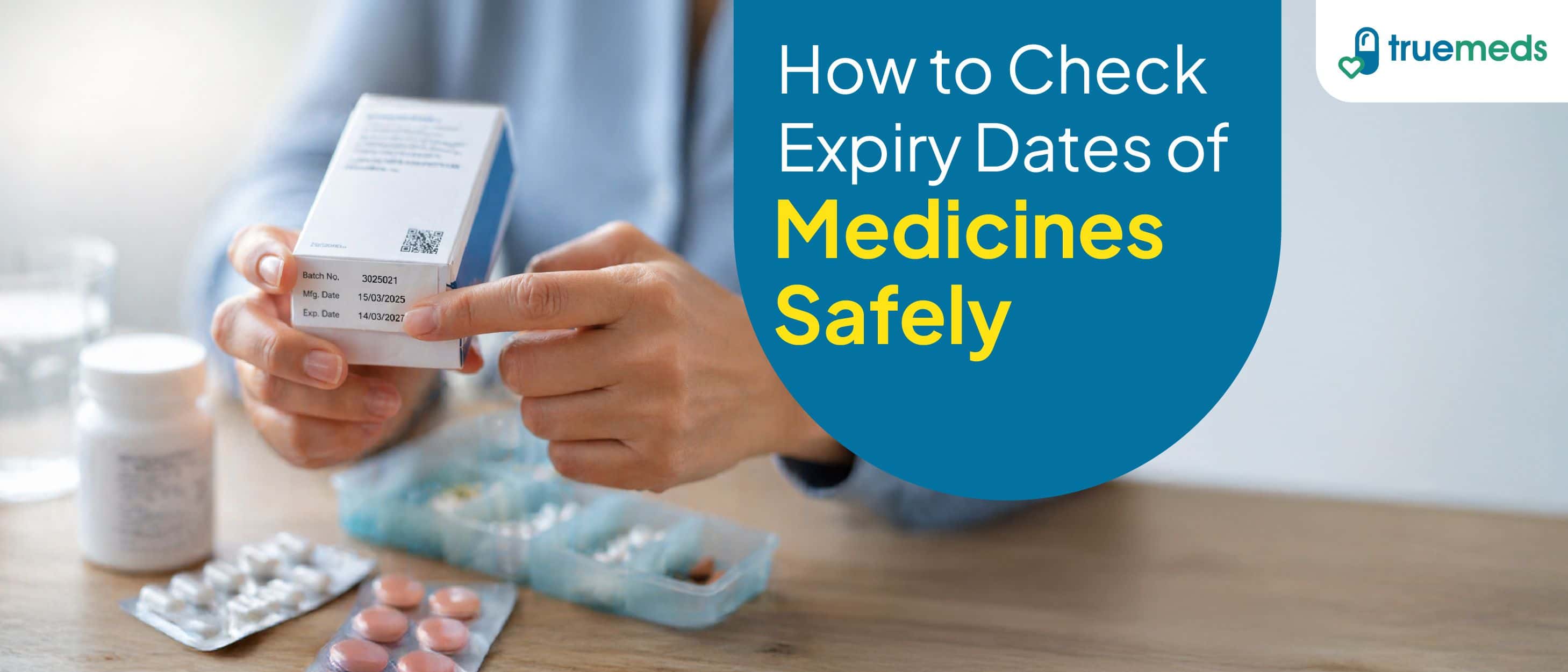
How to Check Expiry Dates and Avoid Using Expired Medicines
Last updated on :06 Jul, 2026
Read time :12 min
Some take medicines to manage minor ailments, while others take them for chronic illnesses. The risk lies in using them without checking whether they are still safe to take. The expiry date printed on a medicine is the manufacturer’s guarantee that the product is both effective and safe up to that point. Once that date has passed, there is no such guarantee [1]. So one must know how to read expiry labels correctly and safely dispose of medicines that are no longer fit for use.
Most people check the expiry date on food before consuming it, but many rarely do the same for medicines kept at home. A strip of tablets left in a drawer for months, an old syrup bottle reused during illness, or eye drops carried long after opening may no longer work as intended and, in some cases, may become unsafe to use. The expiry date printed on a medicine is the manufacturer’s guarantee that the product remains safe and effective up to that point when stored correctly [1]. Knowing how to read expiry labels properly, store medicines safely, and recognise when a medicine should be discarded is an important part of using medicines responsibly.
Why Expiry Dates Matter
Manufacturers of pharmaceuticals use accelerated stability testing to test how medicines react to various environmental stressors (heat, light, and moisture) over time. This testing determines at what point in time a medication will lose potency, become unstable, or become unsafe [2].
Medicines are stored in a wide range of conditions, from air-conditioned rooms to shops and homes without temperature control, particularly during summer when temperatures can exceed 40°C. Heat and humidity are among the most damaging factors for many common medicines, including paracetamol, antibiotics, and insulin [2]. A medicine stored incorrectly may lead to changes in its chemical composition and reduced efficiency, even before its printed expiry date.
How to Read Expiry Labels and Batch Codes
Understanding Expiry Date Wording
Expiry dates on medicines are printed in different formats and with different wording. The meaning of each phrase matters:
- “Expiry: MM/YYYY” or “Exp: MM/YYYY”: It means the medicine will be safe until the last day of the specified month.
- “Use before” or “Use by”: It means to discard the product at the beginning of the specified month. For instance, “Use By March 2026” means that the product should be discarded at the beginning of that month; therefore, the usable period would be through the end of February 2026.
- “Date of Manufacture” (DOM) without a printed expiry: Sometimes only DOM is mentioned with shelf life but no expiration date. In that case, you need to determine the expiration date yourself depending on the shelf life.
- “In-use expiry” or “Discard after opening”: This appears on liquid medicines, eye drops, and syrups. Once opened, many of these products have a much shorter shelf life than the printed date. Eye drops, for example, are typically discarded 28 days after opening, even if the manufacturer’s date on the bottle shows a later date [3].
Note: In India, some medicine strips print only the manufacturing date (MFG) alongside the shelf life in months. Example if the MFG is Jan 2024 and the shelf life is 24 months. It means the medicine is valid until January 2026. If the manufacturing date is present but the shelf life is not stated on the packaging, ask your pharmacist to confirm the expiry date before using.
Understanding Batch Numbers
Every medicine manufactured carries a batch number (also called a lot number) printed alongside the expiry date. The batch number is not directly relevant to a patient’s daily use, but it matters in one serious situation: when a medicine recall is announced. This is when a pharmaceutical company removes a medicine from the market or issues a warning due to defects, safety concerns, or labelling issues. The Central Drugs Standard Control Organisation (CDSCO) and state drug regulators periodically issue alerts recalling specific batches of medicines found to be substandard or contaminated [4].
How to Check Expiry Date
Finding the expiry date should take only a few seconds, but the print is sometimes small and faded:
- On blister strips (the foil-sealed strips common for tablets and capsules), the expiry date is usually printed on the foil backing. Check each strip individually if you have loose strips from the same packet, as different strips in a packet can occasionally have different printing.
- On bottles and syrups, look at the bottom of the label, the bottle cap area, or the crimped seal at the top of the bottle.
- If the expiry date is not visible because of the peeled label, faded ink, or damaged packaging, do not use the medicine. When in doubt, dispose of it and buy new from your pharmacist.
- For medicines kept in a home medicine box, check all expiry dates at least once every three months, particularly before the summer months when temperatures are high.
Risks of Using Expired Medicines
Most people use expired medicine with the belief that the worst that can happen is that the medication will not work. In many cases, that is true, but not always. The risk varies considerably by medicine type.
- Antibiotics. An antibiotic that has degraded in potency may not clear an infection fully, allowing resistant bacteria to survive and multiply. Sub-potent antibiotics are one of the contributing factors to antibiotic resistance [1].
- Insulin and other injectables. Insulin that has been stored incorrectly or used beyond its in-use expiry date may not control blood glucose effectively. This is a serious risk for people with diabetes. Once opened, insulin pens and vials have specific in-use storage limits that vary by product and manufacturer instructions, commonly ranging from around 28 to 42 days [3]. Different insulin brands used in India may also have different in-use periods. For example, certain Huminsulin products are generally recommended for use within about 28 days after opening, while some long-acting insulin products such as Tresiba may remain stable for longer periods when stored correctly. Always follow the storage and expiry instructions provided with the specific insulin product you use.
- Eye drops. Once opened, eye drops can become contaminated with bacteria if not handled hygienically. Using contaminated eye drops risks a serious eye infection. It is recommended to discard all multi-dose eye drops 28 days after opening, regardless of the manufacturer’s printed date [3].
- Liquid medicines and syrups. Oral liquids generally have a shorter shelf life after opening than tablets or capsules. Many reconstituted antibiotic suspensions have a short shelf life (often 7–14 days), depending on the specific medication [3].
- Emergency medicines. Medicines kept for emergencies, such as a glyceryl trinitrate (GTN) tablet for chest pain, or asthma inhalers, must be in date and stored correctly when they are needed. An expired emergency medicine may not be effective at a critical moment.
For most other solid medicines (tablets and capsules stored in intact blister packs in cool, dry conditions), the risk of a single expired dose causing toxicity is low, but this does not mean they should be used. The more relevant concern is reduced effectiveness.
Note: Do not self-medicate with expired medicines in any situation involving infection, a chronic condition such as diabetes or blood pressure, or an emergency. If you have run out of a valid prescription medicine, contact your doctor rather than using an expired alternative.
Home Medicine Medicine Box Checklist
Carry out this check at least once every three months. Go through every item in your medicine box and check for the following:
- Is the expiry date clearly visible and readable?
- Has the expiry date passed?
- For liquids, eye drops, and syrups, was an opening date recorded? Has the in-use expiry passed?
- Does the medicine look, smell, or feel different from when it was purchased? Discolouration, unusual smell, clumping, or separation are all signs of spoilage; discard, irrespective of expiry date [2].
- Is the packaging intact? Are blister foils punctured or peeling?
- Is the medicine being stored correctly as per the storage conditions mentioned in the original package?
- For medicines taken only occasionally, such as antacids, painkillers, or antiallergics, are you still prescribed to use these medicines?
- Are all medicines kept out of reach and sight of children?
- Have you checked the CDSCO website or asked your pharmacist about any recent recalls on medicines you are keeping?
How to Dispose of Expired Medicines Safely
Most people flush expired medicines down the sink, flush them in the toilet, or throw them loosely in the dustbins. All these acts carry risks to the environment, to children, and to others who may come across the discarded medicines [1]. In India, expired and unused medicines are classified as hazardous pharmaceutical waste under the Bio-Medical Waste Management Rules, 2016. The following approach is safer and aligned with general pharmacy guidance:
For Tablets and Capsules
Remove tablets from blister packs or bottles. Mix them with an unpleasant, inedible substance such as used coffee grounds, cat litter, or soil. This makes them unappealing to children or animals [6]. Place the mixture in a sealed plastic bag or container. Dispose of this sealed bag in the dustbin, not in a manner where it is accessible to children. Do not flush tablets down the toilet. Improper disposal of pharmaceuticals may contribute to environmental contamination of water systems [7].
For Liquids and Syrups
Do not pour liquid medicines down the drain or into the toilet. Mix those with an inedible substance such as soil or coffee grounds, seal in a bag, and place in the dustbin.
For Inhalers and Injections
Inhalers should not be punctured before disposal, as the propellant can be flammable. Syringes and needles (sharps) must be placed in a puncture-proof container (a thick plastic bottle with a secure lid is commonly used at home) and taken to a pharmacy or hospital that accepts sharps for safe disposal. Do not place loose needles in household waste [8].
Signs You Should Definitely Discard a Medicine
- Cracked tablets
- Cloudy liquids (when not expected)
- Change in smell
- Leakage or damaged packaging
- Missing label or unreadable expiry date
Common Mistakes to Avoid
- Using medicines just because they “look fine”
- Ignoring the in-use expiry after opening
- Storing medicines in kitchens or bathrooms in heat and humidity
- Keeping loose tablets without original packaging
- Flushing medicines without checking disposal guidance
Using Pharmacy Take-Back
A few pharmacies and hospitals accept unused or expired medicines for safe disposal. Ask your regular pharmacist whether they offer this service. This is the preferred method where it is available, as medicines collected this way are disposed of by trained professionals [9].
When this guide may not apply: This information does not replace instructions provided with specific medicines. Always follow the label or your doctor’s advice if it differs from general guidance.
Conclusion
Checking expiry dates is a small habit that takes only a few seconds but can prevent an emergency situation. The key points are simple: check expiry dates regularly, do not use any medicine whose date has passed or whose appearance has changed. Store medicines in cool and dry conditions away from heat and children, and dispose of expired medicines safely rather than flushing or discarding them loosely.
DISCLAIMER: This article is intended for general informational and educational purposes only. It does not constitute medical advice, diagnosis, or treatment. The information provided is of a general nature and may not apply to your specific medicines or health situation. Always consult your doctor, pharmacist, or a qualified healthcare professional before making decisions related to your medicines.
References
[1] U.S. Food and Drug Administration. (2024, October 31). Don’t be tempted to use expired medicines. FDA. https://www.fda.gov/drugs/special-features/dont-be-tempted-use-expired-medicines
[2] Care Home Medicines Optimisation Team, NHS Bedfordshire, Luton and Milton Keynes Integrated Care Board (BLMK ICB). (2024). Expiry dates of medication – good practice guidance for care homes. https://medicines.bedfordshirelutonandmiltonkeynes.icb.nhs.uk/wp-content/uploads/2024/07/BLMK-ICB-Expiry-dates-of-Medication-July-2024.pdf
[3] Drug Information Services Committee, Pharmaceutical Services Division, Sabah State Health Department, Ministry of Health Malaysia. (2021). Guidance on expiry dates and storage of medicines (1st ed.). Jabatan Kesihatan Negeri Sabah. https://jknsabah.moh.gov.my/hqe2/pusat-media/muat-turun/category/40-garis-panduan?download=321:versi-bahasa-lnggeris-guidance-on-expiry-dates-and-storage-of-medicines-jkn-sabah-2021-dec-2021
[4] Central Drugs Standard Control Organisation (CDSCO). (2024). Drug alerts and recalls. Ministry of Health and Family Welfare, Government of India. https://cdsco.gov.in/opencms/opencms/en/Alerts/
[5] Anderson, L. A. (2024, August 1). Drug expiration dates—Are expired drugs still safe to take? Drugs.com. https://www.drugs.com/article/drug-expiration-dates.html
[6] Nakiganda, R., et al. (2023). Safe disposal of unused medicine among health professions students at Makerere University: Knowledge, practices and barriers. Research Square. https://doi.org/10.21203/rs.3.rs-2525937/v1
[7] Kinrys, G., Gold, A. K., Worthington, J. J., & Nierenberg, A. A. (2018). Medication disposal practices: Increasing patient and clinician education on safe methods. The Journal of International Medical Research, 46(3), 927–939. https://doi.org/10.1177/0300060517738681
[8] Center for Devices, & Radiological Health. (2023, August 18). DOs and DON’Ts of Proper Sharps Disposal. U.S. Food and Drug Administration. https://www.fda.gov/medical-devices/safely-using-sharps-needles-and-syringes-home-work-and-travel/dos-and-donts-proper-sharps-disposal
[9] Munshi, R., Dhiman, A., & Maurya, M. (2023). A cross-sectional survey to assess the drug disposal practices of unused and expired medicines among lay public visiting a tertiary care hospital in an urban metropolis. Indian Journal of Physiology and Pharmacology, 67(29), 29–35. https://doi.org/10.25259/ijpp_486_2022
[10] Cpcb.nic.in. (n.d.). Bio-medical Waste Management Rules, 2016. Government of India, Ministry of Environment, Forest and Climate Change. https://cpcb.nic.in/uploads/Projects/Bio-Medical-Waste/Bio-medical_Waste_Management_Rules_2016.pdf















Disclaimer
Our healthcare experts have carefully reviewed and compiled the information presented here to ensure accuracy and trustworthiness. It is important to note that this information serves as a general overview of the topic and is for informational purposes only. It is not intended to diagnose, prevent, or cure any health problem. This page does not establish a doctor-patient relationship, nor does it replace the advice or consultation of a registered medical practitioner. We recommend seeking guidance from your registered medical practitioner for any questions or concerns regarding your medical condition.
Recent Articles

Company
About UsHealth ArticleHealth StoriesHealth LibraryDiseases & Health ConditionsAyurvedaUnderstanding Generic MedicinesAll MedicinesAll BrandsNeed HelpFAQSecuritySavings CalculatorAdvertise with UsSubscribe
Registered Office Address
Grievance Officer
Download Truemeds


Contact Us
Our customer representative team is available 7 days a week from 9 am - 9 pm.
v4.28.3

2026 - Truemeds | All rights reserved. Our content is for informational purposes only. See additional information.
Our Payment Partners