

- Medicines
- Personal Care
- Skin Cream
- Sunscreen
- Face Wash
- Skin and Body Soap
- Acne Care
- Body Lotions
- Moisturising Lotion
- Moisturising Cream
- Mosquito Repellent
- Moisturising Gel
- Body Wash
- Hair Oils
- Hair Shampoo
- Hair Conditioners
- Hair Supplements
- Hair Colour
- Hair Serum
- Hair Mask
- Hair Solutions
- Baby Diapers and Wipes
- Baby Lotion and Moisturising Cream
- Baby Bath Essentials
- Baby Skin Care
- Baby and Infant Food
- Baby Healthcare
- Women Multivitamins
- Ovulation Test Kit and Women Intimate Care
- Sanitary Pads
- Nutritional Drinks
- Condoms
- Lubricants
- Massage Gels
- Personal Body Massagers
- Men Performance Booster
- Sexual Health Supplements
- Massage Oils
- Ayurveda
- Tooth Paste
- Mouth Ulcer Gel
- Mouthwash
- Toothache and Gum Pain
- Tooth Brush
- Gargle Solution
- Orthopaedic Supports
- Adult Diapers
- Footwear
- Mobility and Support Accessories
- Urinary Support and Care
- Health Conditions
- Bone and Joint Care
- Digestive Care
- Eye Care
- Pain Relief
- Smoking Cessation
- Liver Care
- Stomach Care
- Cold and Cough
- Heart Care
- Kidney Care
- Piles, Fissures & Fistula
- Respiratory Care
- Mental Wellness
- Derma Care
- Pre and Probiotics
- Acidity
- Gas
- Constipation
- Loose Motion/Diarrhoea
- Digestive Fibres
- Digestive Enzymes
- Eye Lubricant Drops
- Lens Solution
- Safety Eye Wear
- Eye Cream
- Eye Vitamins and Supplements
- Eye Drops
- Eye Ointment and Gel
- Nicotine Patch
- Nicotine Gum
- Nicotine Lozenges
- Cough Syrups
- Chest Rubs and Balms
- Nasal Spray
- Lozenges
- Inhalant Capsules
- Cold and Cough Tablets
- Vitamins & Supplements
- Diabetes Care
- Healthcare Devices
- Homeopathic Medicine
- Health Guide

Understanding OTC vs Prescription Medicines
Last updated on :27 May, 2026
Read time :12 min
Every time you walk into a pharmacy store, you get two broad categories of medicine placed on the shelves: those you can pick up yourself and those the pharmacist will only hand over if you have a prescription. Most of us instinctively understand this difference, yet the reasoning behind it and how these medicines should be used is less commonly understood.
What Are OTC and Prescription Medicines?
1. Over-the-Counter (OTC) Medicines
OTC medicines are also called nonprescription medicines. You can purchase these without a doctor’s prescription [1]. They are intended to treat the most common conditions that you can reasonably identify and manage on your own , such as a headache, mild fever, seasonal allergies, heartburn, or a common cold. The conditions OTC medicines target are generally self-limiting, meaning they tend to resolve on their own, and the medicines are formulated to relieve symptoms.
OTC medicines are considered safe and effective for use by the general population when used as directed on the label [1]. Each OTC product must carry a standardised Drug Facts label that lists the active ingredients, uses, warnings, directions, and dosage information [2]. This label is the primary guide for a patient using an OTC medicine independently. Reading it fully, not just the front of the box, is essential every time a new OTC product is used.
Common examples of OTC medicines include paracetamol (acetaminophen) for pain and fever, ibuprofen for inflammation and mild pain, antacids for acidity, antihistamines for allergies, and oral rehydration salts (ORS) for dehydration due to diarrhoea or heat exposure, and should be used according to WHO guidelines.
2. Prescription Medicines
Prescription medicines are those that can only be obtained with a written prescription from a licensed doctor. The requirement for a prescription exists because these medicines are more complex to use safely. They may have a narrow margin between a therapeutic dose and a harmful one, require a confirmed diagnosis before use, interact significantly with other medicines, or require monitoring of the patient’s response, depending on the condition.
Antibiotics (prescribed to treat specific bacterial infections, not colds or viral illnesses), medicines for blood pressure, diabetes, or thyroid conditions, anticoagulants (blood thinners), mental health medications, and medicines used in cancer treatment are only available with a prescription. These are all treatments where a wrong dose, an incorrect diagnosis, or an undetected interaction could cause serious harm.
It is worth noting that some medicines sit in both categories at different strengths. For example, ibuprofen is available over-the-counter at standard doses for short-term pain relief and by prescription at higher doses for conditions such as rheumatoid arthritis. The active ingredient is the same, but the dose and context are different.
Differences Between the Two
1. Safety profile and margin of error
OTC medicines have been assessed to be safe when used as directed by most adults without clinical supervision. Prescription medications, on the other hand, usually need to be taken with more precision in dosage or monitored more closely due to the narrower margin between what is therapeutic and toxic.
2. Diagnosis requirement
Generally, prescription medications are taken for a diagnosed condition. The doctor will determine whether the prescribed medication is correct for the patient’s diagnosis. This degree of accuracy can only be relied on from a certified professional.
3. Potential for misuse
There are several prescription medications, such as opioids, sedatives, and antibiotics. These medicines pose a significant risk for misuse, dependence, or resistance if they are taken without medical supervision. By limiting availability to these prescription-only medicines, it is possible to limit the risks associated with improper use.
4. Monitoring needs
Some prescription medicines require blood tests, monitoring of kidney or liver function, or regular reviews of dosage. OTC medicines do not carry this requirement because their effects at the labelled doses are predictable.
| Factor | OTC Medicines | Prescription Medicines |
| Safety profile | Assessed as safe for self-use at labelled doses | Requires precise dosing and often clinical oversight |
| Diagnosis requirement | Suitable for self-identified, self-limiting conditions | Require a confirmed diagnosis by a doctor |
| Potential for misuse | Lower risk | Higher risk of misuse, dependency, or resistance (e.g. opioids, sedatives, antibiotics) |
| Monitoring needs | No monitoring required | May require regular blood tests, organ function monitoring, or dose review over time |
| Examples | Paracetamol, ibuprofen (standard dose), antacids, and antihistamines | Antibiotics, antihypertensives, anticoagulants, insulin, and psychiatric medications |
The Risks of Self-Medication
Irrational use of medicines, which includes unsupervised self-medication with prescription drugs, leads to improper treatment, unintended side effects, delayed recovery, increased health expenditure, hospitalisations, and in some cases, premature death [3].
Self-medicating with OTC medicines can be appropriate for minor, self-limiting conditions when used as directed, provided the label is read carefully and followed. The risks arise when:
- A person uses an OTC medicine for a condition it was not meant to treat, for example, taking an antihistamine as a primary treatment for a bacterial or viral infection instead of appropriate therapy.
- Prescription medicines are obtained without a doctor’s involvement, from a friend, a leftover supply, or a pharmacy that dispenses without a valid prescription. In these situations, there is no diagnosis, no dosage review, and no assessment of interactions with other medicines being done.
- The same active ingredient is present in multiple products being taken simultaneously. This is a common cause of accidental overdose, particularly with paracetamol, which is an ingredient in many cold, flu, and multi-symptom medicines sold over-the-counter [2].
- OTC medicines are taken for longer than recommended without reassessing whether a doctor should be consulted. Persistent symptoms despite OTC treatment may indicate an underlying condition that needs professional diagnosis.
Note: Do not use someone else’s prescription medicine, or reuse an old prescription for a newly experienced health problem, or obtain prescription medicines without a valid prescription.
Special Populations That Require Extra Caution
Self-medication carries different levels of risk depending on who is taking the medicine. For certain groups, even medicines that are widely considered safe in the general population can cause harm.
1. Children
Children metabolise medicines differently from adults, and their doses cannot be estimated without proper guidance. A common and preventable risk is giving two products that both contain the same active ingredient, such as paracetamol, simultaneously, which can result in accidental overdose. Always consult a paediatrician before giving any medicine to a child, and use only the measuring device provided with the product [7].
2. Elderly
Ageing reduces the efficiency of the liver and kidneys, meaning standard adult doses can accumulate to higher levels in the body than intended. Older patients taking multiple medicines are at significantly greater risk of drug interactions and adverse reactions, a problem known as polypharmacy. Any new OTC product should be discussed with a doctor before use [8].
3. Pregnant Women
Research on OTC medicine safety in pregnancy is limited, and many widely available products have not been adequately studied in this population. The risk is greatest in the first trimester, when fetal organ development is most sensitive to external substances. Pregnant women should not assume an OTC medicine is safe during pregnancy and should consult their doctor before taking anything [9].
4. People with Chronic Illness
Patients managing conditions such as diabetes, hypertension, kidney disease, or heart disease face a higher risk from self-medication because their underlying condition changes how medicines are processed in the body. Common OTC medicines such as ibuprofen in someone with kidney disease can cause serious harm in this group. Any new medicine or supplement should be reviewed by a doctor first [10].
How to Use an OTC Medicine Safely
The Drug Facts label on every OTC medicine contains the information needed to use it safely. The FDA requires this label to be in a standard format so that patients can consistently locate the information they need. The sections to pay particular attention to are:
Active ingredients
This tells you what the medicine actually contains and what it does. If you are taking more than one OTC product, check both labels to ensure you are not accidentally taking the same active ingredient twice.
Uses
This section tells you the specific symptoms or diseases the product is intended to treat or prevent. It helps you confirm that the medicine you are picking up actually matches the health problem you are trying to address. Reading helps choose the right product.
Warnings
This section lists who should not take the medicine, conditions that require a doctor’s advice before use, possible drug interactions, when to stop taking the product, and when to seek medical help.
Directions
Follow the dosage instructions precisely. Taking more than the directed dose does not produce better results; it increases the risk of side effects and organ damage.
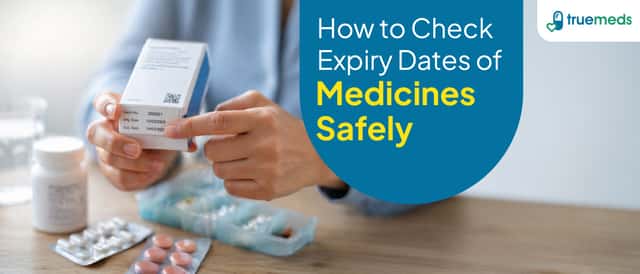
Expiry date
Do not use a medicine past its expiry date. Expired medicines may lose effectiveness over time. In rare cases, certain medicines may undergo chemical changes [2].
When to Consult a Doctor or Pharmacist
Consult your doctor if:
- You are taking medicines for heart, liver, or kidney disease, high blood pressure, or diabetes, as many OTC medicines interact with medications for these conditions.
- Your symptoms have not improved after taking an OTC medicine as directed for the recommended duration.
- You are pregnant, breastfeeding, or giving medicines to a child; all of these groups require specific care when taking any medicine.
- Your symptoms are severe, worsening, or accompanied by high fever, difficulty breathing, chest pain, or neurological changes such as confusion.
- You are taking prescription medicines and want to add an OTC product. Before combining any medicines, always seek a doctor’s view.
- You are unsure whether a symptom requires a diagnosis rather than symptomatic treatment.
Conclusion
There is a reason some medicines are available over-the-counter, while others are available only with a prescription. This is because of the level of risk, the need for diagnosis, and the level of supervision needed to use a medicine safely. OTC medicines are safe and work for the self-limiting conditions they are meant to treat, as long as the instructions on the label are followed. Choosing between OTC and prescription medicines should always be guided by the severity of symptoms, duration, and individual health conditions.
DISCLAIMER: This article is provided for general informational and educational purposes only. It does not constitute medical advice, diagnosis, or treatment and is not a substitute for consultation with a qualified healthcare professional. Medicine regulations, classifications, and labelling requirements vary between countries. Always consult your doctor before starting, changing, or stopping any medicine, whether prescription or over-the-counter.
References
[1] U.S. Food and Drug Administration. (2018, May 16). Understanding over-the-counter medicines. https://www.fda.gov/drugs/buying-using-medicine-safely/understanding-over-counter-medicines
[2] U.S. Food and Drug Administration. (2024). The over-the-counter drug facts label. https://www.fda.gov/drugs/understanding-over-counter-medicines/over-counter-drug-facts-label
[3] Cracowski, J.-L., Muller, S., Anglade, I., Bonnefond, G., Bouhanick, B., Bouquet, S., Cabut, S., Daynès, P., Denis, B., Durand, D., Jonville-Béra, A.-P., Lahouegue, A., Léo, M., Micallef, J., Molimard, M., Penfornis, C., & Querol-Ferrer, V. (2022). Prevention of risks associated with inappropriate use/unnecessary consumption of medicines. Therapie, 77(1), 79–88. https://doi.org/10.1016/j.therap.2022.01.003
[4] Schmiedl, S., Rottenkolber, M., Hasford, J., Rottenkolber, D., Farker, K., Drewelow, B., Hippius, M., Saljé, K., & Thürmann, P. (2014). Self-medication with over-the-counter and prescribed drugs causing adverse-drug-reaction-related hospital admissions: Results of a prospective, long-term multi-centre study. Drug Safety, 37(4), 225–235. https://doi.org/10.1007/s40264-014-0141-3
[5] Narang, P., Garg, V., & Sharma, A. (2023). Regulatory, safety and economic considerations of over-the-counter medicines in the Indian population. Discover Health Systems, 2(1), 17. https://doi.org/10.1007/s44250-023-00032-y
[6] A STUDY OF OTC DRUGS IN INDIA AND REGULATIONS GOVERNING THEM. (2024). International Journal of Biology Pharmacy and Allied Sciences, 13(4). https://doi.org/10.31032/ijbpas/2024/13.4.7946
[7] Karami, S., Asonye, C., Pinnow, E., Pratt, V., McCulley, L., Dwumfour, N., & Zhou, E. H. (2023). Trends in pediatric nonprescription analgesic/antipyretic exposures during the COVID-19 pandemic. Clinical Toxicology, 61(3), 190–199. https://doi.org/10.1080/15563650.2022.2158847
[8] Rafati, S., Baniasadi, T., & Dastyar, N. (2023). Prevalence of self-medication among the elderly: A systematic review and meta-analysis. Journal of Education and Health Promotion, 12, 67. https://doi.org/10.4103/jehp.jehp_630_22
[9] Servey, J., & Chang, J. (2023). Over-the-counter medications in pregnancy. American Family Physician, 108(4), 360–369. https://www.aafp.org/pubs/afp/issues/2023/1000/otc-medications-pregnancy.html
[10] Seoane-Pillado, M. T., et al. (2025). Self-medication as a global health concern: Overview of practices and associated factors — A narrative review. Healthcare, 13(15), 1872. https://doi.org/10.3390/healthcare13151872













Disclaimer
Our healthcare experts have carefully reviewed and compiled the information presented here to ensure accuracy and trustworthiness. It is important to note that this information serves as a general overview of the topic and is for informational purposes only. It is not intended to diagnose, prevent, or cure any health problem. This page does not establish a doctor-patient relationship, nor does it replace the advice or consultation of a registered medical practitioner. We recommend seeking guidance from your registered medical practitioner for any questions or concerns regarding your medical condition.
Recent Articles


Company
About UsHealth ArticleHealth StoriesHealth LibraryDiseases & Health ConditionsAyurvedaUnderstanding Generic MedicinesAll MedicinesAll BrandsNeed HelpFAQSecuritySavings CalculatorSubscribe
Registered Office Address
Grievance Officer
Download Truemeds


Contact Us
Our customer representative team is available 7 days a week from 9 am - 9 pm.
v4.25.2

2026 - Truemeds | All rights reserved. Our content is for informational purposes only. See additional information.

Our Payment Partners




