

- Medicines
- Personal Care
- Skin Cream
- Sunscreen
- Face Wash
- Skin and Body Soap
- Acne Care
- Body Lotions
- Moisturising Lotion
- Moisturising Cream
- Mosquito Repellent
- Moisturising Gel
- Body Wash
- Hair Oils
- Hair Shampoo
- Hair Conditioners
- Hair Supplements
- Hair Colour
- Hair Serum
- Hair Mask
- Hair Solutions
- Baby Diapers and Wipes
- Baby Lotion and Moisturising Cream
- Baby Bath Essentials
- Baby Skin Care
- Baby and Infant Food
- Baby Healthcare
- Women Multivitamins
- Ovulation Test Kit and Women Intimate Care
- Sanitary Pads
- Nutritional Drinks
- Condoms
- Lubricants
- Massage Gels
- Personal Body Massagers
- Men Performance Booster
- Sexual Health Supplements
- Massage Oils
- Ayurveda
- Tooth Paste
- Mouth Ulcer Gel
- Mouthwash
- Toothache and Gum Pain
- Tooth Brush
- Gargle Solution
- Orthopaedic Supports
- Adult Diapers
- Footwear
- Mobility and Support Accessories
- Urinary Support and Care
- Health Conditions
- Bone and Joint Care
- Digestive Care
- Eye Care
- Pain Relief
- Smoking Cessation
- Liver Care
- Stomach Care
- Cold and Cough
- Heart Care
- Kidney Care
- Piles, Fissures & Fistula
- Respiratory Care
- Mental Wellness
- Derma Care
- Pre and Probiotics
- Acidity
- Gas
- Constipation
- Loose Motion/Diarrhoea
- Digestive Fibres
- Digestive Enzymes
- Eye Lubricant Drops
- Lens Solution
- Safety Eye Wear
- Eye Cream
- Eye Vitamins and Supplements
- Eye Drops
- Eye Ointment and Gel
- Nicotine Patch
- Nicotine Gum
- Nicotine Lozenges
- Cough Syrups
- Chest Rubs and Balms
- Nasal Spray
- Lozenges
- Inhalant Capsules
- Cold and Cough Tablets
- Vitamins & Supplements
- Diabetes Care
- Healthcare Devices
- Homeopathic Medicine
- Health Guide
Vidarikand
Vidarikand, or Indian Kudzu (Pueraria tuberosa), is a climbing plant whose large tuberous root is used in Ayurveda. It is classed as a Rasayana, a rejuvenative herb, and is traditionally taken to support strength, stamina and recovery after illness. It is usually taken as a powder with milk or warm water. Speak to an Ayurvedic doctor before starting it.
 50
50Last updated on : 29 Jul, 2026
Read time : 14 mins
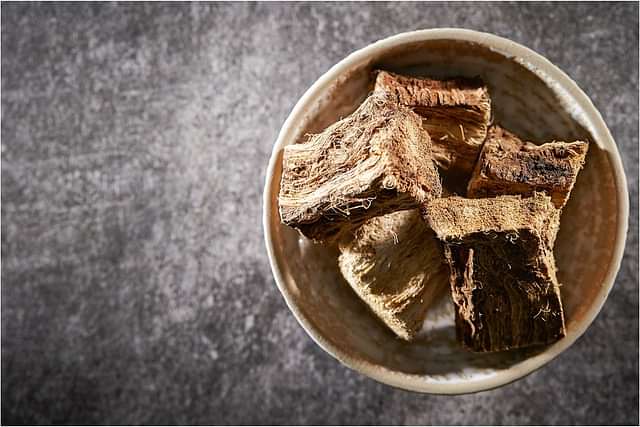
What is Vidarikand?
Vidarikand is the tuberous root of Pueraria tuberosa, a climbing plant in the pea family (Fabaceae). It is often called Indian Kudzu. The plant grows across India, Nepal and Pakistan, and the large starchy tuber is dug up, dried and powdered for use (Bharti et al., 2020).
In Ayurveda, Vidarikand is a classical Rasayana, a group of herbs used for rejuvenation and to build strength. It is also described as Balya, meaning strength-giving, and Brimhana, meaning nourishing and weight-building. It is traditionally given to people who are weak, underweight or recovering from illness.
Its Ayurvedic properties are described as sweet in taste (Madhura rasa), cooling in potency (Sheeta virya) and sweet in post-digestive effect (Madhura vipaka). It is heavy and unctuous in quality, and is understood to pacify Vata and Pitta.
Indian Kudzu (Pueraria tuberosa) is not the same plant as Japanese or Chinese kudzu (Pueraria lobata), although the two are related and are often confused. Much of the published research on kudzu concerns Pueraria lobata rather than the Indian species.
Key Facts
| Feature | Details |
| Botanical name | Pueraria tuberosa |
| Family | Fabaceae (pea family) |
| Also known as | Indian Kudzu, Vidari, Bhumikushmanda |
| Part used | The tuberous root |
| Ayurvedic category | Rasayana (rejuvenative), Balya (strength giving), Brimhana (nourishing) |
| Ayurvedic properties | Madhura rasa (sweet), Sheeta virya (cooling), Madhura vipaka. Pacifies Vata and Pitta |
| Key active compounds | Isoflavones including puerarin, daidzein and genistein |
| Traditional uses | Supporting strength and stamina, nourishing the body, and aiding recovery after illness |
| Common forms | Powder (churna), capsules, and as an ingredient in Ayurvedic tonics |
| General dosage | Adults, 2 to 3 g of powder daily with milk or warm water, or as advised by an Ayurvedic doctor |
| Key safety note | Contains plant compounds with mild oestrogen-like activity. Avoid in pregnancy and breastfeeding. Speak to a doctor if you have a hormone-sensitive condition or take blood pressure or diabetes medicine. |
Alternative Names of Vidarikand
Vidarikand is known by several names, both in Sanskrit and across Indian languages.
- Botanical name: Pueraria tuberosa
- English: Indian Kudzu, Nepalese Kudzu
- Hindi: Vidarikand, Bilaikand
- Sanskrit: Vidari, Swadukanda, Ikshugandha, Kshiravalli, Payasvini
- Marathi: Bhuikohala
- Gujarati: Khakhodo
- Bengali: Bhuikumra
- Tamil: Nilappusani
- Telugu: Nelagummadi
Chemical Constituents of Vidarikand
The tuber of Vidarikand contains a number of naturally occurring plant compounds, identified in laboratory analysis (Bharti et al., 2020).
- Puerarin: The best-known isoflavone in the plant, and the compound most often studied.
- Daidzein and Genistein: Isoflavones that act as phytoestrogens, meaning they have a mild oestrogen-like activity in the body.
- Biochanin A and Irisolidone: Further isoflavones found in the tuber.
- Quercetin: Quercetin a flavonoid with antioxidant activity in laboratory studies.
- Mangiferin and isoorientin: Additional plant compounds identified in the plant.
- Starch: The tuber is starchy, which underlies its traditional use as a nourishing, weight-building food.
Most of the information about these compounds comes from laboratory and animal studies. Human clinical trials on Vidarikand are very limited.
Medicinal Properties of Vidarikand
Vidarikand (Pueraria tuberosa) is a reputed Ayurvedic herb described in classical texts and included in the Ayurvedic Pharmacopoeia of India. It is traditionally prepared as a tuber powder or churna and taken to support digestion, nourishment and overall strength. In Ayurveda, it is considered sweet and cooling, and is traditionally understood to help balance vata and pitta.
- Antioxidant: May help the body neutralise free radicals and reduce oxidative stress, based on laboratory studies.
- Anti-inflammatory: Traditionally believed to help ease mild inflammation, supported by early animal research.
- Antimicrobial: Associated with the ability to inhibit the growth of certain bacteria and fungi in laboratory testing.
- Immunomodulatory: May help support normal immune function, according to preliminary animal studies.
- Antistress: Traditionally believed to help the body adapt to physical stress, though further research is needed to confirm this in humans.
Note: This information is for educational purposes only and does not replace professional medical advice. Please consult a qualified Ayurvedic practitioner before use, especially if pregnant, nursing, or taking other medication.
Key Health Benefits of Vidarikand
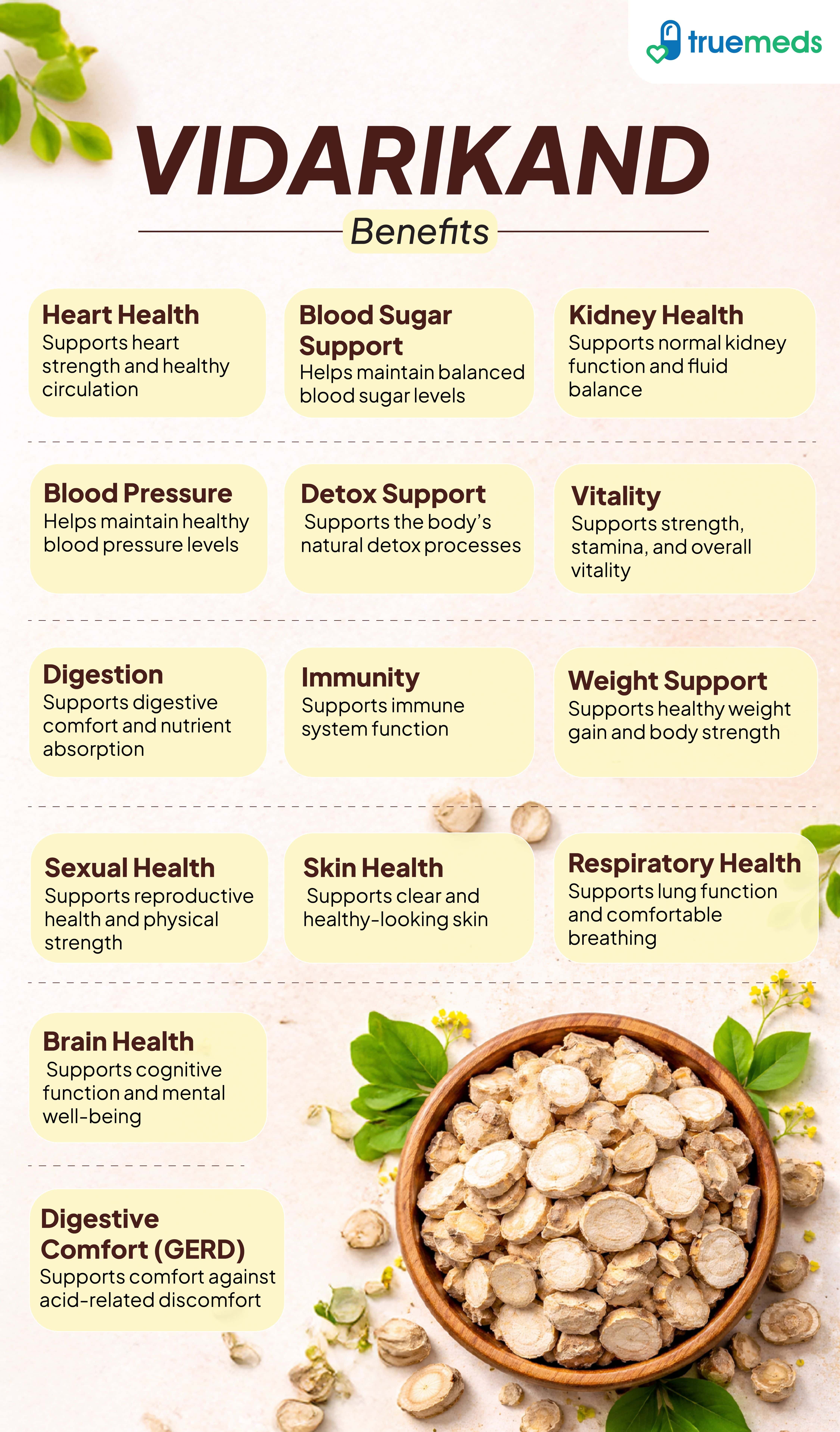
Vidarikand is traditionally used as a strengthening and nourishing herb. Its traditional benefits are described below. Research in humans is very limited, so these are traditional uses rather than proven medical effects. Vidarikand does not treat any disease. See a doctor about any health condition.
Supports Strength and Stamina
Vidarikand is classed in Ayurveda as Balya, meaning strength-giving. It is traditionally taken to support physical strength and stamina, particularly by people who feel weak or run down. This use rests on classical Ayurvedic practice rather than on clinical trials (Shivhare, 2023).
Nourishes the Body and Supports Healthy Weight Gain
The tuber is starchy and is described in Ayurveda as Brimhana, meaning nourishing and building. It is traditionally given to people who are underweight or recovering from illness, as part of a nourishing diet rather than as a treatment. Talk to a doctor about ongoing weight loss.
Helps the Body Cope With Fatigue
As a Rasayana and traditional adaptogen, Vidarikand is taken to help the body handle everyday tiredness and stress. Evidence for this comes from traditional use and early laboratory work, not from human trials.
Supports Recovery After Illness
Vidarikand is traditionally given during convalescence, when appetite and strength are low, usually mixed into warm milk. It is used as a nourishing tonic alongside rest and a good diet, not in place of medical treatment.
Provides Antioxidant Plant Compounds
The tuber contains isoflavones and flavonoids that show antioxidant activity in laboratory tests (Bharti et al., 2020).
Vidarikand is a traditional tonic, not a treatment. If you have a heart, kidney, blood pressure, blood sugar or reproductive health concern, consult with a doctor.
Common Uses of Vidarikand
This section describes when Vidarikand is traditionally taken, rather than what it does.
As a Daily Strengthening Tonic
It is most commonly taken as a daily powder mixed into warm milk, as a general tonic for strength and stamina.
During Recovery From Illness
It is traditionally given to people convalescing after an illness, when appetite and energy are low, as part of a nourishing diet.
For Building Weight and Bulk
Because the tuber is starchy and nourishing, it is traditionally given to people who are underweight or trying to build strength.
During Periods of Tiredness
It is traditionally taken during periods of physical or mental tiredness, as a Rasayana herb.
As an Ingredient in Ayurvedic Formulations
Vidarikand is an ingredient in several classical Ayurvedic tonics and is often taken as part of a formulation rather than on its own.
Precautions While Taking Vidarikand
Vidarikand is generally well tolerated, but several groups should use it with caution. Read the points below before using it.
- Hormone-sensitive conditions: Vidarikand contains isoflavones (daidzein and genistein) that act as phytoestrogens, with mild oestrogen-like effects. If you have a hormone-sensitive condition, such as breast, uterine or ovarian cancer, endometriosis or fibroids, do not take it without speaking to your doctor.
- Pregnancy and breastfeeding: Avoid use during pregnancy and breastfeeding, as its safety has not been established. Additionally, its potential oestrogen-like activity warrants caution.
- Hormone medicines: If you take hormone replacement therapy, tamoxifen or an oral contraceptive, talk to your doctor, as phytoestrogens may interfere with them.
- Low blood pressure or blood pressure medicine: Large doses may lower blood pressure. If you already have low blood pressure or take medicine for high blood pressure, talk to your doctor.
- Diabetes medicine: Vidarikand may affect blood sugar. If you take diabetes medicine, monitor your blood sugar and talk to your doctor.
- Children: Do not give it to children without a doctor's advice.
- Before surgery: Stop taking it at least two weeks before planned surgery, and tell your surgeon.
- Source and quality: Buy from a reputable, licensed supplier. Vidarikand is sometimes adulterated with other tubers, so quality varies.
This is general information and not medical advice. Talk to a doctor before starting any herbal medicine.
How to Use Vidarikand
Vidarikand is available in a few forms, each taken slightly differently.
Mixing the Powder Into Warm Milk
This is the classical method. Stir half a teaspoon (about 2 to 3 g) of Vidarikand powder into a cup of warm milk and drink it, usually once a day. Milk is the traditional carrier, as it suits the herb's nourishing action.
Taking the Powder With Warm Water
If you prefer not to take milk, stir the same amount into warm water and drink it after food.
Swallowing the Capsule Form
Where Vidarikand is sold as a capsule, swallow it with water after food, following the dose on the pack or advised by your practitioner.
Taking It Within an Ayurvedic Formulation
Vidarikand is often an ingredient in a larger Ayurvedic tonic rather than taken alone. In that case, follow the dose for the formulation, not for the single herb.
Do not exceed the dose on the pack, and talk to an Ayurvedic doctor about how long to take it.
Herbs Traditionally Used With Vidarikand
In Ayurvedic practice, Vidarikand is often given alongside other herbs. The traditional pairings below are common. Always ask an Ayurvedic doctor before combining herbal products.
Herbs | How it is traditionally used with Vidarikand |
Ashwagandha | Ashwagandha is commonly paired with Vidarikand in tonics for strength and stamina. Both are classed as Rasayana herbs, and the two are traditionally used together to support energy and recovery. |
Shatavari | Shatavari is often combined with Vidarikand as a nourishing tonic. Both are sweet and cooling in Ayurveda and are traditionally given together to people who are weak or run down. |
Milk (Dugdha) | Warm milk is the classical carrier, or anupana, for Vidarikand. It is used traditionally to carry the powder and to support the herb's nourishing, strength-building action. |
Ghee (Ghrita) | Ghee is sometimes used alongside Vidarikand in nourishing preparations, particularly in classical formulations intended to build strength and body weight. |
Yashtimadhu (Liquorice) | Yashtimadhu is a sweet, cooling herb traditionally combined with Vidarikand in Rasayana preparations, where the two are used to nourish and soothe the body. |
Gokshura | Gokshura is traditionally combined with Vidarikand in tonics aimed at general strength and vitality, particularly in classical Ayurvedic formulations. |
Recommended Dosage of Vidarikand
The right dose depends on age, health and the form used. The guidance below is a starting point only. Always confirm the dose with a qualified Ayurvedic doctor.
- Children: Not recommended without a doctor's advice. There is little safety information for children, and the herb's oestrogen-like activity is a reason for caution.
- Teenagers (13 to 18 years): Only on a doctor's advice, and at a reduced dose.
- Adults: 2 to 3 g of powder (about half a teaspoon) once daily with warm milk or water, after food.
- Older adults (over 65): 1 to 2 g once daily. Start at the lower end, particularly if you take medicine for blood pressure or diabetes.
Note: Dosages above reflect common Ayurvedic clinical practice and are not drawn from a single official pharmacopoeial source. They are intended for general awareness only and must be verified by a qualified Ayurvedic physician before use, particularly for children, pregnant or breastfeeding women, and individuals with existing health conditions.
Side Effects
Vidarikand is generally well tolerated at normal doses. The effects below are possible, particularly at higher doses.
Digestive Upset
Some people may notice nausea, a heavy feeling or loose stools, particularly when starting or at higher doses.
Low Blood Pressure
Large doses may lower blood pressure, which can cause dizziness or lightheadedness. This matters most for people who already have low blood pressure or take medicine for high blood pressure.
Changes in Blood Sugar
Vidarikand may affect blood sugar levels. People with diabetes should monitor their blood sugar.
Hormone Related Effects
Because the herb contains phytoestrogens, mild oestrogen-like effects are possible with long-term use. Anyone with a hormone-sensitive condition should talk to a doctor first.
Allergic Reaction
Rarely, someone may react to the herb. Stop taking it and seek medical help if you develop a rash, itching, swelling or difficulty breathing.
Note: Stop taking Vidarikand and talk to a doctor if any side effect persists.
Interaction
Tell your doctor you are taking Vidarikand if you use any of the medicines below.
Blood Pressure Medicines
Vidarikand may lower blood pressure. Taken with medicine for high blood pressure, it could cause excessively low blood pressure and dizziness.
Diabetes Medicines
The herb may affect blood sugar. If you take insulin or diabetes tablets, monitor your blood sugar and talk to your doctor.
Hormone Medicines and Hormone Therapy
Vidarikand contains phytoestrogens, which may interfere with hormone replacement therapy, oral contraceptives, or medicines such as tamoxifen. Talk to your doctor before combining them.
Medicines Taken by Mouth in General
If you take regular prescription medicine, check with your doctor before adding any herbal supplement.
This is not a complete list. Always tell your doctor about any herbal product you take.
Storage of Vidarikand
Storing the powder properly keeps it effective and stops it from spoiling.
- Keep it in a tightly closed, airtight container.
- Store it in a cool, dry place away from direct sunlight.
- Keep it away from moisture, and always use a dry spoon. The powder is starchy and will clump if it gets damp.
- Keep it out of the reach of children.
- Do not use it after the expiry date printed on the pack.
Key Takeaways
The main points to remember about Vidarikand are below.
- Vidarikand is the tuberous root of Pueraria tuberosa, also called Indian Kudzu, and is a classical Ayurvedic Rasayana herb.
- It is traditionally used to support strength, stamina, nourishment and recovery after illness, usually taken as a powder with warm milk.
- It is a traditional tonic, not a treatment. It does not treat diabetes, high blood pressure, heart disease, asthma or any other condition, and it must never replace prescribed medicine.
- The usual adult dose is 2 to 3 g of powder daily, or as advised by an Ayurvedic doctor.
- It contains isoflavones with mild oestrogen-like activity. Avoid it in pregnancy and breastfeeding, and talk to a doctor if you have a hormone-sensitive condition.
- Talk to your doctor first if you take medicine for blood pressure, diabetes, or hormone therapy.
- Research in humans is very limited. Most of what is known comes from traditional use and laboratory studies.
Disclaimer: This information is general and is not medical advice. Vidarikand is a traditional tonic and does not treat any disease. Talk to a doctor before use.
FAQs
What is Vidarikand used for?
How do I take Vidarikand?
How long does Vidarikand take to work?
Can Vidarikand be taken with milk?
Is Vidarikand good for weight gain?
Is Vidarikand the same as Japanese kudzu?
Who should avoid Vidarikand?
Does Vidarikand have side effects?
References
- Bharti, R., Chopra, B. S., Raut, S., & Khatri, N. (2021). Pueraria tuberosa: A Review on Traditional Uses, Pharmacology, and Phytochemistry. Frontiers in Pharmacology, 11. https://doi.org/10.3389/fphar.2020.582506
- Shivhare, N. L. (2023). A review of Balya action of Vidarikanda in tribal zone as mentioned in Ayurveda. Journal of Ayurveda and Integrated Medical Sciences, 8(8), 196–200. https://doi.org/10.21760/jaims.8.8.30
Other Ayurvedic Ingredients



Explore other categories
Latest health articles





Top Health Essentials





Top-selling ayurvedic products












Disclaimer
Top-Selling Medicines:
...View more
Top-OTC medicines:
...View more
Top-selling healthcare devices:
...View more
Company
About UsHealth ArticleHealth StoriesHealth LibraryDiseases & Health ConditionsAyurvedaUnderstanding Generic MedicinesAll MedicinesAll BrandsNeed HelpFAQSecuritySavings CalculatorAdvertise with UsSubscribe
Registered Office Address
Grievance Officer
Download Truemeds


Contact Us
Our customer representative team is available 7 days a week from 9 am - 9 pm.
v4.28.13

2026 - Truemeds | All rights reserved. Our content is for informational purposes only. See additional information.

Our Payment Partners