

- Medicines
- Personal Care
- Skin Cream
- Sunscreen
- Face Wash
- Skin and Body Soap
- Acne Care
- Body Lotions
- Moisturising Lotion
- Moisturising Cream
- Mosquito Repellent
- Moisturising Gel
- Body Wash
- Hair Oils
- Hair Shampoo
- Hair Conditioners
- Hair Supplements
- Hair Colour
- Hair Serum
- Hair Mask
- Hair Solutions
- Baby Diapers and Wipes
- Baby Lotion and Moisturising Cream
- Baby Bath Essentials
- Baby Skin Care
- Baby and Infant Food
- Baby Healthcare
- Women Multivitamins
- Ovulation Test Kit and Women Intimate Care
- Sanitary Pads
- Nutritional Drinks
- Condoms
- Lubricants
- Massage Gels
- Personal Body Massagers
- Men Performance Booster
- Sexual Health Supplements
- Massage Oils
- Ayurveda
- Tooth Paste
- Mouth Ulcer Gel
- Mouthwash
- Toothache and Gum Pain
- Tooth Brush
- Gargle Solution
- Orthopaedic Supports
- Adult Diapers
- Footwear
- Mobility and Support Accessories
- Urinary Support and Care
- Health Conditions
- Bone and Joint Care
- Digestive Care
- Eye Care
- Pain Relief
- Smoking Cessation
- Liver Care
- Stomach Care
- Cold and Cough
- Heart Care
- Kidney Care
- Piles, Fissures & Fistula
- Respiratory Care
- Mental Wellness
- Derma Care
- Pre and Probiotics
- Acidity
- Gas
- Constipation
- Loose Motion/Diarrhoea
- Digestive Fibres
- Digestive Enzymes
- Eye Lubricant Drops
- Lens Solution
- Safety Eye Wear
- Eye Cream
- Eye Vitamins and Supplements
- Eye Drops
- Eye Ointment and Gel
- Nicotine Patch
- Nicotine Gum
- Nicotine Lozenges
- Cough Syrups
- Chest Rubs and Balms
- Nasal Spray
- Lozenges
- Inhalant Capsules
- Cold and Cough Tablets
- Vitamins & Supplements
- Diabetes Care
- Healthcare Devices
- Homeopathic Medicine
- Health Guide
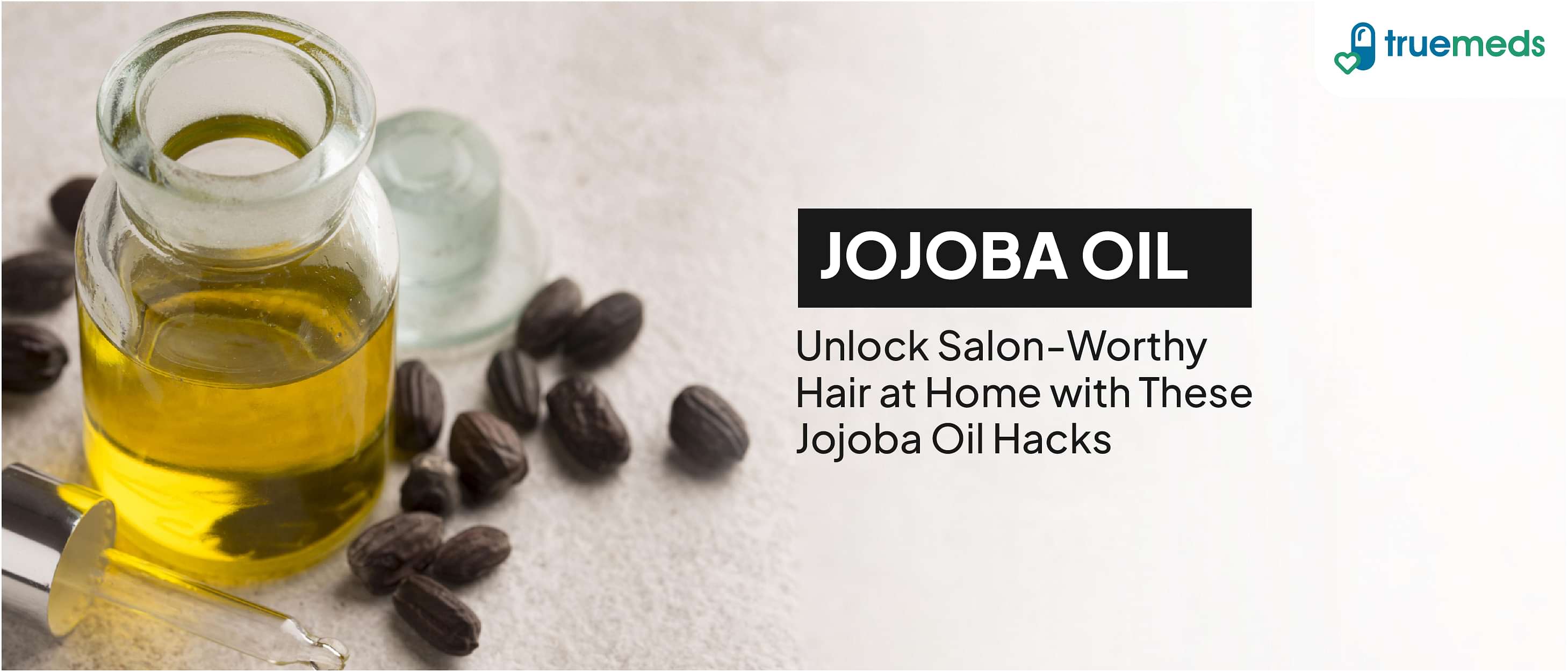
Jojoba Oil for Hair: 5 Key Benefits for Stronger, Glossier Hair
Last updated on :12 Feb, 2026
Read time :7 min
Jojoba oil for hair is a natural solution that may help transform your hair from dry and brittle to strong and glossy. This oil is similar to the natural oils of the scalp, known as sebum, which may help maintain hair health and shine. While it offers several benefits, it’s important to use it correctly and remember that individual results can vary. If you are experiencing chronic scalp irritation or sudden hair thinning, a professional evaluation by a dermatologist is the most reliable way to determine the underlying cause.
What is Jojoba Oil?
Jojoba oil is a liquid wax ester extracted from the seeds of the jojoba plant (Simmondsia chinensis). This non-comedogenic oil is rich in vitamins E and B-complex, ceramides, and essential fatty acids, providing a nutrient-dense profile that complements a standard hair care regimen. Its chemical structure is remarkably similar to the sebum naturally produced by the human scalp [1]. This unique composition mimics the natural oils produced by our scalps, ensuring your hair receives the nourishment it needs without clogging your pores.
The Science Behind Jojoba Oil for Hair
The effectiveness of jojoba oil for hair lies in its unique composition. This oil contains a high proportion of monounsaturated fatty acids, particularly Eicosenoic acid (Gondoic acid), which may help to hydrate and protect the hair shaft [2]. Research suggests that by reducing protein loss inside the hair shaft and increasing protection against breakage, jojoba oil supports overall hair health. Due to its molecular similarity to sebum, it can help regulate the scalp’s natural oil production [3]. Its antimicrobial properties may help manage scalp environments prone to itchiness or dandruff, providing a soothing effect while balancing natural oil production [1]. Due to its unique molecular structure, jojoba oil serves as a viable natural option for enhancing hair lustre and supporting moisture retention.
Top Benefits of Jojoba Oil for Hair
Jojoba oil is a natural, versatile haircare product that offers numerous benefits for achieving stronger, glossier hair. Let’s explore the benefits of using jojoba oil for your hair.
1. Supports Hair Health and Appearance
Jojoba oil nourishes hair follicles with essential vitamins and minerals, like vitamins E and B-complex, zinc, and copper, which may help reduce inflammation and support healthy hair growth [2]. While direct claims of promoting hair growth are not strongly supported, jojoba oil may improve scalp health and reduce hair breakage, indirectly supporting the appearance of fuller hair [3].
2. Moisturises and Hydrates
Jojoba oil is highly moisturising, making it ideal for dry, brittle hair. Its long-chain fatty esters help maintain the scalp’s oil balance, strengthening hair roots and resulting in softer, more manageable hair with added shine.
3. May Help Control Dandruff
Jojoba oil’s anti-inflammatory and antimicrobial properties may help manage dandruff associated with minor fungal overgrowth, although most studies are in vitro and clinical results may vary [4]. It balances oil production, reducing dryness and flakiness, and alleviating itchiness, promoting a healthier scalp environment.
4. Strengthens Hair
Jojoba oil strengthens hair by reducing protein loss and preventing breakage [3]. The fatty acids and nutrients in jojoba oil help maintain hydration and protect hair, leading to thicker, healthier strands with fewer split ends.
5. Improves Scalp Health
Massage application may support scalp circulation and, combined with oil’s moisturising effects, help maintain scalp health. Its soothing properties reduce inflammation and irritation, creating a healthier scalp environment that supports optimal hair growth.
How Can Jojoba Oil be Used For Hair?
To maximise results, incorporate jojoba oil using one of the following targeted application methods:
- Direct Application (Scalp Oil Treatment): Warm a small amount of jojoba oil slightly and massage it gently into your scalp and along the length of your hair. Leave it on for about 20 minutes before washing with a mild shampoo. This technique may help distribute the oil and stimulate circulation.
- As a Hair Mask Ingredient: Combine jojoba oil with nourishing ingredients like mashed avocado, oats, or egg. Apply the mixture to damp hair, leave it on for 5–10 minutes, then rinse thoroughly.
- For Styling and Shine: Use a drop or two of jojoba oil to smooth flyaways, reduce frizz, and add a healthy shine. A little goes a long way, so use sparingly on dry or damp hair.
Important Considerations and Conclusion
While generally safe, individuals with sensitive skin should perform a patch test before widespread use, as allergic contact dermatitis, though rare, is possible. Also, overuse on fine or oily hair types may lead to a greasy appearance. Always use a small amount and adjust based on your hair’s response.
Jojoba oil is a versatile and natural remedy that offers numerous benefits for hair health. It moisturises and nourishes the scalp and hair, reduces frizz and split ends, and promotes a healthier scalp environment. Incorporate jojoba oil into your hair care routine as a conditioner, hair mask, or styling aid. Use in moderation and according to your hair type for best results. Consult a dermatologist for chronic scalp conditions or significant hair loss.
Disclaimer: This article is for informational purposes only and should not be considered medical advice. Please consult a qualified healthcare professional, such as a dermatologist, before starting or changing any treatment, particularly for persistent hair or scalp issues.
Frequently Asked Questions (FAQs)
Is applying jojoba oil good for hair?
Yes, jojoba oil moisturises hair, supports follicle health by maintaining scalp balance, and protects against heat and environmental damage due to its emollient properties and high Vitamin E content.
Is jojoba oil or coconut oil better for hair?
Jojoba oil is a lighter liquid wax and is non-greasy, making it suitable for various hair types, especially those prone to greasiness or buildup. Coconut oil is better for deeply dry or damaged hair as it may penetrate the hair shaft, but it may be too heavy for finer hair.
What are the potential side effects of jojoba oil?
Potential side effects are generally mild and include rare allergic reactions or contact dermatitis. The most common ‘disadvantage’ is greasiness or weighing down the hair if it is over-applied, particularly on fine or low-porosity hair [1].
Which is better for hair, castor oil or jojoba oil?
Jojoba oil is lighter, more similar to natural sebum, and better for overall scalp health and shine. Castor oil is much thicker and primarily used for specific targeted scalp treatments, such as promoting thickness in very dry or coarse hair, but it may easily weigh hair down.
Is jojoba oil good for thin hair?
Jojoba oil may benefit thin hair due to its light texture, but it should be applied very sparingly (a drop or two) to avoid weighing it down and making it look flat or greasy.
References
[1] Gad, H. A., Roberts, A., Hamzi, S. H., Gad, H. A., Touiss, I., Altyar, A. E., Kensara, O. A., & Ashour, M. L. (2021). Jojoba Oil: An Updated Comprehensive Review on Chemistry, Pharmaceutical Uses, and Toxicity. Polymers, 13(11), 1711. https://doi.org/10.3390/polym13111711
[2] Agarwal, S., Kumari, S., & Khan, S. (2023). Jojoba (Simmondsia chinensis). In Neglected and Underutilized Crops (pp. 757–779). Elsevier.https://www.sciencedirect.com/topics/agricultural-and-biological-sciences/jojoba-oil
[3] Jojoba in dermatology: a succinct review. (2013, December 1). PubMed. https://pubmed.ncbi.nlm.nih.gov/24442052/
[4] Abelan, U. S., De Oliveira, A. C., Cacoci, É. S. P., Martins, T. E. A., Giacon, V. M., Velasco, M. V. R., & De Castro Lima, C. R. R. (2021). Potential use of essential oils in cosmetic and dermatological hair products: A review. Journal of Cosmetic Dermatology, 21(4), 1407–1418. https://doi.org/10.1111/jocd.14286














Disclaimer
Our healthcare experts have carefully reviewed and compiled the information presented here to ensure accuracy and trustworthiness. It is important to note that this information serves as a general overview of the topic and is for informational purposes only. It is not intended to diagnose, prevent, or cure any health problem. This page does not establish a doctor-patient relationship, nor does it replace the advice or consultation of a registered medical practitioner. We recommend seeking guidance from your registered medical practitioner for any questions or concerns regarding your medical condition.
Recent Articles



Company
About UsHealth ArticleHealth StoriesHealth LibraryDiseases & Health ConditionsAyurvedaUnderstanding Generic MedicinesAll MedicinesAll BrandsNeed HelpFAQSecuritySavings CalculatorSubscribe
Registered Office Address
Grievance Officer
Download Truemeds


Contact Us
Our customer representative team is available 7 days a week from 9 am - 9 pm.
v4.23.3

2026 - Truemeds | All rights reserved. Our content is for informational purposes only. See additional information.

Our Payment Partners




