

- Medicines
- Personal Care
- Skin Cream
- Sunscreen
- Face Wash
- Skin and Body Soap
- Acne Care
- Body Lotions
- Moisturising Lotion
- Moisturising Cream
- Mosquito Repellent
- Moisturising Gel
- Body Wash
- Hair Oils
- Hair Shampoo
- Hair Conditioners
- Hair Supplements
- Hair Colour
- Hair Serum
- Hair Mask
- Hair Solutions
- Baby Diapers and Wipes
- Baby Lotion and Moisturising Cream
- Baby Bath Essentials
- Baby Skin Care
- Baby and Infant Food
- Baby Healthcare
- Women Multivitamins
- Ovulation Test Kit and Women Intimate Care
- Sanitary Pads
- Nutritional Drinks
- Condoms
- Lubricants
- Massage Gels
- Personal Body Massagers
- Men Performance Booster
- Sexual Health Supplements
- Massage Oils
- Ayurveda
- Tooth Paste
- Mouth Ulcer Gel
- Mouthwash
- Toothache and Gum Pain
- Tooth Brush
- Gargle Solution
- Orthopaedic Supports
- Adult Diapers
- Footwear
- Mobility and Support Accessories
- Urinary Support and Care
- Health Conditions
- Bone and Joint Care
- Digestive Care
- Eye Care
- Pain Relief
- Smoking Cessation
- Liver Care
- Stomach Care
- Cold and Cough
- Heart Care
- Kidney Care
- Piles, Fissures & Fistula
- Respiratory Care
- Mental Wellness
- Derma Care
- Pre and Probiotics
- Acidity
- Gas
- Constipation
- Loose Motion/Diarrhoea
- Digestive Fibres
- Digestive Enzymes
- Eye Lubricant Drops
- Lens Solution
- Safety Eye Wear
- Eye Cream
- Eye Vitamins and Supplements
- Eye Drops
- Eye Ointment and Gel
- Nicotine Patch
- Nicotine Gum
- Nicotine Lozenges
- Cough Syrups
- Chest Rubs and Balms
- Nasal Spray
- Lozenges
- Inhalant Capsules
- Cold and Cough Tablets
- Vitamins & Supplements
- Diabetes Care
- Healthcare Devices
- Homeopathic Medicine
- Health Guide
Dhatupaushtik Churna
Dhatupaushtik Churna is a classical Ayurvedic herbal powder traditionally used to support nourishment of the body tissues, strength, stamina and overall vitality. It is also traditionally associated with supporting physical nourishment and general wellbeing. It is generally taken as a powder mixed with milk or water, under the guidance of a doctor or Ayurvedic practitioner.
 50
Last updated on : 26 Oct, 2026
Read time : 11 mins
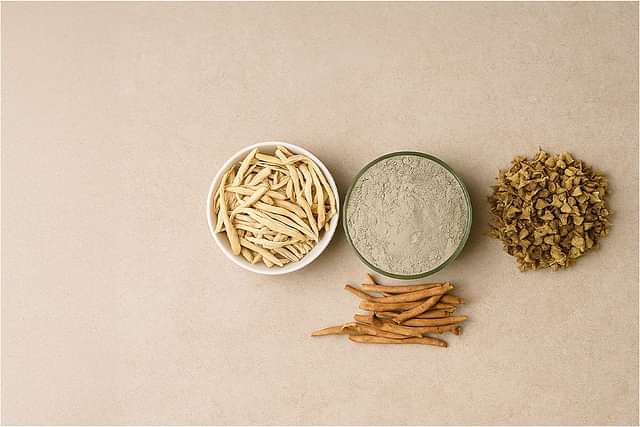
What is Dhatupaushtik Churna?
The name Dhatupaushtik Churna comes from Sanskrit: Dhatu means bodily tissue, and Paushtik means nourishing. In keeping with its name, this classical Ayurvedic powder is traditionally formulated to nourish the body's tissues and support general strength and vitality, including as part of recovery from illness.
This formulation's herbs are traditionally associated with a sweet (Madhura) taste and a heating (Ushna) potency, and the formulation is traditionally used to balance Vata, with a role in nourishing Rasa and Shukra Dhatu, the tissues Ayurveda associates with nourishment and reproductive health.
Key Facts
| Feature | Details |
| Formulation name | Dhatupaushtik Churna |
| Formulation type | Polyherbal Churna (powder) |
| Composition | A blend of herbs including Ashwagandha, Shatavari, Safed Musli, Gokshura, Kapikacchu, Jaiphal and Vidari Kand
|
| Also known as | No widely recognised alternative name; occasionally described informally as a rejuvenative or vitality-supporting powder
|
| Key active compounds | Withanolides (from Ashwagandha) and saponins (from Shatavari and Gokshura) are among the constituents reported in its ingredient herbs |
| Dosha action | Traditionally used to balance Vata and to nourish Rasa and Shukra Dhatu |
| Traditional uses | General weakness, low stamina, and recovery after illness |
| Common forms | Powder |
| General dosage | Do not exceed the amount advised by a doctor or Ayurvedic practitioner |
| Best taken | Traditionally taken with warm milk or water
|
| Key safety note | Not recommended without medical supervision in pregnancy, breastfeeding, kidney disease, heart disease or thyroid conditions, and should not be combined with alcohol or recreational drugs |
Alternative Names of Dhatupaushtik Churna
Dhatupaushtik Churna has one commonly seen spelling variant:
- Dhatupushtak Churna - an alternative transliteration of the same Sanskrit name
Composition of Dhatupaushtik Churna
Dhatupaushtik Churna is prepared from a blend of the following herbs.
- Ashwagandha (Withania somnifera): traditionally used as a general strengthening and restorative herb
- Shatavari (Asparagus racemosus): traditionally used to support reproductive health and hormonal balance
- Gokshura (Tribulus terrestris): traditionally used to support stamina and muscle strength
- Vidari Kand (Pueraria tuberosa): traditionally used as a general strengthening herb
- Kapikacchu (Mucuna pruriens): traditionally used to support the male reproductive system
- Safed Musli (Chlorophytum borivilianum): traditionally used as a strengthening and restorative herb
- Jaiphal (nutmeg, Myristica fragrans): traditionally used in small amounts to support digestion
Medicinal Properties of Dhatupaushtik Churna
The herbs in Dhatupaushtik Churna are traditionally credited with the following properties.
- Adaptogenic: traditionally believed to help the body adapt to physical and mental stress
- Immunomodulatory: studied for their potential role in supporting immune function
- Anti-inflammatory: traditionally believed to support relief from minor inflammatory discomfort
- Restorative (Rasayana): traditionally used to support general strength, energy and tissue nourishment
- Antioxidant: traditionally associated with helping to protect against oxidative stress
- Traditionally used to support healthy libido, though this is not a claim to treat any diagnosed sexual or reproductive condition.
These traditional properties are described in a published review and standardisation study of this formulation's key ingredient herbs (Bhar & Mondal, 2022). Controlled clinical trial evidence specific to the finished formulation is limited.
How Dhatupaushtik Churna Is Made
- Controlled drying of the herbs helps preserve their natural properties.
- Once dried, the herbs are ground into a fine powder.
- The resulting powder is sieved to achieve an even, fine texture.
- Individual herb powders are then combined in fixed proportions.
- Finally, the finished formulation is stored in an airtight container to protect it from moisture.
Key Health Benefits of Dhatupaushtik Churna
The benefits of Dhatupaushtik Churna are traditionally associated with its blend of Ayurvedic herbs, which are used to support physical strength, vitality and general well-being. It is also traditionally used to support mental and emotional wellbeing.
1. Sexual and Reproductive Health
Dhatupaushtik Churna is traditionally used to support sexual and reproductive health, particularly in men. Ashwagandha, Gokshura and Safed Musli are traditionally associated with supporting libido and sexual wellbeing. These herbs have been studied for their potential effects on testosterone and sperm health, but evidence for the finished formulation is limited. Shatavari is traditionally used to support women's reproductive health. It is not a treatment for infertility or other diagnosed reproductive conditions.
2. Improves Overall Physical Stamina and Energy
Dhatupaushtik Churna is traditionally used for fatigue, general weakness and supporting physical stamina. Its herbs, including Ashwagandha and Gokshura, are traditionally believed to support strength and energy. It may be used during recovery from illness, but evidence for improving athletic performance or chronic fatigue is limited.
3. Supports Immune Function
The herbs in Dhatupaushtik Churna are traditionally associated with supporting the body's natural defences. Some ingredients have been studied for immunomodulatory effects, but this does not establish that the formulation can prevent infections or treat disease.
4. Enhances Mental Clarity and Emotional Stability
Some herbs in Dhatupaushtik Churna are traditionally used to support mental clarity, concentration and emotional wellbeing. Ashwagandha has been studied for its potential effects on stress and cortisol, but the formulation is not a treatment for anxiety, depression or other mental health conditions.
5. Improves Digestive Health
Dhatupaushtik Churna is traditionally used to support digestion, appetite and digestive function. However, evidence that the finished formulation improves nutrient absorption, indigestion, bloating or constipation is limited.
6. May Support Healthy Weight Gain
Dhatupaushtik Churna may be used as part of a nutrition and lifestyle plan to support healthy weight gain. Ashwagandha, Shatavari and VidariKand are traditionally associated with nourishment, appetite and strength. Unexplained weight loss requires medical assessment.
7. Supportive of Recovery after Illness
Dhatupaushtik Churna is traditionally used during recovery to support nourishment, strength and general vitality. It should be used alongside appropriate medical and nutritional care rather than as a substitute for treatment or rehabilitation.
8. Traditional Support for Women's Reproductive Health
Shatavari in Dhatupaushtik Churna is traditionally used to support women's reproductive and hormonal health. However, evidence for its effects on menstrual cycles, menopause symptoms or hormone levels remains limited. Persistent symptoms should be assessed by a healthcare professional.
Common Uses of Dhatupaushtik Churna
Beyond its core health benefits, Dhatupaushtik Churna is traditionally used by Ayurvedic practitioners in the following situations.
1. During a Period of General Weakness
It is traditionally used when someone feels generally run down or fatigued, rather than in response to a specific diagnosed condition, and is generally taken as part of a longer-term wellness routine rather than as a one-off remedy.
2. Alongside Training or Physical Activity
Some Ayurvedic practitioners include Dhatupaushtik Churna as part of a broader nutrition and training plan for people who are physically active, alongside an adequate diet, not as a substitute for one.
3. As Part of a Post-Illness Recovery Plan
It is traditionally used for a defined period after an illness or minor surgery, generally alongside rest and a nourishing diet, to support the body's return to its usual strength.
4. During Periods of Stress
It is traditionally taken during periods of everyday stress to support general calm and resilience, rather than as a treatment for a diagnosed mental health condition.
Precautions while Taking Dhatupaushtik Churna
- Speak to your doctor before use if you are pregnant or breastfeeding.
- Avoid, or use only under medical supervision, if you have kidney disease or heart disease.
- Avoid if you have a thyroid condition, or check with your doctor first, since Ashwagandha, one of this formulation's main herbs, can affect thyroid hormone levels.
- Do not combine with alcohol or recreational drugs.
- Do not use if you are allergic to any of the herbs in this formulation.
- Not recommended for children unless specifically advised by a doctor.
Note: This information is general and does not replace advice from your registered medical practitioner.
Recommended Dosage of Dhatupaushtik Churna
Dosage should always be confirmed with a doctor or Ayurvedic practitioner, since it can vary with age, health status and the reason for use. General guidance is given below.
Adults
Typically 1 to 2 teaspoons, around 5 to 10 grams, mixed with warm milk or water, taken once or twice daily, or as advised by a doctor or Ayurvedic practitioner.
Elderly Adults
Older adults, particularly those with heart, kidney or thyroid conditions, should use Dhatupaushtik Churna only under medical supervision.
Teenagers
There is limited published information on dosing in teenagers. Use only under the direct guidance of a doctor or Ayurvedic practitioner.
Children
Dhatupaushtik Churna is not recommended for children unless specifically advised and supervised by a doctor.
Note: The appropriate duration of use varies between individuals and should be determined by a qualified practitioner. This information is for general guidance only and does not replace advice from your doctor.
Side Effects of Dhatupaushtik Churna
Dhatupaushtik Churna may be well tolerated when taken at the advised dose. The following side effects may occur, particularly with excessive use.
1. Digestive Discomfort
Some people may experience mild stomach upset, nausea or loose stools if they take more than the advised amount.
2. Changes in Thyroid Function
Because this formulation contains Ashwagandha, prolonged or excessive use may affect thyroid hormone levels in some people, particularly those with an existing thyroid condition.
In an animal study of this formulation, acute dosing showed no deaths, and subacute dosing over several weeks showed no significant changes in blood tests or in the weight of the liver, kidneys or reproductive organs (Bhar & Mondal, 2022). However, this is animal evidence only, and further research is needed to establish safety in humans.
Interaction of Dhatupaushtik Churna With Other Drugs
Dhatupaushtik Churna may interact with certain medicines because of its Ashwagandha content (NCCIH, 2023). Always tell your doctor about any herbal products you are taking.
Thyroid medicine
Ashwagandha may affect thyroid hormone levels, so combining it with thyroid medicine may need extra monitoring by your doctor (NCCIH, 2023).
Sedatives and anti-anxiety medicines
Ashwagandha has a mild calming effect that may add to the effect of sedative or anti-anxiety medicines, increasing drowsiness (NCCIH, 2023).
Immunosuppressant medicines
Because some of this formulation's herbs are traditionally used to support immune function, people taking immunosuppressant medicines, such as after an organ transplant, should consult their doctor before use, as potential interactions are not well established (NCCIH, 2023).
Storage of Dhatupaushtik Churna
Store Dhatupaushtik Churna in a cool, dry place, in a tightly sealed container, away from direct sunlight and moisture. Keep it out of reach of children. Check the pack for the expiry date and do not use the product beyond it.
Key Takeaways
- Dhatupaushtik Churna is a classical Ayurvedic powder made from herbs including Ashwagandha, Shatavari, Safed Musli and Gokshura, traditionally used to nourish body tissues.
- It is traditionally used to support general strength, stamina, immune function and recovery after illness.
- It may cause digestive discomfort with overuse, and its Ashwagandha content means it should be used with caution in thyroid conditions and alongside sedative or thyroid medicines.
- It should be avoided or used only under medical supervision in pregnancy, breastfeeding, kidney disease, heart disease and thyroid conditions, and should not be combined with alcohol or recreational drugs.
- Always confirm the dose and suitability with a doctor or Ayurvedic practitioner before starting.
FAQs
When should I take Dhatupaushtik Churna?
Can Dhatupaushtik Churna help with weight gain?
Can women take Dhatupaushtik Churna?
Does Dhatupaushtik Churna have proven benefits for male fertility?
Can Dhatupaushtik Churna treat erectile dysfunction?
Can Dhatupaushtik Churna be taken after surgery?
Is Dhatupaushtik Churna safe for long-term use?
Can Dhatupaushtik Churna be taken with medicines for high blood pressure?
Can Dhatupaushtik Churna be taken with other supplements?
References
- Bhar, K., & Mondal, S. (2022). Proponents implemented for quality standardization and toxicity evaluation of classical Ayurvedic formulation: Dhatupaushtik Churna. In Current Overview on Pharmaceutical Science (Vol. 1, pp. 163–209). B P International. https://doi.org/10.9734/bpi/cops/v1/4486E
- National Center for Complementary and Integrative Health. (2023). Ashwagandha: Usefulness and safety. National Institutes of Health. https://www.nccih.nih.gov/health/ashwagandha



Explore other categories
Latest health articles





Top Health Essentials





Top-selling ayurvedic products













Disclaimer
Top-Selling Medicines:
...View more
Top-OTC medicines:
...View more
Top-selling healthcare devices:
...View more
Company
About UsHealth ArticleHealth StoriesHealth LibraryDiseases & Health ConditionsAyurvedaUnderstanding Generic MedicinesAll MedicinesAll BrandsNeed HelpFAQSecuritySavings CalculatorAdvertise with UsSubscribe
Registered Office Address
Grievance Officer
Download Truemeds


Contact Us
Our customer representative team is available 7 days a week from 9 am - 9 pm.
v4.28.23

2026 - Truemeds | All rights reserved. Our content is for informational purposes only. See additional information.

Our Payment Partners




