

- Medicines
- Personal Care
- Skin Cream
- Sunscreen
- Face Wash
- Skin and Body Soap
- Acne Care
- Body Lotions
- Moisturising Lotion
- Moisturising Cream
- Mosquito Repellent
- Moisturising Gel
- Body Wash
- Hair Oils
- Hair Shampoo
- Hair Conditioners
- Hair Supplements
- Hair Colour
- Hair Serum
- Hair Mask
- Hair Solutions
- Baby Diapers and Wipes
- Baby Lotion and Moisturising Cream
- Baby Bath Essentials
- Baby Skin Care
- Baby and Infant Food
- Baby Healthcare
- Women Multivitamins
- Ovulation Test Kit and Women Intimate Care
- Sanitary Pads
- Nutritional Drinks
- Condoms
- Lubricants
- Massage Gels
- Personal Body Massagers
- Men Performance Booster
- Sexual Health Supplements
- Massage Oils
- Ayurveda
- Tooth Paste
- Mouth Ulcer Gel
- Mouthwash
- Toothache and Gum Pain
- Tooth Brush
- Gargle Solution
- Orthopaedic Supports
- Adult Diapers
- Footwear
- Mobility and Support Accessories
- Urinary Support and Care
- Health Conditions
- Bone and Joint Care
- Digestive Care
- Eye Care
- Pain Relief
- Smoking Cessation
- Liver Care
- Stomach Care
- Cold and Cough
- Heart Care
- Kidney Care
- Piles, Fissures & Fistula
- Respiratory Care
- Mental Wellness
- Derma Care
- Pre and Probiotics
- Acidity
- Gas
- Constipation
- Loose Motion/Diarrhoea
- Digestive Fibres
- Digestive Enzymes
- Eye Lubricant Drops
- Lens Solution
- Safety Eye Wear
- Eye Cream
- Eye Vitamins and Supplements
- Eye Drops
- Eye Ointment and Gel
- Nicotine Patch
- Nicotine Gum
- Nicotine Lozenges
- Cough Syrups
- Chest Rubs and Balms
- Nasal Spray
- Lozenges
- Inhalant Capsules
- Cold and Cough Tablets
- Vitamins & Supplements
- Diabetes Care
- Healthcare Devices
- Homeopathic Medicine
- Health Guide
Lakshadi Guggul
Lakshadi Guggul is a classical Ayurvedic formulation made from Laksha, Asthishrinkhala, Arjuna, Ashwagandha, Nagabala and Guggulu, rolled into tablets. It is traditionally used to support bone strength, relieve joint discomfort and aid recovery after fractures, alongside standard medical care for bone and joint conditions such as osteoporosis and arthritis.
 50
50Last updated on : 03 Sep, 2026
Read time : 12 mins
What is Lakshadi Guggul?
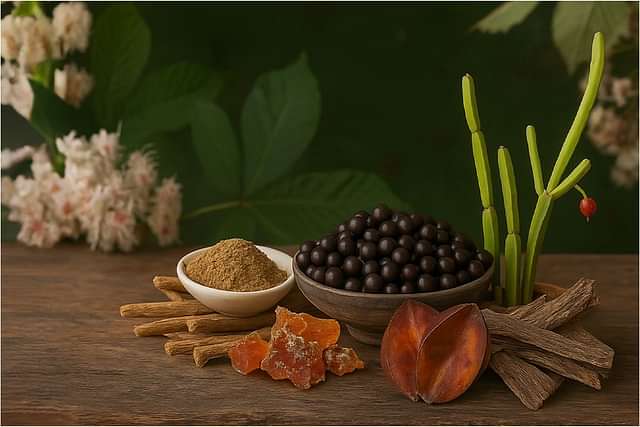
The name Lakshadi Guggul comes directly from its two lead ingredients: Laksha (lac resin) and Guggulu (purified Commiphora mukul resin), which give the formulation its Sanskrit name and its traditional therapeutic uses. It is a classical polyherbal Guggulu preparation, described in Ayurvedic literature for use in fracture management.
In classical Ayurveda, the formulation is described as Vata-balancing (Vata-shamaka) and Ushna Virya (warming in potency), and is traditionally used in conditions such as Asthi-Majjakshaya (degeneration of bone and marrow tissue, which may be loosely correlated with osteoporosis), fractures and Sandhivata (Vata-type joint disorders such as osteoarthritis).
Key Facts
| Feature | Details |
| Formulation name | Lakshadi Guggul (Lakshadi Guggulu) |
| Formulation type | Guggulu Kalpana (classical Guggulu-based tablet)
|
| Composition (ingredients) | Laksha, Asthishrinkhala (Hadjod), Arjuna, Ashwagandha, Nagabala, Shuddha Guggulu
|
| Classical proportion | 1 part each of Laksha, Asthishrinkhala, Arjuna, Ashwagandha and Nagabala to 5 parts Shuddha Guggulu |
| Also known as | Laksha Guggulu, Lakshadi Guggulu
|
| Key active compounds | Guggulsterones (Guggulu), withanolides (Ashwagandha), arjunolic acid (Arjuna)
|
| Dosha action | Traditionally described as Vata-balancing |
| Traditional uses | Fracture recovery, joint discomfort and support for bone health |
| Common forms | Tablet (500 mg) |
| General dosage | 1-2 tablets, twice daily for adults, or as directed by an Ayurvedic practitioner |
| Best taken | With warm water or milk, after food
|
| Key safety note | Consult a healthcare professional before use during pregnancy or breastfeeding or in children; use with caution alongside blood-thinning or thyroid medicines |
Alternative Names of Lakshadi Guggul
Lakshadi Guggul is a classical formulation, so its name is a Sanskrit transliteration rather than a translated English or regional name. The commonly used spelling variants across Ayurvedic texts and practice are:
- Laksha Guggulu
- Lakshadi Guggulu
- Lakshadi Guggul
Composition of Lakshadi Guggul
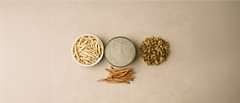
Lakshadi Guggul is prepared from six classical ingredients, combined in fixed proportions and rolled into 500 mg tablets. The main constituents are:
- Laksha (lac resin, from Laccifer lacca) – 1 part
- Asthishrinkhala / Hadjod (Cissus quadrangularis stem) – 1 part
- Arjuna (Terminalia arjuna bark) – 1 part
- Ashwagandha (Withania somnifera root) – 1 part
- Nagabala (root) – 1 part
- Shuddha Guggulu, the purified resin of Commiphora mukul – 5 parts
Chemical Constituents of Lakshadi Guggul
Lakshadi Guggul brings together compounds from each of its herbal ingredients. The main ones identified in pharmacognosy and phytochemical literature are:
- Guggulsterones (from Shuddha Guggulu resin) (Sarup, Bala & Kamboj, 2015) - phytochemical review of Commiphora wightii oleo-gum resin.
- Withanolides (from Ashwagandha root)
- Arjunolic acid and related triterpenoid compounds (from Arjuna bark)
- Lac resin acids and lac dye pigments, such as laccaic acid (from Laksha)
Medicinal Properties of Lakshadi Guggul
Ayurvedic and pharmacological literature describes the ingredients of Lakshadi Guggul as having the following potential actions on the body:
- Anti-inflammatory
- Analgesic (pain-easing)
- Antioxidant
- Antiarthritic
- Bone-supportive (osteogenic)
- Mild antispasmodic
These actions come mainly from guggulsterones in Guggulu and withanolides in Ashwagandha, both studied for anti-inflammatory and antioxidant activity, alongside the traditional bone-healing and analgesic use of Laksha, Arjuna and Nagabala. However, most of this evidence comes from laboratory and animal studies or traditional-use records, rather than large human clinical trials of the finished formulation. Therefore, these properties should be understood as traditionally attributed and partly research-supported, rather than clinically proven in humans.
Key Health Benefits of Lakshadi Guggul
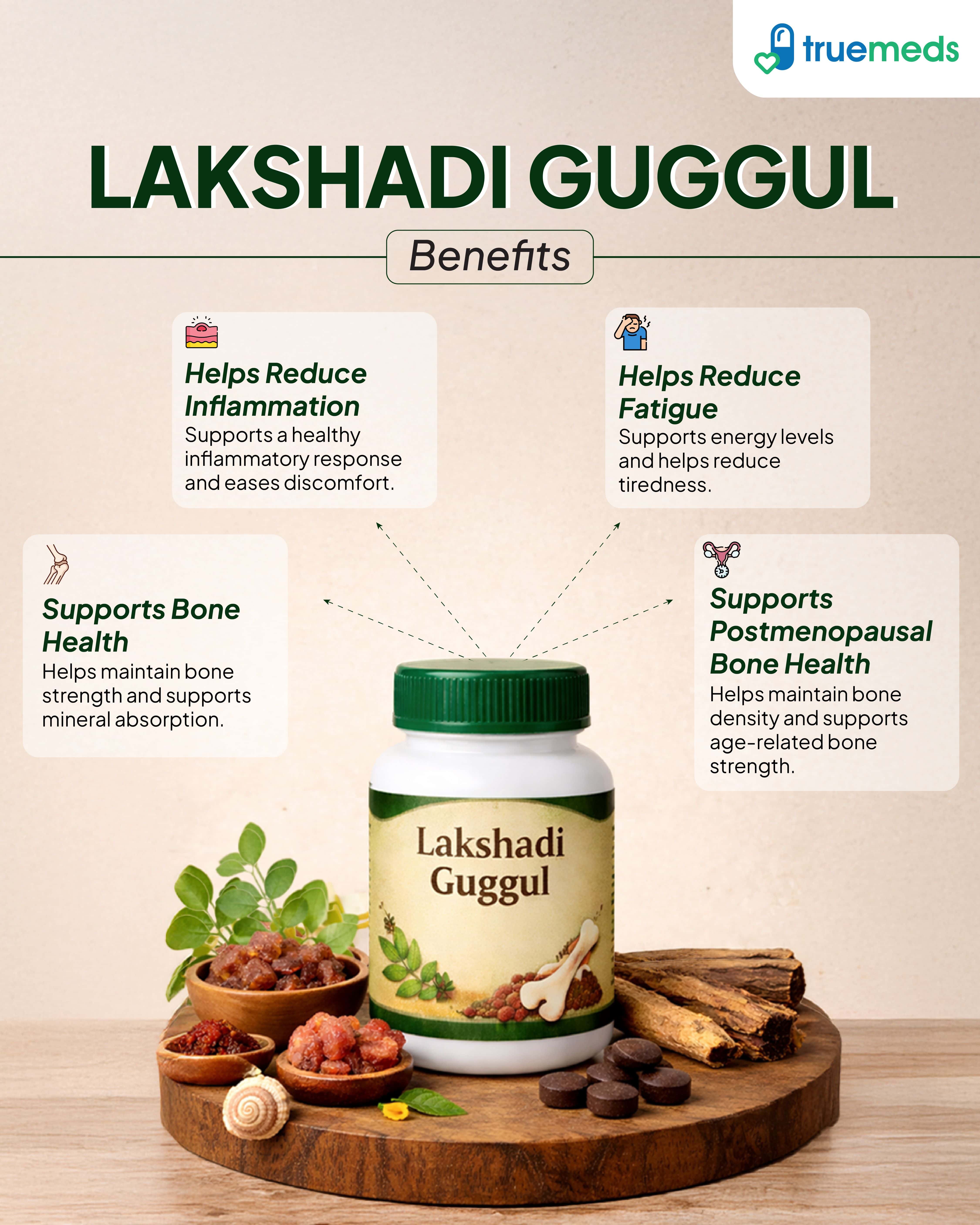
Lakshadi Guggul is traditionally used to support bone health, joint comfort and recovery from musculoskeletal conditions. It is also traditionally associated with maintaining bone health after menopause and supporting general strength during recovery. Evidence specific to Lakshadi Guggul remains limited, so it should complement rather than replace medical treatment.
1. May Support Bone Strength in Osteoporosis
Ayurveda describes weakening bones as Asthi-Majjakshaya, linked to a Vata imbalance. Lakshadi Guggul is traditionally used alongside standard care to help balance Vata and support bone tissue. Human clinical evidence specific to this formulation is limited, so it should be seen as a traditional supportive measure, not a replacement for prescribed osteoporosis treatment.
2. May Help Ease Joint Inflammation
Laksha, Ashwagandha and Arjuna are traditionally associated with anti-inflammatory properties, which is why Lakshadi Guggul is used to help ease mild joint swelling and discomfort, including in conditions such as arthritis (Kumar, 2024). Rheumatoid arthritis is an autoimmune condition and needs a doctor's diagnosis and treatment; this formulation is not a substitute for that care.
3. Traditionally Used for Postmenopausal Bone Loss
Postmenopausal bone loss is a recognised concern in Ayurvedic and modern practice alike. Lakshadi Guggul's antioxidant and anti-inflammatory ingredients are traditionally believed to support bone maintenance after menopause, though this is based on traditional use and preliminary evidence rather than confirmed clinical trials, and bone density should still be monitored medically.
4. May Support General Vitality During Recovery
Ashwagandha, one of the formulation's ingredients, is traditionally used in Ayurveda to help ease fatigue and support general strength during recovery from injury. This is a traditional-use claim rather than an evidence-based one specific to Lakshadi Guggul, and persistent tiredness should always be discussed with a doctor to rule out other causes.
Common Uses of Lakshadi Guggul
Lakshadi Guggul is traditionally used as a supportive formulation during bone fracture recovery, joint discomfort and musculoskeletal rehabilitation (Kumar et al., 2024). It may also be used as an adjunct alongside medical care for low bone density or osteoporosis, but it should not replace standard orthopaedic treatment or osteoporosis management.
1. During Recovery From a Bone Fracture
Used alongside standard orthopaedic treatment (setting, casting or surgery, as advised by a doctor) as a traditional supportive measure during the healing period (Sharma et al., 2012).
2. For Ongoing Joint Stiffness or Swelling
Taken by people with long-standing joint stiffness or mild swelling (Kumar et al., 2024), typically on the advice of an Ayurvedic practitioner, as part of a broader management plan.
3. As Part of Long-Term Osteoporosis Care
Used as a traditional adjunct in people already under medical care for low bone density, rather than as a stand-alone treatment for osteoporosis.
4. During Physiotherapy or Post-Injury Rehabilitation
Sometimes recommended by Ayurvedic practitioners alongside physiotherapy to support the recovery period after a musculoskeletal injury.
Precautions While Taking Lakshadi Guggul
- Consult a healthcare provider: Consult an Ayurvedic practitioner or doctor before starting, especially if you have an existing health condition or take other medicines.
- Avoid in pregnancy and breastfeeding: safety in pregnancy and breastfeeding has not been well studied, so it should not be used during these stages without medical advice.
- Not recommended for children without medical supervision: dosing in children has not been well established.
- Watch for allergic reactions: stop use and seek medical help if you notice a rash, itching or breathing difficulty.
- Take care with digestive sensitivity: people with a sensitive stomach or a digestive disorder should consult a healthcare professional rather than starting at a lower dose on their own.
- Keep to the recommended dose: do not exceed the amount advised by your practitioner, as taking more than recommended may increase the chance of stomach upset.
- Check for drug interactions: consult your doctor before use if you take blood-thinning medicines or medicines for thyroid or bone conditions.
How to Use Lakshadi Guggul
Lakshadi Guggul is available in tablet form, with each tablet containing 500 mg. Here is how it is traditionally taken:
Taking Lakshadi Guggul Tablets
- Take 1–2 tablets, twice daily, or as directed by your Ayurvedic practitioner.
- Swallow the tablets with a glass of warm water or warm milk, preferably after a meal.
- Take it consistently, and continue only for as long as your practitioner recommends, since the duration may vary depending on the condition being managed.
Herbs Traditionally Used With Lakshadi Guggul
Ayurvedic practitioners sometimes combine Lakshadi Guggul with the following herbs and formulations, depending on the individual's condition:
| Herb | Why It Is Traditionally Combined With Lakshadi Guggul |
| Hadjod (Cissus quadrangularis) | Already one of Lakshadi Guggul's own ingredients; practitioners sometimes add a further Hadjod supplement for additional support during fracture recovery, since it is traditionally valued for supporting bone healing. |
| Shallaki (Boswellia serrata) | Shallaki is commonly paired for joint conditions, since its resin is traditionally used to ease joint inflammation and stiffness, complementing the traditional uses of Lakshadi Guggul for bone and joint health. |
| Yograj Guggulu | Another classical Guggulu formulation, often combined for chronic Vata-type joint disorders such as long-standing osteoarthritis, where broader Vata-balancing support is wanted. |
| Trayodashang Guggulu | Sometimes added when weakness or heaviness accompanies joint or bone pain, as it is traditionally used for Vata disorders affecting the muscles and nerves. |
Dosage
| Age Group | Guidance |
| Children | Not recommended without direct guidance from a qualified Ayurvedic practitioner; a safe paediatric dose has not been established. |
| Teenagers | Only under the guidance of an Ayurvedic practitioner or doctor; not for unsupervised self-use. |
| Adults | 1–2 tablets (500 mg each), twice daily, with warm water or milk, preferably after food, or as directed by an Ayurvedic practitioner. |
| Elderly | The adult dose is generally used, but a practitioner should first review other medicines being taken and overall kidney and liver health; starting at the lower end of the range is advisable. |
Note: Lakshadi Guggul supports recovery alongside medical fracture and bone care; it is not a substitute for orthopaedic treatment such as splinting, casting or surgery where this has been advised.
Side Effects of Lakshadi Guggul
Lakshadi Guggul is generally well tolerated when taken as directed. The side effects below may occur, particularly with higher-than-recommended doses or prolonged unsupervised use:
1. Digestive Discomfort
Mild nausea, bloating or loose stools can occur, particularly with higher doses or in people with a sensitive stomach (Nohr et al., 2009). Taking the tablets after food may help reduce this.
2. Allergic Skin Reactions
A small number of people may develop a rash or itching (Nohr et al., 2009). Stop use and seek medical advice if this happens, or if you notice swelling or breathing difficulty, which needs urgent medical attention.
3. Effects With Long-Term Unsupervised Use
Guggul-containing formulations have been associated with digestive and, rarely, thyroid-related effects when used for long periods without medical supervision. Ongoing use should be reviewed periodically by an Ayurvedic practitioner or doctor.
Interaction of Lakshadi Guggul With Other Drugs
Lakshadi Guggul may interact with the following types of medicine. Always tell your doctor about any Ayurvedic products you are taking:
1. Blood-Thinning Medicines
Guggul-containing formulations may affect the action of blood-thinning or antiplatelet medicines, such as warfarin or aspirin, which could increase the risk of bruising or bleeding. Medical supervision is needed if you take these medicines.
2. Thyroid Medicines
Guggul may influence thyroid hormone levels. If you take thyroid medicines such as levothyroxine, use Lakshadi Guggul only under medical guidance, with periodic thyroid function checks if advised.
3. Other Bone or Anti-Inflammatory Medicines
Combining Lakshadi Guggul with other bone-support supplements or anti-inflammatory medicines may increase the chance of digestive side effects. Consult your doctor or pharmacist before combining them, rather than spacing doses out without professional advice.
Storage of Lakshadi Guggul
Store Lakshadi Guggul tablets in a cool, dry place, away from direct sunlight and moisture. Keep the container tightly closed after use, and keep it out of reach of children.
Key Takeaways
- Traditional bone and joint support: Lakshadi Guggul is a classical Ayurvedic formulation of Laksha, Asthishrinkhala, Arjuna, Ashwagandha, Nagabala and Guggulu, traditionally used to support bone strength and ease joint discomfort.
- Used alongside, not instead of, medical care: It is traditionally taken as a supportive measure during fracture recovery and in ongoing joint or bone conditions such as osteoporosis and arthritis, alongside treatment from a doctor.
- Evidence is mainly traditional: Its anti-inflammatory and antioxidant actions are supported by traditional use and early laboratory research on some of its ingredients; large human clinical trials on the formulation itself are limited.
- Generally well tolerated, with some cautions: Mild digestive upset may occur; it should be avoided in pregnancy, breastfeeding and children without medical advice, and used cautiously with blood-thinning or thyroid medicines.
- Always seek medical advice for fractures and osteoporosis: This formulation does not replace orthopaedic treatment, prescribed osteoporosis medicines, or a doctor's diagnosis and monitoring.
FAQs
Can Lakshadi Guggul help with height?
Who should avoid taking Lakshadi Guggul?
Can Lakshadi Guggul be taken with diabetes or blood pressure medicines?
Is Lakshadi Guggul effective for osteoporosis?
Can Lakshadi Guggul be taken for a long time?
Can Lakshadi Guggul affect blood clotting?
Can Lakshadi Guggul be taken if I have kidney disease?
Does Lakshadi Guggul help with bone fractures?
References
- Kumar, S., Jadar, P. G., & Metia, E. (2024). Therapeutic potential and mechanisms of Laksha Guggulu: A comprehensive review. International Journal of Pharmacy and Pharmaceutical Research, 30(5), 479–487. https://ijppr.humanjournals.com/wp-content/uploads/2024/06/35.Dr_.-Shashi-Kumar-Dr.-Prashanth-G.-Jadar-Dr.-Elina-Metia.pdf
- Sarup, P., Bala, S., & Kamboj, S. (2015). Pharmacology and phytochemistry of oleo-gum resin of Commiphora wightii (Guggulu). Scientifica, 2015, Article 138039. https://doi.org/10.1155/2015/138039
- Dudhamal, T. S. (2012). Efficacy of Lakshadi plaster and Laksha Guggulu in the management of Bhagna (stable Colle’s fracture): A case report. [Journal title], 3(2), 124–129. https://www.researchgate.net/publication/277327983
- Nohr, L. A., Rasmussen, L. B., & Straand, J. (2009). Resin from the mukul myrrh tree, guggul: Can it be used for treating hypercholesterolemia? A randomized, controlled study. Complementary Therapies in Medicine, 17(1), 16–22. https://doi.org/10.1016/j.ctim.2008.07.001
- Mishra, L. C., Singh, B. B., & Dagenais, S. (2000). Scientific basis for the therapeutic use of Withania somnifera (ashwagandha): A review. Alternative Medicine Review, 5(4), 334–346. https://pubmed.ncbi.nlm.nih.gov/10956379/
Explore other categories
Latest health articles




Top Health Essentials
Top-selling ayurvedic products












Disclaimer
Top-Selling Medicines:
...View more
Top-OTC medicines:
...View more
Top-selling healthcare devices:
...View more
Company
About UsHealth ArticleHealth StoriesHealth LibraryDiseases & Health ConditionsAyurvedaUnderstanding Generic MedicinesAll MedicinesAll BrandsNeed HelpFAQSecuritySavings CalculatorAdvertise with UsSubscribe
Registered Office Address
Grievance Officer
Download Truemeds


Contact Us
Our customer representative team is available 7 days a week from 9 am - 9 pm.
v4.28.13

2026 - Truemeds | All rights reserved. Our content is for informational purposes only. See additional information.

Our Payment Partners




