

- Medicines
- Personal Care
- Skin Cream
- Sunscreen
- Face Wash
- Skin and Body Soap
- Acne Care
- Body Lotions
- Moisturising Lotion
- Moisturising Cream
- Mosquito Repellent
- Moisturising Gel
- Body Wash
- Hair Oils
- Hair Shampoo
- Hair Conditioners
- Hair Supplements
- Hair Colour
- Hair Serum
- Hair Mask
- Hair Solutions
- Baby Diapers and Wipes
- Baby Lotion and Moisturising Cream
- Baby Bath Essentials
- Baby Skin Care
- Baby and Infant Food
- Baby Healthcare
- Women Multivitamins
- Ovulation Test Kit and Women Intimate Care
- Sanitary Pads
- Nutritional Drinks
- Condoms
- Lubricants
- Massage Gels
- Personal Body Massagers
- Men Performance Booster
- Sexual Health Supplements
- Massage Oils
- Ayurveda
- Tooth Paste
- Mouth Ulcer Gel
- Mouthwash
- Toothache and Gum Pain
- Tooth Brush
- Gargle Solution
- Orthopaedic Supports
- Adult Diapers
- Footwear
- Mobility and Support Accessories
- Urinary Support and Care
- Health Conditions
- Bone and Joint Care
- Digestive Care
- Eye Care
- Pain Relief
- Smoking Cessation
- Liver Care
- Stomach Care
- Cold and Cough
- Heart Care
- Kidney Care
- Piles, Fissures & Fistula
- Respiratory Care
- Mental Wellness
- Derma Care
- Pre and Probiotics
- Acidity
- Gas
- Constipation
- Loose Motion/Diarrhoea
- Digestive Fibres
- Digestive Enzymes
- Eye Lubricant Drops
- Lens Solution
- Safety Eye Wear
- Eye Cream
- Eye Vitamins and Supplements
- Eye Drops
- Eye Ointment and Gel
- Nicotine Patch
- Nicotine Gum
- Nicotine Lozenges
- Cough Syrups
- Chest Rubs and Balms
- Nasal Spray
- Lozenges
- Inhalant Capsules
- Cold and Cough Tablets
- Vitamins & Supplements
- Diabetes Care
- Healthcare Devices
- Homeopathic Medicine
- Health Guide
Sanjivani Vati
Sanjivani Vati is a classical Ayurvedic polyherbal tablet formulation made from ten herbal and mineral ingredients, including Vidanga, Haritaki, Amalaki, Guduchi and specially purified Vatsanabha. It is traditionally prepared to support digestion, ease mild fever, and assist the body's natural process of clearing accumulated waste, known in Ayurveda as ama. It is traditionally believed to help balance Vata and Pitta dosha and support digestive fire, or Agni, when used correctly.
 50
50Last updated on : 23 Sep, 2026
Read time : 15 mins
What is Sanjivani Vati?
The name Sanjivani means "restorer of life" in Sanskrit, reflecting its traditional reputation as a formulation used in serious conditions where fast recovery was needed. In Ayurveda, it is classified as a Rasaushadhi, a herbo-mineral tablet that combines specially purified mineral ingredients with common digestive herbs, prepared according to traditional purification protocols (Sanskara) to reduce the potential toxicity of ingredients such as Vatsanabha before use. It is traditionally used to support digestion, help clear ama (accumulated digestive waste), and ease mild fever.
Key Facts
| Feature | Details |
| Formulation name | Sanjivani Vati |
| Formulation type | Herbo-mineral tablet (Vati / Rasaushadhi) |
| Classical reference | Sharangdhara Samhita, Madhyamakhanda |
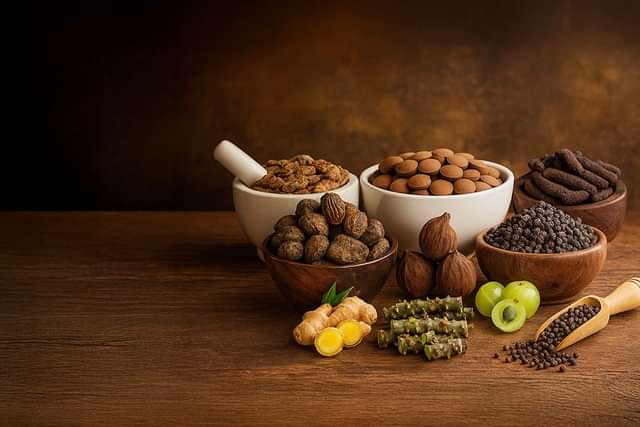
| Composition | Vidanga, Ginger, Pippali, Haritaki, Vibhitaki, Amalaki, Vacha, Guduchi, purified Bhallataka and purified Vatsanabha, traditionally triturated with cow's urine |
| Classical proportion | Traditionally equal parts of each of the ten ingredients |
| Also known as | Sanjeevani Vati, Sanjivani Gutika |
| Key active compounds | Piperine (Pippali, related to black pepper), embelin (Vidanga), tannins (Haritaki, Vibhitaki, Amalaki), and aconite alkaloids in purified Vatsanabha, with reduced toxicity after purification (Deore et al., 2013) |
| Dosha action | Traditionally believed to balance Vata and Pitta dosha |
| Traditional uses | Digestive discomfort, ama accumulation, mild fever |
| Common forms | Tablets |
| General dosage | 1 to 2 tablets twice daily after meals, with ginger juice and warm water, or as directed by an Ayurvedic physician |
| Best taken | After meals, with ginger juice and warm water as anupana |
| Key safety note | Contains specially purified potentially toxic ingredients (Vatsanabha and Bhallataka); listed under Schedule E(1) of the Drugs and Cosmetics Rules, 1945 (Vikram et al., 2022); use only under medical supervision |
Alternative Names of Sanjivani Vati
Sanjivani Vati is a Sanskrit name used across India with only minor spelling variations, rather than one that has been translated into separate regional names. The commonly seen spelling variants are:
- Sanjivani Vati
- Sanjeevani Vati
- Sanjivani Gutika
- Sanjeevani Gutika
Composition of Sanjivani Vati
Traditional preparation involves purifying and powdering each ingredient below, including specific purification (Shodhana) of the toxic components, before triturating the mixture with cow's urine and forming it into tablets. The classically documented ingredients are:
- Vidanga (Embelia ribes): traditionally used as an anthelmintic (de-worming) and digestive herb; laboratory studies suggest antimicrobial activity associated with its embelin content (Sharma et al., 2022)
- Amalaki (Emblica officinalis): a vitamin C-rich fruit traditionally associated with antioxidant and rejuvenative (rasayana) properties
- Haritaki (Terminalia chebula): traditionally used to support healthy digestion and elimination
- Vibhitaki (Terminalia bellirica): traditionally used for its astringent, digestive properties
- Ginger, or Shunthi (Zingiber officinale): traditionally used to support digestion
- Pippali (Piper longum): traditionally used to support digestion and, in early clinical research, has been associated with modest relief of cough and cold symptoms (George et al., 2025)
- Vacha (Acorus calamus): traditionally used as a carminative and digestive aid
- Guduchi (Tinospora cordifolia): traditionally regarded as an adaptogen; has shown immune-supportive activity in animal studies (Aranha & Venkatesh, 2020)
- Bhallataka (Semecarpus anacardium), specially purified: a classical rasayana ingredient traditionally used in small, physician-supervised doses for joint discomfort; the unprocessed nut is toxic and can cause severe skin and mucosal irritation
- Vatsanabha (Aconitum ferox), specially purified: traditionally valued for its digestive-stimulant and fever-easing action once detoxified through Shodhana, which is intended to reduce the toxicity of its alkaloids (Deore et al., 2013); the unprocessed root is a listed poison under Schedule E(1) of the Drugs and Cosmetics Rules, 1945 (Vikram et al., 2022)
- Cow's urine: used as the traditional trituration liquid (bhavana dravya) that binds the powdered ingredients into tablets
Ingredients Used in Sanjivani Vati
Sanjivani Vati is a potent combination of rare herbs and their rich medicinal properties. Some of the prominent components of Sanjivani Vati are as follows:
- Vidanga or Embelia ribes: This herb acts as an antiparasitic and de-wormer and is used to manage several stomach-related diseases.
- Amlaki or Amalaki (Emblica officinalis): This herb is a Vitamin C storehouse with rich antioxidant and rejuvenator properties.
- Haritaki (Terminalia chebula) is a powerful herb for detoxifying the body.
- Vibhitaki (Terminalia bellirica) acts as an astringent; it can control respiratory and digestive system disorders.
- Ginger (Zingiber officinale): Aids in digestion and has anti-inflammatory action.
- Black Pepper (Piper nigrum): Improves digestion and boosts metabolism.
- Pippali (Piper longum) mainly supports the respiratory pathway and aids digestion.
- Bhallataka (Semecarpus anacardium): Known for its potent immune-boosting and anti-inflammatory properties
- Ativisha (Aconitum ferox): Anti-pyretic in nature, useful in managing fever
- Vacha (Acorus calamus): Possess carminative and digestive properties
- Guduchi (Tinospora cordifolia): Renowned adaptogen and immunomodulator, Guduchi helps enhance overall immunity and manages chronic fevers and infections.
- Cows Urine: a bio-enhancer, aiding in detoxification and balancing tridoshas
Medicinal Properties of Sanjivani Vati
The ingredients in Sanjivani Vati are traditionally associated with several actions on the body. These reflect traditional Ayurvedic understanding and, in places, early laboratory research, rather than confirmed clinical effects in humans:
- Digestive stimulant: traditionally believed to support Agni, the digestive fire, and improve appetite
- Carminative: traditionally used to help ease trapped gas and bloating that can follow a heavy or irregular meal
- Antioxidant: Amalaki is a well-documented natural source of antioxidant compounds that may help counter oxidative stress
- Anti-inflammatory: traditionally used to help ease minor joint discomfort and stiffness associated with occasional overexertion
- Antipyretic: traditionally used to help manage mild fever and support general recovery during minor infections
- Immunomodulatory: Guduchi has shown immune-supportive activity in animal studies, though human evidence remains limited (Aranha & Venkatesh, 2020)
- Antimicrobial: some ingredients, including Vidanga, show antimicrobial activity against certain bacteria in laboratory studies (Sharma et al., 2022)
Health Benefits of Sanjivani Vati
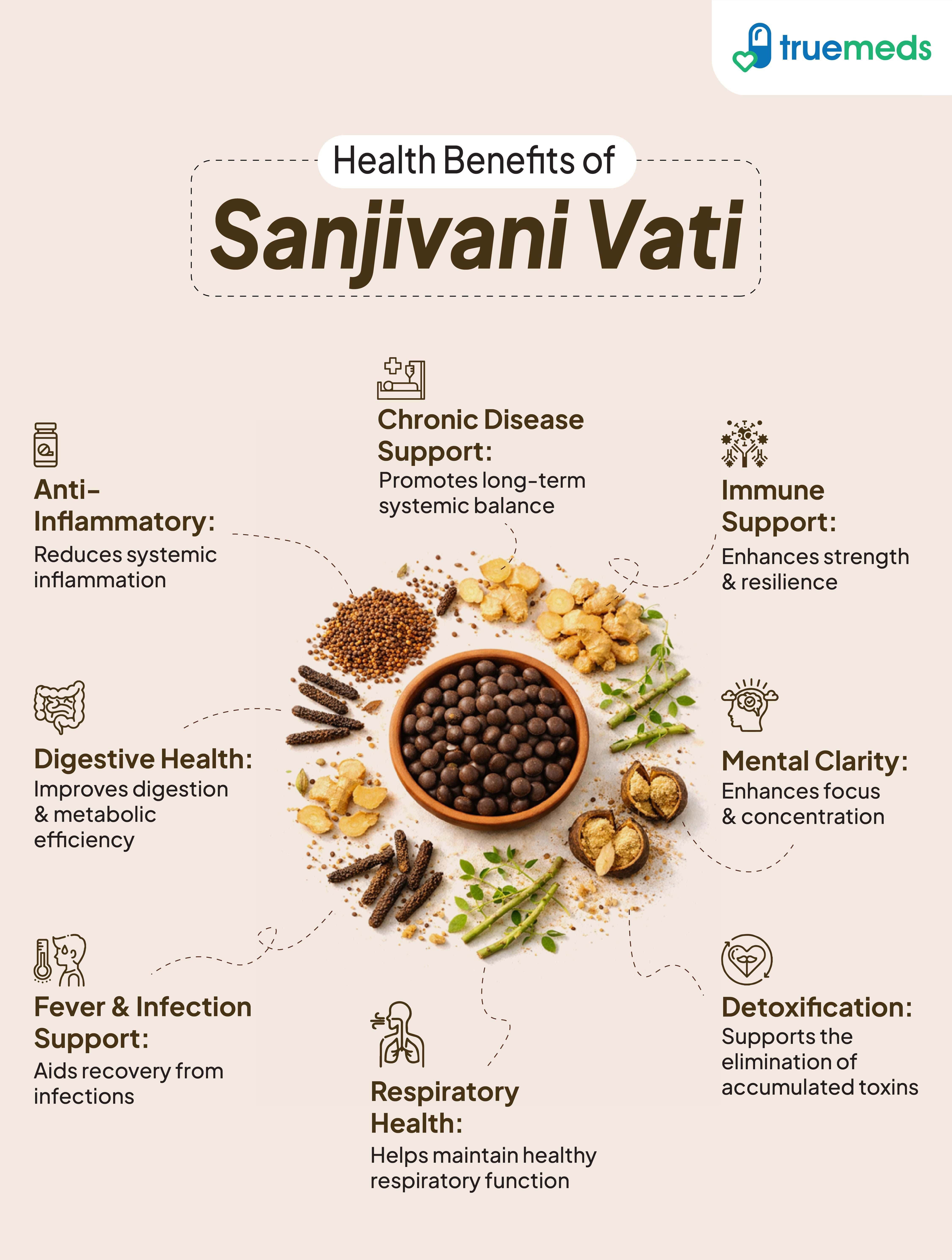
Sanjivani Vati is traditionally associated with the health benefits below. Each one reflects traditional Ayurvedic use, and in places early research, rather than a guaranteed clinical outcome, and none of them should replace medical treatment for a diagnosed or serious illness.
Supports the Body's Natural Detox Process
In Ayurveda, Sanjivani Vati is traditionally believed to help clear ama, or accumulated digestive waste, from the body. Ingredients such as Haritaki and Amalaki are traditionally associated with supporting healthy digestion and elimination. This is a traditional use and has not been confirmed by human clinical trials.
May Help Support Digestion
Ginger and Pippali in Sanjivani Vati are traditionally believed to support Agni, the digestive fire that Ayurveda associates with healthy appetite, digestion and elimination. It is traditionally used to help ease mild bloating and indigestion after meals, alongside a suitable diet.
Traditionally Associated With Immune Support
Guduchi, one of the key ingredients in Sanjivani Vati, has shown immune-supportive activity in animal studies (Aranha & Venkatesh, 2020). In Ayurveda, the formulation is traditionally used to help support the body's natural resistance during seasonal infections, although human clinical evidence for the complete formulation is currently lacking.
May Offer Symptomatic Support for Cough and Cold
Pippali and ginger in Sanjivani Vati are traditionally used to help loosen mucus and ease throat discomfort during a cough or cold. A recent systematic review found modest symptom relief in limited-quality clinical studies (George et al., 2025). It is not a treatment for asthma or any other diagnosed respiratory disease.
May Help With Occasional Joint Discomfort
The specially purified Bhallataka in Sanjivani Vati is traditionally associated with easing minor joint stiffness and discomfort. It is not a treatment for rheumatoid arthritis or other diagnosed joint disease, which need proper medical diagnosis, and should be used only under Ayurvedic physician supervision given Bhallataka's toxicity profile.
Traditionally Used During Mild Fever
Sanjivani Vati is traditionally used to help ease mild fever and support recovery from minor infections, under medical guidance. This use is recorded in classical Ayurvedic texts. It is not intended for high, prolonged, or unexplained fever, which needs prompt medical assessment to rule out a serious underlying cause.
May Support Mental Clarity and Focus
By supporting healthy digestion and helping clear ama, Sanjivani Vati is traditionally believed to ease the mental fog that can accompany poor digestion or tiredness. This is a traditional Ayurvedic association rather than a proven cognitive effect, and it is not intended for any diagnosed neurological or psychiatric condition.
Traditionally Used as Part of Long-Term Ayurvedic Care
In classical Ayurvedic practice, Sanjivani Vati is sometimes included in longer-term care plans for chronic digestive and inflammatory complaints, always under a qualified Ayurvedic physician's supervision. It is not a treatment for diabetes, or for any other diagnosed chronic disease, and must never replace prescribed medical treatment for such conditions.
Common Uses of Sanjivani Vati
Sanjivani Vati is traditionally used in Ayurveda for digestive complaints, seasonal cough and cold symptoms, and mild fever. Its use should follow the guidance of a qualified Ayurvedic practitioner, particularly because the formulation contains purified toxic ingredients.
During Seasonal Cold and Cough Episodes
Sanjivani Vati is traditionally used at the first sign of a seasonal cough, cold or throat irritation, alongside rest, warm fluids and a light diet, and under medical guidance if symptoms are severe or do not settle within a few days.
Alongside Ginger Juice as a Classical Anupana
In classical practice, Sanjivani Vati is traditionally taken with ginger juice as the anupana, or vehicle, which is traditionally believed to support the digestive action of the tablet when taken after meals.
As Part of Ayurvedic Digestive-Care Routines
Ayurvedic practitioners have traditionally used Sanjivani Vati as one part of a broader digestive-care routine for occasional indigestion, bloating or sluggish digestion, alongside dietary advice suited to the individual's constitution.
Under Physician Supervision for Classical Fever Protocols
In classical Ayurvedic fever-management protocols, Sanjivani Vati has traditionally been used by qualified practitioners as one part of a supervised treatment plan, and not as a stand-alone home remedy for undiagnosed or persistent fever.
Precaution While Taking Sanjivani Vati
Sanjivani Vati contains specially purified ingredients that may be toxic, so the following precautions should be followed carefully:
- Pregnancy and breastfeeding: Avoid use unless specifically advised and supervised by a qualified Ayurvedic physician, as safety in pregnancy and breastfeeding has not been established
- Existing health conditions: People with heart disease, kidney disease, diabetes, or other chronic conditions should consult a doctor before use, as the dose may need to be adjusted or the formulation avoided
- Alcohol: Avoid alcohol while taking this formulation, as it may increase the risk of adverse effects
- Known allergy: Do not take Sanjivani Vati if you have a known allergy or sensitivity to Bhallataka (Semecarpus anacardium) or Vatsanabha (Aconitum ferox)
- Self-medication: Do not use Sanjivani Vati as a substitute for professional medical advice, particularly for fever, infection or joint pain that does not improve within a few days
Note: This information is not a substitute for professional medical advice. Please consult a qualified Ayurvedic physician before use, particularly if you are pregnant, breastfeeding, elderly, or managing a long-term illness.
How to Use Sanjivani Vati
Sanjivani Vati is available only as tablets. The steps below explain how it is traditionally taken.
- Take the number of tablets advised by your Ayurvedic physician, generally after meals.
- Swallow the tablets with a small amount of ginger juice, followed by a glass of warm water, which is the classical anupana used to support digestion.
- Do not crush or chew the tablet unless your practitioner has specifically advised you to.
- Do not exceed the dose your practitioner has recommended, and do not increase the dose on your own if symptoms persist.
Note: Do not use Sanjivani Vati as a first response to a medical emergency, including a suspected snake bite or a high fever of unknown cause. Seek immediate medical attention in such situations.
Herbs Traditionally Used With Sanjivani Vati
In classical Ayurvedic practice, certain herbs are traditionally combined with Sanjivani Vati to support its intended action. The pairing that could be verified for this formulation is described below.
Herb | How it is traditionally used with Sanjivani Vati |
Ginger (Shunthi / Ardraka) | Ginger juice is the classical anupana, or carrier, traditionally taken alongside Sanjivani Vati after meals with warm water, and is traditionally believed to support digestion and the intended action of the formulation. |
Recommended Dosage of Sanjivani Vati
Dosage varies by age and health status. The general ranges below are for information only, and an Ayurvedic physician should confirm the right dose and duration for you.
- Children (under 12 years): not recommended for self-administration; any use should be prescribed and closely supervised by a physician experienced in treating children, given the potentially toxic purified ingredients in this formulation
- Teenagers (13 to 18 years): dosage should be set individually by an Ayurvedic physician based on age, weight and health status; there is no standard over-the-counter dose for this age group
- Adults: typically 1 to 2 tablets, twice daily, taken after meals with ginger juice and warm water, or as directed by an Ayurvedic physician
- Elderly: a lower starting dose is generally advised, with close monitoring for digestive or other side effects, particularly where other medicines are also being taken
Note: This dosage information is for general educational purposes only and must not replace personalised advice from a qualified Ayurvedic physician. Sanjivani Vati must never be used, including for a suspected snake bite, unexplained fever, or any other medical emergency, as a substitute for immediate professional medical care.
Side Effects of Sanjivani Vati
Sanjivani Vati may cause side effects, particularly if used incorrectly or without medical supervision. The following side effects may occur:
Gastrointestinal Discomfort
Taking more than the recommended dose may cause nausea, stomach pain or diarrhoea. Stop the formulation and consult a doctor if these symptoms occur or persist.
Skin and Allergic Reactions
Some people may develop a skin rash or itching, particularly if they are sensitive to Bhallataka or Vatsanabha. Stop use immediately and seek medical advice if this occurs.
Symptoms of Overdose
Taking significantly more than the recommended dose may cause dizziness, abdominal pain or other toxic effects. This is a medical emergency, and immediate medical attention should be sought.
Note: If you notice any side effect not listed here, or one that is severe or does not improve, stop taking Sanjivani Vati and consult a doctor promptly.
Interaction of Sanjivani Vati With Other Drugs
No formal drug-interaction studies have been carried out on Sanjivani Vati as a complete formulation. Based on its individual ingredients, the following precautions are advised.
Blood-Thinning Medicines
Ginger may have a mild effect on blood clotting. People taking blood-thinning medicines, such as warfarin or aspirin, should use Sanjivani Vati only under medical supervision.
Diabetes and Blood-Pressure Medicines
Because several ingredients may influence digestion and metabolism, people taking medicines for diabetes or high blood pressure should consult their doctor before use, to reduce the risk of unexpected changes in blood sugar or blood pressure control.
Other Ayurvedic or Herbal Products
Taking Sanjivani Vati together with other formulations that also contain purified Vatsanabha or Bhallataka may increase the risk of side effects and should be avoided unless a qualified Ayurvedic physician has reviewed all products being used.
Note: Always tell your doctor or Ayurvedic physician about all medicines and supplements you are taking before starting Sanjivani Vati.
Storage of Sanjivani Vati
Store Sanjivani Vati in a cool, dry place, away from direct sunlight and moisture. Keep the container tightly closed, and keep it out of reach of children at all times, as this formulation contains ingredients that may be toxic if taken in excess or without medical supervision. Do not use beyond the expiry date printed on the pack.
Key Takeaways
- Sanjivani Vati is a classical Ayurvedic herbo-mineral tablet traditionally used to support digestion, ease mild fever, and assist the body's natural process of clearing ama
- It contains specially purified ingredients that may be toxic, Vatsanabha and Bhallataka, and is listed under Schedule E(1) of the Drugs and Cosmetics Rules, 1945, meaning it should be used only on the advice of a registered Ayurvedic practitioner (Vikram et al., 2022)
- It is not a treatment for diabetes, asthma, or any other diagnosed medical condition, and should never replace prescribed medical treatment for such conditions
- Side effects may include digestive upset and occasional skin reactions, but an overdose can cause dizziness and other toxic effects and needs urgent medical attention
- Pregnant or breastfeeding women, children, the elderly, and people with a chronic illness should use this formulation only under medical supervision
FAQs
Is it safe to take Sanjivani Vati without consulting a doctor?
Can Sanjivani Vati be taken with other medicines or multivitamins?
When is the best time to take Sanjivani Vati?
Is it safe to administer Sanjivani Vati to children and elderly individuals?
Can Sanjivani Vati be taken for a long period?
What diet should be followed while taking Sanjivani Vati?
References
- Gairola, S., Gupta, V., Bansal, P., Maithani, M., & Krishna, C. M. (2011). PHARMACOLOGICAL ACTIVITIES OF POLYHERBAL FORMULATION: SANJIVANI VATI. International Journal of Ayurvedic Medicine, 2(1). https://doi.org/10.47552/ijam.v2i1.54
- Tewari, D., Tewari, V., Kuldeep, Chaudhary, S., & Tiwari, S. (2018). Greentree Group Publishers Int J Ayu Pharm Chem A Scientific Review on Sanjivani Vati with special reference to its Pharmacological Actions, Therapeutic Indications and Pharmaceutics. Greentree Group Publishers© IJAPC Int J Ayu Pharm Chem, 9, 3. http://ijapc.com/volume9-third-issue/MNAPC-V9-I3-27-p-82-92.pdf





Explore other categories
Latest health articles





Top Health Essentials



Top-selling ayurvedic products













Disclaimer
Top-Selling Medicines:
...View more
Top-OTC medicines:
...View more
Top-selling healthcare devices:
...View more
Company
About UsHealth ArticleHealth StoriesHealth LibraryDiseases & Health ConditionsAyurvedaUnderstanding Generic MedicinesAll MedicinesAll BrandsNeed HelpFAQSecuritySavings CalculatorAdvertise with UsSubscribe
Registered Office Address
Grievance Officer
Download Truemeds


Contact Us
Our customer representative team is available 7 days a week from 9 am - 9 pm.
v4.28.18

2026 - Truemeds | All rights reserved. Our content is for informational purposes only. See additional information.

Our Payment Partners




