

Key Takeaways
- Haritaki (Terminalia chebula) is the dried fruit of a tree native to South Asia. It is a traditional Ayurvedic herb used mainly for digestive complaints and constipation, and it is a key ingredient of Triphala.
- Most research on Haritaki is from laboratory and animal studies. High-quality human studies are limited, and its effectiveness in treating specific diseases has not been established.
- It has a laxative effect. Excessive use can cause diarrhoea and dehydration. It is not a weight-loss or “detox” product.
- It may interact with some medicines, including diabetes medicines. Avoid it during pregnancy and breastfeeding unless advised by a doctor, and avoid using it if you have diarrhoea or dehydration.
- Ask a doctor or qualified Ayurvedic practitioner before using it, and buy only from a licensed manufacturer. Herbal products may contain contaminants or ingredients that are not listed on the label.
- Stop using it and seek medical help for severe diarrhoea, blood in the stool, severe stomach pain, dizziness or an allergic reaction.
Haritaki, scientifically known as Terminalia chebula, is a revered herb in Ayurvedic medicine, often called the "King of Medicines"[1]. The dried fruit has been used for centuries in Ayurveda, mainly for digestive complaints such as constipation, and it is a key ingredient of Triphala[2]. According to Ayurveda, Haritaki balances the three doshas (vata, pitta and kapha), which is a traditional concept and not a scientifically measured effect[1]. Modern research has found that Haritaki contains compounds with antioxidant and other biological activities, but most of this research is in laboratory or animal studies, and high-quality human studies are limited[3].
This guide explains the traditional uses of Haritaki, what the evidence shows, how it is used, its side effects, and who should use caution with it.
What is Haritaki?
Haritaki is a medium-sized deciduous tree that is native to the Indian subcontinent, particularly in the regions of India, Nepal, and Sri Lanka[1]. The tree bears a fruit that is highly valued for its medicinal properties[3]. In Ayurveda, Haritaki is classified as a "Rasayana," which means it has rejuvenating and longevity-promoting effects on the body[1]. The dried fruit of the Haritaki tree is used in various forms, such as powder, decoction, or tablets, to treat a wide range of ailments. Its astringent, bitter, and sweet tastes are believed to contribute to its therapeutic effects, making it a versatile remedy in traditional medicine[3].
Did you know?
Haritaki is a unique Ayurvedic herb that contains five out of the six primary tastes, i.e., Katu (pungent), Tikta (bitter), Kashaya (astringent), Madhur (sweet), and Amla (sour). It is known for its Laghu and Ruksha Guna (light and dry qualities), Ushna Virya (hot potency), and Madhura Vipaka (sweet post-digestive effect). This rare combination makes it a powerful rejuvenator and a natural balancer of all three doshas: Vata, Pitta, and Kapha.
Health Benefits of Haritaki
Haritaki offers a range of health benefits, making it a valuable addition to one's wellness routine[2]. From aiding digestion and supporting detoxification to bolstering the immune system, this herb has a multifaceted approach to promoting overall health[3]. Here are some of the key Haritaki benefits:
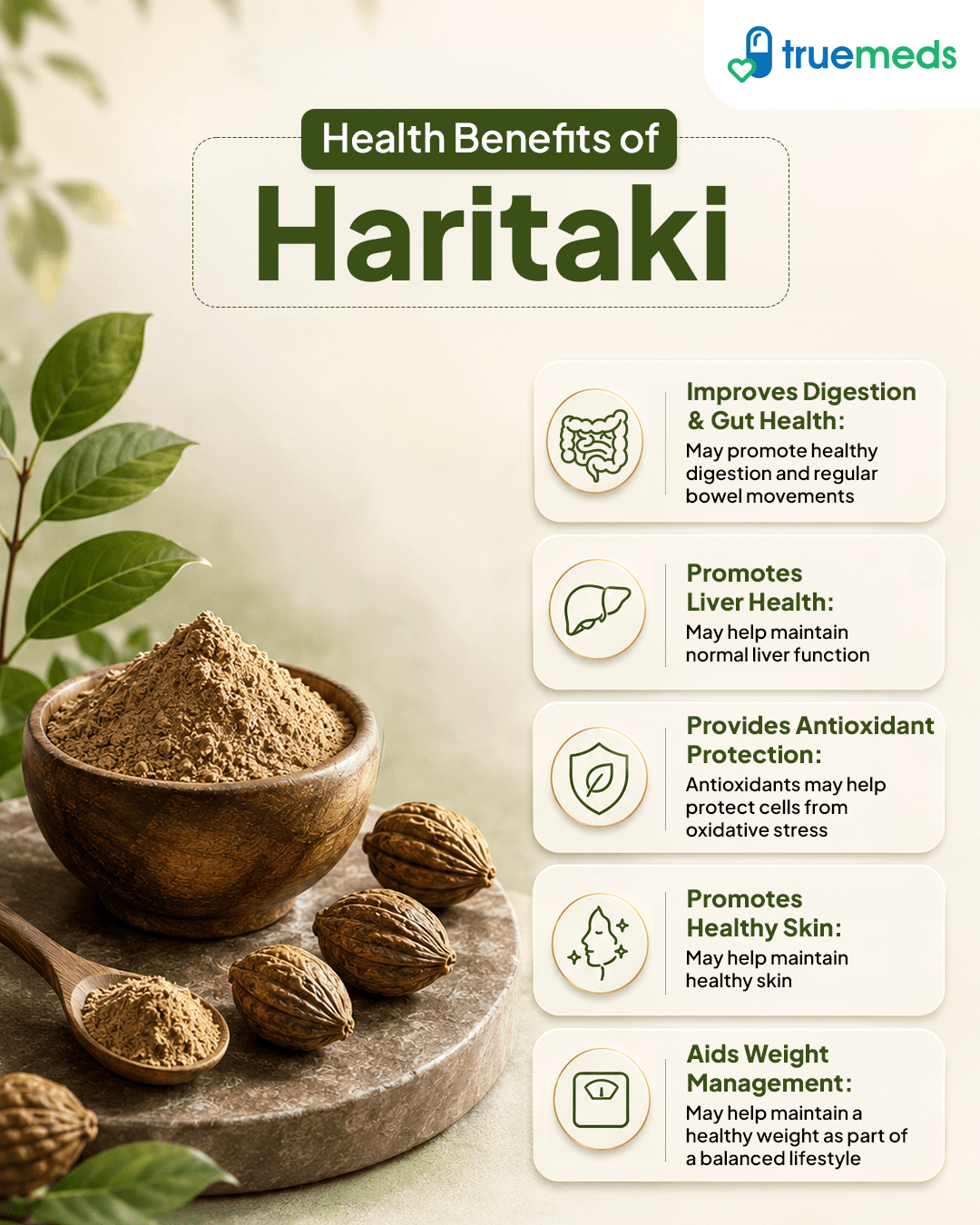
1. Enhanced Digestion & Gut Health
One of the most well-known Haritaki benefits is its ability to support digestive health. The herb's laxative properties may help alleviate constipation and promote regular bowel movements, ensuring proper elimination of waste from the body. Haritaki may improve gut motility and digestive function, which aid in the breakdown and absorption of nutrients from food[4]. Additionally, its astringent properties help tone the digestive tract, reducing inflammation and preventing issues such as bloating and gas[3]. Consuming Haritaki powder with warm water on an empty stomach is a traditional Ayurvedic practice believed to cleanse the digestive system and optimise gut health[4].
2. Natural Detoxification
Haritaki is a potent natural detoxifier that helps the body eliminate toxins and other harmful substances[2]. Experimental studies have shown that it enhances liver function, which is central to detoxification, by stimulating bile production and supporting liver enzyme activity. This helps the liver process and eliminate metabolic waste more efficiently[5]. Additionally, Haritaki acts as a mild laxative, promoting regular bowel movements and preventing constipation by improving gut motility[4]. Its rich antioxidant content protects cells from oxidative damage caused by free radicals, reducing inflammation and oxidative stress. Haritaki also supports natural detoxification pathways by enhancing liver metabolism and improving circulation[6].
3. Immune System Support
Haritaki has immune-boosting properties that help strengthen the body's natural defences against infections and diseases. It has shown immunomodulatory effects in preclinical studies, which enhance the body's innate ability to fight pathogens by promoting the function of immune cells[7]. The antioxidants present in Haritaki protect immune cells from oxidative stress, thereby maintaining their effectiveness[6]. Regular use of Haritaki may support the immune system by reducing inflammation and preventing disease progression[3]. This herb's ability to balance the body's doshas further contributes to a robust immune response, making it valuable for maintaining overall immune health[1].
4. Skin and Hair Vitality
Haritaki has traditionally been used for skin and hair health. It may support skin health by purifying the blood and removing toxins, which may help clear acne and other skin blemishes. Its antioxidant properties combat oxidative stress, reducing inflammation and promoting a clearer, healthier complexion. By enhancing circulation and detoxification, Haritaki may contribute to skin regeneration and vitality. For hair, Haritaki may strengthen hair follicles, promote healthy hair growth, and prevent premature greying and hair loss. Its nourishing and cleansing effects help maintain scalp health and improve hair texture, making it a beneficial natural remedy for both skin and hair care[6].
5. Weight Management
Haritaki may be a valuable ally in your weight loss journey. Its unique blend of bioactive compounds helps boost metabolism and support healthy fat burning. Various pre-clinical studies have shown that Haritaki supports lipid metabolism and aids digestion by enhancing enzymatic activity, which may help reduce LDL cholesterol levels and prevent excessive fat accumulation in the body[8]. This ancient remedy also detoxifies the system by eliminating harmful toxins, which may support overall digestive health and metabolic function[6]. Consuming Haritaki powder mixed in warm water is a traditional method for managing weight, as its mild laxative effect supports digestion and nutrient absorption, whilst it may balance gut health for improved energy utilisation and fat metabolism[4].
Note: Evidence is primarily from animal studies; human data are limited. Consult a qualified Ayurvedic practitioner before starting any new supplement regimen for weight management.
Types of Haritaki
Several traditional varieties of Haritaki are described in Ayurveda, each with distinct characteristics:
- Vijaya: Considered the most widely used variety and traditionally valued for its broad range of applications.
- Rohini: Recognised for its round shape and traditionally associated with supporting tissue health.
- Putana: Characterised by a large seed and comparatively less pulp.
- Amrita: Known for its fleshy pulp and traditionally used in various Ayurvedic preparations.
- Abhaya: Traditionally associated with digestive wellness and regular bowel function.
- Jivanti: Identified by its golden-yellow appearance and valued in traditional practices.
- Chetaki: Distinguished by its elongated shape and commonly referenced in classical Ayurvedic texts.
Haritaki uses in traditional medicine
Haritaki (Terminalia chebula) has been a cornerstone of traditional Indian healing practices for centuries[1]. Haritaki is most renowned for promoting digestive health and relieving constipation, gas, and bloating, and is a key ingredient in the well-known Triphala formulation[9]. Its detoxifying and rejuvenating effects help cleanse the body, support liver function, and promote vitality and longevity[5]. Traditionally, it has also been used for respiratory issues, due to its expectorant and antimicrobial qualities, while its antioxidant and immunomodulatory properties may help strengthen immunity[3]. Haritaki aids in skin healing, metabolic balance, and cardiovascular support, particularly in managing blood sugar and heart health[2].
How to use Haritaki?
When incorporating Haritaki into your wellness routine, there are several ways to consume this powerful herb:
- Powder: Mix Haritaki powder in warm water or honey. Consume this mixture before meals to aid digestion or at bedtime for mild laxative effects.
- Capsules: Standardised doses, as per product guidelines, offer a convenient and controlled way to intake Haritaki.
- Triphala: Combine equal parts of Haritaki, Bibhitaki, and Amalaki to create the renowned Ayurvedic formulation, Triphala[9]. Take this mixture with warm water for detoxification and improved gut health.
- Decoctions: Boil Haritaki powder in water, strain the liquid, and drink it to address specific ailments, such as respiratory issues.
To ensure the most effective and personalised use of Haritaki, it is always advisable to consult an experienced Ayurvedic practitioner who can provide tailored dosing recommendations and formulations based on your individual needs.
Haritaki Dosage
There is no clearly established standard dose of Haritaki based on high-quality human clinical evidence. The amount used may vary depending on the form, such as powder, capsule or tea, and the reason for use. If you are considering Haritaki, consult a doctor or qualified Ayurvedic practitioner for advice on the appropriate amount for you, particularly if you have a health condition or are pregnant or breastfeeding.
- Do not exceed the recommended amount stated on a licensed product's label.
- Stop using Haritaki if you develop significant diarrhoea, dizziness or other concerning symptoms.
- Children should use Haritaki only under the guidance of a doctor or qualified Ayurvedic practitioner.
Clinical advisory: Dosage must be determined by a healthcare provider. Do not self-medicate without medical supervision.
Haritaki side effects and precautions
Here are some of the potential Haritaki side effects and precautions you must keep in mind:
- Digestive Issues: Haritaki has a mild laxative effect, which may cause diarrhoea or stomach upset in some individuals.
- Interaction with Medications: It may interact with diabetes medications due to its hypoglycaemic effects, so monitoring blood sugar levels is essential.
- Pregnancy and Breastfeeding: Avoid use during pregnancy and breastfeeding unless specifically advised by a healthcare professional.
- Allergic Reactions: In rare cases, some people may experience allergic reactions to Haritaki.
- Overconsumption: Avoid taking excessive amounts of Haritaki, as it can lead to excessive purgation and diarrhoea, leading to dehydration and electrolyte imbalance.
Always consult with a qualified healthcare provider before incorporating Haritaki into your health regimen, especially if you have underlying medical conditions.
By understanding these potential side effects and precautions, you can make an informed decision about incorporating Haritaki into your health regimen.
FAQs
What are the health benefits of Haritaki?
Haritaki is traditionally used in Ayurveda and is linked to potential benefits for digestion, immunity, and respiratory health. Some research suggests it may support metabolic and heart health, though evidence is limited. Many claimed effects are based on traditional use, and results can vary.
Can Haritaki help with constipation?
Haritaki is traditionally used for digestive support and may help with constipation due to its fibre content and mild laxative properties. However, effects can vary, and it’s best used cautiously, especially if you have underlying digestive conditions.
Is Haritaki safe for long-term use?
While limited data exists, traditional use suggests Haritaki is safe under professional guidance. Consult an Ayurvedic practitioner for personalised advice.
How do I use Haritaki for detoxification?
Consume Haritaki powder with warm water before bed to cleanse toxins. Combining it with honey may enhance the detoxifying effects.
Are there any side effects of using Haritaki?
Overuse of Haritaki may cause dehydration, diarrhoea, or electrolyte imbalances. Avoid using it during pregnancy or alongside certain medications.
Can Haritaki be used for weight loss?
While some animal studies suggest Haritaki may support lipid metabolism, there is no conclusive clinical evidence proving it causes weight loss in humans.
How long does Haritaki take to show results?
The time required for Haritaki to show results varies depending on the individual and the intended use. Some people may notice digestive effects within a few days, whilst other potential benefits may require longer-term, consistent use as part of a balanced lifestyle.
Is it safe to take Haritaki every day?
Haritaki has traditionally been used regularly in Ayurvedic practice. However, daily use may not be suitable for everyone, particularly those with underlying health conditions or taking medications. It is advisable to consult a healthcare professional before long-term use.
Does Haritaki support liver health?
Some experimental and pre-clinical studies suggest that Haritaki may support liver function through its antioxidant properties and effects on liver metabolism. However, more high-quality human studies are needed, and it should not be considered a treatment for liver disease.
What is the best time to take Haritaki?
There is no scientifically established best time to take Haritaki. The timing may depend on its form and purpose. Follow the product instructions or consult a doctor or qualified Ayurvedic practitioner for personalised advice.
Can Haritaki be taken during pregnancy?
Haritaki should not be taken during pregnancy unless specifically advised by a doctor or qualified Ayurvedic practitioner. There is limited evidence about its safety during pregnancy, so professional guidance is recommended before using it.
Can people with diabetes take Haritaki?
People with diabetes should consult their doctor before taking Haritaki. It may affect blood sugar levels and could interact with diabetes medicines, potentially affecting blood glucose control.
Medical Disclaimer
This article is for informational purposes only and does not constitute medical advice. The information provided should not be used for diagnosing or treating health conditions. Always consult a qualified healthcare provider for diagnosis, treatment, and personalised medical advice. Do not disregard professional medical advice or delay seeking it because of information found in this article. If you have a medical emergency, contact your doctor or emergency services immediately.
References
Ratha, K. K., & Joshi, G. C. (2013). Haritaki (Chebulic myrobalan) and its varieties. Ayu, 34(3), 331-334. https://pmc.ncbi.nlm.nih.gov/articles/PMC3902605/
Hassan Bulbul, M. R., Uddin Chowdhury, M. N., Naima, T. A., Sami, S. A., Imtiaj, M. S., Huda, N., & Uddin, M. G. (2022). A comprehensive review on the diverse pharmacological perspectives of Terminalia chebula Retz. Heliyon, 8(8), e10220. https://pubmed.ncbi.nlm.nih.gov/36051270/
Bag, A., Bhattacharyya, S. K., & Chattopadhyay, R. R. (2013). The development of Terminalia chebula Retz. (Combretaceae) in clinical research. Asian Pacific Journal of Tropical Biomedicine, 3(3), 244-252. https://pmc.ncbi.nlm.nih.gov/articles/PMC3631759/
Shaila, H. P., Udupa, S. L., & Udupa, A. L. (2000). Effect of oral administration of Terminalia chebula on gastric emptying: An experimental study. Journal of Ayurveda and Integrative Medicine, 21(1), 14-17. https://pubmed.ncbi.nlm.nih.gov/10740705/