

- Medicines
- Personal Care
- Skin Cream
- Sunscreen
- Face Wash
- Skin and Body Soap
- Acne Care
- Body Lotions
- Moisturising Lotion
- Moisturising Cream
- Mosquito Repellent
- Moisturising Gel
- Body Wash
- Hair Oils
- Hair Shampoo
- Hair Conditioners
- Hair Supplements
- Hair Colour
- Hair Serum
- Hair Mask
- Hair Solutions
- Baby Diapers and Wipes
- Baby Lotion and Moisturising Cream
- Baby Bath Essentials
- Baby Skin Care
- Baby and Infant Food
- Baby Healthcare
- Women Multivitamins
- Ovulation Test Kit and Women Intimate Care
- Sanitary Pads
- Nutritional Drinks
- Condoms
- Lubricants
- Massage Gels
- Personal Body Massagers
- Men Performance Booster
- Sexual Health Supplements
- Massage Oils
- Ayurveda
- Tooth Paste
- Mouth Ulcer Gel
- Mouthwash
- Toothache and Gum Pain
- Tooth Brush
- Gargle Solution
- Orthopaedic Supports
- Adult Diapers
- Footwear
- Mobility and Support Accessories
- Urinary Support and Care
- Health Conditions
- Bone and Joint Care
- Digestive Care
- Eye Care
- Pain Relief
- Smoking Cessation
- Liver Care
- Stomach Care
- Cold and Cough
- Heart Care
- Kidney Care
- Piles, Fissures & Fistula
- Respiratory Care
- Mental Wellness
- Derma Care
- Pre and Probiotics
- Acidity
- Gas
- Constipation
- Loose Motion/Diarrhoea
- Digestive Fibres
- Digestive Enzymes
- Eye Lubricant Drops
- Lens Solution
- Safety Eye Wear
- Eye Cream
- Eye Vitamins and Supplements
- Eye Drops
- Eye Ointment and Gel
- Nicotine Patch
- Nicotine Gum
- Nicotine Lozenges
- Cough Syrups
- Chest Rubs and Balms
- Nasal Spray
- Lozenges
- Inhalant Capsules
- Cold and Cough Tablets
- Vitamins & Supplements
- Diabetes Care
- Healthcare Devices
- Homeopathic Medicine
- Health Guide
Clove
Clove (Laung) is the dried flower bud of Syzygium aromaticum, a spice that has been long used in Ayurveda. It is valued for its warming, aromatic properties and its main active compound, eugenol. Clove is traditionally used to support digestion, help relieve occasional cough and freshen the mouth. It is commonly consumed in small amounts as whole buds, powder, tea or properly diluted oil.
 50
50Last updated on : 11 Aug, 2026
Read time : 12 mins

What is Clove?
Clove takes its English name from the Latin clavus, meaning nail, which the dried bud resembles. In Ayurveda, it is known as Lavanga. The spice is the unopened, dried flower bud of Syzygium aromaticum, an evergreen tree native to the Maluku Islands of Indonesia and now grown across India and other tropical regions.
Many of clove's traditional and studied properties are attributed to its essential oil, which is rich in eugenol, a compound that has been studied for its antimicrobial and antioxidant properties (Cortés-Rojas et al., 2014). In Ayurveda, clove is described by its taste (Rasa), potency (Virya) and post-digestive effect (Vipaka), as well as its action on the three doshas.
Key Facts
| Feature | Details |
| Botanical name | Syzygium aromaticum (syn. Eugenia caryophyllata) |
| Family | Myrtaceae |
| Part used | Dried unopened flower bud |
| Ayurvedic name | Lavanga |
| Ayurvedic properties | Rasa, Virya, Vipaka and dosha action, Virya |
| Key active compounds | Eugenol, beta-caryophyllene, eugenyl acetate, gallic acid, tannins and flavonoids |
| Traditional uses | Digestive support, oral and throat comfort, occasional cough |
| Common forms | Whole buds, ground powder, clove tea, diluted clove oil |
| General dosage | About 2 to 3 whole cloves a day for adults, or as advised by a qualified practitioner |
| Best taken | After meals, or as part of a herbal tea |
| Key safety note | Avoid using clove in medicinal doses during pregnancy and breastfeeding. Do not swallow undiluted clove oil. Keep clove oil out of the reach of young children. |
Alternative Names of Clove
Clove is known by many names across India and around the world. The main ones are:
- Botanical name: Syzygium aromaticum (Myrtaceae)
- English: Clove
- Sanskrit: Lavanga
- Hindi: Laung
- Tamil: Kirambu / Lavangam
- Telugu: Lavangalu
- Kannada: Lavanga
- Malayalam: Grambu
- Bengali: Lobongo
- Marathi: Lavang
- Gujarati: Laving
Chemical Constituents of Clove
Clove owes its aroma and much of its studied biological activity to its essential oil. The main constituents are:
- Eugenol, the primary compound, responsible for its characteristic aroma and many of its studied antimicrobial and antioxidant properties.
- Eugenyl acetate and beta-caryophyllene, which are among the other major components of clove essential oil.
- Gallic acid and tannins, plant polyphenols with antioxidant properties.
- Flavonoids such as kaempferol and quercetin.
- Small amounts of minerals, including calcium, magnesium and manganese.
The composition of clove essential oil has been well characterised (Haro-González et al., 2021).
Medicinal Properties of Clove
Clove is valued in Ayurveda and has also been studied in modern herbal practice for several well-recognised properties, many of which are linked to its eugenol content:
- Antimicrobial: It may help inhibit the growth of some bacteria and fungi.
- Antioxidant: Its polyphenols may help reduce oxidative stress in the body.
- Anti-inflammatory: Traditionally used to help relieve minor inflammation and discomfort.
- Carminative: It is traditionally used to relieve bloating and trapped wind.
- Local analgesic: When applied locally, diluted clove oil can provide temporary pain relief, primarily due to its eugenol content.
These properties are described in scientific reviews of clove and its essential oil (Cortés-Rojas et al., 2014).
Available Forms of Clove
Clove is used in several simple forms, each suited to a different purpose:
- Whole buds: The dried, unopened flower buds, used in cooking and sometimes chewed in small amounts.
- Ground clove: The powdered form, used in spice blends and herbal preparations.
- Clove oil: The essential oil, which should only be used after proper dilution for topical and aromatherapy purposes.
- Clove tea: Whole buds steeped in hot water to make a warming drink.
Key Health Benefits of Clove
Clove is a small spice with several well-supported traditional uses. Each is explained below, with the likely reason it may help.
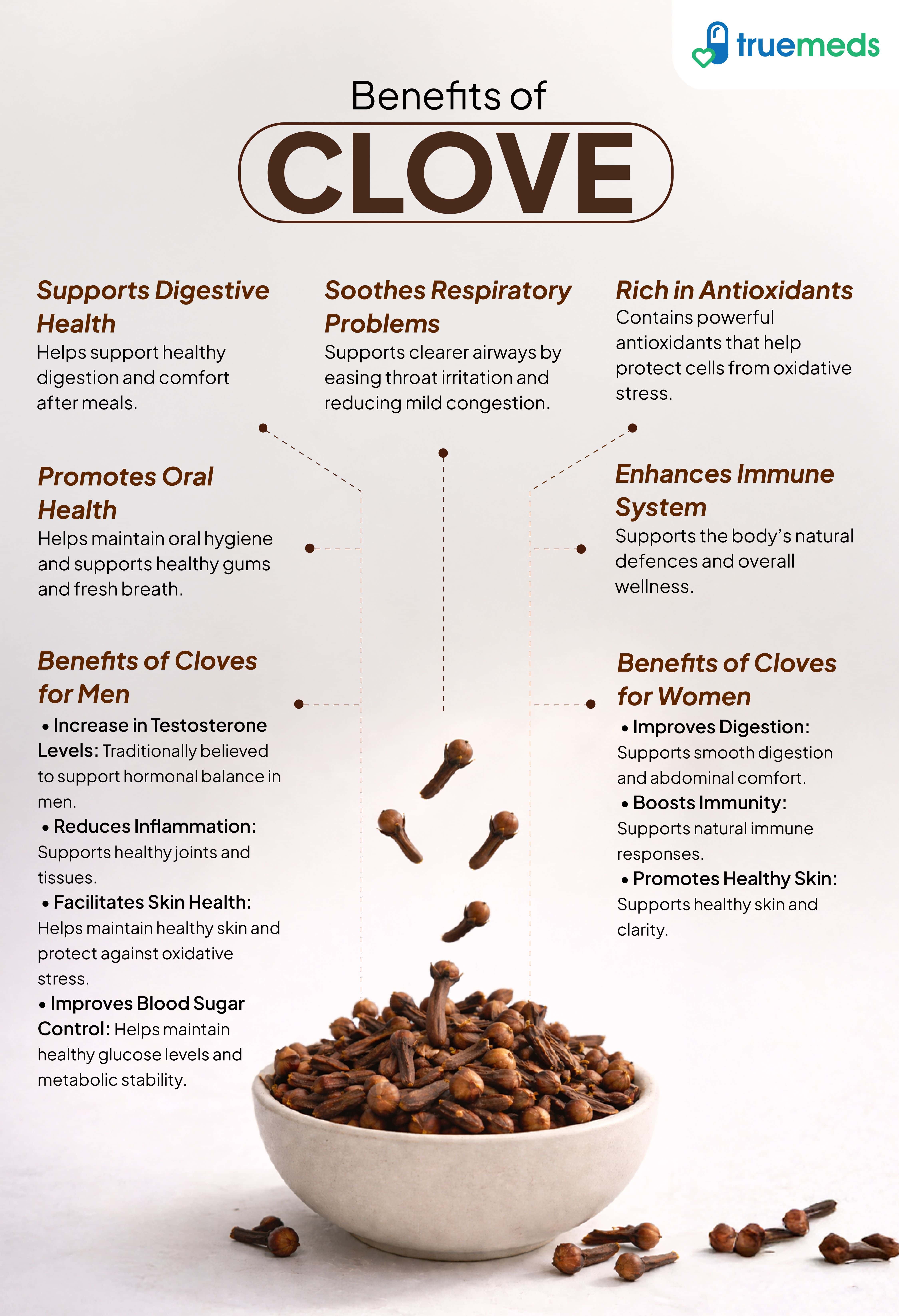
1. Supports Everyday Digestion
Clove is a warming, carminative spice. Taken in small amounts after food, it is traditionally used to ease bloating, trapped wind and a heavy feeling after meals by supporting normal digestion and the secretion of digestive juices.
2. Provides Antioxidant Activity
Clove is rich in antioxidant plant compounds, chiefly eugenol and polyphenols. These may help reduce oxidative stress, which refers to everyday cell damage caused by free radicals. This is one reason clove is often described as having antioxidant properties (Cortés-Rojas et al., 2014).
3. Supports Oral and Throat Comfort
The eugenol in clove has been shown to have mild local anaesthetic and antibacterial properties, which is why it is included in many mouthwashes and toothpastes and has traditionally been used as a home remedy for toothache and minor gum discomfort. Diluted clove oil may be applied to the affected area for temporary relief (Haro-González et al., 2021).
4. May Ease an Occasional Cough
As a warming spice, clove is traditionally taken in tea or with honey to soothe an occasional cough, a scratchy throat and mild congestion. It is intended as a traditional comfort measure and is not a treatment for respiratory conditions.
5. Supports Everyday Immunity
The antioxidant and antimicrobial compounds in clove have led to its traditional use as part of a general wellness routine, particularly during the cough-and-cold season. However, evidence supporting its immune benefits in humans remains limited, and it should be used alongside a balanced diet and appropriate medical care when needed.
Common Uses of Clove
- For toothache: A small amount of diluted clove oil may be applied to the affected tooth for temporary relief while awaiting dental care.
- For an occasional cough or scratchy throat: Clove tea, or clove with honey, is traditionally used as a warming home remedy.
- After meals: A clove, or clove tea, is traditionally consumed to help relieve bloating and trapped wind.
- In aromatherapy: Clove oil is used in a diffuser for its warm, spicy aroma.
- In skin and scalp care: Properly diluted clove oil may be used in small amounts, following a patch test, as part of a regular skincare or haircare routine.
Precautions While Taking Clove
Clove is generally considered safe for most people when used as a culinary spice, but a few sensible precautions apply, especially when using the concentrated essential oil:
- Pregnancy and breastfeeding: Use only normal culinary amounts. Avoid medicinal doses or clove oil unless advised by a doctor.
- Clove oil is concentrated: Never swallow undiluted clove oil, and always dilute it before applying it to the skin, gums or teeth.
- Young children: Do not give clove oil to young children by mouth or apply it to their skin without medical advice.
- If you take regular medicines: If you are taking blood thinners, diabetes medicines or other regular medications, or have a heart, liver or kidney condition, consult your doctor before using clove in medicinal amounts.
- Before surgery: Stop using clove in medicinal doses at least two weeks before any planned surgery, as it may affect bleeding.
Disclaimer: This information is for general guidance only and is not a substitute for professional medical advice. Seek medical help if symptoms are severe, persistent or worrying.
How to Use Clove
Clove can be used in a few simple ways. Keep to small amounts, and treat clove oil as a concentrated product that should be used externally only.
As a Warming Clove Tea
Lightly crush 2 to 3 whole cloves, add them to a cup of hot water, and let them steep for 5 to 10 minutes. Strain and drink warm. This is a traditional way clove is consumed to support digestion or help soothe an occasional cough.
As Diluted Clove Oil (external use only)
For toothache, mix 1 to 2 drops of clove oil with a little carrier oil and apply it to the affected tooth with a cotton bud. For skin application, always dilute the oil with a carrier oil and perform a patch test first. Do not swallow clove oil.
As Ground Clove in Food
A small pinch of ground clove can be stirred into warm water with honey, or added to food. Keep to culinary amounts.
As a Chewed Bud
Chewing one clove after a meal is a traditional way to freshen breath and support digestion. Spit out the woody remainder.
Herbs Traditionally Used With Clove
| Herb / spice | Why it is combined with clove |
| Cardamom (Elaichi) | Paired with clove in teas and spice blends to support digestion and freshen the breath. |
| Cinnamon (Dalchini) | Traditionally paired with clove in warming teas to promote comfort during the cold season. |
| Black pepper (Kali Mirch) | Used with clove in traditional Ayurvedic preparations to support digestion and is believed to enhance the absorption of certain herbal ingredients. |
| Ginger (Adrak / Sonth) | Added to clove tea as a warming spice to help soothe an occasional cough and support digestion. |
| Honey (Madhu, as anupana) | Used as a carrier for clove powder in traditional cough and throat remedies. |
Recommended Dosage of Clove
Clove is potent, so small amounts are generally sufficient. The guidance below reflects traditional use rather than medically established doses. Anyone with a health condition should consult a doctor before using clove in medicinal amounts.
- Children: Clove as a food flavouring is generally considered safe. Do not use clove oil or strong clove preparations in children, and do not give clove oil to children under 2 years of age without medical advice.
- Teenagers: Normal culinary amounts and the occasional cup of weak clove tea are generally considered safe. Avoid concentrated clove products.
- Adults: About 2 to 3 whole cloves a day, or one cup of clove tea. A small pinch of ground clove in food is also suitable.
- Elderly: Similar amounts to adults, but start at the lower end, especially if taking regular medicines.
- Clove oil: For external use only and always used in diluted form. It is not recommended for internal use.
Note: Dosages above reflect common Ayurvedic clinical practice and are not drawn from a single official pharmacopoeial source. They are intended for general awareness only and must be verified by a qualified Ayurvedic physician before use, particularly for children, pregnant or breastfeeding women, and individuals with existing health conditions.
Side Effects Of Clove
Clove is generally well tolerated as a spice. Side effects are uncommon and are mostly linked to using medicinal amounts or concentrated clove oil.
Allergic Reactions
Some people may experience an allergic reaction to clove or clove oil, which can include skin itching, a rash, or, in rare cases, swelling or difficulty breathing. Stop use and seek medical help if this happens.
Digestive Upset
Taking clove in large amounts can cause stomach upset, nausea or loose stools. Using only small culinary amounts or recommended traditional amounts may help reduce this risk.
Clove Oil Toxicity in High Doses
Concentrated clove oil poses the greatest risk. Swallowing it, or using large amounts, can cause liver injury and other serious adverse effects, particularly in children. Use clove oil only in diluted form for external use, and keep it out of reach of children.
Interaction of Clove With Other Drugs
Used as a spice, clove rarely causes problems. However, when used in medicinal amounts or as concentrated clove oil, it may interact with certain medicines. Tell your doctor if you regularly use clove in medicinal amounts and are taking any of the following:
Blood-Thinning Medicines
Clove, and especially clove oil, may enhance the effect of anticoagulant or antiplatelet medicines such as warfarin, potentially increasing the risk of bleeding. Use clove in medicinal amounts only after consulting a doctor and mention its use before any surgery.
Diabetes Medicines
Clove may affect blood sugar levels and may enhance the effect of diabetes medicines. If you take these medicines, monitor your blood sugar as advised by your doctor and consult your doctor before using clove in medicinal amounts.
Other Regular Medicines
If you take regular prescription medicines, consult your doctor or pharmacist before using clove in medicinal amounts, as it may interact with certain medications.
Storage of Clove
Proper storage helps preserve clove’s aroma and quality. Keep whole or ground clove in an airtight container in a cool, dry, dark place, away from direct sunlight and heat. Whole cloves keep their flavour for longer than ground clove, so grind only what you need. Store clove oil in a tightly closed, dark glass bottle, away from heat and out of reach of children.
Key Takeaways
- Clove (Laung) is a warming Ayurvedic spice traditionally used to support digestion, oral and throat comfort, and general wellbeing.
- Many of its studied properties are attributed to eugenol, which has been studied for its antioxidant, antimicrobial and mild local anaesthetic properties.
- Adults can traditionally consume 2 to 3 cloves a day. Clove oil is highly concentrated and should only be used externally in diluted form.
- If you are pregnant, breastfeeding, taking blood thinners or diabetes medicines, or considering using clove medicinally for a young child, consult your doctor before use.
FAQs
How many cloves are safe per day?
Does clove help with a cough?
How do I use clove oil for toothache?
Is clove oil safe to swallow?
Do cloves have side effects?
Can I use clove during pregnancy?
Is clove good for skin and hair?
Does clove interact with any medicines?
References
- Cortés-Rojas, D. F., de Souza, C. R. F., & Oliveira, W. P. (2014). Clove (Syzygium aromaticum): a precious spice. Asian Pacific Journal of Tropical Biomedicine, 4(2), 90–96. https://doi.org/10.1016/s2221-1691(14)60215-x
- Haro-González, J. N., Castillo-Herrera, G. A., Martínez-Velázquez, M., & Espinosa-Andrews, H. (2021). Clove Essential Oil (Syzygium aromaticum L. Myrtaceae): Extraction, Chemical Composition, Food Applications, and Essential Bioactivity for Human Health. Molecules, 26(21), 6387. https://doi.org/10.3390/molecules26216387




Explore other categories
Latest health articles





Top Health Essentials





Top-selling ayurvedic products













Disclaimer
Top-Selling Medicines:
...View more
Top-OTC medicines:
...View more
Top-selling healthcare devices:
...View more
Company
About UsHealth ArticleHealth StoriesHealth LibraryDiseases & Health ConditionsAyurvedaUnderstanding Generic MedicinesAll MedicinesAll BrandsNeed HelpFAQSecuritySavings CalculatorAdvertise with UsSubscribe
Registered Office Address
Grievance Officer
Download Truemeds


Contact Us
Our customer representative team is available 7 days a week from 9 am - 9 pm.
v4.28.14

2026 - Truemeds | All rights reserved. Our content is for informational purposes only. See additional information.

Our Payment Partners