

- Medicines
- Personal Care
- Skin Cream
- Sunscreen
- Face Wash
- Skin and Body Soap
- Acne Care
- Body Lotions
- Moisturising Lotion
- Moisturising Cream
- Mosquito Repellent
- Moisturising Gel
- Body Wash
- Hair Oils
- Hair Shampoo
- Hair Conditioners
- Hair Supplements
- Hair Colour
- Hair Serum
- Hair Mask
- Hair Solutions
- Baby Diapers and Wipes
- Baby Lotion and Moisturising Cream
- Baby Bath Essentials
- Baby Skin Care
- Baby and Infant Food
- Baby Healthcare
- Women Multivitamins
- Ovulation Test Kit and Women Intimate Care
- Sanitary Pads
- Nutritional Drinks
- Condoms
- Lubricants
- Massage Gels
- Personal Body Massagers
- Men Performance Booster
- Sexual Health Supplements
- Massage Oils
- Ayurveda
- Tooth Paste
- Mouth Ulcer Gel
- Mouthwash
- Toothache and Gum Pain
- Tooth Brush
- Gargle Solution
- Orthopaedic Supports
- Adult Diapers
- Footwear
- Mobility and Support Accessories
- Urinary Support and Care
- Health Conditions
- Bone and Joint Care
- Digestive Care
- Eye Care
- Pain Relief
- Smoking Cessation
- Liver Care
- Stomach Care
- Cold and Cough
- Heart Care
- Kidney Care
- Piles, Fissures & Fistula
- Respiratory Care
- Mental Wellness
- Derma Care
- Pre and Probiotics
- Acidity
- Gas
- Constipation
- Loose Motion/Diarrhoea
- Digestive Fibres
- Digestive Enzymes
- Eye Lubricant Drops
- Lens Solution
- Safety Eye Wear
- Eye Cream
- Eye Vitamins and Supplements
- Eye Drops
- Eye Ointment and Gel
- Nicotine Patch
- Nicotine Gum
- Nicotine Lozenges
- Cough Syrups
- Chest Rubs and Balms
- Nasal Spray
- Lozenges
- Inhalant Capsules
- Cold and Cough Tablets
- Vitamins & Supplements
- Diabetes Care
- Healthcare Devices
- Homeopathic Medicine
- Health Guide
Abhayarishta
Abhayarishta, also known as Abhayarishtam, is a classical Ayurvedic Arishta (a self-fermented liquid formulation) made mainly from Haritaki. In Ayurveda, it is traditionally used to support digestion and relieve occasional constipation, piles (haemorrhoids) and loss of appetite. It is traditionally believed to have a mild laxative action, and should be used at the recommended dose under medical guidance rather than as a long-term, unsupervised remedy.
 50
50Last updated on : 23 Sep, 2026
Read time : 13 mins
What is Abhayarishta?
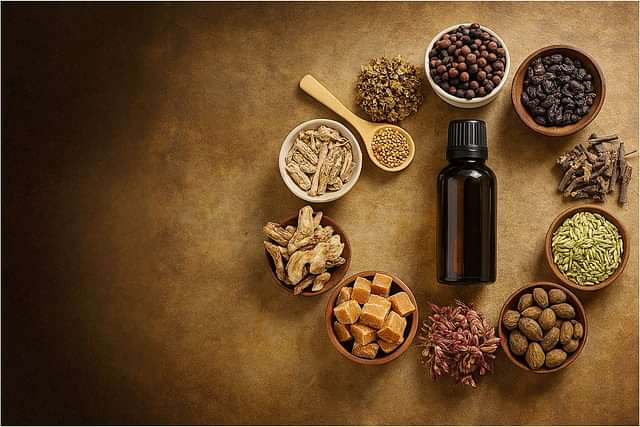
The name Abhayarishta comes from ‘Abhaya’, another name for Haritaki (Terminalia chebula), its principal ingredient, combined with ‘Arishta’, meaning a self-fermented liquid preparation (Dighe et al., 2018). Abhayarishta is described in the classical Ayurvedic text Bhaishajya Ratnavali under Arsho Rogadhikara, which covers the management of Arsha (piles). It is prepared using Haritaki, Draksha (Vitis vinifera), Vidanga (Embelia ribes), Madhuka (Madhuca indica), Gokshura (Tribulus terrestris), Trivrit (Operculina turpethum), Shunti (Zingiber officinale) and Dhataki (Woodfordia fruticosa), along with jaggery. Dhataki flowers are traditionally included in the natural fermentation process. As a fermented Arishta, it naturally contains a small amount of alcohol that functions as an extraction and preservation medium (Chaudhary et al., 2011).
Key Facts
| Feature | Details |
| Formulation name | Abhayarishta (Abhayarishtam)
|
| Formulation type | Arishta: a self-fermented Ayurvedic liquid preparation
|
| Classical reference (text) | Bhaishajya Ratnavali, Arsho Rogadhikara
|
| Composition (ingredients) | Haritaki, Draksha, Vidanga, Madhuka, Gokshura, Trivrit, Dhataki and Shunti, fermented with jaggery |
| Also known as | Abhayarishtam |
| Key active compounds | Includes tannins and gallic acid (from Haritaki) and embelin (from Vidanga) |
| Dosha action | Traditionally described as Vata Shamaka (pacifies aggravated Vata)
|
| Traditional uses | Traditionally used for Vibandha (constipation) and Arsha (piles)
|
| Common forms | Liquid (syrup) |
| General dosage | Adults: 15–30 ml twice daily after meals, diluted with an equal quantity of water |
| Best taken | After meals, diluted with an equal quantity of water
|
| Key safety note | Use during pregnancy or breastfeeding only after consultation with a healthcare professional; long-term use should be medically supervised rather than continued without review. |
Alternative Names of Abhayarishta
Abhayarishta is a Sanskrit name that is transliterated rather than translated, so only genuine spelling variants exist rather than separate names in other languages.
- Abhayarishtam: the common alternative spelling used on product labels and in classical texts.
Composition of Abhayarishta
Abhayarishta is prepared from the following herbs, together with jaggery and Dhataki flowers, which are used to start fermentation:
- Haritaki (Terminalia chebula): the main ingredient, traditionally used as a mild laxative and to support digestion (Hassan Bulbul et al., 2022)
- Draksha (Vitis vinifera, dried grape): traditionally used to support digestion and bowel regularity
- Vidanga (Embelia ribes): traditionally used to support digestion and traditionally associated with anthelmintic activity (Sharma et al., 2022)
- Madhuka (Madhuca indica): traditionally used to support bowel regularity
- Gokshura (Tribulus terrestris): traditionally used to support urinary comfort
- Trivrit (Operculina turpethum): traditionally used for its purgative action
- Shunti (Zingiber officinale, ginger): traditionally used to support digestion
- Dhataki (Woodfordia fruticosa): flowers used to start the natural fermentation process (Chaudhary et al., 2011)
Chemical Constituents of Abhayarishta
Abhayarishta's action is associated with active compounds present in its herbal ingredients. Reported constituents include:
- Tannins and gallic acid from Haritaki
- Embelin from Vidanga
- Flavonoids from Draksha
Medicinal Properties of Abhayarishta
Abhayarishta's ingredients are traditionally and pharmacologically associated with the following actions:
- Mild laxative: traditionally believed to support bowel movements and ease stool passage
- Carminative: is traditionally believed to reduce gas and bloating
- Digestive stimulant: is traditionally believed to support Agni (digestive fire)
- Antispasmodic: may help relieve intestinal cramping
- Mild anti-inflammatory: is associated with supporting relief from irritation and inflammation
These actions are mainly attributed to Haritaki, Vidanga and Trivrit. They are supported by traditional Ayurvedic use, and Haritaki's laxative and digestive actions are widely described in Ayurvedic pharmacology (Hassan Bulbul et al., 2022), but human clinical evidence for Abhayarishta as a finished formulation is limited. These properties should be read as traditional or preliminary, not as an established medical treatment for any disease.
Key Health Benefits of Abhayarishta
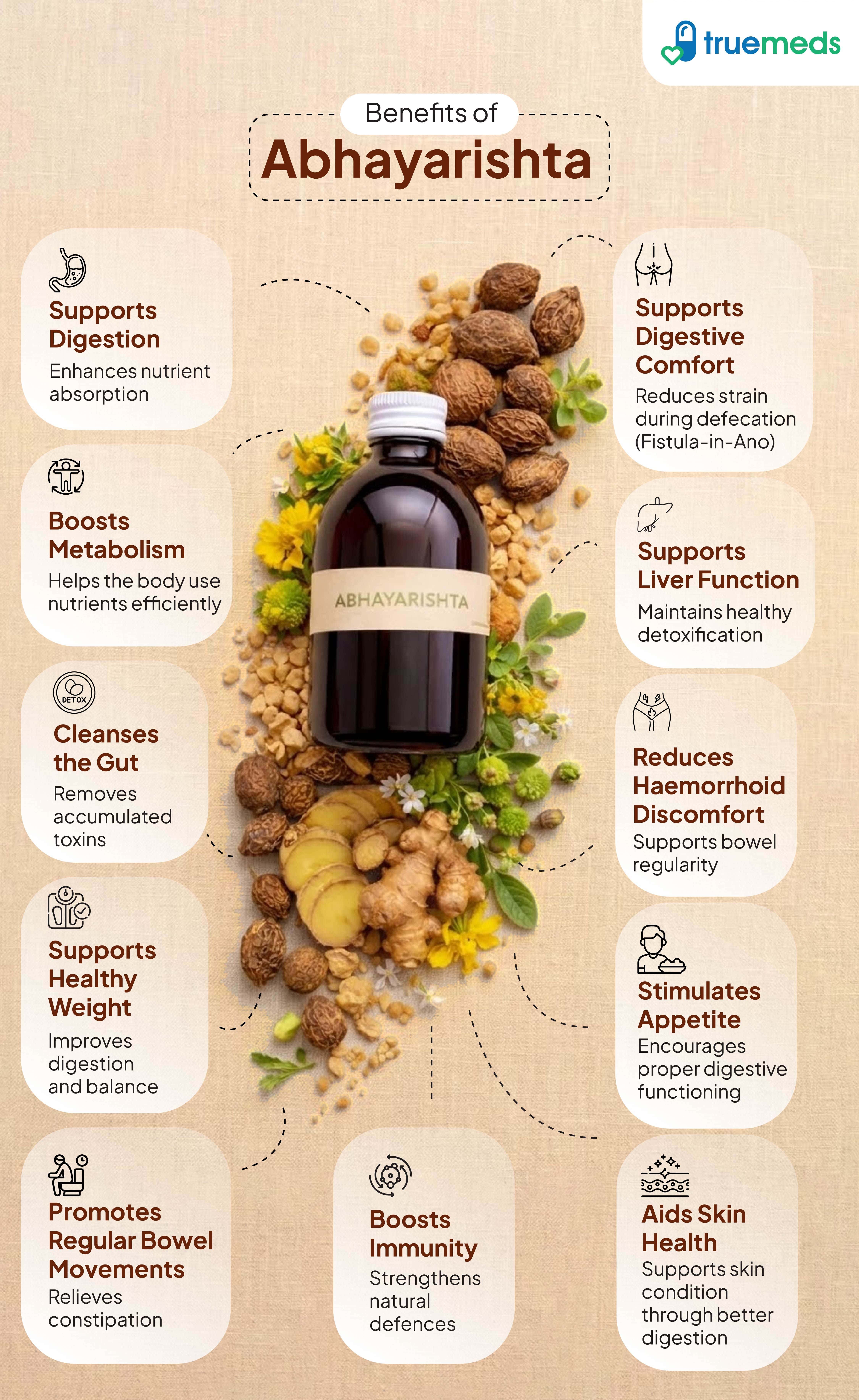
Abhayarishta is traditionally used to support digestion, bowel clearance and digestive function (Hassan Bulbul et al., 2022). It is also traditionally associated with metabolic, weight-management, immune and liver support, although evidence for these broader benefits in humans is limited.
Supports Digestion
Abhayarishta is traditionally believed to support digestive function, which may help ease bloating and indigestion (Hassan Bulbul et al., 2022). It is also traditionally used to reduce gas and acidity. These effects are based on traditional Ayurvedic use rather than confirmed clinical trial evidence.
May Support Metabolic Function
In Ayurveda, Abhayarishta is traditionally believed to support Agni, or digestive fire, which is linked to the body's ability to break down food and absorb nutrients (Hassan Bulbul et al., 2022). This is a traditional concept rather than a measured effect on metabolic rate.
May Support Gut Clearance
Abhayarishta is traditionally believed to support the clearing of Ama, described in Ayurveda as accumulated digestive residue linked to sluggish digestion. This is a traditional concept, and Ama should not be equated with medically defined “toxins” or a measured clinical marker.
May Support Healthy Weight Management
By traditionally supporting digestion, Abhayarishta may play a supporting role within a wider healthy-weight routine that includes diet and activity. It is not a treatment for obesity and should not be used as a stand-alone weight-loss remedy.
May Support Immune Function
Abhayarishta contains plant compounds such as tannins and polyphenols from Haritaki, which have been studied for antioxidant activity (Hassan Bulbul et al., 2022). There is insufficient clinical evidence in humans to establish that Abhayarishta supports immune function, so this should be understood as a traditional belief rather than a proven effect.
May Support Liver Function
Abhayarishta's plant compounds have antioxidant activity in preclinical research, but evidence that the finished formulation improves liver function in humans is limited. Anyone with a diagnosed liver condition should be under the care of a doctor rather than relying on Abhayarishta alone.
Common Uses of Abhayarishta
Abhayarishta is traditionally used mainly to support bowel regularity, particularly in constipation and piles, and is also used in Ayurveda for reduced appetite. It may be used as supportive care in fistula-in-ano, but it does not treat the underlying condition. Persistent or unexplained symptoms require medical assessment.
Vibandha (Constipation)
Abhayarishta is traditionally used to support relief from constipation. It contains Haritaki, a herb traditionally recognised for its laxative action, which may help soften stool and ease its passage. It is used as part of an overall care plan, alongside adequate dietary fibre and fluids, rather than as a stand-alone remedy for persistent constipation.
Arsha (Piles)
Abhayarishta is traditionally used to support bowel regularity and reduce straining associated with piles. It provides symptomatic support only and does not treat the underlying condition. Persistent, painful or bleeding piles require medical assessment.
Fistula-in-Ano (Supportive Use Only)
Abhayarishta may be used traditionally as a supportive remedy alongside medical care to help maintain bowel regularity and reduce straining. Fistula-in-ano is a condition that requires medical assessment and appropriate treatment; Abhayarishta does not treat the underlying fistula.
Agnimandya (Loss of Appetite)
Abhayarishta is traditionally used to support appetite by supporting Agni, or digestive fire. This is an Ayurvedic concept and should not be interpreted as a clinically established effect on digestive secretions. Ongoing or unexplained loss of appetite should be medically assessed rather than self-treated.
Precautions While Taking Abhayarishta
- Chronic health conditions: People with chronic illnesses, such as diabetes, high blood pressure or digestive disorders, should consult a doctor before starting Abhayarishta rather than self-prescribing it. Its jaggery content may contribute to carbohydrate intake, so people with diabetes should seek individual dietary and medication advice before use.
- Pregnancy and breastfeeding: Abhayarishta is not recommended during pregnancy or while breastfeeding unless specifically advised by a doctor, as its safety in these situations has not been adequately established.
- Keep to the recommended dose: Taking more than the recommended dose may cause diarrhoea, abdominal discomfort or dehydration. Follow the dose advised by a qualified Ayurvedic practitioner or doctor rather than self-adjusting the amount.
- Children: Abhayarishta should not be given to children unless specifically advised by a qualified healthcare professional, as an appropriate dose depends on age, health status and the reason for use.
- Avoid long-term, unsupervised use: Prolonged use of laxative preparations without medical supervision is not advisable. If constipation persists or Abhayarishta is needed regularly, consult a doctor to identify and address the underlying cause.
How to Use Abhayarishta
Abhayarishta is available as a liquid, so the steps below apply to this form:
- Measure the prescribed amount using the cap or a measuring cup.
- Dilute it with an equal quantity of water.
- Take it after meals, usually twice daily, or as directed by a qualified Ayurvedic practitioner or doctor.
Note: For persistent constipation or other ongoing digestive symptoms, do not continue using Abhayarishta for several weeks without medical review. The duration of use should be determined by a healthcare professional based on the underlying cause and response to treatment.
Recommended Dosage of Abhayarishta
Dosage varies by age, health status and reason for use, and should be confirmed by a qualified Ayurvedic practitioner or doctor.
Children Under 12
Abhayarishta is not generally recommended for children under 12 unless specifically advised by a qualified healthcare professional.
Teenagers
Use only under the supervision of a qualified Ayurvedic practitioner or doctor, who can determine an appropriate dose based on age, health status and the reason for use.
Adults
The commonly referenced adult dose is 15 to 30 ml twice daily after meals, diluted with an equal quantity of water. The appropriate dose and duration should be confirmed by a qualified practitioner.
Elderly
Use under medical supervision, particularly in older adults with chronic conditions or those taking regular medicines. A practitioner should determine the appropriate dose based on overall health and the reason for use.
Disclaimer: This dosage information is based on traditional Ayurvedic references and general practice. Always consult a qualified Ayurvedic practitioner before starting Abhayarishta, particularly for children, teenagers, elderly people, and pregnant or breastfeeding women.
Side Effects of Abhayarishta
The effects below may occur, particularly when Abhayarishta is taken in higher-than-recommended amounts. Tell your doctor if any symptoms are persistent, severe or do not improve.
Digestive Effects
Abhayarishta may cause stomach discomfort, abdominal cramps, loose stools, diarrhoea, increased bowel movements, nausea, bloating or excess gas. These effects may be more likely at higher doses because of its laxative action.
Heartburn and Dizziness
Some people may experience heartburn, acidity or dizziness. Excessive or prolonged use, particularly if it causes frequent loose stools, may increase the risk of dehydration.
Allergic Reactions
Allergic reactions are uncommon but possible in people who are sensitive to one or more ingredients. Stop use and seek medical attention promptly if symptoms such as a rash, itching, swelling or breathing difficulty occur.
Interaction of Abhayarishta With Other Drugs
Abhayarishta may affect the use or absorption of some medicines, particularly because of its laxative action. Tell your doctor or pharmacist about all medicines and supplements you take before starting it.
Diabetes Medicines
Abhayarishta contains jaggery, which contributes to carbohydrate intake and may affect blood sugar control. People taking diabetes medicines should discuss its use with their doctor and monitor their blood glucose as advised.
Other Laxatives or Stool Softeners
Taking Abhayarishta with other laxatives or stool-softening medicines may increase the risk of diarrhoea, abdominal cramping and dehydration. Do not combine laxative products unless advised by a healthcare professional.
Medicines Affected by Diarrhoea
If Abhayarishta causes frequent or persistent diarrhoea, the absorption of some oral medicines may be affected. People taking regular medicines should consult a doctor or pharmacist if significant diarrhoea occurs.
Storage of Abhayarishta
- Store it at room temperature in a cool, dry place, away from direct sunlight, heat and moisture.
- Keep the bottle tightly closed after each use.
- Keep it out of the reach and sight of children.
- Do not use it after the expiry date printed on the pack. Discard the product if its colour, smell or appearance changes noticeably.
Key Takeaways
- Abhayarishta is a classical Ayurvedic Arishta made mainly from Haritaki, traditionally used to support digestion and bowel regularity, including in constipation and piles.
- It is traditionally believed to have a mild laxative action that may support easier bowel movements when taken at the recommended dose.
- The commonly referenced adult dose is 15-30 ml twice daily after meals, diluted with an equal quantity of water. Dosing for teenagers and older adults should be individualised by a healthcare professional, while use in children should only occur when specifically advised.
- Side effects such as loose stools, abdominal discomfort, cramping or dehydration may occur, particularly at higher doses. Prolonged use without medical supervision is not advisable.
- Abhayarishta is a traditional supportive remedy and does not replace medical treatment. Conditions such as fistula-in-ano require appropriate medical assessment and treatment.
FAQs
Is alcohol present in Abhayarishta?
Are there any dietary guidelines to follow when taking Abhayarishta?
Is it possible to take Abhayarishta alongside multivitamins?
Is Abhayarishta a type of laxative?
Is it safe for someone with diabetes to use Abhayarishta?
What potential side effects might Abhayarishta have?
Is it safe to use Abhayarishta without consulting a doctor?
Is it possible to take Abhayarishta every day?
What's the correct way to take Abhayarishta?
Is it safe to use Abhayarishta for extended durations?
Does Abhayarishta reduce body heat?
References
- Chaudhary, A., Singh, N., Dalvi, M., & Wele, A. (2011). A progressive review of Sandhana kalpana (biomedical fermentation): An advanced innovative dosage form of Ayurveda. Ayu, 32(3), 408–417. https://doi.org/10.4103/0974-8520.93925
- Dighe, D. D. P., Panda, P., Pradeepkumar, P. P., Aswani, P. S., & Rao, M. M. (2018). Review on pharmacological properties of arishta kalpana with a glance on arishta kalpas of Bhaishajya Ratnavali. International Journal of Research in Ayurveda and Pharmacy, 9(2), 6–11. https://doi.org/10.7897/2277-4343.09226
- Sharma, V., Gautam, D. N. S., Radu, A.-F., Behl, T., Bungau, S. G., & Vesa, C. M. (2022). Reviewing the traditional/modern uses, phytochemistry, essential oils/extracts and pharmacology of Embelia ribes Burm. Antioxidants, 11(7), 1359. https://doi.org/10.3390/antiox11071359
- Hassan Bulbul, M. R., Uddin Chowdhury, M. N., Naima, T. A., Sami, S. A., Imtiaj, M. S., Huda, N., & Uddin, M. G. (2022). A comprehensive review on the diverse pharmacological perspectives of Terminalia chebula Retz. Heliyon, 8(8), e10220. https://doi.org/10.1016/j.heliyon.2022.e10220


Explore other categories
Latest health articles





Top Health Essentials









Top-selling ayurvedic products

















Disclaimer
Top-Selling Medicines:
...View more
Top-OTC medicines:
...View more
Top-selling healthcare devices:
...View more
Company
About UsHealth ArticleHealth StoriesHealth LibraryDiseases & Health ConditionsAyurvedaUnderstanding Generic MedicinesAll MedicinesAll BrandsNeed HelpFAQSecuritySavings CalculatorAdvertise with UsSubscribe
Registered Office Address
Grievance Officer
Download Truemeds


Contact Us
Our customer representative team is available 7 days a week from 9 am - 9 pm.
v4.28.14

2026 - Truemeds | All rights reserved. Our content is for informational purposes only. See additional information.

Our Payment Partners