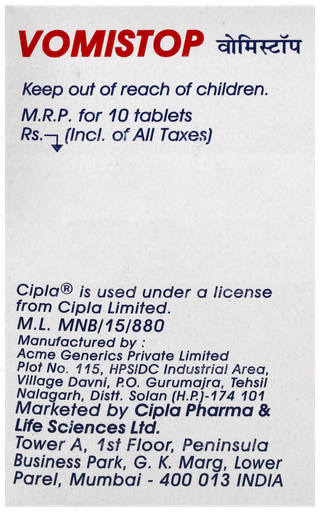
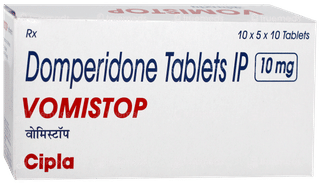

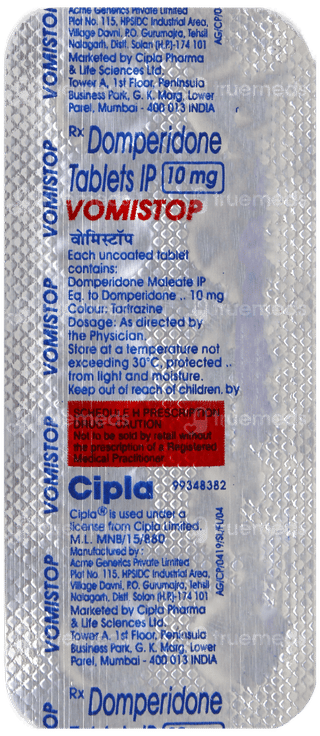
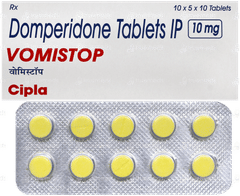
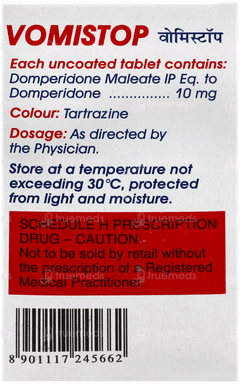
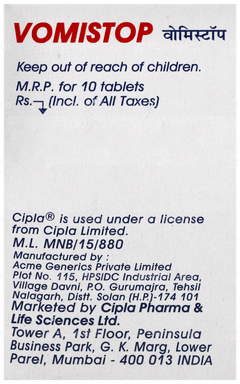
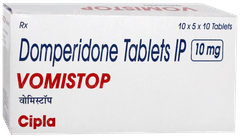

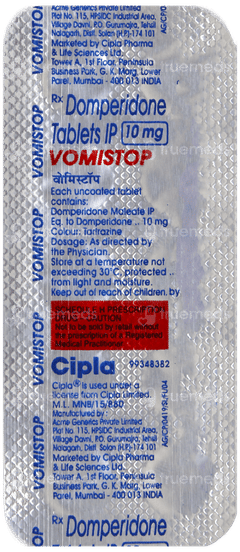

 Composition
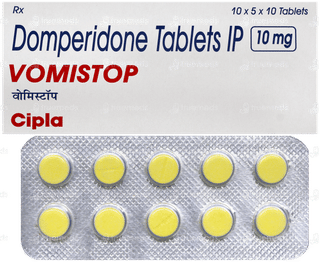
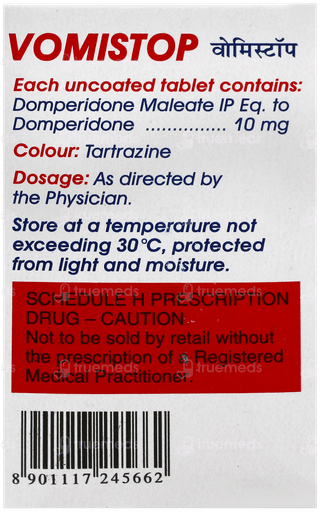
Vomistop Tablet is a prescription antiemetic medicine used to relieve nausea and vomiting. These symptoms may occur with certain gastrointestinal illnesses or other medical conditions. Domperidone also increases upper gastrointestinal motility, but its use for bloating or delayed gastric emptying requires careful assessment of the benefits and risks. It does not treat the underlying cause of vomiting. Persistent or unexplained symptoms require medical evaluation.
Take Vomistop Tablet before meals, following your doctor's instructions. Swallow the tablet whole with water. Do not exceed the prescribed amount or continue treatment longer than advised. Domperidone should generally be used for no longer than one week. Avoid combining it with other antiemetic medicines without medical advice. Contact your doctor if nausea or vomiting persists, particularly if you cannot retain fluids.
Common side effects of Vomistop Tablet include dry mouth, headache, abdominal cramps and diarrhoea. Some patients may experience dizziness, breast tenderness or increased prolactin-related effects. Inform your doctor if symptoms persist or worsen. Rarely, domperidone may cause serious heart rhythm disturbances. Seek urgent medical attention for fainting, severe palpitations or an irregular heartbeat. Persistent vomiting with dehydration, severe abdominal pain or blood in vomit also requires prompt assessment.
Before using Vomistop Tablet, tell your doctor about heart disease, arrhythmias, liver disease or kidney problems. Mention low potassium or magnesium levels and medicines affecting heart rhythm. Domperidone must not be combined with certain QT-prolonging medicines or potent CYP3A4 inhibitors. Avoid use in patients with gastrointestinal obstruction, perforation or bleeding. Discuss pregnancy and breastfeeding with your doctor. Older adults may have a greater risk of cardiac complications.