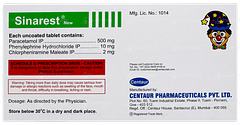
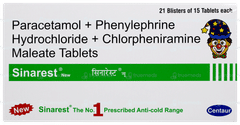
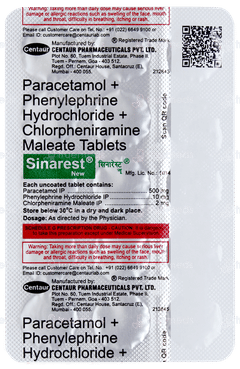

 Composition
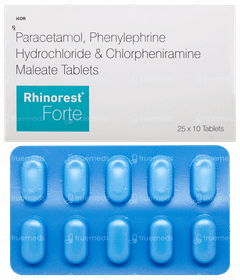
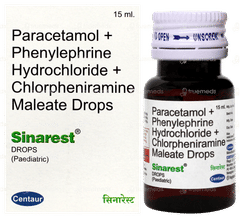
Sinarest New Tablet contains paracetamol (an analgesic and antipyretic), phenylephrine (a nasal decongestant) and chlorpheniramine (an antihistamine). It relieves cold and allergy symptoms, including fever, headache, sneezing, runny nose and nasal congestion. Paracetamol reduces pain and fever, phenylephrine constricts nasal blood vessels, and chlorpheniramine blocks histamine receptors. Take the tablet with water as directed by your doctor, with or without food. Possible side effects include drowsiness, dizziness, nausea, dry mouth and increased heart rate. Tell your doctor about hypertension, heart disease, glaucoma or liver problems. Avoid additional paracetamol-containing products. Seek urgent care for severe palpitations, breathing difficulty or signs of liver injury.
Sinarest New Tablet is a combination medicine used for temporary relief of common cold and allergic rhinitis symptoms. Colds can cause fever, body aches, headache, sneezing and a blocked nose. Allergic rhinitis may cause nasal itching, watery eyes and runny discharge. The medicine addresses symptoms but does not eliminate the viruses causing a common cold. It is not an antibiotic. Persistent fever or worsening breathing symptoms require medical evaluation.
Take Sinarest New Tablet according to your doctor's instructions. Swallow the tablet with water, with or without food. Follow the advised treatment duration and do not increase the prescribed amount. Check other cold, flu and pain medicines for paracetamol before combining them. Excess paracetamol can cause serious liver damage. Avoid alcohol, especially if the medicine makes you sleepy. Do not drive until you understand its effects on alertness.
Common side effects of Sinarest New Tablet include sleepiness, dizziness, dry mouth, nausea, constipation and blurred vision. Some people experience restlessness, headache, difficulty sleeping or palpitations. Symptoms may resolve after the medicine is stopped, but persistent reactions need medical advice. Contact your doctor if you develop urinary difficulty or troublesome dizziness. Seek immediate care for a rapid irregular heartbeat, severe allergic swelling or symptoms suggesting paracetamol overdose.
Before taking Sinarest New Tablet, tell your doctor about high blood pressure, heart disease, diabetes or hyperthyroidism. Mention glaucoma, urinary retention, liver impairment and kidney disease. Discuss pregnancy and breastfeeding with your doctor before use. Some antidepressants, including monoamine oxidase inhibitors, can interact with phenylephrine. Tell your doctor about every medicine you take, including cold preparations. Avoid alcohol and other sedating medicines unless your doctor has approved the combination.