

- Medicines
- Personal Care
- Skin Cream
- Sunscreen
- Face Wash
- Skin and Body Soap
- Acne Care
- Body Lotions
- Moisturising Lotion
- Moisturising Cream
- Mosquito Repellent
- Moisturising Gel
- Body Wash
- Hair Oils
- Hair Shampoo
- Hair Conditioners
- Hair Supplements
- Hair Colour
- Hair Serum
- Hair Mask
- Hair Solutions
- Baby Diapers and Wipes
- Baby Lotion and Moisturising Cream
- Baby Bath Essentials
- Baby Skin Care
- Baby and Infant Food
- Baby Healthcare
- Women Multivitamins
- Ovulation Test Kit and Women Intimate Care
- Sanitary Pads
- Nutritional Drinks
- Condoms
- Lubricants
- Massage Gels
- Personal Body Massagers
- Men Performance Booster
- Sexual Health Supplements
- Massage Oils
- Ayurveda
- Tooth Paste
- Mouth Ulcer Gel
- Mouthwash
- Toothache and Gum Pain
- Tooth Brush
- Gargle Solution
- Orthopaedic Supports
- Adult Diapers
- Footwear
- Mobility and Support Accessories
- Urinary Support and Care
- Health Conditions
- Bone and Joint Care
- Digestive Care
- Eye Care
- Pain Relief
- Smoking Cessation
- Liver Care
- Stomach Care
- Cold and Cough
- Heart Care
- Kidney Care
- Piles, Fissures & Fistula
- Respiratory Care
- Mental Wellness
- Derma Care
- Pre and Probiotics
- Acidity
- Gas
- Constipation
- Loose Motion/Diarrhoea
- Digestive Fibres
- Digestive Enzymes
- Eye Lubricant Drops
- Lens Solution
- Safety Eye Wear
- Eye Cream
- Eye Vitamins and Supplements
- Eye Drops
- Eye Ointment and Gel
- Nicotine Patch
- Nicotine Gum
- Nicotine Lozenges
- Cough Syrups
- Chest Rubs and Balms
- Nasal Spray
- Lozenges
- Inhalant Capsules
- Cold and Cough Tablets
- Vitamins & Supplements
- Diabetes Care
- Healthcare Devices
- Homeopathic Medicine
- Health Guide
Avipattikar Churna
Avipattikar Churna is a classical Ayurvedic polyherbal powder used mainly to balance aggravated Pitta in the digestive tract. It is traditionally taken to ease hyperacidity (Amlapitta), heartburn, indigestion, bloating and occasional constipation, and to support gentle, regular bowel movement. It is best used as a supportive digestive formulation alongside, not in place of, medical care for persistent or severe symptoms.
 50
50Last updated on : 13 Aug, 2026
Read time : 13 mins
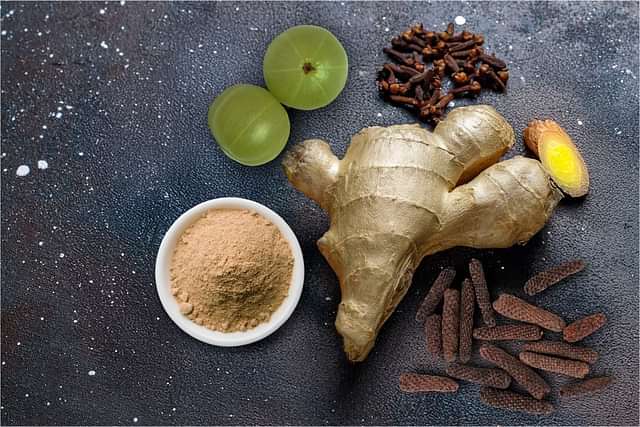
What is Avipattikar Churna?
The name Avipattikar reflects the formulation’s traditional association with relieving digestive discomfort. It is a classical polyherbal churna described in the Ayurvedic compendium Bhaishajya Ratnavali, in the section dealing with Amlapitta (hyperacidity).
In Ayurvedic terms, Avipattikar Churna is classified as a Pitta-pacifying formulation with a Vata-anulomana action. In practice this is understood as cooling excess Pitta in the stomach and intestines while gently encouraging regular bowel movement, which is why it is traditionally used for hyperacidity, heartburn and occasional constipation.
Key Facts
| Feature | Details |
| Formulation name | Avipattikar Churna
|
| Formulation type | Classical polyherbal churna (medicated powder); Pitta-pacifying digestive and mild purgative |
| Classical reference | Bhaishajya Ratnavali, Amlapitta chikitsa |
| Composition | 14 ingredients: Shunthi, Maricha, Pippali, Haritaki, Vibhitaka, Amalaki, Musta, Vidanga, Ela, Tejpatra, Lavanga, Trivrit, Sharkara (sugar), Vida Lavana (salt)
|
| Classical proportion | Trivrit (turpeth) is taken in the largest share; sugar forms the sweet base. |
| Also known as | Avipattika Churna, Avipattikara Churna (spelling variants of the same name) |
| Key active compounds | Gallic, chebulinic and chebulagic acids, tannins and flavonoids, piperine, gingerols, embelin, eugenol
|
| Dosha action | Balances Pitta; supports Vata-anulomana (downward movement) |
| Traditional uses | Amlapitta (hyperacidity), heartburn, indigestion, bloating, occasional constipation
|
| Common forms | Powder (classical); also sold as capsules and tablets
|
| General dosage | Adults commonly 3–5 g once or twice daily with warm water after food, or as directed by an Ayurvedic physician
|
| Best taken | After meals, with warm water as the usual anupana |
| Key safety note | Contains sugar and turpeth (a purgative). Use with caution in diabetes; avoid unsupervised high-dose or long-term use. Choose certified brands, as some churnas may carry heavy-metal traces.
|
Alternative Names of Avipattikar Churna
Avipattikar Churna is a transliterated Sanskrit name, so it does not translate into separate English, Hindi or regional names. Only spelling variants exist:
- Avipattikar Churna (most common spelling)
- Avipattika Churna
- Avipattikara Churna
- Avipattikar Choorna
“Churna” simply means a fine Ayurvedic powder.
Chemical Constituents of Avipattikar Churna
The digestive and antioxidant actions of Avipattikar Churna come from compounds carried by its individual herbs. The main constituents reported for these herbs include:
- Gallic acid, chebulinic acid, chebulagic acid and ellagic acid (from Haritaki, Vibhitaka and Amalaki)
- Tannins and flavonoids, plus vitamin C (from Amalaki)
- Piperine (from Maricha and Pippali)
- Gingerols and shogaols (from Shunthi)
- Embelin (from Vidanga)
- Eugenol (from Lavanga / clove)
- Volatile oils such as cineole (from Ela and Tejpatra)
Composition of Avipattikar Churna
Avipattikar Churna is a blend of the following herbs, minerals and sweet base:
- Shunthi (Zingiber officinale): Dried ginger; supports digestion and eases nausea
- Maricha (Piper nigrum): Black pepper; stimulates digestion
- Pippali (Piper longum): Long pepper; supports digestion and metabolism
- Haritaki (Terminalia chebula): Supports bowel regularity and gentle detoxification
- Vibhitaka (Terminalia bellirica): Supports digestion
- Amalaki (Emblica officinalis): Amla; cooling, antioxidant, Pitta-pacifying
- Musta (Cyperus rotundus): Soothes the digestive tract
- Vidanga (Embelia ribes): Supports digestion and gut cleansing
- Ela (Elettaria cardamomum): Cardamom; aids digestion and reduces gas
- Tejpatra (Cinnamomum tamala): Indian bay leaf; supports digestion
- Lavanga (Syzygium aromaticum): Clove; supports digestion
- Trivrit (Operculina turpethum): Turpeth; gentle purgative and detoxifying action
- Sharkara: Sugar; sweet base that balances taste and soothes the stomach
- Vida Lavana: Rock/black salt; improves palatability and absorption
In the classical recipe, Trivrit is taken in the largest quantity, with sugar forming the bulk sweet base.
Medicinal Properties of Avipattikar Churna
Avipattikar Churna is a classical Ayurvedic polyherbal formulation traditionally used for digestive complaints. It is prepared as a powdered formulation and is traditionally associated with supporting digestion and managing symptoms related to excess acidity. Its Ayurvedic use is based on concepts such as balancing digestive function and supporting pachana.
- Antioxidant: It may help neutralise free radicals and reduce oxidative stress. Experimental studies have demonstrated antioxidant activity in Avipattikar Churna extracts.
- Acid neutralising: It may help reduce gastric acidity by neutralising acid in laboratory studies.
- Anti-secretory: It may reduce gastric acid secretion by influencing acid producing mechanisms, based mainly on experimental evidence.
- Anti-inflammatory: Experimental findings suggest it may help reduce inflammatory signalling, although further research is needed to confirm its clinical relevance.
Consult a qualified Ayurvedic practitioner before using Avipattikar Churna, particularly for persistent or recurrent digestive symptoms.
Health Benefits of Avipattikar Churna
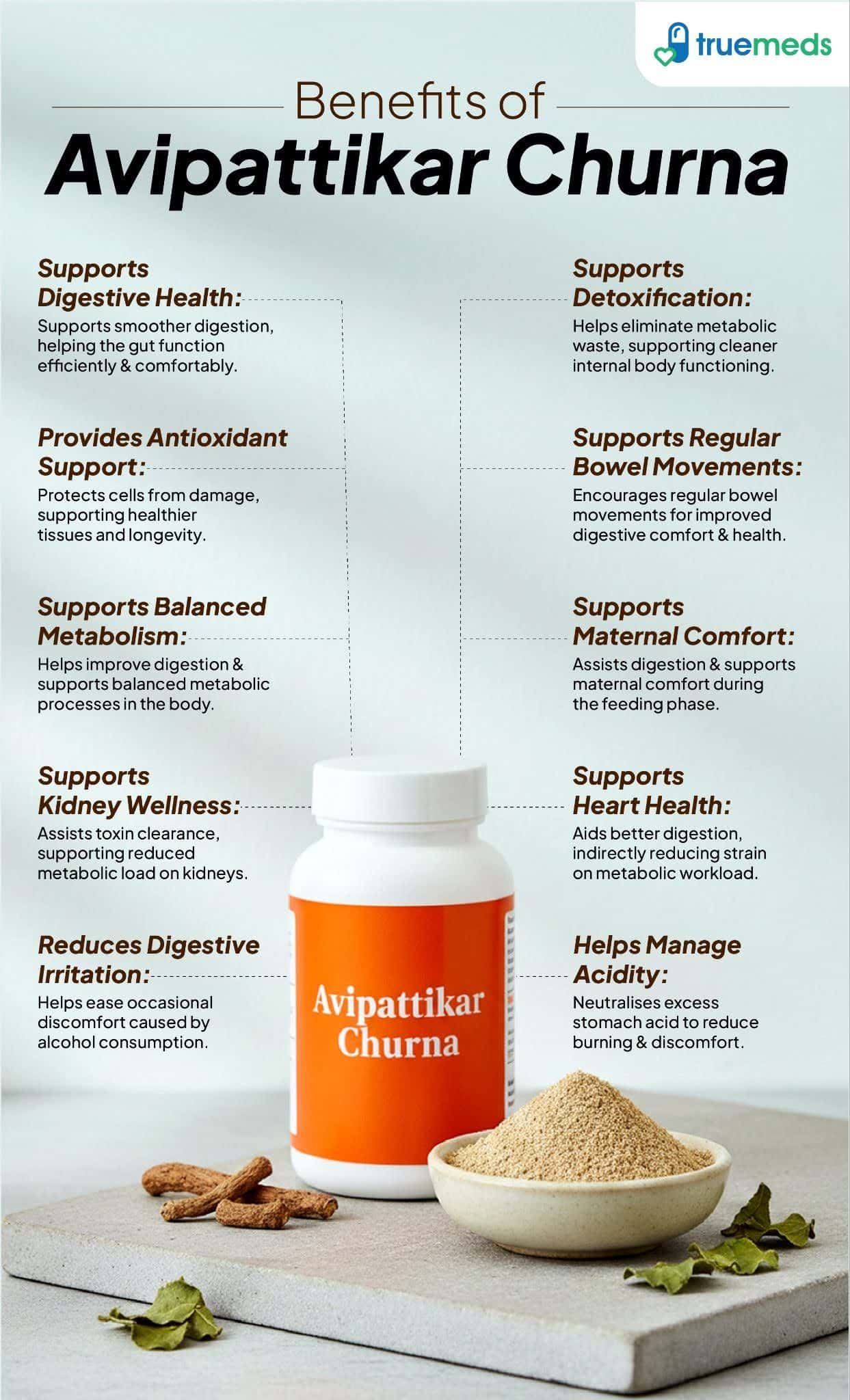
Avipattikar churna benefits in terms of several digestive health concerns, ultimately supporting our general health and wellness (Gadad & Gudaganatti, 2021).
1. Health of the Digestive System
According to Ayurvedic texts, Avipattikar Churna supports digestive health by stimulating the secretion of digestive enzymes. Modern studies suggest that some of its herbal ingredients, such as Amla and Haritaki, may aid digestion and help reduce acidity (Gadad & Gudaganatti, 2021). This supports better food breakdown and nutrient absorption, both of which are essential for maintaining a healthy digestive system. It can be especially beneficial for individuals experiencing gas, bloating, or indigestion.
2. Help with Acidity and Gastritis
Avipattikar Churna has traditionally been used in Ayurveda to help manage acidity and heartburn. It may support the stomach lining and reduce irritation caused by excess acid. However, it is advisable to consult a doctor for conditions like GERD or chronic gastritis. The churna’s cooling effect helps soothe the stomach lining, reducing inflammation and irritation.
3. Relief from Constipation
As a downward-moving (Anulomana) agent, it facilitates regular bowel movements by stimulating peristalsis without causing the dependency or electrolyte imbalance often associated with harsh chemical laxatives.
4. Detoxing Effect
In addition to its action on the digestive system, Avipattikar Churna also helps in the detoxification regimen.
5. Antioxidant Properties
Avipattikar churna contains sufficient antioxidants that help reduce inflammation and oxidative stress. Thanks to these qualities, cells sustain the damage from free radicals, which is fundamental for the concentration of health and vigour. Regular use may enhance the immune system and increase lifespan.
6. Breastfeeding Mothers
Breastfeeding mothers should consult a healthcare professional before use, as some herbs may affect milk composition and the baby’s health.
7. Diabetes Patients
Patients with diabetes need to be careful before taking Avipattikar Churna since it contains sugar. It is better to refrain from this preparation in cases of high uncontrolled blood sugar levels, as it may provoke a rise and lowering effect on blood sugar levels. Diabetics must speak to a doctor regarding the use of this remedy.
8. Heart Disease Patients
Among patients with heart disease, the use of Avipattikar Churna must be cautious. It is advisable to consult with a physician before use. A physician or other qualified health professional will be able to evaluate the risks and how to use it safely.
9. Kidney Disease Patients
In patients with kidney disease, the Avipattikar Churna use is not safe until a doctor oversees treatment. The composition may affect the kidneys; therefore, taking this remedy under close observation of any change in the health state is important.
10. Alcohol Consumption
Avoid consuming alcohol with Avipattikar Churna, as it may worsen nausea, dehydration, or other digestive side effects. Patients should also be advised that alcohol may compromise the therapeutic action of the product, which may lead to adverse complications; hence, abstaining from alcohol while taking this treatment is mandatory.
Common Uses of Avipattikar Churna
Avipattikar Churna is traditionally used in the following situations:
When there is hyperacidity or heartburn
It is most often used when someone has a burning sensation, sour reflux or an acidic stomach, especially the classical Amlapitta pattern.
After heavy, oily or spicy meals
Avipattikar Churna is taken to relieve the fullness, heaviness and gas that can follow rich food.
During occasional constipation
It is traditionally used for occasional constipation and may help support regular bowel movements.
In Pitta-aggravating conditions
Traditionally, Avipattikar Churna is used when Pitta-related digestive symptoms, such as acidity, are more common, particularly during hot weather or periods of stress.
As physician-guided cleansing support
It is sometimes used under an Ayurvedic practitioner as gentle preparatory or supportive care during a cleansing routine.
Precautions While Taking Avipattikar Churna
Avipattikar Churna is generally well tolerated, but the following precautions help keep its use safe:
- Pregnancy and breastfeeding: Avoid unless a qualified Ayurvedic or medical professional specifically advises it, as some herbs may affect the mother or baby.
- Diabetes: The formula contains sugar, so people with diabetes should use it only under medical advice and monitor blood sugar.
- Heart or kidney disease: Use only with doctor supervision, as the salt content and purgative action may not suit everyone.
- Children and older adults: Use only on professional advice and at an appropriately reduced dose.
- Alcohol: Avoid taking it with alcohol, which can worsen nausea and dehydration.
- Product quality: Some churnas may carry trace heavy metals; buy only from certified, reputable brands.
- Do not self-treat severe or persistent symptoms: Strong or lasting acidity, vomiting, black stools, severe abdominal pain or unexplained weight loss need prompt medical assessment, not home remedies.
Note: This is general information and not a substitute for personalised advice from a doctor or qualified Ayurvedic practitioner.
How to Use Avipattikar Churna
The right method depends on the form you have. Always follow the pack directions or your practitioner’s advice.
Taking the powder (churna)
Mix the advised dose (commonly 3–5 g) with a little warm water, or with warm water and honey, into a smooth, easily swallowed paste or drink. Take it after meals unless your practitioner advises otherwise.
Using capsules
Swallow the capsules whole with water, after food, at the dose printed on the pack. Do not open or chew them unless the label says you can.
Using tablets
Take the tablets with water after meals, as directed on the pack. Do not crush them unless the label allows it.
Note: If acidity, indigestion or constipation does not settle within a few days, or keeps coming back, see a doctor or Ayurvedic practitioner rather than increasing the dose.
Commonly Paired Avipattikar Churna and Formulations
Avipattikar Churna is traditionally taken with, or alongside, the following, under practitioner guidance:
Paired with | Traditional role |
Warm water | The usual vehicle (anupana) for taking the powder, aiding digestion and comfort. |
Honey | Sometimes used as a vehicle to make an easy-to-take paste (avoid adding to hot liquids). |
Cooling formulations (e.g. Kamdudha, Sutshekhar) | Occasionally co-prescribed by practitioners for stubborn hyperacidity. |
Recommended Dosage of Avipattikar Churna
Dosage varies with age, health and the advice of a qualified practitioner. As a general guide:
Children
Give only on the advice of a doctor or Ayurvedic practitioner, who will set a small, age-appropriate dose. Do not use standard adult doses in children.
Teenagers
Use only if advised by a practitioner, usually at a lower dose than adults, and preferably for short periods.
Adults
A common range is 3–5 g once or twice daily with warm water after meals. Use the lowest recommended dose initially, unless a qualified practitioner advises otherwise. Do not increase the dose without professional guidance.
Older adults
Begin with a lower dose and use with care, especially where there is diabetes, heart or kidney disease, or other regular medication.
Disclaimer: These dosages are general information only and may vary with individual health, age and other factors. Always consult a qualified doctor or Ayurvedic practitioner before starting, and do not exceed recommended amounts without medical supervision.
Avipattikar Churna Side Effects
Used sensibly, Avipattikar Churna is usually well tolerated, but some people may notice side effects, mostly with high doses or an empty stomach:
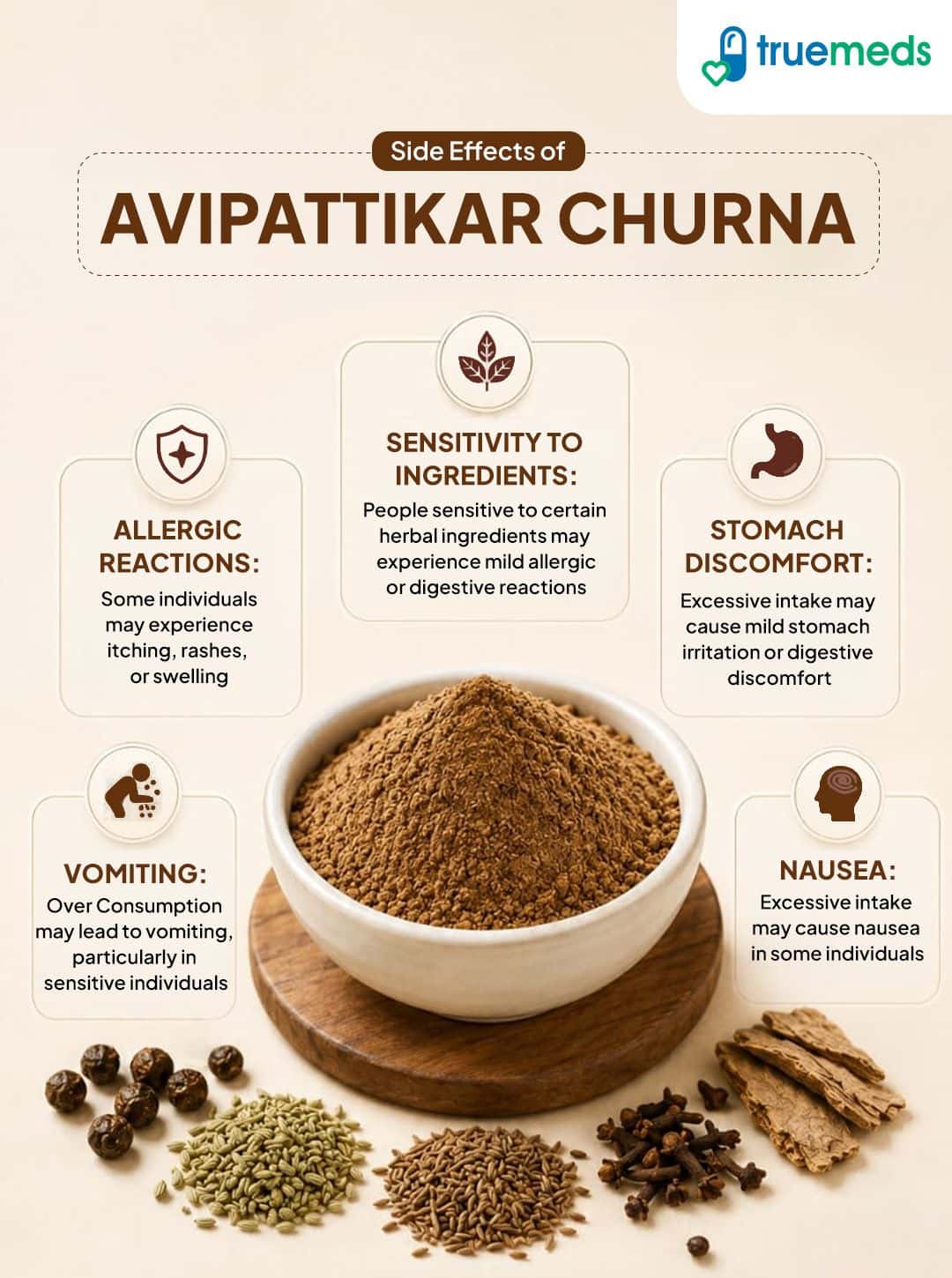
Nausea or vomiting
Taking it on an empty stomach or in excess can trigger nausea or vomiting. Taking it after food generally prevents this.
Digestive upset
Higher doses of Avipattikar Churna may cause loose stools, abdominal cramping or discomfort. These symptoms often improve after reducing the dose.
Allergic reactions
Rarely, an ingredient may cause a rash, itching or swelling. Stop the product and seek medical advice if this happens.
Note: Stop use and consult a doctor if any side effect is severe or persistent.
Interaction of Avipattikar Churna With Other Drugs
Avipattikar Churna can interact with certain medicines. Tell your doctor everything you take, including supplements and herbs, before starting it.
Antidiabetic medicines
It may add to the blood-sugar-lowering effect of diabetes medicines, so monitor levels closely and adjust only on medical advice.
Antacids
Taking Avipattikar Churna and antacids together may reduce their effectiveness. Keep a gap of at least two hours between them.
Blood thinners
Some ingredients may affect clotting, which could raise bleeding risk. Use together only if your doctor approves.
Digestive enzyme supplements
Combining them may over-stimulate digestion and cause discomfort. Space them out if you use both.
Other herbal remedies
Other herbs may act in the same direction and make effects unpredictable. Check with your practitioner before combining.
Storage of Avipattikar Churna
Store Avipattikar Churna in a cool, dry place away from direct sunlight and moisture. Keep the container tightly closed to protect the powder from damp, which can reduce its potency and shelf life. Keep it out of reach of children, and do not use it after the expiry date on the pack.
Key Takeaways
- Traditionally used to ease acidity, heartburn, indigestion, bloating, and occasional constipation.
- It works by cooling excess Pitta and gently supporting regular bowel movement.
- It is a supportive formula, not a cure, and severe or lasting symptoms need a doctor.
- Use caution in diabetes (it contains sugar), and in pregnancy, breastfeeding, heart or kidney disease, and in children and older adults.
- Always mention all your medicines and supplements to avoid interactions.
FAQs
In what dose should Avipattikar Churna be taken?
How do you take Avipattikar Churna?
Can it help with gastritis?
Does it have any side effects?
Can it be used for GERD?
Is it suitable if I have kidney problems?
Is it good for acid reflux?
Is it helpful for loose motion?
Can it be used daily?
References
- Gadad, G. G., & Gudaganatti, K. S. (2021). Critical analysis of formulation andProbable mode of action of Avipattikara churna: A comprehensive review. International Journal of Pharmacy and Pharmaceutical Research, 301–311. https://doi.org/10.25166/ijppr/2021.22.2.1
- Gyawali, S., Khan, G. M., Lamichane, S., Gautam, J., Ghimire, S., Adhikari, R., & Lamsal, R. (2013). Evaluation of anti-secretory and anti-ulcerogenic activities of avipattikar churna on the peptic ulcers in experimental rats. Journal of Clinical and Diagnostic Research: JCDR, 7(6), 1135–1139. https://doi.org/10.7860/JCDR/2013/5309.3058


Explore other categories
Latest health articles





Top Health Essentials




Top-selling ayurvedic products












Disclaimer
Top-Selling Medicines:
...View more
Top-OTC medicines:
...View more
Top-selling healthcare devices:
...View more
Company
About UsHealth ArticleHealth StoriesHealth LibraryDiseases & Health ConditionsAyurvedaUnderstanding Generic MedicinesAll MedicinesAll BrandsNeed HelpFAQSecuritySavings CalculatorAdvertise with UsSubscribe
Registered Office Address
Grievance Officer
Download Truemeds


Contact Us
Our customer representative team is available 7 days a week from 9 am - 9 pm.
v4.28.19

2026 - Truemeds | All rights reserved. Our content is for informational purposes only. See additional information.

Our Payment Partners




