
 Composition
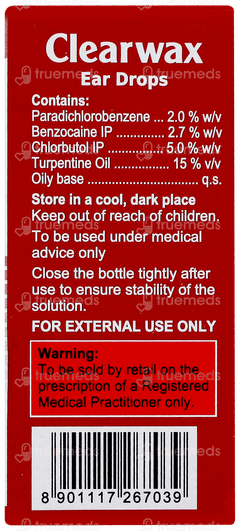
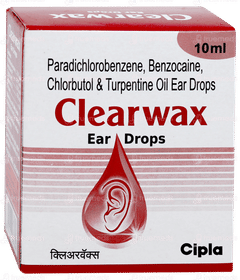
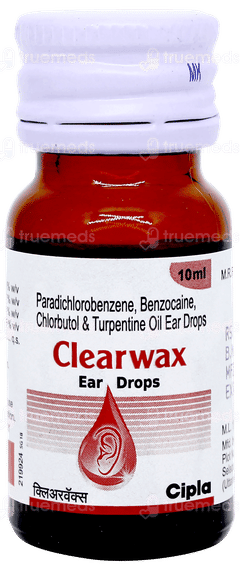
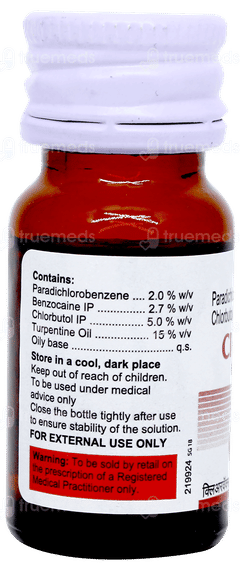
Clearwax Ear Drops contain benzocaine 2.7%, chlorbutol 5%, paradichlorobenzene 2% and turpentine oil 15%. This combination is used to soften accumulated earwax and relieve discomfort associated with wax blockage. Paradichlorobenzene helps loosen hardened wax, while turpentine oil contributes lubricating properties. Benzocaine provides local anaesthetic action, and chlorbutol has preservative and antiseptic properties. Use the drops only as directed by your doctor. Possible side effects include local burning, stinging, itching and irritation. Tell your doctor about ear pain, discharge or previous eardrum damage. Do not use earwax-softening drops when the eardrum may be perforated without medical assessment. Persistent hearing loss requires examination.
Clearwax Ear Drops are used to manage excessive or impacted earwax in the external ear canal. Hardened wax may cause fullness, discomfort, itching or temporary hearing difficulties. Softening the wax can make subsequent removal easier when necessary. However, not every blocked-ear sensation results from earwax. Ear infections and other conditions may produce similar symptoms. Keratosis obturans requires specialist assessment rather than routine self-treatment with ear drops. Sudden hearing loss needs urgent medical evaluation.
Use Clearwax Ear Drops exactly as directed by your doctor. Wash your hands and warm the closed bottle gently between your palms before use. Tilt your head and instil the prescribed drops into the affected ear. Avoid touching the dropper tip to the ear or surrounding skin. Remain in the recommended position to allow the solution to enter the canal. Do not insert cotton buds or other objects into the ear. Follow the prescribed treatment duration.
Possible side effects of Clearwax Ear Drops include temporary burning, stinging, itching and local irritation. Some patients may experience redness or discomfort in the ear canal. Stop using the drops and consult your doctor if irritation becomes severe. Allergic reactions to benzocaine or other ingredients may occur. Benzocaine has rarely been associated with methaemoglobinaemia, a serious condition affecting oxygen transport. Seek urgent medical attention for bluish skin, breathlessness or unusual weakness. Persistent pain or discharge requires assessment.
Before using Clearwax Ear Drops, tell your doctor about previous ear surgery, perforated eardrums or recurrent ear infections. Mention ear discharge, severe pain, dizziness or sudden hearing changes. Do not use the drops if you are allergic to any ingredient. Children should receive them only following age-appropriate medical advice. Discuss pregnancy and breastfeeding before use. Avoid using the solution in the eyes or swallowing it. Seek professional wax removal if the blockage persists.