
 Composition
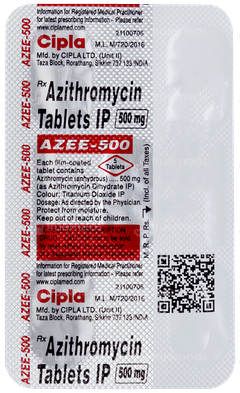
Azee 500 Tablet contains azithromycin 500 mg, a macrolide antibiotic used to treat selected bacterial infections. It may be prescribed for susceptible respiratory tract, ear, skin and certain sexually transmitted infections. Azithromycin binds to the bacterial 50S ribosomal subunit, inhibiting protein synthesis and bacterial growth. Take the tablet exactly as prescribed by your doctor. Possible side effects include nausea, diarrhoea, abdominal pain and vomiting. Tell your doctor about liver disease, irregular heart rhythms or previous reactions to macrolide antibiotics. Azithromycin can occasionally cause serious liver injury, allergic reactions or abnormal heart rhythms. Seek urgent medical attention for jaundice, fainting or severe allergic symptoms. It does not treat viral infections.
Azee 500 Tablet is prescribed for selected bacterial infections caused by susceptible organisms. These may include community-acquired pneumonia, bacterial sinusitis, certain throat infections and uncomplicated skin infections. Azithromycin may also be used for specific sexually transmitted infections according to current treatment guidelines. Antibiotic selection depends on the diagnosis, local resistance patterns and patient characteristics. It is not appropriate for every respiratory infection. Typhoid fever requires susceptibility-based treatment rather than routine azithromycin use.
Take Azee 500 Tablet exactly as directed by your doctor. Swallow the tablet with water, following the prescribed treatment schedule. Conventional azithromycin tablets can generally be taken with or without food. Follow the recommended course, even if symptoms improve earlier. Do not change the dose or use leftover antibiotics. Separate aluminium- or magnesium-containing antacids according to medical advice. If you miss a dose, follow your doctor's instructions without doubling the next dose.
Possible side effects of Azee 500 Tablet include nausea, vomiting, diarrhoea, abdominal pain and headache. Some patients may experience dizziness or mild skin reactions. Persistent or severe diarrhoea requires assessment for antibiotic-associated colitis. Rarely, azithromycin may cause serious liver injury or heart rhythm disturbances. Seek urgent medical attention for jaundice, fainting, palpitations or severe allergic reactions. Stop treatment and obtain medical advice if widespread blistering or severe skin reactions develop. Report persistent symptoms promptly.
Before taking Azee 500 Tablet, tell your doctor about liver disease, heart rhythm disorders or low potassium levels. Mention myasthenia gravis and previous allergies to azithromycin, erythromycin or other macrolides. Report medicines that prolong the QT interval, anticoagulants and other relevant treatments. Discuss pregnancy and breastfeeding before use. Patients with significant cardiac risk factors may require additional assessment. Seek medical review if symptoms worsen or fail to improve. Avoid unnecessary antibiotic use.